
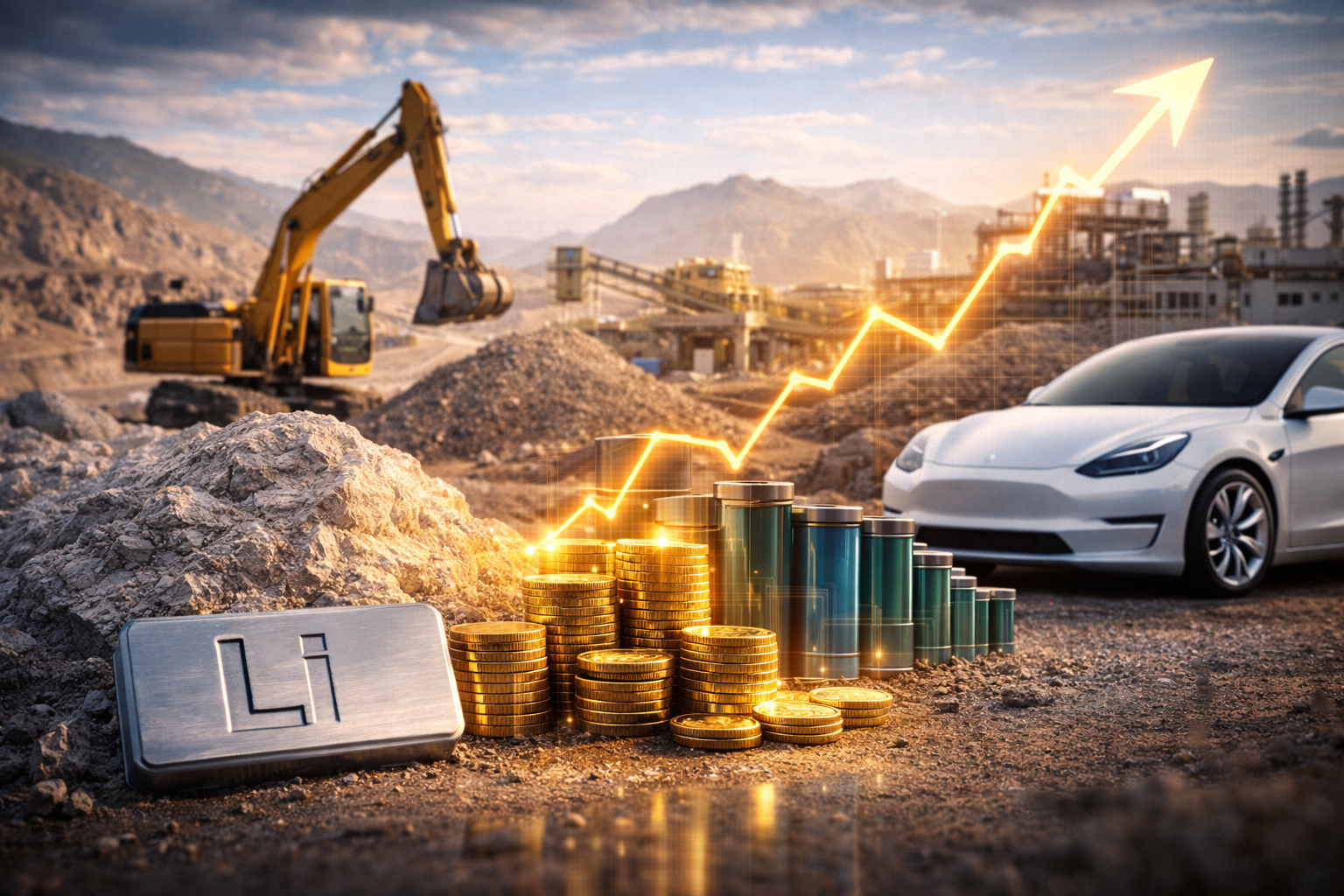
The global race to electrify transportation is rapidly reshaping the metals and mining industry, and lithium has emerged as one of the most strategically important resources of the decade. Over the past month, lithium prices have surged roughly 15%, reflecting accelerating demand from electric vehicle (EV) manufacturers and energy storage companies. As the market tightens, mining firms across North America are racing to expand production capacity and fast-track new projects to secure a larger share of the rapidly growing battery materials supply chain.
Industry reports from Mining.com and Bloomberg Markets highlight a new wave of investments and project approvals in the United States and Canada, where companies are seeking to reduce reliance on overseas supply and establish domestic lithium production. For investors, the trend underscores a broader shift: the electrification of transportation and expansion of renewable energy storage are creating a long-term structural demand cycle for critical minerals.
As EV adoption accelerates globally, lithium—often referred to as “white gold” in battery markets—has become a focal point for governments, manufacturers, and investors alike.
The Strategic Role of Lithium in the Energy Transition
Lithium plays a central role in modern battery technology, particularly lithium-ion batteries, which power electric vehicles, smartphones, grid storage systems, and a wide range of portable electronics.
Automakers transitioning toward electrification rely heavily on lithium supply chains to manufacture EV batteries. Each electric vehicle battery requires significant quantities of lithium carbonate or lithium hydroxide, making the metal one of the most critical inputs in the clean energy economy.
According to the International Energy Agency, demand for lithium could grow more than 40 times by 2040 under aggressive global climate and electrification scenarios. The agency identifies lithium as one of the key minerals required to support the global transition toward low-carbon energy systems.
This explosive demand growth is already reshaping the mining sector.
Companies are expanding lithium extraction projects, exploring new deposits, and investing heavily in refining and processing infrastructure to meet expected supply needs. North America, in particular, has become a focal point for new development as governments aim to build secure and resilient supply chains for critical minerals.
EV Demand Is Driving the Lithium Boom
The most powerful driver behind rising lithium prices is the rapid expansion of the electric vehicle market.
Global EV sales have grown dramatically in recent years as governments introduce stricter emissions standards and consumers shift toward cleaner transportation options. Automakers such as Tesla, General Motors, and Ford Motor Company have committed billions of dollars toward EV production and battery technology.
According to industry research cited by BloombergNEF, electric vehicles could represent more than half of global new car sales by 2035, dramatically increasing demand for battery materials such as lithium, nickel, and cobalt.
Energy storage systems used in renewable power grids are also contributing to demand growth. Lithium-ion batteries are widely used to store electricity generated from solar and wind power, helping stabilize energy supply during periods of fluctuating generation.
This dual demand—from both transportation and energy storage—has created intense competition for lithium resources.
North America’s Push for Domestic Lithium Production
Historically, much of the world’s lithium supply has been produced in countries such as Australia, Chile, and Argentina. However, geopolitical concerns and supply chain vulnerabilities have prompted the United States and Canada to prioritize domestic critical mineral production.
Government initiatives aimed at strengthening domestic supply chains have created new opportunities for mining companies operating in North America.
The U.S. Department of Energy and other federal agencies have launched programs to support critical mineral development, including lithium extraction projects and battery manufacturing facilities.
Similarly, Canada has introduced strategies to position itself as a key supplier of battery metals, leveraging its vast mineral resources and mining expertise.
Several mining companies are already responding to these incentives by accelerating exploration and development projects across North America.
Projects in Nevada, Quebec, Ontario, and other mineral-rich regions are attracting investor attention as companies seek to expand lithium production capacity.
Companies Leading the Lithium Expansion
Several major mining firms are positioning themselves to capitalize on the lithium boom.
One of the most prominent players is Albemarle Corporation, one of the world’s largest lithium producers. The company has been expanding its operations to meet growing battery demand.
Another key player is Livent, which supplies lithium compounds used in EV battery production.
Canadian mining companies are also entering the lithium race, exploring deposits and partnering with battery manufacturers to secure long-term supply agreements.
In addition to established producers, numerous junior mining companies are working to develop new lithium projects across North America. These smaller firms can offer higher growth potential, although they also carry greater investment risk due to the capital-intensive nature of mining development.
Why This Matters for Investors
The lithium market represents a classic supply-and-demand story unfolding within the broader clean energy transition.
As EV adoption increases and renewable energy infrastructure expands, demand for lithium is expected to remain strong for decades.
However, developing new mining projects takes time. Environmental approvals, infrastructure development, and refining capacity can delay production, potentially leading to supply shortages in the short to medium term.
This supply constraint is one reason lithium prices have surged recently.
For investors, rising prices can translate into improved margins for producers and potentially higher valuations for companies involved in lithium extraction and processing.
At the same time, volatility in commodity markets means investors should carefully evaluate company fundamentals, project timelines, and cost structures before making investment decisions.
Future Trends Investors Should Watch
Several key developments could influence the future trajectory of lithium markets.
Battery Technology Innovation
Advancements in battery chemistry could affect long-term lithium demand. While lithium-ion batteries currently dominate the market, new technologies may alter material requirements in the future.
Recycling and Circular Supply Chains
Battery recycling could eventually reduce pressure on primary lithium supply by recovering valuable materials from used batteries.
Government Policy and Incentives
Policies aimed at supporting EV adoption and domestic mineral production will continue to influence investment flows within the sector.
Global Competition for Critical Minerals
As countries compete for secure access to battery materials, geopolitical factors may influence mining development and supply chain strategies.
Key Investment Insight
For investors looking to capitalize on the clean energy transition, lithium represents one of the most compelling opportunities within the metals and mining sector.
Companies involved in lithium extraction, refining, battery production, and EV manufacturing stand to benefit from long-term structural demand growth.
However, investors should remain mindful of the cyclical nature of commodity markets and the risks associated with mining project development.
A diversified approach that includes exposure to multiple segments of the EV supply chain—from mining to battery manufacturing—may help balance risk while capturing potential upside from the electrification megatrend.
The surge in lithium prices and expansion of North American mining projects underscore a broader transformation taking place in global energy and transportation systems.
As demand for critical minerals continues to rise, the companies securing access to these resources today could play a pivotal role in powering the electric economy of tomorrow.
Stay informed about the latest developments in metals markets, clean energy technologies, and investment opportunities by following MoneyNews.Today, your trusted source for daily investor insights and financial news.




