
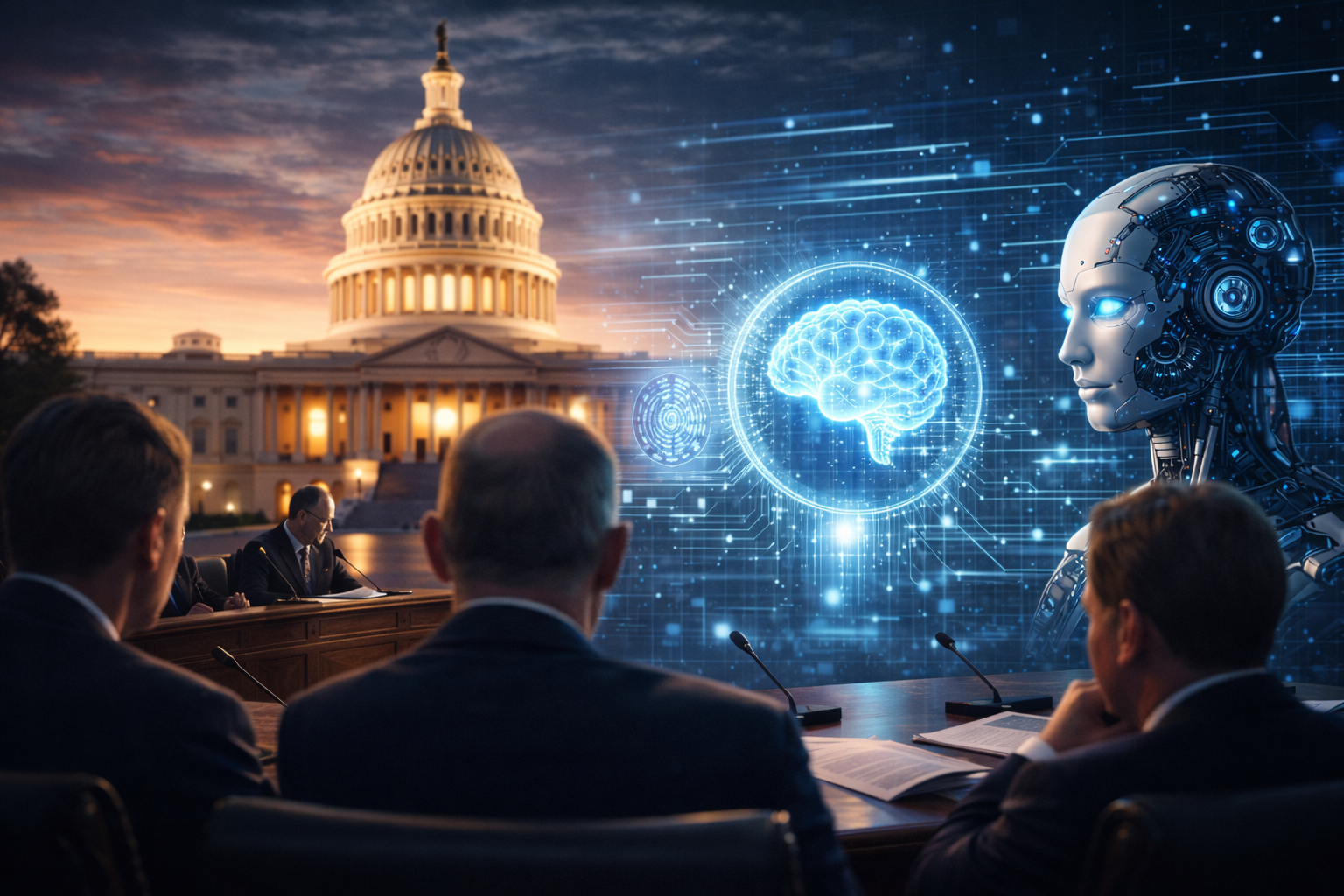
Artificial intelligence has rapidly become one of the most transformative forces in the global economy, reshaping industries ranging from finance and healthcare to entertainment and national security. But as generative AI systems grow more powerful—and more widely adopted—regulators are beginning to scrutinize the technology with increasing urgency.
Now, lawmakers in United States Congress are debating new legislation aimed at increasing transparency and accountability in the development of artificial intelligence systems. The proposed measures would require AI companies to disclose the sources of training data used in generative models and provide regulators with greater visibility into how these systems produce outputs.
The initiative reflects growing concerns about ethical risks, misinformation, copyright issues, and national security implications tied to rapidly advancing AI technologies. According to reporting from Politico and Reuters, policymakers are seeking to ensure that companies building powerful AI systems operate within a framework that protects consumers, creators, and critical infrastructure.
For investors, the debate marks a critical turning point. Regulatory decisions made today could shape the competitive landscape of the AI industry for years to come.
The Rising Influence of Artificial Intelligence
Artificial intelligence has quickly become one of the most important technological drivers of economic growth.
Generative AI systems—capable of producing text, images, software code, and video—are being integrated into everything from corporate productivity tools to creative content platforms.
Major technology companies including Microsoft, Alphabet, and OpenAI have invested billions of dollars into developing and deploying AI models.
According to research cited by McKinsey & Company, generative AI could contribute up to $4.4 trillion annually to the global economy by boosting productivity across industries.
However, the same capabilities that make AI valuable also raise complex questions around transparency, accountability, and risk management.
Large AI models are often trained on enormous datasets gathered from across the internet, which may include copyrighted material, personal information, and sensitive data. Critics argue that without stronger disclosure requirements, it is difficult for regulators—or the public—to understand how AI systems function or what information they rely on.
What the Proposed Legislation Would Require
The legislation being discussed in Congress aims to address these concerns by establishing new transparency rules for AI developers.
While details of the proposals are still evolving, key elements under discussion include:
Disclosure of Training Data Sources
AI companies may be required to provide regulators with information about the datasets used to train generative models. This could help address concerns about intellectual property rights and data privacy.
Transparency in AI Model Outputs
Developers could be required to document how AI systems generate content, allowing regulators to assess risks such as misinformation or algorithmic bias.
Reporting and Compliance Standards
Companies operating advanced AI models may need to comply with reporting obligations similar to those applied in other regulated technology sectors.
Oversight for High-Risk AI Applications
Certain AI systems—especially those used in areas such as healthcare, finance, and national security—could face stricter oversight requirements.
The goal of these measures is not necessarily to slow innovation but to ensure that AI development occurs within a framework that protects consumers and maintains trust in digital systems.
Why This Matters for Investors
For investors, regulatory developments around artificial intelligence represent a major variable influencing the future trajectory of technology stocks.
On one hand, increased regulation can introduce new compliance costs and operational complexity for companies developing AI systems.
Firms that fail to meet regulatory standards could face fines, legal challenges, or restrictions on product deployment.
On the other hand, clear regulatory frameworks often create long-term stability for emerging industries.
Financial markets generally prefer environments where companies understand the rules governing innovation and competition. In many cases, regulation can reduce uncertainty and encourage greater institutional investment.
Companies that proactively adopt transparent AI development practices may gain a competitive advantage in a more regulated landscape.
Investors should therefore view the current legislative debate not simply as a risk factor, but also as a potential catalyst that could shape industry leadership.
Technology Companies Are Preparing for Regulatory Scrutiny
Major technology firms are already adjusting their strategies in anticipation of tighter oversight.
Many AI developers have begun publishing transparency reports, implementing safety guardrails, and creating internal ethics review processes.
Industry initiatives focused on responsible AI development have also emerged, with companies collaborating to establish voluntary standards around safety, data use, and model governance.
These efforts may help companies demonstrate compliance readiness as governments move toward formal regulatory frameworks.
At the same time, smaller startups operating in the AI sector may face greater challenges adapting to complex regulatory requirements.
This dynamic could potentially consolidate market power among larger companies that have the resources to navigate compliance processes.
Global Momentum Toward AI Regulation
The United States is not alone in exploring regulatory frameworks for artificial intelligence.
Governments around the world are introducing policies aimed at balancing innovation with oversight.
The European Union, for example, has already approved comprehensive AI regulations through its landmark AI Act, which sets rules governing the development and deployment of artificial intelligence systems.
Other countries—including Canada, the United Kingdom, and Japan—are also exploring regulatory frameworks that address issues such as algorithmic transparency, data protection, and ethical AI deployment.
The global nature of the AI industry means that companies will likely need to comply with multiple regulatory regimes across different jurisdictions.
For multinational technology firms, navigating these requirements will become an increasingly important part of strategic planning.
Future Trends to Watch in AI Policy
As the legislative debate unfolds, several key trends could shape the future of AI regulation and its impact on financial markets.
Increased Transparency Requirements
Governments are likely to demand greater visibility into how AI systems operate, particularly when they influence public information or critical services.
Risk-Based Regulatory Models
Some policymakers are exploring frameworks that apply stricter oversight to high-risk AI applications while allowing more flexibility for lower-risk use cases.
Intellectual Property and Data Rights
Questions around copyrighted training data may become a central issue in future AI regulation.
National Security Concerns
Advanced AI technologies could also fall under national security scrutiny, particularly if they influence defense systems or sensitive infrastructure.
Each of these factors could influence how quickly AI technologies are adopted and how companies structure their development strategies.
Key Investment Insight
For investors tracking the AI boom, the emerging regulatory landscape represents both a challenge and an opportunity.
Companies that prioritize transparency, compliance, and responsible AI development may gain credibility with regulators and institutional investors.
Meanwhile, firms that lag behind in adapting to regulatory expectations could face operational disruptions or reputational risks.
Investors may want to pay particular attention to:
- Technology companies leading in responsible AI development
- Firms investing heavily in compliance infrastructure
- Businesses integrating AI tools within regulated industries
- Companies positioned to benefit from government AI standards
In many ways, the regulatory frameworks being developed today could determine which companies dominate the AI industry in the coming decade.
Artificial intelligence is poised to reshape the global economy, but its long-term success will depend on public trust, regulatory clarity, and responsible innovation.
As policymakers, technology companies, and investors navigate this evolving landscape, staying informed about regulatory developments will be essential for identifying both risks and opportunities.
Follow MoneyNews.Today for the latest insights on AI policy, emerging technologies, and the investment trends shaping tomorrow’s markets.




