
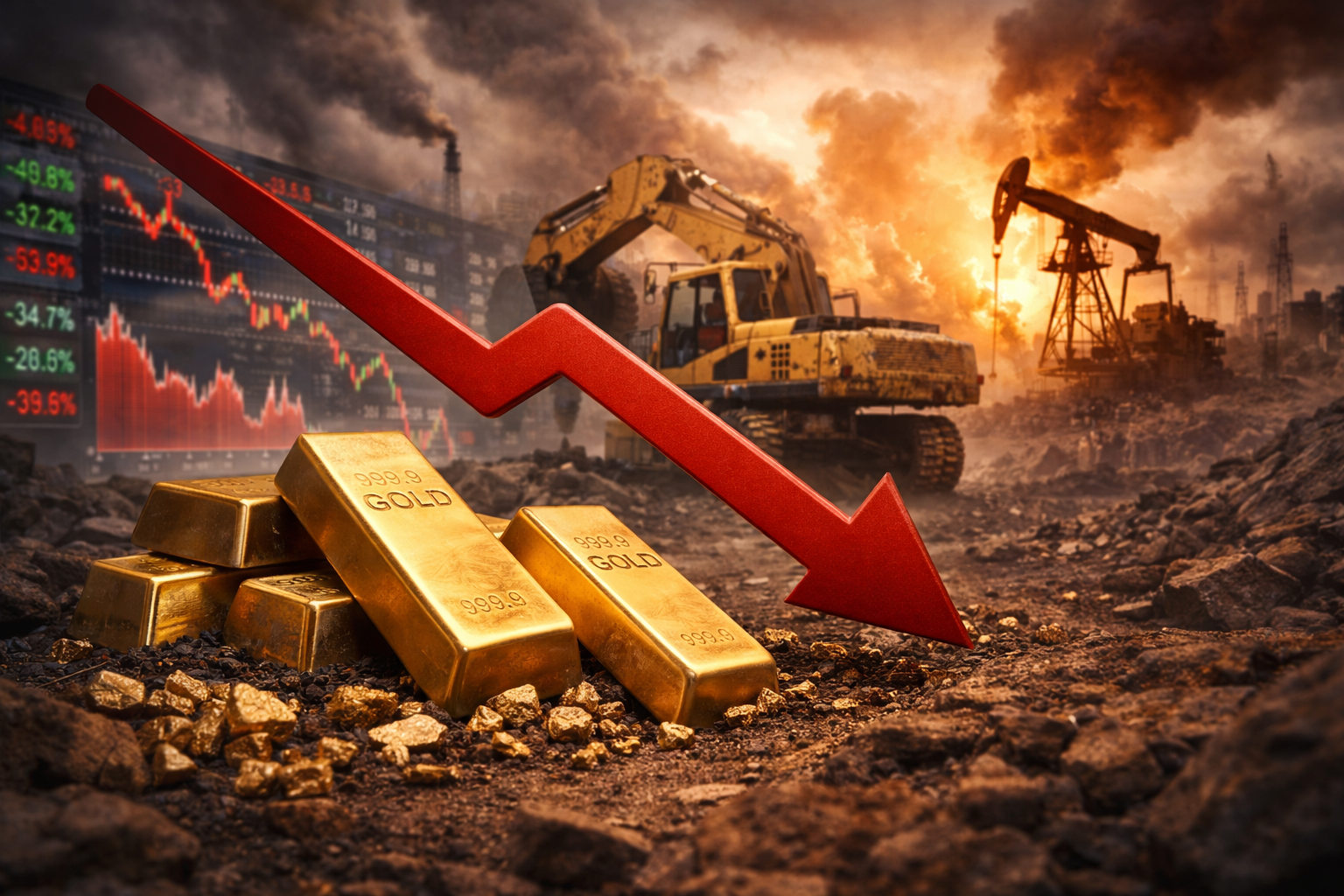
In a market environment increasingly defined by geopolitical shocks and energy volatility, even traditional safe havens are losing their footing. Gold—long considered a refuge during times of uncertainty—is facing unexpected pressure, while mining stocks are sliding as rising oil prices reshape the economics of the sector.
As reported by Reuters, the recent surge in crude oil prices—driven by escalating geopolitical tensions—has triggered a rotation toward the U.S. dollar, leaving precious metals and mining equities under strain. For investors, this divergence is more than a short-term anomaly; it signals a deeper shift in how markets respond to inflation, risk, and global instability.
When Gold Fails to Shine: A Shift in Safe-Haven Dynamics
Historically, gold has thrived during periods of geopolitical uncertainty and inflationary pressure. However, the current environment is presenting a different narrative.
Despite heightened tensions and rising oil prices, gold prices have struggled to gain momentum. According to Reuters market coverage, a strengthening U.S. dollar—fueled by risk aversion and expectations of prolonged higher interest rates—is offsetting gold’s traditional appeal.
This reflects a critical shift:
- Investors are prioritizing liquidity and yield over traditional hedges
- The U.S. dollar is emerging as the dominant safe-haven asset
- Gold’s inverse relationship with real yields is becoming more pronounced
In simple terms, when interest rates remain elevated, holding non-yielding assets like gold becomes less attractive.
Oil’s Ripple Effect on Mining Economics
While the spotlight is on gold’s underperformance, the more significant story may lie beneath the surface—in the cost structure of mining companies.
Energy is one of the largest input costs in mining operations. From extraction and processing to transportation, nearly every stage of production is energy-intensive. As oil prices climb above $100 per barrel, these costs rise sharply.
This creates a challenging dynamic:
- Higher commodity prices can boost revenues
- Rising energy costs simultaneously erode profit margins
The result is margin compression—a key concern for investors evaluating mining equities.
Industry data and analyst commentary from major financial institutions, including Bloomberg and S&P Global, have consistently highlighted that energy costs can account for 20% to 30% of total mining operating expenses, depending on the region and commodity.
With oil prices surging, that percentage is likely to increase—putting pressure on even the most efficient operators.
Why Mining Stocks Are Underperforming
The recent decline in mining stocks reflects a combination of macroeconomic and sector-specific pressures:
1. Margin Compression Fears
As energy costs rise, investors are recalibrating earnings expectations for mining companies. Even if gold or other metals maintain stable prices, higher operating costs can significantly reduce profitability.
2. Strong U.S. Dollar
A stronger dollar typically weighs on commodity prices, as most are priced in USD. This dynamic is particularly impactful for gold, which tends to move inversely to the dollar.
3. Interest Rate Environment
Higher interest rates not only pressure gold prices but also increase financing costs for mining companies, many of which rely on debt to fund operations and expansion.
4. Investor Rotation
Capital is flowing toward sectors that directly benefit from rising oil prices—such as energy—at the expense of mining and precious metals.
This rotation highlights a broader market theme: investors are prioritizing immediate cash flow and pricing power over defensive positioning.
Sector Breakdown: Winners and Losers
Gold Producers: Facing Headwinds
Gold mining companies are caught in a difficult position. While geopolitical uncertainty should theoretically support gold prices, the macro environment is working against them.
Key challenges include:
- Weak price momentum for gold
- Rising input costs
- Currency headwinds
As a result, many gold producers are underperforming broader market indices.
Diversified Miners: Mixed Outlook
Companies with exposure to multiple commodities—such as copper, iron ore, and industrial metals—may fare better, depending on global demand trends.
For example:
- Copper demand remains supported by electrification and infrastructure investment
- Iron ore is tied to construction and industrial activity
However, these companies are not immune to rising energy costs, which can impact margins across the board.
Energy Sector: The Clear Beneficiary
In contrast, energy companies are benefiting directly from higher oil prices, attracting capital flows that might otherwise have gone into mining stocks.
This divergence underscores a key investment theme: commodity exposure alone is not enough—cost structure matters.
Why This Matters for Investors
The current market environment is challenging traditional assumptions about safe havens and sector performance.
Key takeaways include:
- Gold is no longer a guaranteed hedge in periods of geopolitical stress, particularly when interest rates are high
- Cost inflation is becoming a dominant factor in determining sector performance
- Currency strength can override commodity fundamentals
For investors, this means that a deeper level of analysis is required—one that goes beyond simple narratives and considers the interplay between macroeconomic forces and sector-specific dynamics.
Future Trends to Watch
1. Oil Price Trajectory
If oil prices remain elevated, pressure on mining margins is likely to persist. Conversely, a decline in energy prices could provide relief for the sector.
2. Federal Reserve Policy
Interest rate decisions will play a critical role in shaping the outlook for both gold and mining stocks. A shift toward rate cuts could weaken the dollar and support gold prices.
3. Inflation Trends
Persistent inflation—particularly driven by energy—could create a complex environment where gold’s role as a hedge is tested.
4. Operational Efficiency in Mining
Companies that can manage costs effectively and improve operational efficiency will be better positioned to navigate this environment.
Key Investment Insight
In today’s market, not all commodities are created equal—and not all commodity producers benefit equally from rising prices.
Investors should consider:
- Focusing on low-cost mining operators with strong balance sheets
- Evaluating energy exposure within mining portfolios
- Balancing commodity investments with direct energy sector exposure
- Monitoring currency trends and interest rate expectations
Most importantly, investors should recognize that margin dynamics—not just commodity prices—are driving performance in the mining sector.
Navigating a Changing Commodity Landscape
The decline in gold and mining stocks amid rising oil prices is a powerful reminder that markets are constantly evolving. Traditional relationships are being challenged, and new dynamics are emerging.
For investors, staying ahead requires not only understanding these shifts but also adapting strategies accordingly. As energy prices, interest rates, and geopolitical risks continue to shape the market, the ability to interpret these signals will be critical.
Stay informed with MoneyNews.Today for daily, in-depth insights that help you navigate complex market trends and uncover actionable investment opportunities.




