
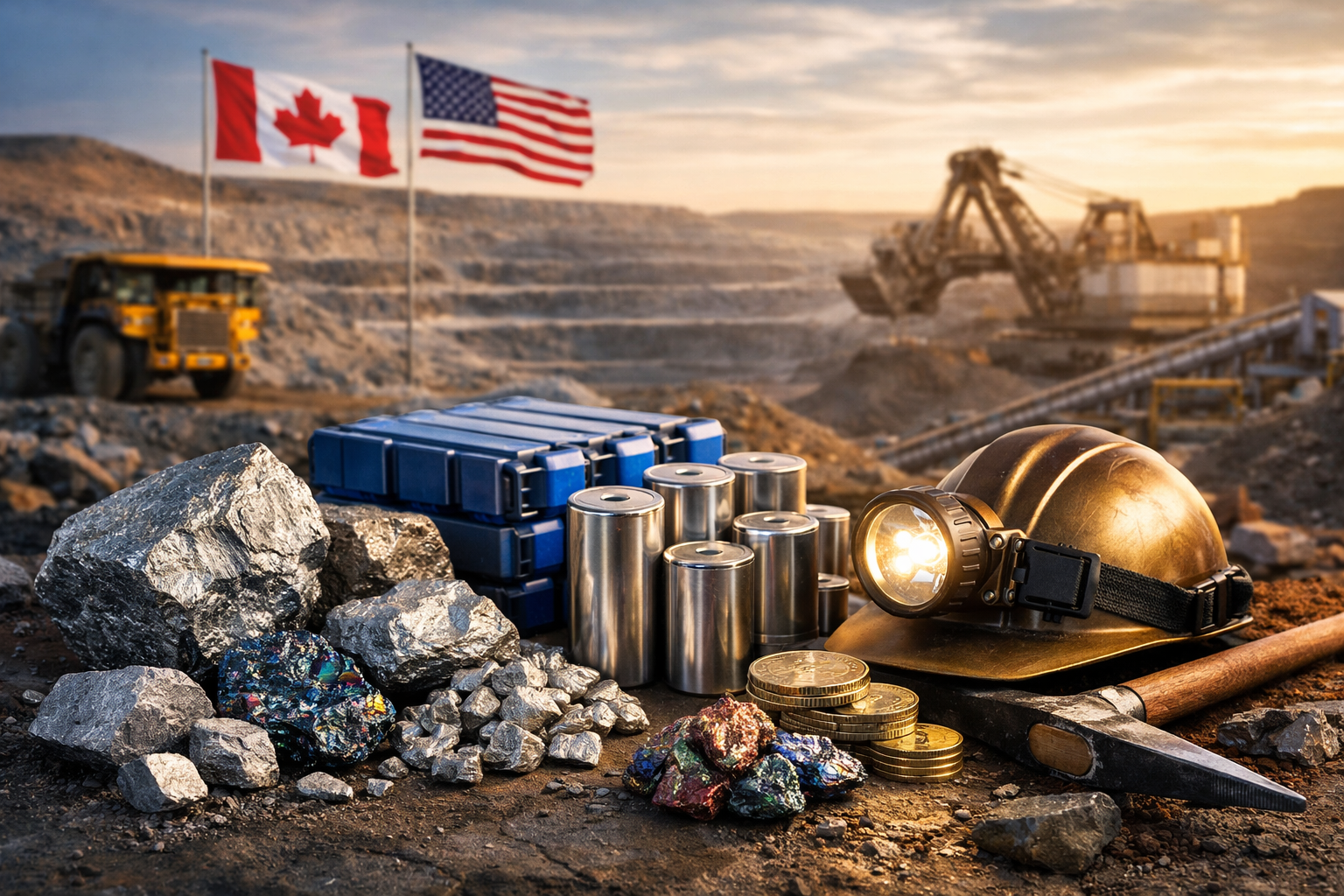
The global race for resources is intensifying—and this time, it’s not about oil. Lithium, nickel, and rare earth elements have become the backbone of the modern economy, powering everything from electric vehicles to advanced defense systems. As geopolitical tensions reshape global trade, the United States and Canada are moving aggressively to secure these critical minerals, triggering a new wave of investment and opportunity across the mining sector.
Recent reports from Reuters and official government releases (March 2026) highlight a coordinated effort between the United States and Canada to strengthen supply chains and reduce dependence on China, which currently dominates global production and processing of many key materials. For investors, this shift marks a pivotal moment—one where natural resources are no longer just commodities, but strategic assets.
A Strategic Shift in Global Resource Policy
For decades, the global supply of critical minerals has been heavily concentrated, with China controlling a significant share of processing capacity for rare earth elements and battery metals. This concentration has created vulnerabilities for Western economies, particularly as demand for clean energy technologies accelerates.
In response, the United States and Canada are deepening collaboration to build more resilient and diversified supply chains. This includes:
- Expanding domestic mining operations
- Investing in processing and refining capabilities
- Supporting exploration projects through funding and incentives
- Strengthening cross-border partnerships
These initiatives are part of a broader strategy to ensure long-term access to materials that are essential for economic growth and national security.
Demand Is Being Driven by the Energy Transition
The surge in demand for critical minerals is closely tied to the global shift toward clean energy.
Electric Vehicles (EVs)
Lithium and nickel are key components in EV batteries. As automakers accelerate electrification, demand for these materials is expected to grow exponentially.
Renewable Energy
Wind turbines and solar panels rely on rare earth elements for their operation. The expansion of renewable energy infrastructure is adding another layer of demand.
Energy Storage
Grid-scale battery storage systems, which are essential for integrating renewable energy, require large quantities of lithium and other metals.
According to industry estimates cited by Reuters, demand for certain critical minerals could increase several-fold over the next decade. This structural growth is a major driver of investment in the mining sector.
Mining Companies Ramp Up Production
In response to rising demand and supportive government policies, mining companies across North America are accelerating exploration and production efforts.
New projects are being launched, existing operations are being expanded, and capital investment in the sector is increasing. Canadian mining firms, in particular, are playing a key role, leveraging the country’s rich resource base and stable regulatory environment.
At the same time, U.S.-based companies are benefiting from government incentives aimed at boosting domestic production. These measures are designed to reduce reliance on imports and strengthen supply chain resilience.
However, scaling up production is not without challenges. Mining projects often face long development timelines, regulatory hurdles, and environmental considerations. These factors can create supply constraints even as demand continues to grow.
Why This Matters for Investors
The evolving dynamics of the critical minerals market have significant implications for investors:
1. Commodities Are Becoming Strategic Assets
Critical minerals are no longer just inputs for industrial production—they are central to geopolitical strategy. Governments are actively supporting the sector, creating a favorable environment for investment.
2. Long-Term Demand Visibility
The energy transition provides a clear and sustained demand driver for critical minerals. Unlike traditional commodity cycles, which are often driven by short-term economic factors, this trend is underpinned by structural changes in the global economy.
3. Supply Constraints Could Support Prices
Despite increased investment, supply may struggle to keep pace with demand due to the complexity of mining projects. This imbalance could support higher prices for key minerals over the long term.
4. Increased Volatility
While the long-term outlook is positive, the sector remains volatile. Commodity prices can fluctuate based on global economic conditions, policy changes, and geopolitical developments.
The Role of ETFs and Public Market Exposure
For many investors, direct investment in mining projects may not be practical. However, there are multiple ways to gain exposure to the critical minerals theme:
- Mining Stocks: Publicly traded companies involved in lithium, nickel, and rare earth production
- Exchange-Traded Funds (ETFs): Funds that track baskets of mining companies or specific commodities
- Supply Chain Companies: Firms involved in processing, refining, and battery manufacturing
ETFs, in particular, offer a diversified approach, allowing investors to spread risk across multiple companies and regions.
As institutional interest in critical minerals grows, these investment vehicles are likely to see increased inflows.
Future Trends to Watch
1. Expansion of Domestic Supply Chains
The push for supply chain security is likely to continue, with further investment in domestic mining and processing capabilities.
2. Technological Innovation
Advancements in mining technology and recycling could improve efficiency and reduce environmental impact, potentially reshaping the industry.
3. Global Competition
Other regions, including Europe and Asia, are also investing heavily in critical minerals, increasing competition for resources and investment.
4. Policy and Regulation
Government policies will remain a key driver of the sector. Changes in incentives, environmental regulations, or trade policies could have significant impacts on market dynamics.
Positioning for the Critical Minerals Boom
The growing importance of critical minerals presents a compelling investment opportunity—but it requires a strategic approach.
Key strategies to consider:
- Focus on North American Leaders: Companies operating in the United States and Canada may benefit from supportive policies and funding
- Diversify Across the Supply Chain: Consider exposure to both mining and processing companies
- Leverage ETFs for Broad Exposure: Diversified funds can reduce risk while capturing sector growth
- Monitor Policy Developments: Government initiatives will play a crucial role in shaping the market
Investors should also remain mindful of risks, including project delays, environmental challenges, and commodity price volatility.
Investment Outlook: Strategic Metals Take Center Stage
The rise of critical minerals as a strategic priority marks a fundamental shift in the global economy. As the United States and Canada work to secure supply chains, the mining sector is entering a new era of growth and relevance.
For investors, this represents a unique opportunity to participate in a long-term structural trend. However, success will depend on careful selection, diversification, and a clear understanding of the underlying dynamics.
In a world increasingly defined by energy transition and geopolitical competition, critical minerals are emerging as one of the most important investment themes of the decade.
Stay ahead of the trends shaping global markets with MoneyNews.Today, your trusted source for daily investor insights and analysis.




