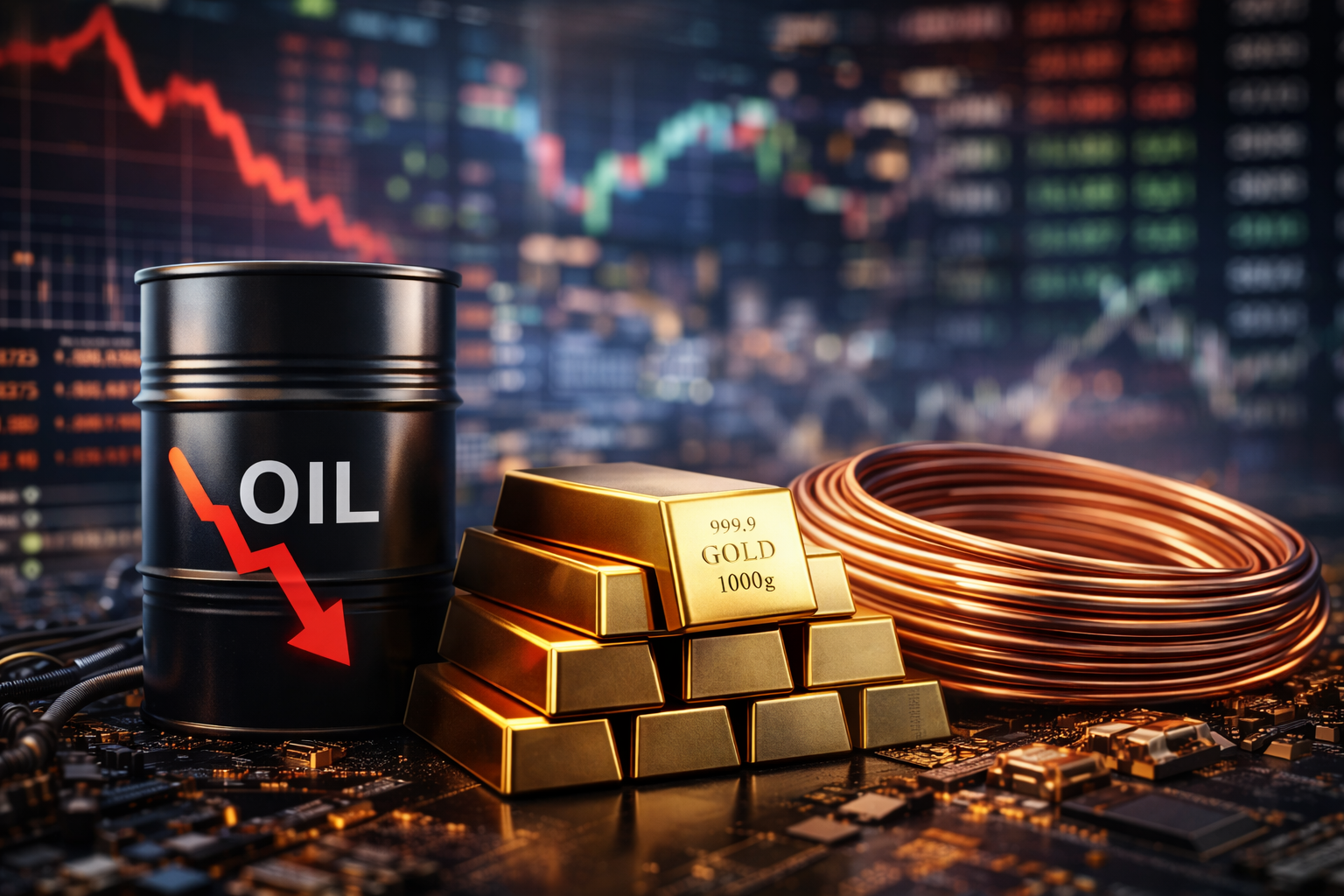
After weeks of volatility driven by geopolitical tension and supply concerns, global commodity markets are entering a more nuanced phase—one defined less by sharp directional moves and more by divergence across asset classes. Oil prices have fallen more than 3% on signs of easing Middle East tensions, while metals are sending mixed signals: gold remains resilient, and copper is softening.
For investors, this is not a quiet market—it’s a transitional one. The current setup reflects uncertainty around global growth, shifting risk sentiment, and evolving supply-demand dynamics. And in commodities, these transitions often precede the next major move.
A Market Searching for Direction
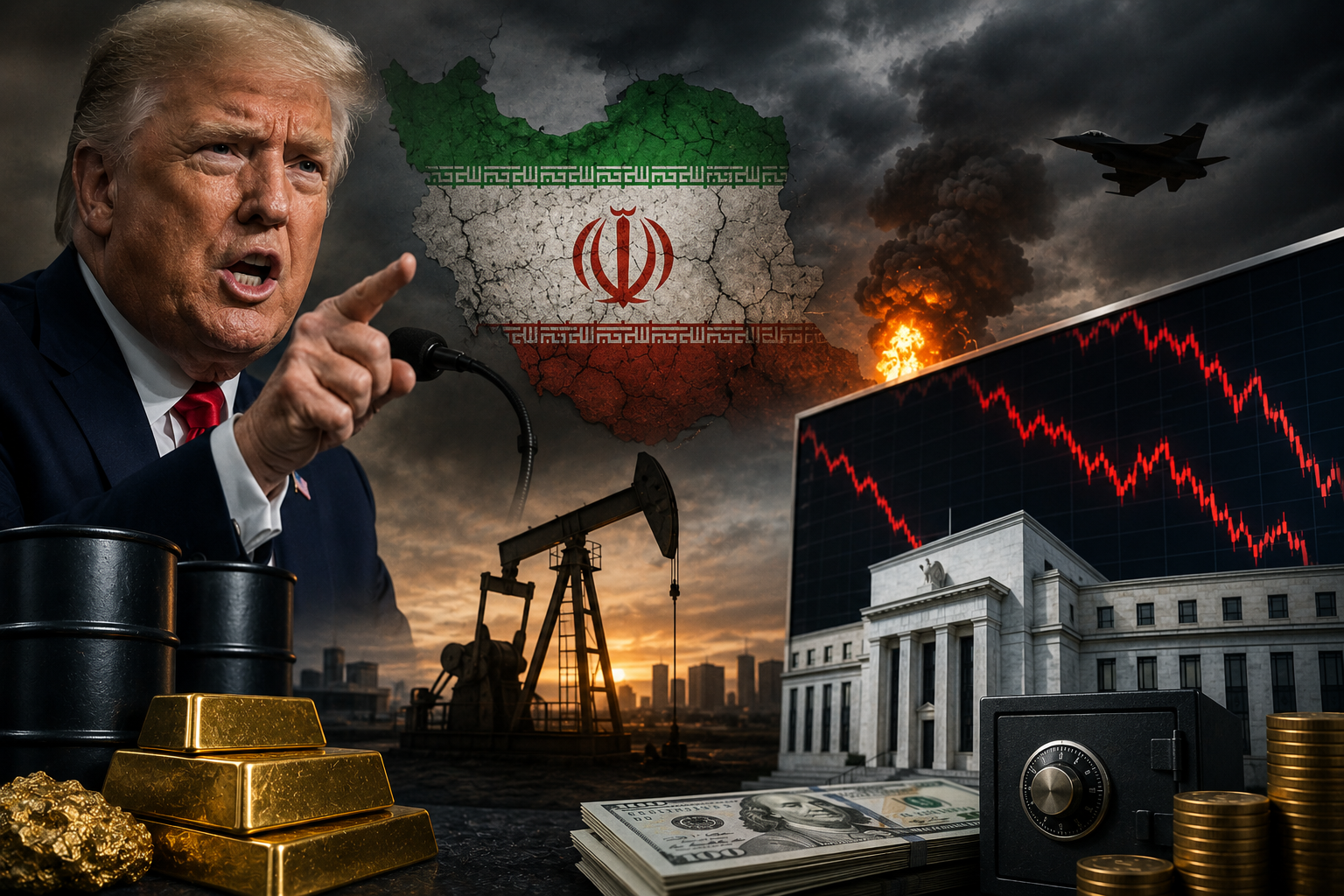
According to Reuters (April 17, 2026), the recent drop in oil prices comes as geopolitical fears begin to ease, removing a key risk premium that had previously supported crude markets. At the same time, metals are stabilizing rather than breaking out—suggesting that investors are reassessing both inflation risks and global demand expectations.
This creates a fragmented landscape:
- Oil declines as geopolitical pressure fades
- Gold holds steady, reflecting persistent macro uncertainty
- Copper softens, hinting at concerns around global economic momentum
Rather than a unified trend, the commodity complex is now reflecting multiple competing narratives.
Why This Matters for Investors
Commodities are often seen as a leading indicator for broader economic conditions. When different commodities move in different directions, it typically signals uncertainty about the macro outlook.
That’s exactly what we’re seeing now.
Oil’s decline suggests that markets are pricing in reduced geopolitical risk and potentially softer demand expectations. Meanwhile, gold’s resilience indicates that investors are still seeking protection against inflation, currency volatility, and broader uncertainty.
Copper, often referred to as “Dr. Copper” for its ability to diagnose economic health, is sending a more cautious signal. Its recent weakness may reflect concerns about slowing industrial activity or uneven global growth.
For investors, this divergence matters because it highlights a key reality:
There is no single macro narrative driving markets right now.
Instead, we are entering a phase where asset selection and timing become more important than broad exposure.
Oil: From Risk Premium to Reality Check
The recent drop in oil prices marks a significant shift.
During periods of geopolitical tension, oil often benefits from a risk premium tied to potential supply disruptions. As those tensions ease, that premium begins to unwind—bringing prices back in line with underlying supply-demand fundamentals.
This is what’s happening now.
While lower oil prices can be positive for global growth by reducing input costs, they also raise questions about demand strength. If the decline is driven not just by easing tensions but also by weaker consumption expectations, it could signal broader economic softness.
For energy-focused companies such as ExxonMobil and Chevron, this shift could translate into:
- Lower revenue expectations
- Pressure on margins
- Increased sensitivity to further price movements
At the same time, lower energy costs can benefit other sectors, particularly industrials and consumer-facing businesses.
Gold: Stability in Uncertainty
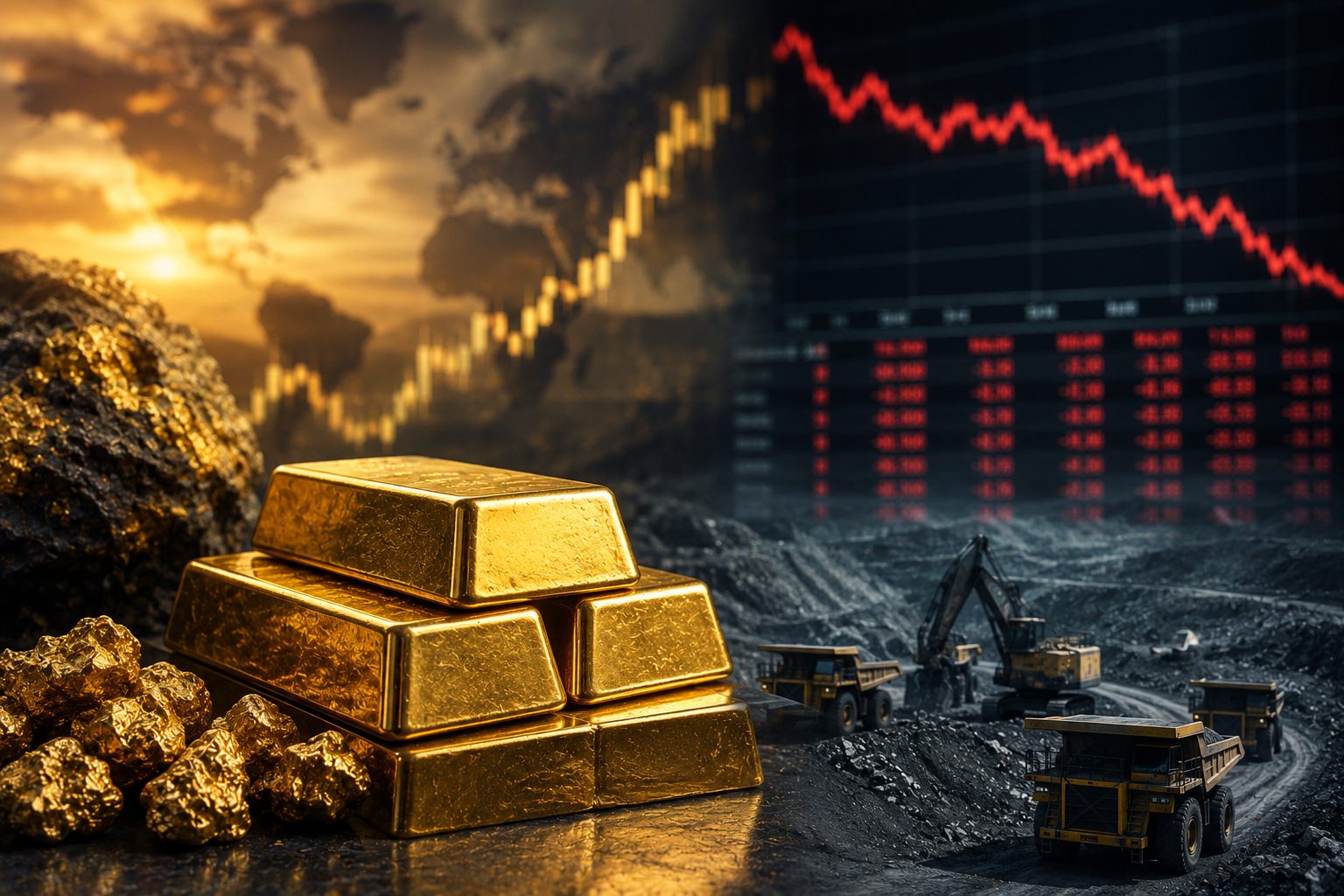
Gold’s ability to hold steady despite falling oil prices is telling.
Typically, declining energy prices can reduce inflation expectations, which in turn can weaken gold. However, the metal’s resilience suggests that investors remain cautious about the broader macro environment.
Gold continues to serve as a hedge against uncertainty, supported by:
- Ongoing geopolitical risks, even if reduced
- Concerns about inflation persistence
- Central bank demand and diversification strategies
Institutions such as the World Gold Council have noted that central bank purchases remain a key driver of gold demand, reinforcing its role as a strategic asset.
For investors, gold’s stability signals that defensive positioning has not disappeared—it has simply become more selective.
Copper: The Growth Signal to Watch
If gold represents caution, copper represents growth expectations.
The recent softening in copper prices is a signal worth paying close attention to. As a key industrial metal used in construction, manufacturing, and electrification, copper demand is closely tied to economic activity.
Weakness in copper can indicate:
- Slowing industrial production
- Reduced infrastructure spending
- Uneven recovery in major economies
However, it’s important to view this in context.
Long-term demand drivers for copper remain strong, particularly due to:
- The global energy transition
- Electric vehicle adoption
- Renewable energy infrastructure
Organizations like the International Energy Agency (IEA) have repeatedly highlighted copper as a critical material for the clean energy transition.
This creates a tension between short-term weakness and long-term structural demand—a dynamic that investors must navigate carefully.
Future Trends to Watch
As commodities enter this consolidation phase, several key trends are likely to shape the next move:
1. Geopolitical Developments
Even as tensions ease, the situation remains fluid. Any escalation could quickly push oil prices higher again.
2. Global Economic Data
Indicators such as manufacturing activity, GDP growth, and trade volumes will influence demand expectations for metals.
3. Central Bank Policy
Interest rate decisions from institutions like the Federal Reserve will impact both currency strength and commodity pricing.
4. Energy Transition Momentum
Demand for industrial metals tied to electrification and renewables will continue to grow, even amid short-term volatility.
5. Currency Movements
A stronger U.S. dollar can weigh on commodity prices, while a weaker dollar can provide support.
Actionable Investment Insights
In a mixed commodity environment, the key for investors is not to chase broad trends but to focus on specific signals and strategic positioning.
Here are several actionable takeaways:
- Use gold as a hedge: Its stability in the current environment reinforces its role as a portfolio diversifier.
- Monitor copper closely: It remains one of the best real-time indicators of global economic health.
- Be cautious with energy exposure: Oil’s recent decline introduces uncertainty for energy stocks, particularly if demand weakens further.
- Look for long-term opportunities: Industrial metals tied to electrification and infrastructure remain compelling over a multi-year horizon.
- Stay diversified: Mixed signals across commodities highlight the importance of balancing exposure across asset classes.
The broader takeaway is clear: this is a market that rewards precision, not broad bets.
The Bigger Picture: Consolidation Before the Next Move
Commodity markets rarely move in straight lines. Periods of strong directional trends are often followed by phases of consolidation, where prices stabilize and investors reassess the macro landscape.
That’s where we are now.
The current environment reflects a market in transition—one where:
- Geopolitical risks are easing but not disappearing
- Economic growth is stable but uneven
- Inflation concerns are moderating but still present
These conditions create a pause in momentum, but they also set the stage for the next major move.
For investors, the challenge is to use this period effectively—to identify which signals matter most and position accordingly.
Stay Ahead of Commodity Market Shifts
As oil declines and metals stabilize, the real story lies in what these movements reveal about the global economy—and where the next opportunities may emerge.
Stay informed with MoneyNews.Today for daily, high-impact insights that help you navigate commodity markets, understand macro trends, and make smarter investment decisions in an increasingly complex financial landscape.