
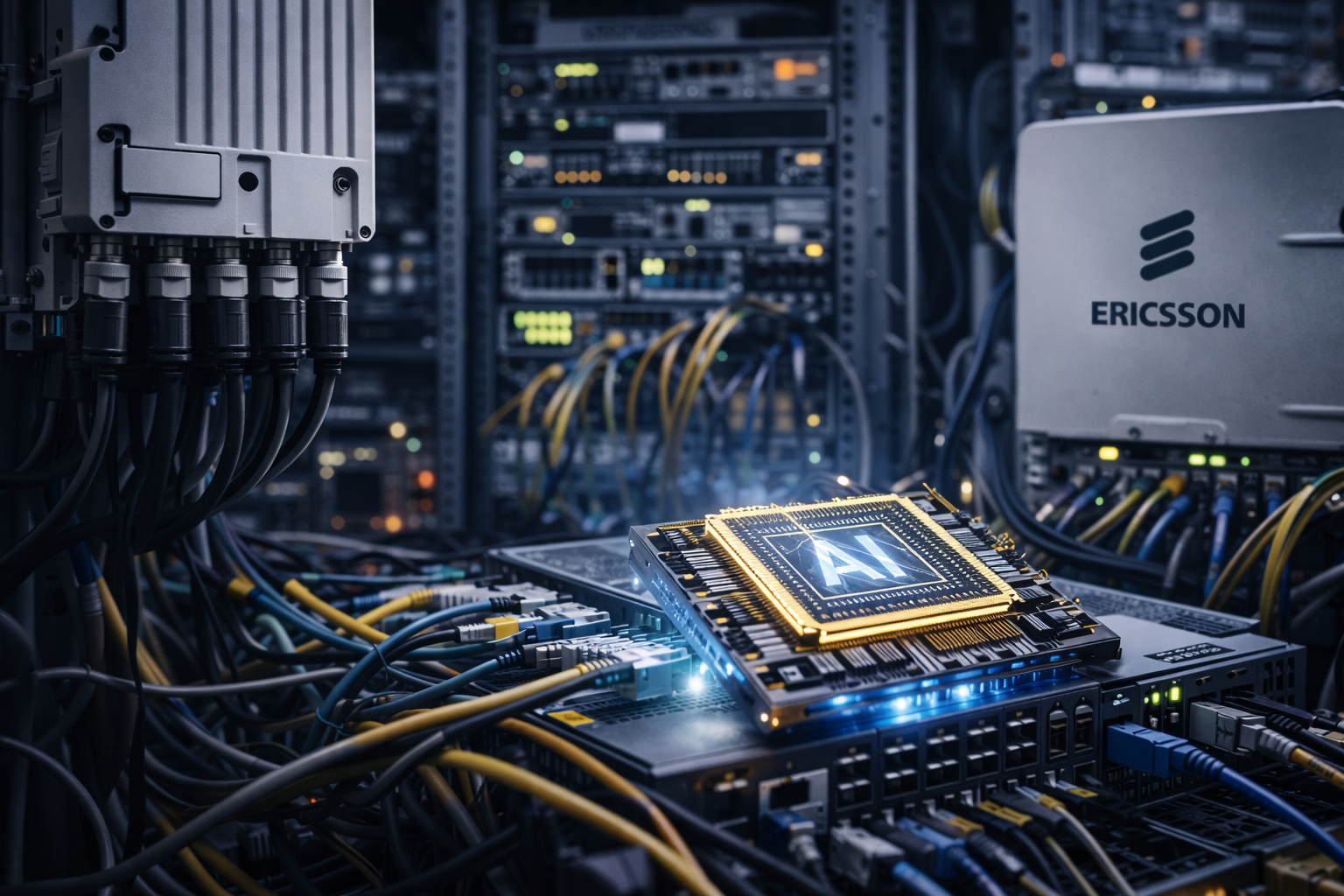
The artificial intelligence boom has been one of the strongest tailwinds for global technology markets—but a new phase is beginning to take shape. What was once a story dominated by explosive growth and limitless demand is now evolving into a more complex reality: rising costs, margin pressure, and supply chain constraints.
That shift came into sharp focus following results from Ericsson, which reported weaker-than-expected earnings and flagged increasing semiconductor costs tied to AI demand. For investors, this is more than an isolated earnings miss—it’s a signal that the AI trade is entering a more mature, cost-sensitive phase.
The AI Boom Meets Cost Reality
According to Reuters (April 17, 2026), telecom and networking firms are facing a surge in input costs as demand for AI infrastructure drives up semiconductor prices. Chips used in high-performance computing, networking, and data transmission are becoming more expensive due to limited supply and intense competition from hyperscalers and AI developers.
This dynamic is reshaping the economics of the sector.
Companies that build and operate the backbone of the digital economy—telecom providers, network equipment manufacturers, and infrastructure firms—are now being squeezed between rising costs upstream and pricing resistance downstream.
In Ericsson’s case, the company not only cited cost pressures but also pointed to slowing North American sales, compounding the challenge. The combination of higher input costs and softer demand creates a difficult environment for maintaining margins.
Why This Matters for Investors
The key takeaway is simple but critical: AI is no longer a pure margin expansion story.
In the early stages of the AI boom, markets rewarded companies for exposure—those investing in infrastructure, chips, and cloud capacity saw significant valuation gains. Now, the focus is shifting toward who can sustain profitability in a higher-cost environment.
This shift introduces several important considerations:
- Margin Compression Risk: Rising chip and component costs can erode profitability for infrastructure providers.
- Pricing Power Becomes Critical: Companies that can pass costs onto customers will outperform those that cannot.
- Demand Elasticity: Slowing sales in key regions suggest that customers may be pushing back on higher prices.
For investors, this means moving beyond broad AI narratives and focusing on financial resilience and competitive positioning.
The Semiconductor Bottleneck
At the core of this issue is the semiconductor supply chain.
Demand for advanced chips—particularly those used in AI workloads—has surged dramatically over the past year. This has placed enormous pressure on manufacturers such as NVIDIA and Taiwan Semiconductor Manufacturing Company, which are racing to expand capacity.
However, semiconductor production is not easily scalable. It requires:
- Multi-billion-dollar fabrication facilities
- Advanced manufacturing processes
- Long lead times for expansion
As a result, supply remains constrained even as demand accelerates.
Reports from Bloomberg Intelligence and McKinsey have consistently highlighted that chip shortages and pricing pressures are likely to persist in the near term, particularly for high-end AI components.
This creates a clear divide in the market:
- Upstream players (chipmakers) benefit from strong pricing power
- Downstream players (telecom, networking firms) face rising costs
Telecom and Network Providers: Caught in the Middle
Telecom and network infrastructure companies occupy a challenging position in the AI value chain.
They are essential to enabling AI—providing the connectivity and infrastructure required to move and process massive amounts of data. Yet they do not always have the same pricing power as chipmakers or hyperscalers.
This creates a margin squeeze:
- Costs increase due to expensive semiconductors
- Customers resist higher prices, especially in competitive markets
- Revenue growth slows in key regions like North America
For companies like Ericsson, this combination is particularly difficult. The firm must continue investing in next-generation infrastructure while managing cost pressures and maintaining competitiveness.
Other players in the ecosystem, including Cisco Systems, may face similar dynamics, depending on their exposure to AI-driven demand and their ability to manage costs.
The Pricing Power Divide
One of the most important themes emerging from this shift is the pricing power divide across the tech ecosystem.
Not all companies are equally positioned to handle rising costs.
Strong Pricing Power:
- Leading chipmakers
- Hyperscale cloud providers
- Dominant platform companies
Limited Pricing Power:
- Telecom operators
- Mid-tier infrastructure providers
- Highly competitive hardware segments
This divide will likely shape performance across the sector in the coming quarters.
Companies with strong pricing power can maintain margins and continue investing aggressively in AI. Those without it may be forced to cut costs, delay investments, or accept lower profitability.
Macro Headwinds Add Pressure
Beyond the supply chain, broader macroeconomic conditions are also playing a role.
Slowing growth in North America—highlighted in Ericsson’s latest results—suggests that enterprise spending may be moderating. This could be due to:
- Higher interest rates impacting capital expenditure
- Budget constraints among corporate customers
- A more cautious investment environment
At the same time, global competition and geopolitical dynamics continue to influence supply chains and pricing.
For example, export controls, trade policies, and regional manufacturing strategies can all impact the availability and cost of critical components.
Future Trends to Watch
As the AI infrastructure market evolves, several key trends are likely to define the next phase:
1. Vertical Integration
Major tech companies are increasingly developing their own chips and infrastructure to reduce reliance on external suppliers.
2. Supply Chain Diversification
Efforts to localize semiconductor production in North America and Europe could reshape cost dynamics over time.
3. AI Pricing Models
Rising costs may lead to new pricing structures for AI services, affecting adoption and revenue growth.
4. Consolidation in Infrastructure
Smaller players may struggle to compete, leading to mergers and acquisitions within the sector.
5. Energy and Efficiency Focus
As AI workloads grow, companies will prioritize energy-efficient solutions to manage operating costs.
Actionable Investment Insights
For investors navigating this environment, the key is to identify where value is being created—and where it is being squeezed.
Here are several strategic takeaways:
- Favor upstream beneficiaries: Semiconductor companies remain well-positioned due to strong demand and pricing power.
- Evaluate pricing power carefully: Not all AI-related companies can pass on higher costs—this will be a key differentiator.
- Monitor margins, not just revenue: Earnings quality will become increasingly important in this phase of the cycle.
- Look for infrastructure innovation: Companies that improve efficiency or reduce costs could gain a competitive edge.
- Stay alert to macro signals: Slowing demand in key markets could amplify existing pressures.
The broader message is clear: AI exposure alone is no longer enough—execution and cost management now matter just as much.
The Bigger Picture: From Growth to Discipline
The evolution of the AI market is following a familiar pattern.
Early stages are characterized by rapid growth and investor enthusiasm. Over time, as the market matures, attention shifts toward profitability, efficiency, and sustainability.
That transition is now underway.
The companies that succeed in this phase will be those that can:
- Navigate supply chain challenges
- Maintain pricing power
- Balance growth with cost discipline
For investors, this marks a shift from chasing momentum to analyzing fundamentals.
Stay Ahead of the AI Infrastructure Curve
As rising chip costs ripple through telecom and network providers, the AI investment landscape is becoming more complex—and more selective.
Stay informed with MoneyNews.Today for daily, high-impact insights that help you identify where the real opportunities lie as technology markets evolve.




