
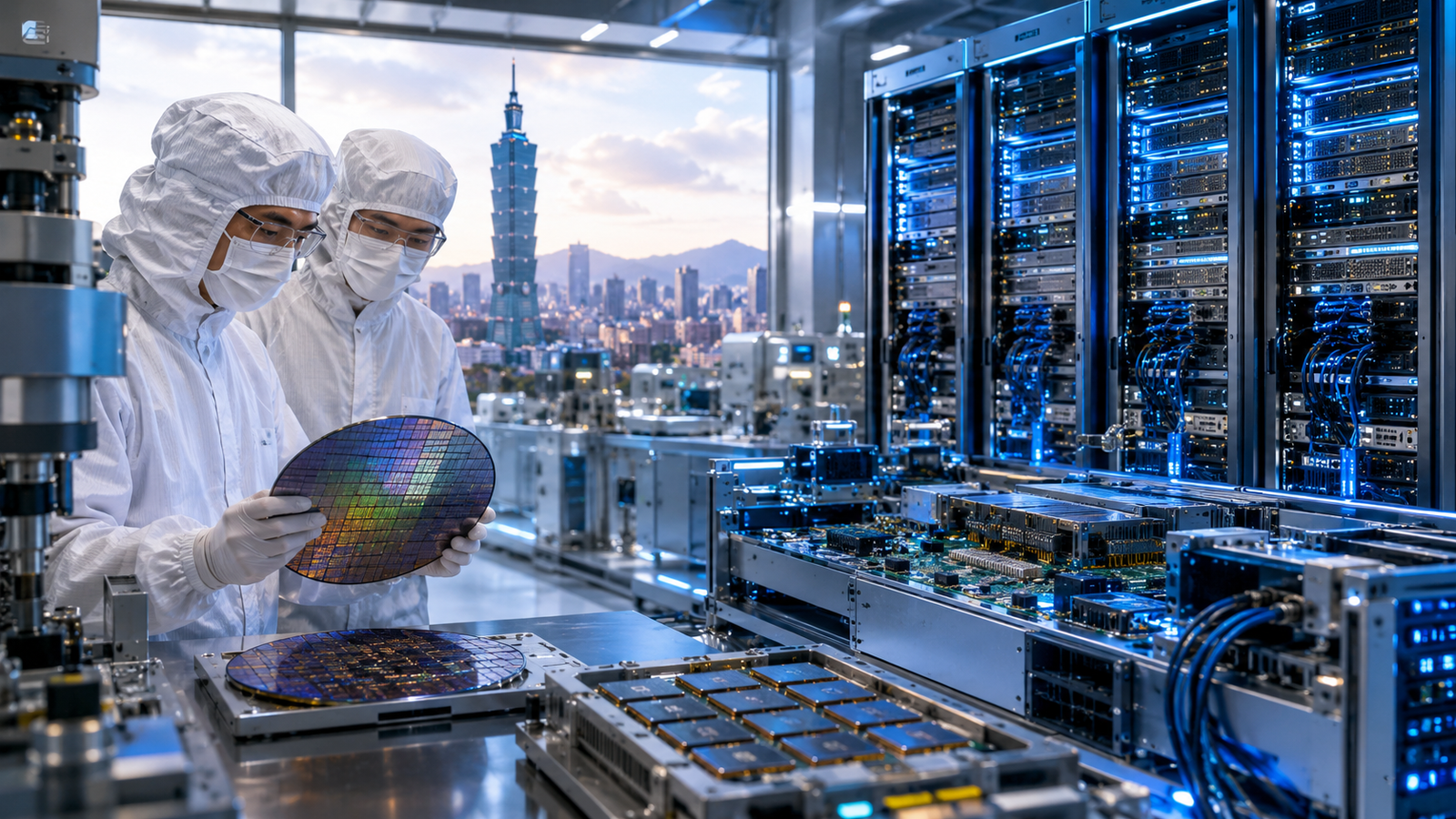
A new phase of the artificial intelligence boom is taking shape—not in software breakthroughs, but in the physical infrastructure required to power them.
Ahead of Computex 2026, Nvidia CEO Jensen Huang signaled that the company could spend up to $150 billion annually in Taiwan, reinforcing the country’s central role in global AI infrastructure. The statement, reported by Reuters and widely discussed across industry coverage tied to Computex, underscores just how capital-intensive the AI revolution has become.
While investors have largely focused on AI software platforms and semiconductor design leaders over the past two years, Nvidia’s comments highlight a deeper reality: the AI cycle is now being driven by massive, sustained infrastructure spending across the entire supply chain—from chip fabrication to memory systems, networking, cooling, and energy infrastructure.
For investors, this is no longer just an Nvidia story. It is a signal that the AI investment cycle is still in its expansion phase, with second-order beneficiaries increasingly coming into focus.
Taiwan’s Strategic Role in the Global AI Supply Chain
Taiwan has long been a critical hub for global semiconductor manufacturing, but its importance has grown dramatically in the AI era.
The island is home to some of the world’s most advanced chip manufacturing capabilities, including cutting-edge fabrication processes and high-density packaging technologies that are essential for AI processors. As AI models become more complex, demand for advanced chip production has surged, strengthening Taiwan’s position as the center of global semiconductor infrastructure.
Nvidia’s potential $150 billion annual spending projection reflects this reality. It signals continued reliance on Taiwan-based manufacturing ecosystems for advanced GPUs, AI accelerators, and high-performance computing components.
According to Reuters reporting tied to Computex 2026 discussions, the scale of AI-related capital expenditure is now reaching levels comparable to the largest industrial buildouts in modern history.
This is not a short-term investment cycle. It is a multi-year structural transformation of global computing infrastructure.
Why This Matters for Investors
The significance of Nvidia’s announcement extends far beyond a single company’s capital expenditure plans.
It reinforces three key themes shaping global markets:
1. AI Infrastructure Spending Is Still Accelerating
One of the biggest debates in financial markets has been whether AI investment is peaking or still expanding.
Nvidia’s Taiwan-focused spending outlook suggests the latter.
Massive investments are continuing across:
- Semiconductor fabrication capacity
- AI server manufacturing
- High-bandwidth memory production
- Data-center construction
- Advanced networking systems
Industry research from firms such as McKinsey and IDC has consistently projected multi-year double-digit growth in AI infrastructure spending. Nvidia’s latest signal aligns with those forecasts, indicating that demand for AI computing power remains structurally strong.
2. The AI Supply Chain Is Becoming More Capital Intensive
AI development is no longer driven primarily by software innovation alone.
The underlying infrastructure required to train and deploy large-scale models has become increasingly complex and expensive. Each new generation of AI systems requires:
- More advanced GPUs and accelerators
- Greater memory bandwidth (HBM and DRAM)
- Faster interconnects and networking systems
- Higher energy consumption and cooling capacity
As a result, capital expenditure across the semiconductor ecosystem is rising sharply.
This creates a multiplier effect across the entire supply chain, benefiting not only chip designers like Nvidia but also manufacturers, component suppliers, and infrastructure providers.
3. Geographic Concentration Risk Is Becoming a Market Factor
Taiwan’s central role in AI infrastructure also introduces geopolitical considerations into investment analysis.
The concentration of advanced semiconductor manufacturing in a single region has long been recognized as a strategic vulnerability by governments and corporations. As AI demand accelerates, so too does the importance of supply chain resilience.
This dynamic is driving:
- Government incentives for domestic chip production in the U.S. and Europe
- Diversification of advanced manufacturing capacity
- Increased investment in alternative semiconductor ecosystems
For investors, this creates both risk and opportunity as capital flows shift toward supply chain diversification.
The Second-Order Winners of the AI Boom
Perhaps the most important implication of Nvidia’s spending outlook is the continued expansion of second-order AI beneficiaries.
While Nvidia remains a central player in AI chip design, the broader ecosystem is becoming increasingly important for investors seeking diversified exposure to the AI theme.
Semiconductor Manufacturers
Advanced chip fabrication companies are among the most direct beneficiaries of increased AI hardware demand. As AI chips become more complex, manufacturing requirements intensify, supporting long-term demand for high-end fabrication capabilities.
Memory Chip Producers
High-bandwidth memory (HBM) has become a critical bottleneck in AI performance. Demand for memory bandwidth is rising rapidly, making memory manufacturers key beneficiaries of the AI infrastructure cycle.
Networking and Interconnect Companies
AI workloads require massive data movement between systems. This is driving demand for high-speed networking equipment, optical interconnects, and data-center communication systems.
Power and Energy Infrastructure Providers
AI data centers consume significant electricity. Power generation, grid infrastructure, and energy efficiency technologies are becoming increasingly important components of the AI supply chain.
Cooling and Thermal Management Systems
As computing density increases, cooling systems have become essential for maintaining performance and reliability in AI data centers.
Data Center Operators
The expansion of AI workloads continues to drive global data center construction, benefiting companies involved in infrastructure development, leasing, and operations.
Future Trends to Watch
Several key developments will shape the next phase of the AI infrastructure cycle:
Continued Capital Expenditure Growth
Major technology companies are expected to maintain or increase AI-related capital spending, reinforcing demand across semiconductor and infrastructure sectors.
Expansion of High-Bandwidth Memory Production
Supply constraints in HBM are expected to remain a key factor influencing pricing and profitability in the memory market.
Government-Led Semiconductor Investment
National governments continue to prioritize semiconductor independence, potentially accelerating regional diversification of AI manufacturing capacity.
AI Model Scaling Requirements
Next-generation AI models are expected to require significantly more compute, memory, and energy resources, further increasing infrastructure demand.
Taiwan’s Strategic Importance
Taiwan’s role in global semiconductor production will remain central, but investors should monitor diversification efforts in the U.S., Japan, and Europe.
Key Investment Insight
Nvidia’s $150 billion Taiwan AI infrastructure outlook is not just a headline about one company—it is a confirmation that the AI investment cycle remains in a capital-intensive expansion phase.
Rather than slowing, AI-related spending is broadening across the entire technology ecosystem. This includes semiconductors, memory chips, networking systems, cooling technologies, power infrastructure, and data-center expansion.
For investors, the most important takeaway is that AI is evolving from a software-driven narrative into a full-scale industrial buildout.
The next wave of opportunities may increasingly come from second-order beneficiaries across the supply chain rather than only the most visible AI leaders.
As capital continues to flow into global AI infrastructure at unprecedented levels, companies positioned within the supporting ecosystem may define the next phase of technology-driven market growth.
Stay updated with MoneyNews.Today for daily investor insights, market analysis, and coverage of the trends shaping the future of global investing.




