
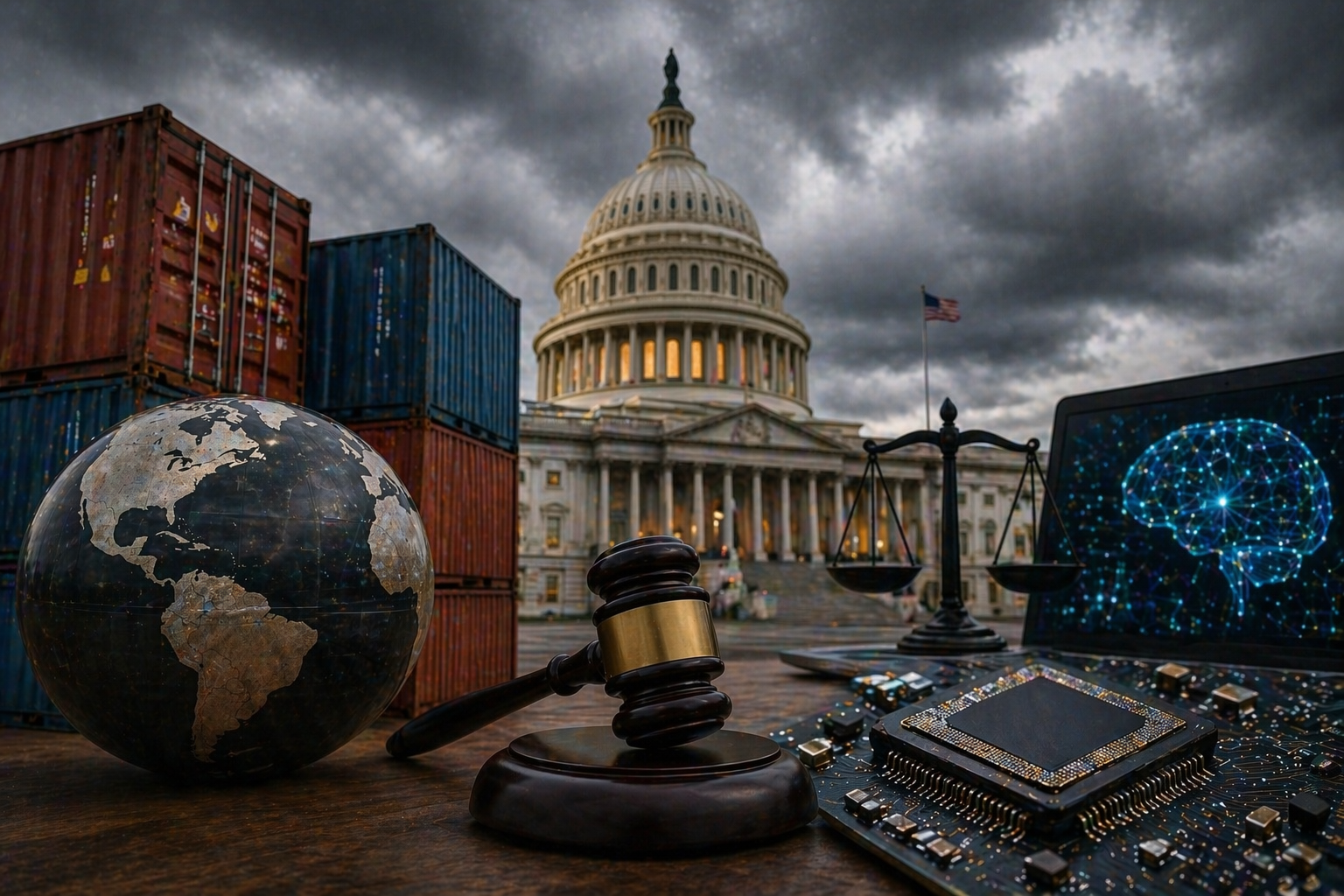
Markets can handle bad news. What they struggle with is uncertainty—and right now, Washington is delivering plenty of it.
From evolving tariff discussions to intensifying debates around artificial intelligence regulation, U.S. policy signals are becoming increasingly difficult for investors to interpret. The result is a market environment where confidence is tempered, positioning is cautious, and volatility is beginning to reprice.
According to Reuters and The Washington Post (April 24, 2026), multinational corporations and investors alike are navigating a complex policy landscape shaped by trade tensions, national security concerns, and the growing influence of AI on the global economy. With key legislative decisions looming, markets are entering a phase where policy risk is once again a primary driver of asset prices.
For investors, this is not just background noise—it’s a critical variable shaping capital allocation decisions.
Policy Is Back at the Center of Market Dynamics
After a period dominated by monetary policy and inflation, fiscal and regulatory developments are regaining influence.
The Shift From Rates to Regulation
Over the past two years, markets have been primarily focused on:
- Central bank rate decisions
- Inflation trends
- Economic growth indicators
Now, attention is shifting toward:
- Trade policy adjustments
- Technology regulation frameworks
- National security-driven economic policies
This transition is significant because policy decisions tend to:
- Have long-lasting structural impacts
- Affect entire industries simultaneously
- Introduce binary outcomes (approval vs. restriction)
As Reuters highlights, markets are increasingly reacting to headlines out of Washington, not just economic data releases.
Trade Policy: A Renewed Source of Tension
Trade policy is once again emerging as a key source of uncertainty for global markets.
Tariffs and Supply Chains
Ongoing discussions around tariffs—particularly involving strategic industries such as technology, manufacturing, and energy—are creating challenges for multinational companies.
Key concerns include:
- Potential increases in import/export costs
- Disruptions to global supply chains
- Retaliatory measures from trading partners
The Washington Post notes that companies with significant international exposure are particularly sensitive to these developments, as even minor policy changes can have outsized financial impacts.
Strategic Decoupling
Beyond tariffs, there is a broader trend toward economic decoupling, particularly in critical sectors like semiconductors and AI.
This includes:
- Restrictions on technology exports
- Incentives for domestic manufacturing
- Increased scrutiny of cross-border investments
While these policies aim to strengthen national resilience, they also introduce complexity and cost for businesses operating globally.
AI Regulation: The Next Frontier
Artificial intelligence is not just a technological revolution—it’s becoming a regulatory battleground.
Why AI Is Under Scrutiny
Governments are increasingly focused on:
- Data privacy and security
- Ethical use of AI systems
- National security implications
- Market concentration among large tech firms
As AI adoption accelerates, policymakers are working to establish frameworks that balance innovation with oversight.
Market Implications
For investors, AI regulation presents both risks and opportunities:
- Compliance costs could impact margins for tech companies
- Regulatory clarity could unlock new investment flows
- Restrictions could reshape competitive dynamics
Reuters reports that uncertainty around the scope and timing of AI regulation is causing investors to adopt a more cautious stance toward high-growth tech stocks.
Why This Matters for Investors
Policy uncertainty is not inherently negative—but it does require a different investment approach.
Key Implications:
1. Volatility Is Increasing
Markets are reacting more sharply to policy-related news, leading to short-term price swings.
2. Sector Sensitivity Is Diverging
Not all sectors are equally affected—some are more exposed to policy risk than others.
3. Long-Term Planning Becomes More Complex
Companies may delay investment decisions due to uncertainty, impacting growth trajectories.
4. Risk Premiums Are Rising
Investors are demanding higher returns to compensate for increased uncertainty.
Sector Impact: Winners and Losers
Policy developments are creating clear distinctions between sectors.
Technology
Tech companies—particularly those involved in AI, semiconductors, and data—are at the center of regulatory discussions.
Risks include:
- Increased compliance requirements
- Potential restrictions on operations
- Antitrust scrutiny
However, regulatory clarity could ultimately benefit the sector by reducing uncertainty.
Industrials
Industrial companies are highly sensitive to trade policy, particularly tariffs and supply chain disruptions.
Opportunities may arise from:
- Domestic manufacturing incentives
- Infrastructure spending initiatives
Energy
Energy markets are influenced by both trade policy and regulatory frameworks.
Key factors include:
- Export restrictions
- Environmental regulations
- Geopolitical dynamics
Corporate Strategy Is Already Shifting
In response to policy uncertainty, companies are adjusting their strategies.
Key Trends:
Supply Chain Diversification
Businesses are reducing reliance on single regions or suppliers to mitigate risk.
Increased Domestic Investment
Companies are investing more in domestic production to align with policy incentives.
Regulatory Engagement
Firms are actively engaging with policymakers to shape regulatory outcomes.
These shifts are not just reactive—they are reshaping the global business landscape.
Future Trends to Watch
As policy debates evolve, several key trends will be critical for investors:
Legislative Outcomes
The specifics of upcoming policy decisions will determine market direction.
Global Coordination (or Lack Thereof)
Differences in regulatory approaches across countries could create opportunities and challenges.
Corporate Adaptation
How effectively companies adjust to new policies will influence their performance.
Market Repricing
As uncertainty resolves, markets may reprice assets based on new realities.
The Risk of Policy-Driven Market Moves
One of the defining features of the current environment is the potential for sudden, policy-driven market shifts.
Unlike economic data, which tends to evolve gradually, policy decisions can:
- Be announced unexpectedly
- Have immediate market impact
- Trigger sector-wide movements
This creates a need for greater vigilance and flexibility in portfolio management.
Key Investment Insight
Policy risk is no longer a secondary consideration—it’s a core investment factor.
For investors, the focus should be on:
- Identifying sectors most exposed to regulatory changes
- Diversifying across industries to mitigate concentration risk
- Monitoring policy developments as closely as economic indicators
- Positioning portfolios to benefit from both risks and opportunities
In particular, sectors such as technology, industrials, and energy require careful analysis, as they are directly influenced by policy decisions.
Hedging strategies and flexible asset allocation can help navigate this environment.
The Bigger Picture
The intersection of politics and markets is nothing new—but the current moment represents a shift in intensity and scope.
As governments take a more active role in shaping economic outcomes, investors must adapt to a landscape where policy decisions are as important as earnings reports.
This doesn’t make markets less attractive—but it does make them more complex.
Understanding the nuances of policy developments—and their impact on different sectors—will be essential for generating consistent returns.
Stay informed on the forces shaping global markets and gain a strategic edge with MoneyNews.Today, your trusted source for daily investor insights.




