
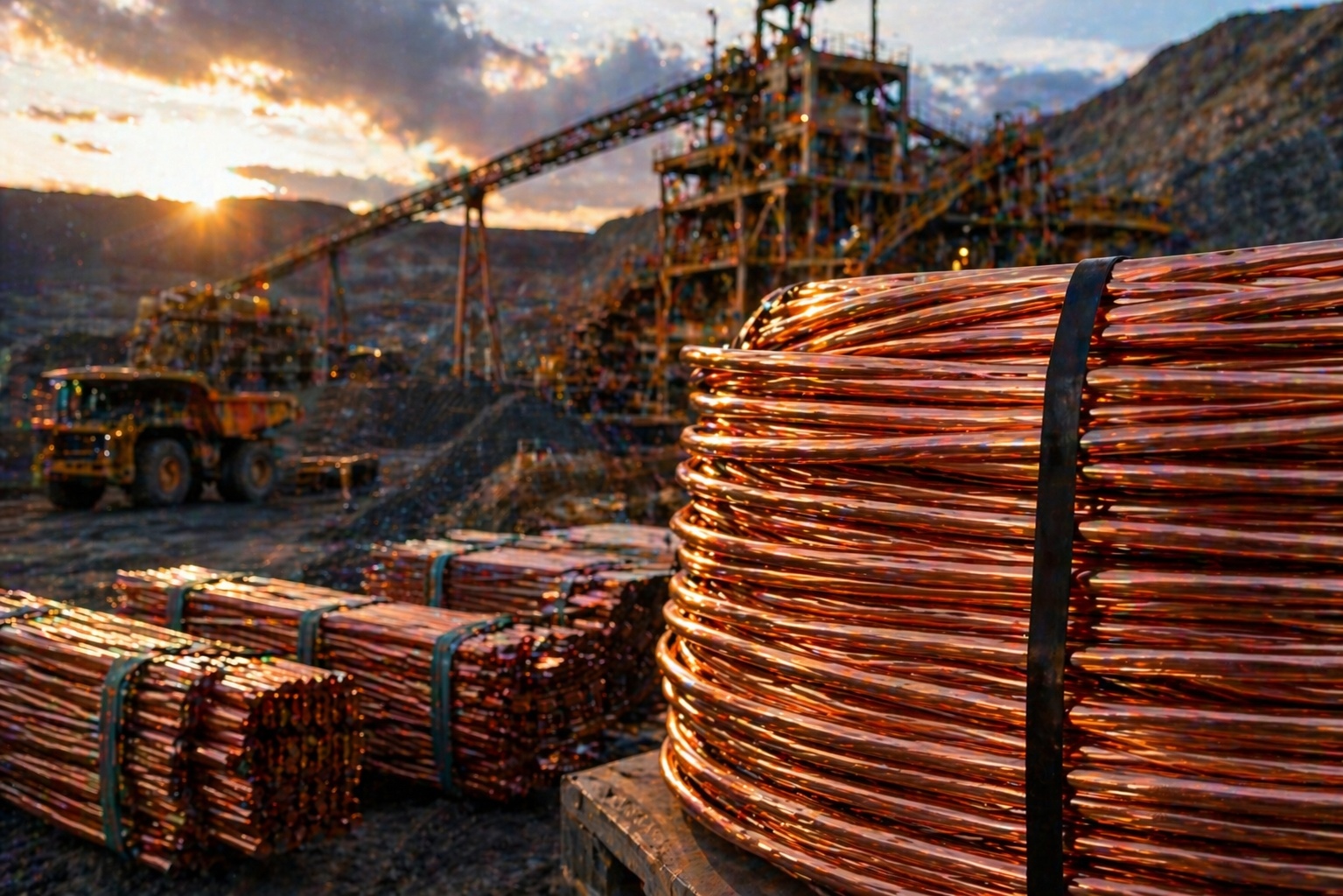
Copper is quietly becoming one of the most important battlegrounds in the global economy—and investors are starting to take notice.
While headlines often focus on AI, tech stocks, or cryptocurrencies, a parallel story is unfolding in the commodities market. Copper, long considered a bellwether for economic activity, is now at the center of a structural demand surge driven by electrification, renewable energy, and infrastructure expansion.
According to recent reports from Bloomberg and Mining.com (April 24, 2026), copper prices are trending upward as supply struggles to keep pace with accelerating demand. The imbalance is not temporary—it reflects a deeper shift in how the global economy is being rebuilt.
For investors, this is more than a cyclical upswing. It’s a long-term supply-demand mismatch with significant implications.
Electrification Is Driving a Structural Demand Boom
The global transition toward electrification is fundamentally reshaping copper demand.
Unlike previous commodity cycles driven by construction or industrial activity, today’s demand is tied to multi-decade megatrends, including:
- Electric vehicles (EVs)
- Renewable energy systems (solar, wind)
- Power grid modernization
- Data center expansion
Why Copper Is Essential
Copper’s unique properties—high conductivity, durability, and efficiency—make it indispensable in electrical systems.
Key applications include:
- EV batteries and wiring systems
- Wind turbines and solar installations
- Transmission and distribution infrastructure
- Charging networks and energy storage systems
Bloomberg estimates that an electric vehicle requires up to four times more copper than a traditional internal combustion engine vehicle. Meanwhile, renewable energy systems are significantly more copper-intensive than fossil fuel-based infrastructure.
The result is a surge in demand that is both broad-based and sustained.
Supply Constraints Are Becoming Structural
While demand is accelerating, supply is struggling to keep up—and that’s where the investment story becomes compelling.
Why Supply Growth Is Limited
Several structural challenges are limiting copper production:
Declining Ore Grades
Existing mines are producing lower-quality ore, requiring more effort and cost to extract the same amount of copper.
Long Development Timelines
Bringing a new copper mine online can take 10–15 years, from discovery to production.
Regulatory and Environmental Hurdles
Mining projects face increasing scrutiny, particularly in regions with strict environmental regulations.
Geopolitical Risks
Many of the world’s largest copper reserves are located in politically sensitive regions, adding uncertainty to supply chains.
According to Mining.com, these factors are creating a scenario where new supply is not being developed fast enough to meet future demand.
Pricing Power Is Returning to the Sector
The imbalance between supply and demand is already translating into higher copper prices—and potentially stronger margins for producers.
A Shift in Market Dynamics
In previous cycles, rising prices often led to rapid supply increases, eventually stabilizing the market. This time, the dynamics are different:
- Supply constraints are more persistent
- Capital discipline among mining companies has increased
- Investors are demanding higher returns before funding new projects
This creates a more favorable environment for pricing power.
Bloomberg reports that copper prices are approaching levels that reflect not just current demand, but expectations of future shortages.
Why This Matters for Investors
Copper’s current trajectory has significant implications across multiple asset classes and sectors.
Key Implications:
1. Copper as a “Future Metal”
Copper is no longer just an industrial commodity—it’s a critical enabler of the energy transition and digital economy.
2. Long-Term Demand Visibility
Unlike traditional commodity cycles, demand for copper is supported by structural trends that are unlikely to reverse.
3. Supply Constraints Support Valuations
Limited supply growth enhances pricing power and supports higher valuations for producers.
4. Broader Market Impact
Rising copper prices can influence inflation, industrial costs, and even monetary policy decisions.
The Mining Sector: A Revaluation Opportunity
The evolving copper narrative is leading to a reassessment of mining companies.
Historically, the sector has been viewed as:
- Cyclical
- Capital-intensive
- Highly sensitive to commodity price swings
But the current environment is changing that perception.
A Shift Toward Quality and Discipline
Investors are increasingly favoring:
- Low-cost producers with efficient operations
- Companies with long-life assets and stable production profiles
- Firms demonstrating capital discipline and shareholder returns
This shift is leading to a re-rating of select mining stocks, particularly those with strong exposure to copper.
Exploration Firms Are Back in Focus
One of the most interesting developments in the copper market is the renewed interest in exploration companies.
As supply constraints intensify, the value of undeveloped resources is rising.
Why Exploration Matters
Exploration firms offer:
- Exposure to potential new discoveries
- Leverage to rising copper prices
- Strategic value as acquisition targets for larger mining companies
However, they also come with higher risk, including:
- Uncertain project outcomes
- Long timelines to production
- Financing challenges
For investors, this creates a high-risk, high-reward segment within the broader copper investment landscape.
Future Trends to Watch
As the copper market evolves, several key trends will shape its trajectory:
Increased Investment in Mining Projects
Rising prices may eventually incentivize new project development—but timelines remain long.
Technological Innovation
Advancements in mining technology could improve efficiency and reduce costs.
Recycling and Substitution
Efforts to recycle copper and develop alternative materials may partially offset demand—but are unlikely to fully close the gap.
Policy and Regulation
Government policies related to energy transition and mining regulations will play a critical role in shaping supply dynamics.
The Risk Factor: What Could Disrupt the Bull Case?
While the long-term outlook for copper is strong, investors should remain aware of potential risks:
Global Economic Slowdown
A significant downturn could reduce industrial demand for copper in the short term.
Demand Substitution
Technological advancements could reduce reliance on copper in certain applications.
Unexpected Supply Increases
New discoveries or accelerated project approvals could ease supply constraints.
Commodity Market Volatility
Copper prices can still be influenced by broader market dynamics, including currency movements and speculative trading.
Key Investment Insight
Copper’s investment case is no longer just about cyclical recovery—it’s about structural scarcity in a rapidly electrifying world.
For investors, the opportunity lies in identifying:
- Low-cost producers with strong balance sheets
- Companies with scalable reserves and long-term production visibility
- Exploration firms with high-quality assets and strategic positioning
- Businesses that can benefit from sustained pricing power
At the same time, diversification remains essential. While copper offers compelling upside, it should be part of a broader portfolio strategy.
The Bigger Picture
The global economy is undergoing a transformation—and copper sits at the center of it.
From powering electric vehicles to enabling renewable energy systems and supporting digital infrastructure, copper is becoming one of the most strategically important commodities of the 21st century.
For investors, this represents a rare opportunity: exposure to a long-term structural trend supported by both economic and environmental forces.
But as with any opportunity, success will depend on careful analysis, disciplined positioning, and a clear understanding of the risks.
Stay ahead of the trends shaping global markets and uncover actionable investment insights with MoneyNews.Today, your trusted source for daily investor intelligence.




