
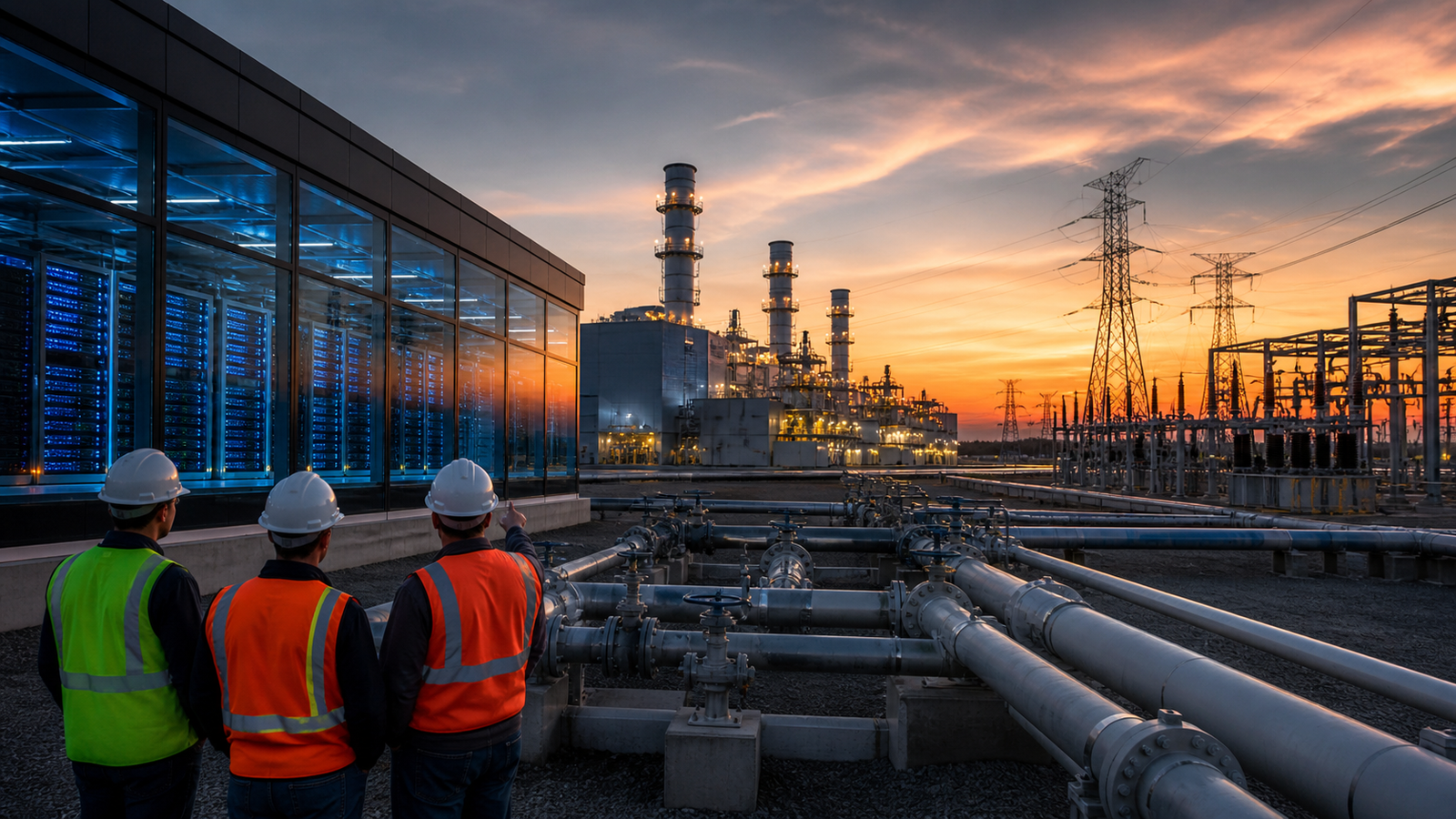
The artificial intelligence revolution is entering a new phase—and it’s not happening in Silicon Valley alone. As investors continue to focus on chips, cloud, and software, a quieter but equally powerful trend is gaining momentum: the surge in energy infrastructure required to support AI and data centers.
On May 1, 2026, reporting from Reuters highlighted a critical development in this shift. TC Energy has approved a $1.5 billion expansion of its natural gas pipeline network, backed by long-term contracts aimed at supplying power generation tied to AI systems and data centers.
This is more than a regional infrastructure project—it is a signal that the next phase of the digital economy will be defined not just by algorithms and compute, but by energy capacity, reliability, and scale. For investors, this marks a pivotal opportunity to reposition portfolios around what could become one of the most durable themes of the decade: energy for AI.
The Hidden Engine Behind the AI Boom
The rapid expansion of artificial intelligence has created unprecedented demand for computational power. Training large-scale models and running hyperscale data centers require vast amounts of electricity—often on a continuous, 24/7 basis.
According to estimates from organizations like the International Energy Agency (IEA) and consulting firms such as McKinsey, global electricity demand from data centers could rise sharply over the next decade, driven largely by AI workloads. Some projections suggest that AI-related power consumption alone could rival that of entire mid-sized countries.
This surge in demand is forcing a rethink of energy infrastructure.
While renewable energy continues to grow, it is not yet capable of providing the consistent baseload power required by large-scale AI operations. This is where natural gas comes into play. It offers a relatively flexible, scalable, and reliable energy source—making it a critical bridge in powering the AI economy.
The decision by TC Energy to expand its pipeline capacity reflects this reality. Backed by long-term contracts, the project ensures a steady supply of natural gas for power generation, directly supporting the needs of data centers and digital infrastructure.
Why This Matters for Investors
1. AI Is Driving a New Energy Supercycle
The AI narrative has largely been centered around technology companies—semiconductors, cloud providers, and software platforms. However, the underlying driver of all these innovations is energy.
Without sufficient power, AI cannot scale.
This is creating what many analysts are beginning to describe as a new energy supercycle, where demand growth is driven not by traditional industrial expansion, but by digital infrastructure.
For investors, this represents a shift in where value is being created. The winners of the AI era will not be limited to tech companies—they will also include energy producers, pipeline operators, and utilities.
2. Long-Term Contracts Provide Revenue Visibility
One of the most attractive aspects of infrastructure investments is their predictability. The pipeline expansion by TC Energy is backed by long-term contracts, which provide stable and recurring revenue streams.
This stands in contrast to the volatility often associated with technology stocks.
For institutional investors and income-focused portfolios, this combination of growth exposure and cash flow stability is particularly compelling. It allows participation in the AI boom without taking on the full risk of high-valuation tech equities.
3. The Rise of “Energy as a Service” for Tech
As data centers and AI systems scale, energy is becoming a strategic input rather than a commodity. This is giving rise to a model where energy providers effectively act as partners to technology companies.
In this framework:
- Data centers secure long-term energy supply agreements
- Energy companies invest in dedicated infrastructure
- Both sides benefit from predictable demand and pricing
This evolving relationship is blurring the lines between traditional industries and technology, creating new opportunities for collaboration—and investment.
The Expanding Opportunity Set
Pipeline Operators and Midstream Companies
Midstream energy companies, which focus on transportation and storage, are emerging as key beneficiaries of this trend. Their role in connecting supply with demand makes them indispensable in a world where energy needs are rapidly evolving.
TC Energy is just one example, but the broader sector includes numerous players positioned to capitalize on increased throughput and infrastructure expansion.
LNG and Global Energy Trade
Liquefied natural gas (LNG) is another critical component of the equation. As demand for power grows globally, LNG exports are expected to increase, linking regional energy markets with global supply chains.
This creates opportunities for companies involved in:
- LNG production and export
- Shipping and logistics
- Regasification and distribution
For investors, LNG represents a way to gain exposure to the global dimension of the AI-driven energy boom.
Utilities and Power Generation
Electric utilities are at the front lines of this transformation. As data centers expand, utilities must scale generation capacity, upgrade grids, and ensure reliability.
This could lead to:
- Increased capital expenditure
- Regulatory support for infrastructure investment
- Higher long-term demand growth
Utilities with strong balance sheets and strategic positioning near data center hubs are particularly well-placed.
Future Trends to Watch
1. Hybrid Energy Models
While natural gas is currently leading the charge, the long-term solution will likely involve a mix of energy sources. Hybrid models combining natural gas, renewables, and energy storage are expected to become more common.
This transition will create opportunities across multiple segments of the energy market.
2. Geographic Clustering of Data Centers
Energy availability is becoming a key factor in determining where data centers are built. Regions with abundant and affordable power are likely to attract more investment.
This could reshape economic development patterns, benefiting certain regions and infrastructure providers.
3. Policy and Regulatory Support
Governments are increasingly recognizing the strategic importance of digital infrastructure. Policies aimed at supporting energy development, streamlining permitting, and encouraging investment could further accelerate growth.
At the same time, environmental considerations will play a significant role, particularly in balancing the use of natural gas with climate goals.
Key Investment Insight
The most important takeaway for investors is this: the next wave of growth in the AI economy will be powered by energy infrastructure.
While semiconductors and software remain critical, they represent only part of the value chain. The physical systems that enable AI—pipelines, power plants, and grids—are becoming equally important.
To capitalize on this trend, investors should consider:
- Energy infrastructure companies: Pipeline operators and midstream firms with exposure to growing demand
- LNG players: Companies positioned to benefit from global energy trade
- Utilities: Firms with strong growth prospects tied to data center expansion
- Diversified portfolios: Combining tech and energy exposure to capture the full AI value chain
This approach provides a more balanced way to participate in the AI boom, capturing both growth and stability.
The intersection of artificial intelligence and energy is reshaping the investment landscape in real time. As infrastructure projects like the one led by TC Energy continue to emerge, the message is clear: the future of AI will be built not just in code, but in pipelines, power plants, and grids.
For investors looking to stay ahead of this transformation, understanding the role of energy is no longer optional—it’s essential.
Stay with MoneyNews.Today for daily insights that connect the biggest trends shaping global markets and uncover the opportunities that matter most to your portfolio.




