
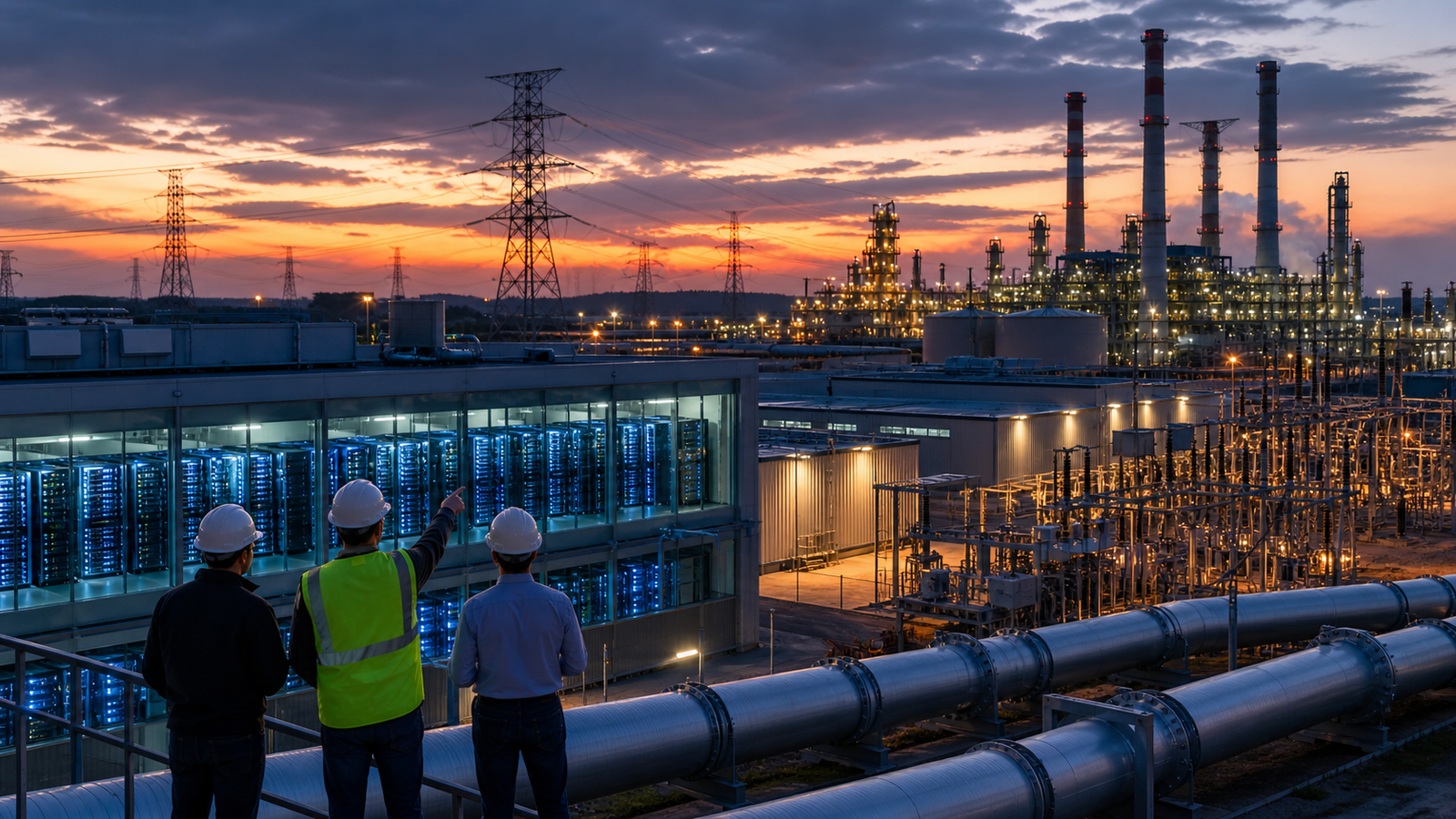
The narrative around crypto has shifted dramatically—and fast. What was once viewed primarily as a speculative digital asset class is now colliding with one of the most critical sectors in the global economy: energy. On May 1, 2026, reporting from Reuters highlighted a powerful emerging trend—soaring electricity demand from AI data centers and crypto mining is accelerating investments in natural gas pipelines and energy infrastructure across North America.
For investors, this is more than a niche development. It signals a structural transformation where crypto and AI are no longer isolated tech plays but deeply intertwined with physical infrastructure, commodities, and power markets. The implications are profound—and potentially lucrative.
The Convergence of AI, Crypto, and Energy
The exponential growth of artificial intelligence has already strained global power systems. Training large-scale AI models and operating hyperscale data centers require immense computational power—and therefore, massive amounts of electricity. At the same time, crypto mining—particularly for assets like Bitcoin—remains one of the most energy-intensive digital activities.
Now, these two forces are converging.
According to Reuters (May 1, 2026), pipeline operators and energy companies are ramping up investments in natural gas infrastructure to meet this surge in demand. Projects that were once justified by industrial or residential growth are now being driven by data centers, AI compute clusters, and crypto mining operations.
One example comes from TC Energy, which recently expanded its natural gas pipeline capacity backed by long-term contracts tied to power generation demand. While not explicitly labeled as “crypto” or “AI” projects, the underlying driver is clear: the digital economy is becoming energy-intensive at an unprecedented scale.
Why This Matters for Investors
1. Crypto Is Becoming an Infrastructure Trade
For years, crypto investing revolved around tokens, exchanges, and blockchain innovation. But this new dynamic introduces a different lens: crypto as an energy consumer.
Mining operations require consistent, low-cost power. As competition intensifies, miners are increasingly seeking access to reliable energy sources—often locking in long-term agreements with utilities and infrastructure providers.
This transforms crypto into an indirect play on energy markets, where profitability depends not just on token prices but on electricity costs and availability.
For investors, this opens up new opportunities beyond traditional crypto exposure.
2. Energy Demand Is Entering a Structural Bull Market
The combination of AI and crypto is creating what analysts are beginning to describe as a “power supercycle.”
Data from institutions like the International Energy Agency (IEA) and consulting firms such as McKinsey suggest that global electricity demand from data centers could double or even triple over the next decade. When crypto mining is added to the equation, the pressure on grids becomes even more intense.
This is why natural gas—often viewed as a transitional energy source—is seeing renewed interest. It offers:
- Reliable baseload power
- Faster deployment compared to renewables
- Lower emissions relative to coal
Companies like TC Energy are positioning themselves to capitalize on this trend, expanding infrastructure to meet future demand.
3. The Rise of “Digital Energy Arbitrage”
One of the more nuanced developments is the concept of digital energy arbitrage—where crypto miners and AI operators locate facilities in regions with the cheapest available power.
This has several implications:
- Increased demand for regional infrastructure upgrades
- Greater volatility in local energy markets
- Opportunities for utilities to monetize excess capacity
It also means that energy infrastructure is no longer just a passive asset class. It is becoming an active participant in the digital economy, with pricing power tied to compute demand.
The Companies and Sectors to Watch
Energy Infrastructure Leaders
Pipeline operators, LNG exporters, and utility companies are emerging as key beneficiaries. Firms like TC Energy are already expanding capacity, but the broader opportunity spans:
- Natural gas pipelines
- Liquefied natural gas (LNG) facilities
- Power generation assets
These companies offer a more stable, income-generating way to gain exposure to the AI and crypto boom.
Power Producers and Utilities
Electricity providers are at the center of this transformation. As demand from data centers and mining operations increases, utilities may benefit from:
- Higher load growth
- Long-term supply contracts
- Infrastructure investment incentives
However, they also face challenges related to grid stability and regulatory scrutiny.
Crypto Mining Firms
Publicly traded mining companies stand to benefit from higher crypto prices, but their margins are increasingly tied to energy costs. Those with access to low-cost, sustainable power will have a competitive advantage.
This makes energy strategy a critical factor in evaluating mining stocks.
Technology and Data Center Operators
While the focus is on energy, the demand originates from tech companies building AI infrastructure. Hyperscalers and data center operators will continue to drive power consumption, indirectly supporting energy sector growth.
Future Trends to Watch
1. Integration of Renewables and Storage
While natural gas is currently leading the charge, the long-term trajectory points toward a mix of energy sources. Renewable energy—combined with battery storage—will play a growing role in powering data centers and mining operations.
This creates opportunities in:
- Solar and wind development
- Energy storage technologies
- Grid modernization
2. Regulatory and Environmental Pressures
The environmental impact of crypto mining has been a contentious issue. As energy consumption rises, governments may introduce stricter regulations on:
- Emissions
- Energy usage
- Location of mining facilities
Investors should monitor policy developments, as they could significantly impact the profitability of both crypto and energy companies.
3. Convergence of AI, Crypto, and Energy Markets
The most important trend is the convergence itself. AI, crypto, and energy are no longer separate sectors—they are becoming part of a single, interconnected ecosystem.
This means that developments in one area can have ripple effects across others. For example:
- A surge in AI demand can drive energy prices higher
- Changes in energy policy can impact crypto mining profitability
- Advances in energy efficiency can reshape the economics of both sectors
Key Investment Insight
The biggest takeaway for investors is this: the crypto story is evolving into an energy and infrastructure story.
Rather than focusing solely on digital assets like Bitcoin, investors should consider a broader strategy that includes:
- Energy producers (natural gas, LNG)
- Infrastructure operators (pipelines, utilities)
- Data center and cloud providers
- Select crypto mining firms with strong energy advantages
This diversified approach allows investors to capture the upside of the digital economy while mitigating some of the volatility associated with crypto markets.
The lines between technology and traditional industries are blurring faster than ever. As AI and crypto continue to reshape global demand for energy, the opportunities—and risks—are expanding beyond Silicon Valley into pipelines, power plants, and infrastructure networks.
For investors looking to stay ahead of the curve, understanding this convergence is no longer optional—it’s essential.
Stay with MoneyNews.Today for daily insights that connect the dots across markets, sectors, and emerging trends shaping the future of investing.




