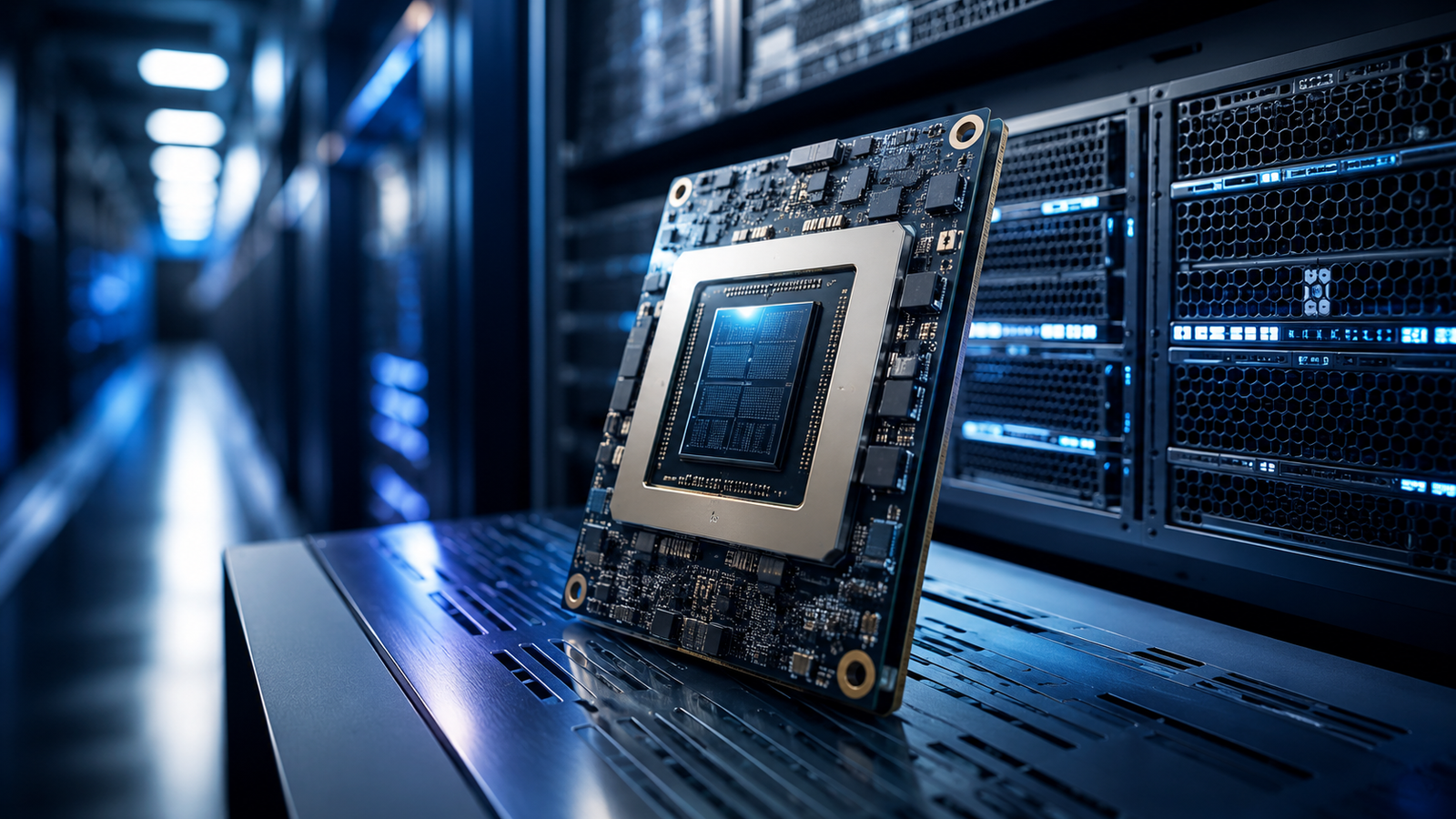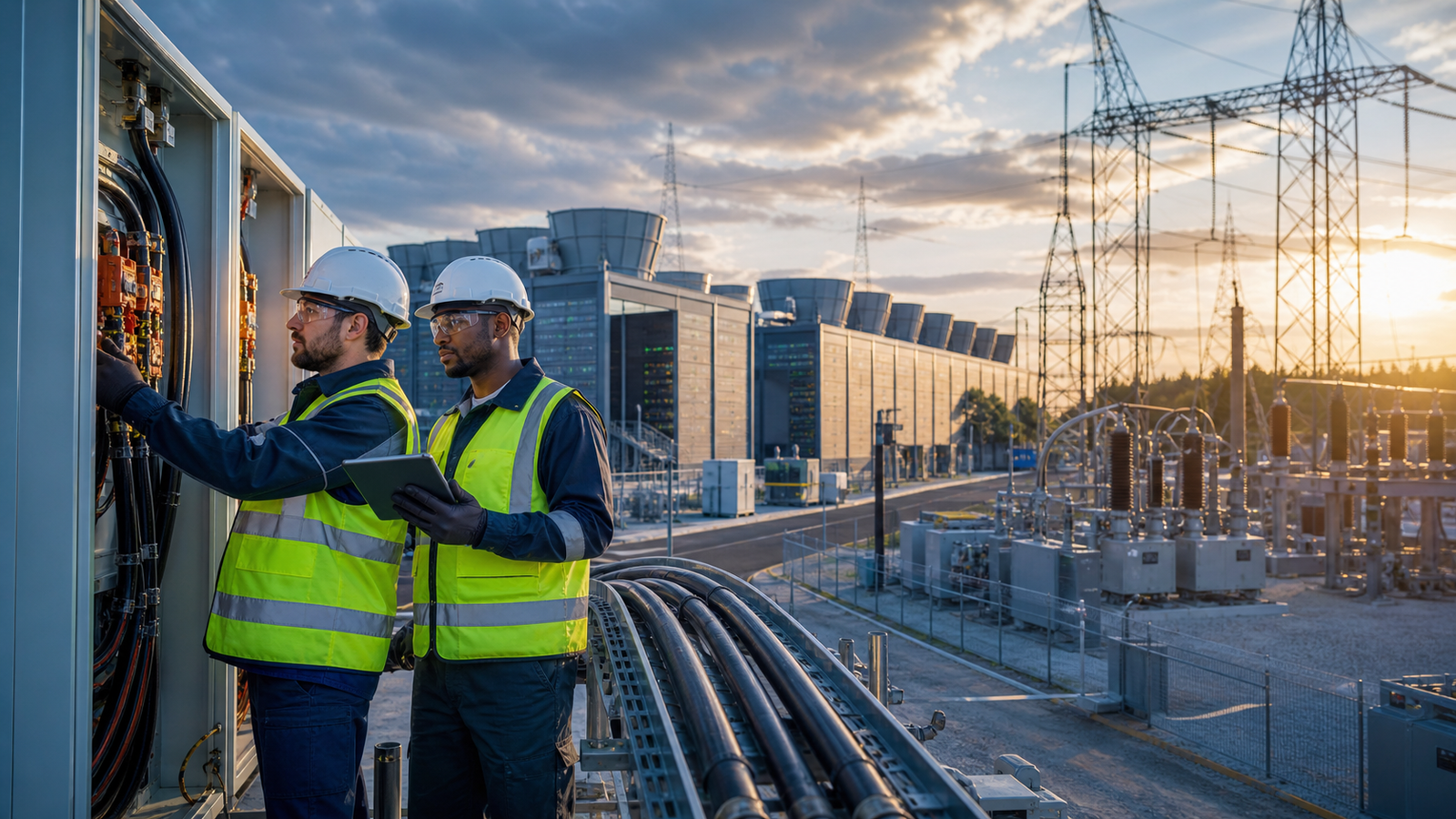
The artificial intelligence boom is moving into a new phase, and investors are beginning to realize the next constraint may not be chips, models, or cloud demand. It may be electricians, grid connections, power equipment, turbines, and construction crews.
For the past two years, the AI trade has been dominated by semiconductors, hyperscale cloud spending, and software platforms. But the market is now widening its lens. As data centers grow larger and more power-hungry, the infrastructure behind AI is becoming just as important as the GPUs inside the servers. That shift is creating opportunities in electrical equipment, engineering and construction, power management, grid services, independent power generation, and energy infrastructure.
Barron’s reported today that the U.S. data-center boom is running into a shortage of electricians and skilled contractors, with demand benefiting companies tied to electrical engineering and construction such as Quanta Services, Argan, SOLV Energy, and Legence. The same theme appeared in Eaton’s latest results, where record first-quarter earnings were supported by AI data-center demand, even as the stock fell because guidance did not fully satisfy elevated investor expectations.
For investors, the message is clear: AI infrastructure remains one of the strongest emerging-industry themes in the market, but the best opportunities may increasingly sit outside the obvious chip winners.
The AI Trade Is Moving From Silicon to Steel, Copper and Labor
AI data centers are physical infrastructure projects. They require land, power, cooling, substations, switchgear, transformers, backup systems, grid interconnections, water systems, fiber networks, security, permitting, and specialized labor. The industry’s growth story is no longer only about how many AI accelerators a cloud company can buy. It is also about whether the power and construction ecosystem can keep up.
Barron’s reported that the shortage of electricians and skilled contractors has become a major bottleneck for AI data-center expansion. The article noted that the U.S. is projected to need 81,000 new electricians annually over the next decade, while the availability of electrical engineers per megawatt of new power capacity may decline sharply by 2034.
That shortage matters because data centers are among the most electrically intensive commercial buildings in the economy. A delay in electrical labor or grid interconnection can delay revenue generation for hyperscalers and cloud operators. It can also shift bargaining power toward companies that can design, build, connect, and maintain the power infrastructure required for AI-scale computing.
This is why investors are increasingly watching companies that would not have been considered “AI stocks” in the first wave of the boom. Electrical contractors, grid builders, equipment suppliers, and power-infrastructure firms are becoming picks-and-shovels plays on AI.
Eaton Shows the Demand Is Real—but Expectations Are High
Eaton’s first-quarter results offered a useful case study. Barron’s reported that Eaton delivered record first-quarter earnings, with adjusted earnings of $2.81 per share on $7.5 billion in revenue, beating Wall Street expectations of $2.73 per share and $7.1 billion in sales. Demand from AI data centers helped drive the strong performance.
Yet Eaton shares still fell in premarket trading after the company’s guidance disappointed investors. Barron’s reported that Eaton raised its full-year sales growth outlook from 8% to 10% and adjusted earnings guidance to $13.05 to $13.50 per share, but its second-quarter EPS outlook of $3.00 to $3.10 came in below the $3.12 analysts expected.
That reaction is important for investors. It shows that AI infrastructure demand is strong, but market expectations are already aggressive. A company can post record results and still face selling pressure if guidance does not support the valuation.
This is becoming a defining feature of the AI infrastructure trade. Investors are rewarding companies with exposure to data-center power demand, but they are also demanding proof that revenue growth converts into margin expansion, free cash flow, and durable earnings upside.
Power Demand Is Becoming a Structural Growth Story
The long-term numbers explain why this theme has momentum. McKinsey has estimated that data centers will require $6.7 trillion in global investment by 2030 to meet rising demand for compute capacity. That figure includes the massive physical infrastructure required to support AI workloads, cloud services, and digital transformation.
Goldman Sachs Research has projected that global power demand from data centers could rise 165% by 2030 from 2023 levels, driven by artificial intelligence adoption and broader digital infrastructure growth. The firm also projected that data-center occupancy could rise from around 85% in 2023 to more than 95% in late 2026, before moderating as more capacity comes online.
Those forecasts are critical for investors because they shift the AI conversation from cyclical technology spending to long-duration infrastructure demand. If data-center power needs rise dramatically, the beneficiaries may extend far beyond Nvidia, AMD, cloud providers, and server manufacturers.
Power-management companies, transformer suppliers, switchgear manufacturers, grid contractors, engineering firms, turbine suppliers, natural-gas infrastructure providers, renewable developers, nuclear operators, and battery-storage companies could all see rising demand.
The Labor Shortage Creates Pricing Power
Labor scarcity can be a risk, but it can also create pricing power for companies with the right workforce, contracts, and execution capability. If hyperscale technology companies need specialized electrical and construction capacity urgently, contractors with proven expertise may be able to command better margins, longer backlogs, and stronger contract terms.
Barron’s highlighted several companies benefiting from this trend, including Quanta Services, Argan, SOLV Energy, and Legence. These firms operate in areas tied to grid construction, power infrastructure, renewable-energy projects, engineering, procurement, and construction services.
Quanta Services is particularly relevant because it has broad exposure to electric power infrastructure, grid modernization, and utility-scale construction. Argan is tied to power-plant engineering and construction. SOLV Energy is exposed to solar and energy infrastructure. Legence operates in energy-efficiency and building systems. The common thread is not “AI software.” It is the physical capacity required to make AI computing possible.
Investors should also watch private and public initiatives around training. Barron’s reported that technology companies, including Google, are investing in training programs for electricians and apprentices. That suggests the labor problem is not temporary. It is strategic.
Energy Supply Is the Next Competitive Advantage
Power availability is becoming a competitive differentiator for technology companies and data-center operators. The International Energy Agency has noted that nuclear power is expected to play a significant role in meeting U.S. data-center electricity demand after 2030, especially if small modular reactors are successfully deployed. The IEA also said technology companies have announced plans to finance more than 20 gigawatts of small modular reactor capacity to date.
That creates an emerging investment map. Natural gas may benefit because it can provide dispatchable power faster than some alternatives. Nuclear may benefit because large technology companies want reliable, low-carbon baseload power. Renewables and storage may benefit where they can support large-scale clean-energy procurement. Grid equipment and transmission companies may benefit because power must still be delivered to the data-center site.
In other words, AI is becoming an energy story. Investors who focus only on chips may miss the next layer of value creation.
Risks: Valuation, Delays and Execution
The opportunity is large, but risks are rising. The first risk is valuation. Many infrastructure names tied to AI and power demand have already rallied sharply. Barron’s noted that high valuations are a challenge for investors even as demand remains strong.
The second risk is execution. Data-center projects can face delays from permitting, interconnection queues, equipment shortages, labor constraints, local opposition, and utility capacity limits. Ars Technica recently reported that satellite and drone images revealed delays affecting a meaningful share of U.S. data centers planned for 2026, citing construction and energy bottlenecks.
The third risk is margin pressure. If companies must invest heavily in workforce expansion, equipment, training, and project capacity, revenue may rise faster than profit in the short term. Eaton’s stock reaction shows that investors are watching earnings conversion closely, not just top-line demand.
Key Investment Insight
The key investment insight is that AI infrastructure is expanding into a broad industrial supply chain. Investors may want to watch electrical equipment manufacturers, power-management companies, grid contractors, engineering and construction firms, independent power producers, nuclear developers, natural-gas infrastructure companies, and data-center infrastructure providers.
However, selectivity matters. The strongest companies will likely be those with backlog visibility, skilled labor access, pricing power, exposure to hyperscale customers, disciplined capital allocation, and the ability to convert revenue growth into earnings and cash flow.
For long-term investors, this theme may be one of the most durable emerging-industry opportunities of the decade. AI demand is creating a new infrastructure cycle, and that cycle requires physical assets, skilled workers, and reliable power.
For tactical investors, earnings guidance is the signal to watch. Strong revenue growth is no longer enough. Companies must show that AI-driven demand is translating into higher margins, stronger cash flow, and sustainable backlog.
What Investors Should Watch Next
Investors should track three indicators. First, watch capital-spending guidance from hyperscalers such as Microsoft, Amazon, Alphabet, Meta, and Oracle. Higher AI capex typically flows into data-center construction, power equipment, and grid demand. Second, monitor order backlogs and margins at power-equipment and EPC companies. Third, watch utility interconnection queues, natural-gas turbine availability, transformer supply, and skilled-labor data.
The AI boom is no longer confined to Silicon Valley. It is spreading into substations, construction sites, power plants, grid corridors, and electrical apprenticeship programs. That creates a powerful opportunity for investors willing to look beyond the obvious AI names.
Stay with MoneyNews.Today for daily investor-focused coverage of emerging industries, AI infrastructure, energy, and the market trends shaping tomorrow’s capital flows.