
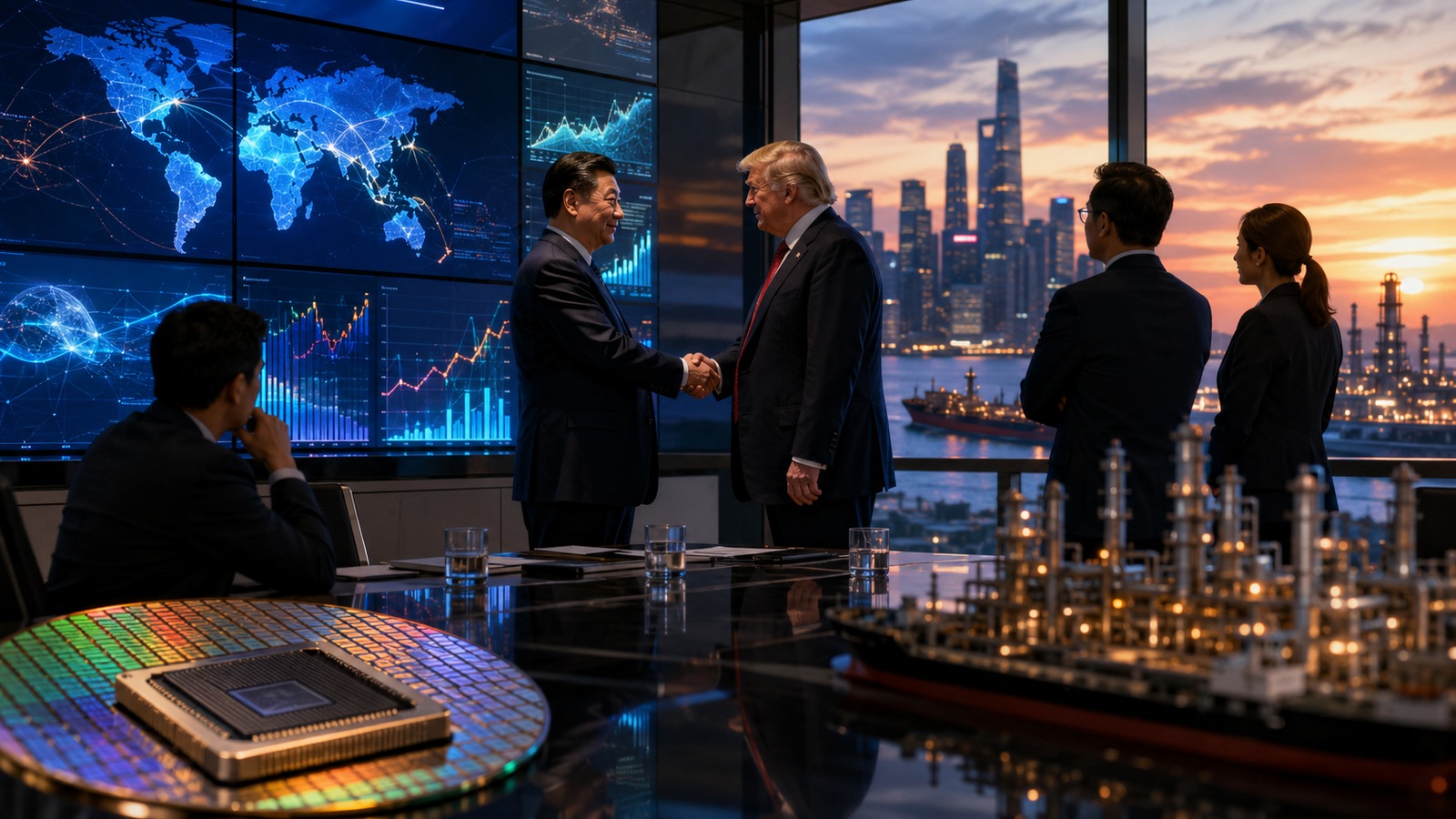
Global markets are increasingly being shaped not just by corporate earnings or central bank policy, but by geopolitics. On Wall Street and across international trading desks, investors are closely watching two major developments dominating headlines this week: the possibility of renewed diplomacy between Donald Trump and Chinese President Xi Jinping, and ongoing ceasefire discussions involving the United States and Iran.
Together, these developments are influencing everything from oil prices and semiconductor stocks to inflation expectations and broader market risk appetite. Investors are betting that geopolitical stabilization could ease pressure on global supply chains, reduce energy market volatility, and support continued momentum in equities already buoyed by the artificial intelligence-driven rally.
According to Reuters and global market briefings, optimism surrounding a potential Trump-Xi summit and improving Middle East diplomacy has become a key driver behind the latest gains in U.S. equities. Markets are increasingly interpreting signs of geopolitical progress as a positive signal for multinational corporations, technology companies, and sectors tied to global trade.
For investors, the message is becoming increasingly clear: geopolitics is no longer a secondary market factor. It is now central to understanding inflation trends, commodity pricing, supply chain stability, and the future direction of global markets.
Why the Trump-Xi Relationship Matters to Investors
Relations between the United States and China remain one of the most important variables influencing global markets.
Reports surrounding a possible Trump-Xi summit have generated strong investor interest because discussions are expected to focus on several issues with direct economic consequences, including tariffs, semiconductor restrictions, artificial intelligence policy, trade normalization, and Taiwan-related tensions.
For years, U.S.-China tensions have weighed heavily on multinational companies and technology supply chains. Tariffs increased costs for manufacturers, semiconductor export restrictions disrupted global technology markets, and uncertainty surrounding Taiwan created additional geopolitical risk premiums across equities and commodities.
Now, investors are hoping renewed diplomatic engagement could reduce some of those pressures.
Technology companies are particularly sensitive to these developments. Firms including Nvidia, Apple, Qualcomm, AMD, and other semiconductor-related companies rely heavily on international supply chains connected to Asia. Any easing in trade tensions or export restrictions could improve market sentiment across the technology sector.
According to Reuters and various Wall Street analysts, markets are increasingly pricing in the possibility that diplomatic stabilization between Washington and Beijing could support corporate earnings growth during the second half of 2026.
However, investors also recognize that tensions surrounding artificial intelligence, national security, and semiconductor leadership remain deeply strategic issues for both countries.
Even limited diplomatic progress could still have a meaningful impact on market confidence.
Iran Ceasefire Talks Are Influencing Energy Markets
At the same time, negotiations surrounding Iran and broader Middle East tensions are becoming another major market catalyst.
Energy traders and equity investors alike are closely monitoring ceasefire discussions because of their direct influence on oil prices and global inflation expectations. Concerns surrounding the Strait of Hormuz—a critical shipping route for global energy supplies—have previously contributed to sharp volatility in crude markets.
Signs of easing tensions have helped stabilize oil prices in recent sessions, reducing fears of a major energy supply shock.
This matters because energy costs influence nearly every part of the global economy. Rising oil prices can increase transportation expenses, manufacturing costs, inflation pressures, and consumer spending strain. Lower energy volatility, by contrast, generally supports broader market sentiment.
For central banks, including the Federal Reserve, stable energy prices also reduce some inflationary risks that could otherwise complicate monetary policy decisions.
According to global market briefings and Reuters coverage, investors increasingly view geopolitical stabilization in the Middle East as supportive for equities, particularly for growth-oriented sectors already benefiting from AI optimism.
However, the situation remains highly fragile.
Any renewed escalation involving Iran, regional shipping routes, or military activity could quickly reverse market sentiment and trigger volatility across commodities, equities, and currencies.
Markets Are Becoming More Sensitive to Geopolitical Risk
One of the biggest shifts occurring in global markets is the growing connection between geopolitical events and day-to-day asset pricing.
Historically, markets often treated geopolitical developments as temporary disruptions unless they directly affected economic activity. Today, that dynamic has changed significantly.
Trade policy, sanctions, export restrictions, energy security, semiconductor supply chains, and military tensions are now deeply intertwined with corporate profitability and economic growth expectations.
This is especially true in sectors tied to advanced technology and global manufacturing.
Artificial intelligence has intensified the strategic importance of semiconductors, data infrastructure, and supply chain control. As a result, geopolitical decisions involving technology exports or cross-border trade now carry enormous financial implications.
Investors are also becoming increasingly aware that geopolitical events can rapidly influence inflation trends.
For example:
- Oil supply disruptions can drive inflation higher
- Tariff increases can raise manufacturing costs
- Semiconductor restrictions can pressure technology pricing
- Shipping disruptions can affect global logistics expenses
These factors make geopolitics an increasingly important variable in Federal Reserve policy expectations and equity market performance.
Why Wall Street Is Responding Positively
Despite the underlying risks, markets are currently reacting positively to signs of diplomatic progress because investors believe stabilization could support several bullish trends simultaneously.
First, easing geopolitical tensions may help sustain the current AI-driven rally in technology stocks. Reduced uncertainty surrounding semiconductor exports and supply chains could improve long-term earnings visibility for major technology firms.
Second, stable oil prices could support consumer spending and reduce inflation concerns, potentially improving the broader macroeconomic outlook.
Third, improved diplomatic sentiment may reduce market volatility and encourage institutional investors to increase exposure to risk assets.
This optimism has helped major U.S. indices remain near record highs even amid elevated valuations and ongoing monetary policy uncertainty.
According to analysts cited by Reuters and Bloomberg, markets currently appear to believe that geopolitical risks are moderating rather than escalating—a significant shift from earlier periods of heightened tension.
Still, investors remain cautious because geopolitical conditions can change rapidly.
Risks Investors Should Continue Monitoring
Although markets are currently optimistic, several major risks remain.
U.S.-China relations continue involving highly sensitive issues, including Taiwan, AI leadership, semiconductor access, cybersecurity, and military positioning in the Indo-Pacific region. Any deterioration in diplomatic negotiations could quickly pressure global markets.
Similarly, ceasefire discussions involving Iran remain uncertain and vulnerable to sudden setbacks.
Energy markets remain particularly exposed to geopolitical volatility. Even temporary disruptions in shipping routes or production facilities could trigger sharp oil price increases.
Investors are also watching how geopolitical developments interact with Federal Reserve policy. Rising commodity prices or supply chain disruptions could complicate inflation trends and delay potential interest rate cuts.
Another important concern is market concentration.
The current rally remains heavily dependent on mega-cap technology companies and AI-related growth expectations. If geopolitical developments negatively affect semiconductor exports or global trade, technology stocks could experience increased volatility.
Key Investment Insight
For investors, the growing influence of geopolitics on financial markets is becoming impossible to ignore.
The potential Trump-Xi summit and ongoing Iran ceasefire negotiations are influencing everything from energy prices and semiconductor stocks to inflation expectations and broader equity market sentiment. Diplomatic stabilization is currently supporting investor optimism, particularly alongside the powerful AI-driven rally dominating Wall Street.
However, geopolitical risks remain highly dynamic and unpredictable.
Investors should closely monitor oil prices, semiconductor export policies, U.S.-China trade developments, and Middle East tensions throughout the remainder of 2026. These factors could significantly influence inflation trends, Federal Reserve policy decisions, supply chains, and multinational corporate earnings.
Sectors most sensitive to these developments include technology, semiconductors, energy, industrials, and global manufacturing companies with significant international exposure.
As markets become increasingly interconnected with geopolitical strategy, understanding political risk is becoming just as important as analyzing earnings reports or economic data.
Stay with MoneyNews.Today for more daily investor insights covering politics, stock markets, AI, crypto, commodities, and the global trends shaping the future of investing.




