
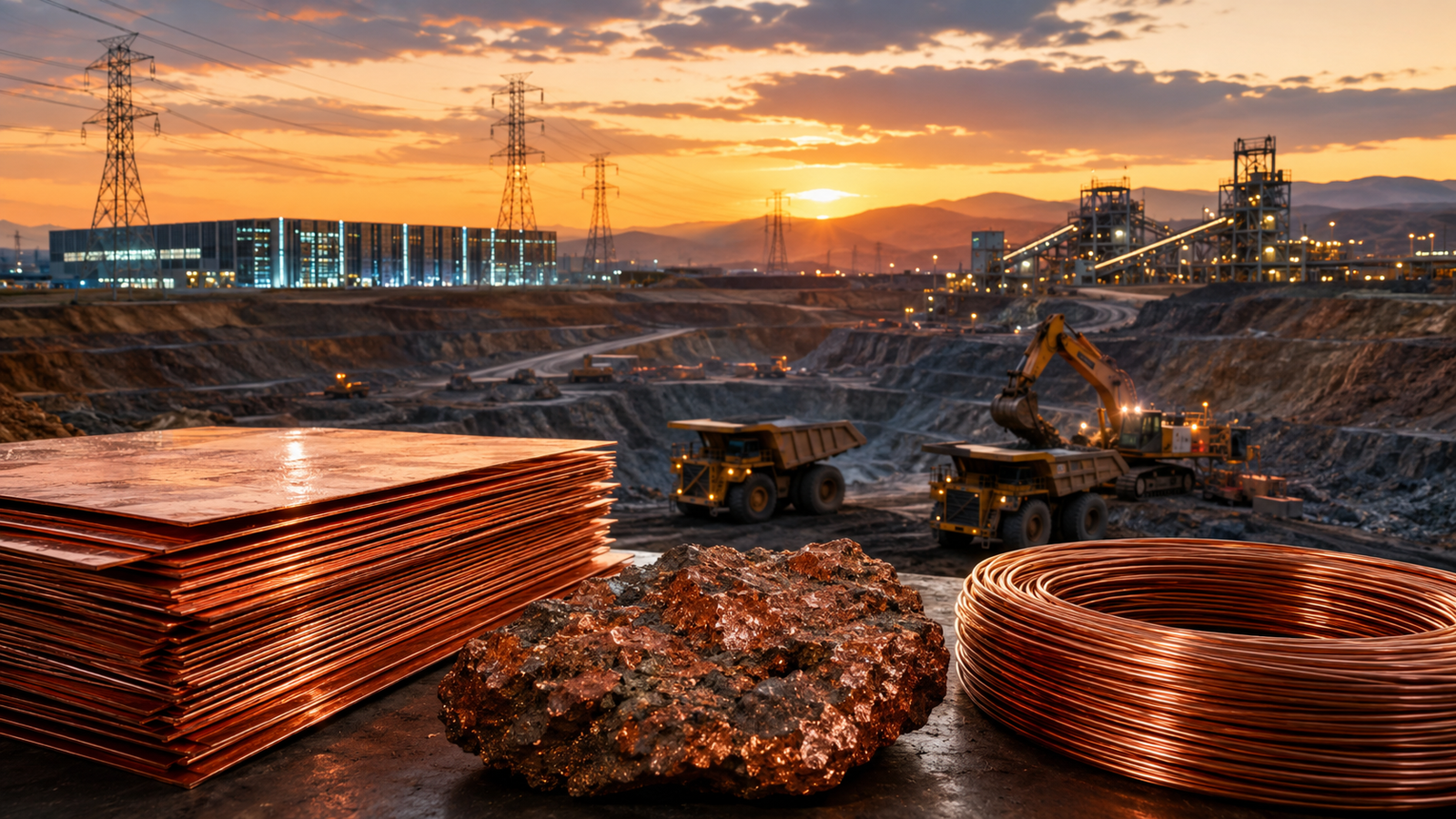
Copper is rapidly becoming one of the most important strategic commodities in the global economy, and investors are taking notice. As artificial intelligence infrastructure, electrification, renewable energy projects, and power grid modernization accelerate worldwide, demand for copper is surging at a pace that is reshaping the mining sector and driving a new wave of competition for long-term supply.
On May 8, mining stocks rallied sharply after Reuters reported that Rio Tinto is evaluating increasing its stake in Argentina’s Los Azules copper project—one of the world’s largest undeveloped copper deposits. The development reinforced growing investor belief that major global miners are racing to secure strategic copper reserves before supply shortages intensify later this decade.
At the same time, Canadian mining shares climbed alongside rising copper and gold prices as geopolitical tensions, inflation uncertainty, and AI-driven infrastructure demand continued boosting commodity markets. According to Mining.com and broader market commodity briefings, investors are increasingly positioning around metals tied to artificial intelligence, energy transition projects, and global infrastructure expansion.
For investors, copper is no longer just an industrial metal. It is increasingly being viewed as the backbone of the next generation economy.
Why Copper Has Become a Strategic Commodity
Copper plays a critical role in nearly every major industrial and technological trend shaping global markets today.
Electric vehicles require significantly more copper than traditional gasoline-powered vehicles. Renewable energy systems, including solar and wind infrastructure, depend heavily on copper wiring and transmission systems. Power grids undergoing modernization to support electrification also require enormous copper volumes.
Now artificial intelligence is adding another major demand driver.
AI data centers, hyperscale cloud infrastructure, advanced networking systems, and semiconductor manufacturing facilities all consume large amounts of copper. As companies race to expand AI computing capacity, the physical infrastructure behind the AI boom is creating a new source of commodity demand.
This shift is transforming investor sentiment around the mining sector.
According to analysts cited by Reuters and commodity market reports, the combination of electrification and AI infrastructure spending is creating one of the strongest long-term demand outlooks copper markets have seen in decades.
That demand surge is occurring while supply growth remains constrained, increasing concerns about potential structural shortages later in the decade.
Rio Tinto’s Move Highlights the Industry Race for Supply
Rio Tinto’s reported interest in expanding its position in Argentina’s Los Azules project underscores how aggressively major mining companies are pursuing large-scale copper assets.
Los Azules is widely viewed as one of the most important undeveloped copper deposits globally. Located in Argentina, the project could become a major strategic source of future copper production as global demand continues rising.
The mining industry increasingly recognizes that securing long-term copper reserves is becoming essential for maintaining future production growth and market relevance.
According to Reuters reporting, large miners are intensifying acquisition efforts and partnership discussions across Latin America and other resource-rich regions as they attempt to lock in future supply.
This competition reflects a broader industry concern: existing copper production may not be sufficient to meet projected demand growth tied to AI infrastructure, electric vehicles, renewable energy systems, and global electrification initiatives.
Investors are responding by increasing exposure to companies with strong copper portfolios and undeveloped resource potential.
Canadian Mining Stocks Benefit From Commodity Momentum
Canadian mining shares were among the strongest performers as copper and gold prices climbed on May 8.
Canada remains one of the world’s most important mining markets, with significant exposure to copper, gold, nickel, uranium, and other strategic commodities. Rising investor interest in metals linked to energy transition and AI infrastructure is helping drive renewed momentum across the sector.
Gold is also benefiting from the current geopolitical environment.
While copper demand is being driven primarily by industrial expansion and AI infrastructure growth, gold continues attracting investors seeking protection against inflation, geopolitical instability, and currency volatility.
The combination of rising copper prices and resilient gold demand is creating a favorable backdrop for diversified mining companies.
Analysts note that many investors are increasingly viewing mining stocks as both growth opportunities and macroeconomic hedges.
This dual appeal is becoming particularly important as geopolitical uncertainty and inflation concerns continue influencing global financial markets.
AI Infrastructure Is Quietly Fueling Commodity Demand
One of the most underappreciated themes in commodity markets is the connection between artificial intelligence and resource demand.
AI systems require massive physical infrastructure. Data centers need electrical wiring, cooling systems, transformers, networking equipment, and high-capacity power infrastructure—all of which depend heavily on copper.
As hyperscalers including Microsoft, Amazon, Google, and Meta continue spending aggressively on AI expansion, demand for industrial metals is rising alongside semiconductor demand.
This trend is helping reshape commodity market dynamics.
Historically, technology investors and commodity investors operated in largely separate market narratives. Today, those worlds are becoming increasingly interconnected.
The AI boom is not only driving software and semiconductor stocks higher—it is also supporting demand for the raw materials powering digital infrastructure.
According to industry analysts and market commodity briefings, AI-related infrastructure spending could become one of the largest long-term drivers of industrial metal demand over the next decade.
Supply Constraints Could Tighten Markets Further
While demand expectations continue rising, supply-side risks remain a major concern for commodity markets.
Mining projects typically require years of development, permitting, financing, and infrastructure construction before production can begin. Environmental regulations, political instability, labor disputes, and infrastructure limitations can also delay supply growth.
Analysts have repeatedly warned that global copper production may struggle to keep pace with projected long-term demand.
Shipping risks and geopolitical disruptions are adding further uncertainty.
Trade tensions, regional instability, and disruptions involving key shipping routes could tighten supply chains and increase price volatility across industrial metals markets.
According to Reuters and commodity analysts, investors are increasingly monitoring supply-side developments as closely as demand trends.
This dynamic is contributing to bullish sentiment across copper markets despite broader macroeconomic uncertainty.
Why Investors Are Watching Gold Alongside Copper
Gold continues playing an important role within the broader mining investment narrative.
While copper is benefiting from long-term industrial demand trends, gold remains highly sensitive to geopolitical uncertainty, inflation expectations, and central bank policy.
Recent geopolitical tensions involving the Middle East, trade negotiations, and global economic uncertainty have helped support safe-haven demand for gold.
This creates an interesting environment for mining investors because both industrial metals and precious metals are attracting capital simultaneously.
Diversified mining companies with exposure to both copper and gold may benefit from multiple macroeconomic trends at once:
- AI infrastructure expansion
- Electrification demand
- Renewable energy investment
- Inflation concerns
- Geopolitical instability
- Safe-haven capital flows
This combination is helping support stronger investor interest in the broader mining sector.
Key Investment Insight
For investors, copper is increasingly emerging as one of the most important long-term commodity themes in global markets.
The accelerating buildout of AI infrastructure, renewable energy systems, electric vehicles, and power grid modernization is driving unprecedented demand for copper and other strategic industrial metals. Rio Tinto’s reported interest in expanding its exposure to the Los Azules project highlights how aggressively global miners are positioning for future supply shortages.
At the same time, gold continues benefiting from geopolitical uncertainty and inflation concerns, creating favorable conditions for diversified mining companies.
Investors should closely monitor copper supply developments, mining project expansions, AI infrastructure spending trends, and geopolitical risks throughout 2026. Companies with strong copper reserves and scalable production pipelines may become increasingly valuable as global demand accelerates.
As artificial intelligence and electrification reshape the global economy, the mining sector is becoming one of the most important foundational industries supporting the next generation of growth.
Stay with MoneyNews.Today for more daily investor insights covering metals, mining, AI, stock markets, commodities, crypto, and the global trends shaping the future of investing.




