
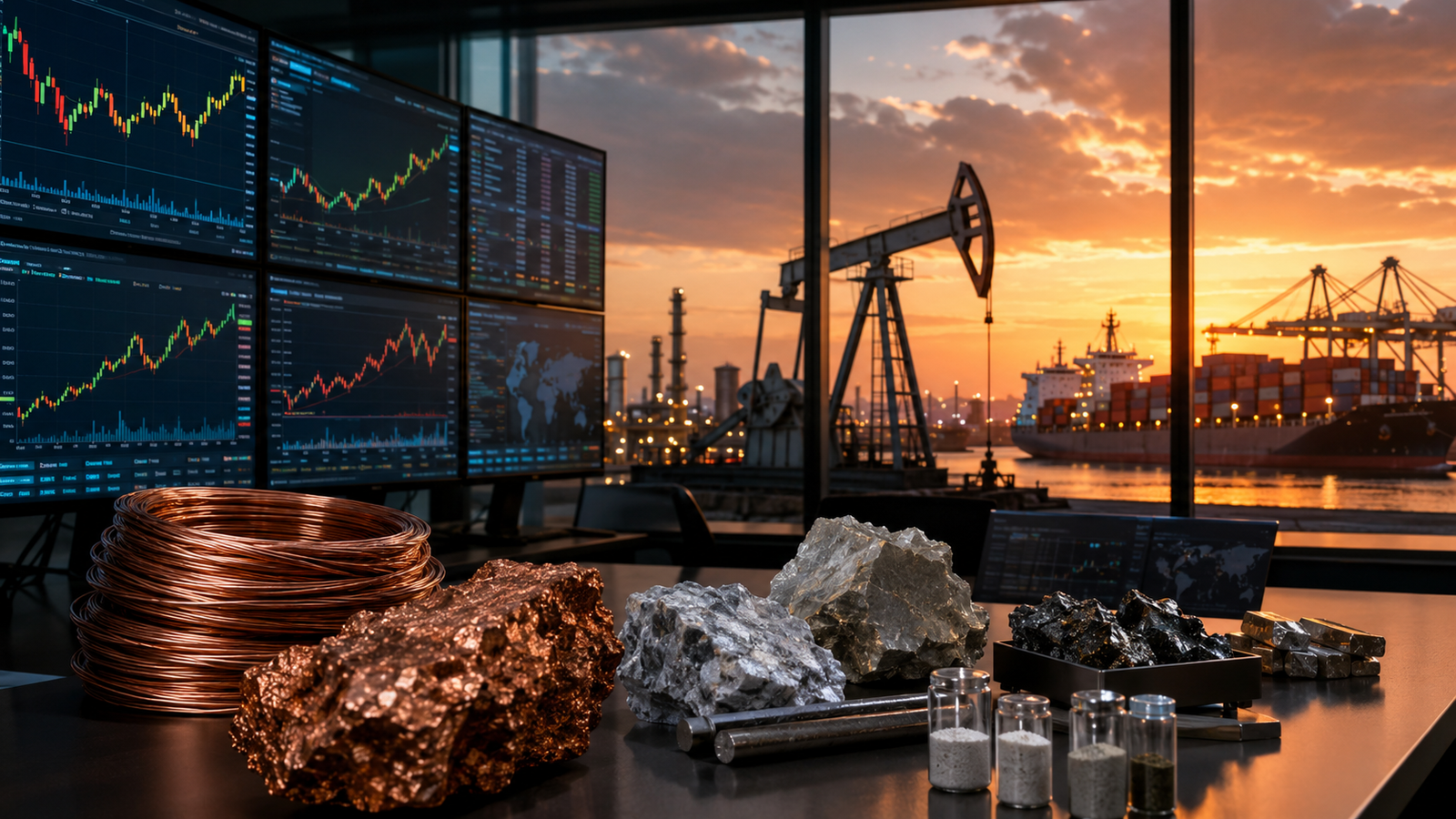
Commodity markets are rapidly becoming the center of global investor attention as rising geopolitical tensions and intensifying competition over strategic resources reshape the outlook for energy, mining, and industrial supply chains. Oil prices are climbing again amid renewed uncertainty surrounding Middle East negotiations, while ongoing U.S.-China discussions around critical minerals and trade policy are fueling volatility across metals markets.
For investors, this is no longer just a short-term commodity story. The battle for energy security and strategic minerals is increasingly tied to artificial intelligence infrastructure, electric vehicle production, defense technology, and the broader global transition toward electrification.
Copper, lithium, rare earths, uranium, and energy commodities are now sitting at the intersection of geopolitics, industrial policy, and technological transformation. As governments race to secure supply chains critical to future economic competitiveness, investors are beginning to treat strategic resources as one of the defining long-term investment themes of the decade.
The result is a commodity market environment where macroeconomics, geopolitics, and technological disruption are becoming deeply interconnected.
Oil Prices Rise as Middle East Risks Return
One of the biggest drivers behind the latest commodity rally is the renewed rise in oil prices.
According to Reuters, markets are reacting to stalled U.S.-Iran negotiations and broader instability in the Middle East, increasing concerns about potential supply disruptions across global energy markets. Crude prices have moved higher as traders assess the possibility of tighter supply conditions and escalating geopolitical tensions.
Energy markets remain extremely sensitive to developments involving Iran because the country plays a major role in global oil exports and regional stability. Any disruptions to supply routes or sanctions policy could significantly impact global crude availability.
For investors, rising oil prices create both opportunities and risks.
On one hand, higher energy prices support profitability for oil producers, refiners, and energy infrastructure companies. Energy equities have recently regained momentum after lagging behind technology stocks during much of the AI-driven market rally.
On the other hand, sustained increases in oil prices could create inflationary pressure across the broader economy. Higher energy costs can impact transportation, manufacturing, and consumer spending while complicating future Federal Reserve policy decisions.
That dynamic is especially important in 2026 because markets are still closely watching inflation trends and interest rate expectations.
If oil prices continue climbing sharply, investors may need to reassess expectations surrounding future monetary easing and economic growth.
Strategic Minerals Become a Geopolitical Priority
Beyond energy markets, strategic minerals are increasingly becoming a major geopolitical issue.
The United States and China remain deeply interconnected in global commodity supply chains, particularly for critical materials used in semiconductors, batteries, renewable energy systems, and AI infrastructure.
Recent trade discussions between Washington and Beijing have intensified investor focus on supply-chain security for strategic resources including copper, lithium, nickel, cobalt, and rare earth elements.
These materials are essential for multiple high-growth industries shaping the global economy:
- Copper is critical for electrification, power grids, and AI data centers.
- Lithium and nickel remain foundational for electric vehicle batteries.
- Rare earth elements are vital for defense systems, semiconductors, and advanced electronics.
- Uranium is gaining renewed attention amid rising interest in nuclear energy for AI-related power demand.
Governments worldwide are increasingly treating access to these resources as a matter of national security rather than simply economic policy.
According to Reuters and several industry reports, policymakers in both the U.S. and Canada are accelerating efforts to strengthen domestic mining, processing, and refining capacity for critical minerals.
This shift is helping reshape capital flows across the mining sector.
Copper Is Emerging as One of the Biggest AI Trades
While AI stocks have dominated headlines throughout 2026, commodity investors are increasingly focusing on copper as one of the most important secondary beneficiaries of the AI boom.
The reason is straightforward: AI infrastructure requires enormous amounts of electricity and electrical equipment.
Data centers, transmission systems, cooling infrastructure, semiconductors, and renewable power expansion all depend heavily on copper. Analysts at Goldman Sachs and McKinsey have repeatedly highlighted copper as one of the commodities most exposed to long-term electrification demand.
At the same time, global copper supply growth remains constrained by permitting challenges, geopolitical risks, environmental regulations, and underinvestment in new mining projects.
That imbalance between growing demand and limited supply is fueling bullish sentiment across the copper sector.
Major mining companies including Freeport-McMoRan, Rio Tinto, BHP, and Teck Resources are increasingly positioning themselves around future copper demand tied to AI infrastructure and energy transition trends.
Some analysts now describe copper as “the new oil” of the digital economy because of its central role in electrification and industrial modernization.
For investors, copper miners and infrastructure-related commodity companies may offer indirect exposure to the broader AI expansion beyond traditional semiconductor stocks.
Rare Earths and Lithium Remain Strategic Battlegrounds
Rare earth elements and lithium are also becoming increasingly important investment themes.
China currently dominates significant portions of the global rare earth supply chain, including processing and refining capacity. That dominance has raised concerns among Western governments seeking to reduce strategic dependence on foreign supply chains.
The U.S., Canada, Australia, and European countries are now accelerating investment into domestic critical mineral projects to improve supply-chain resilience.
Lithium markets, meanwhile, continue evolving as EV adoption grows globally despite periods of price volatility. Although lithium prices experienced major corrections over the past year, long-term demand projections remain strong as battery manufacturing capacity expands worldwide.
According to BloombergNEF and International Energy Agency estimates, demand for many strategic minerals could multiply several times over the next decade due to electrification and renewable energy adoption.
This has created growing investor interest in mining companies, royalty firms, mineral processing businesses, and battery supply-chain infrastructure.
Why Commodity Markets Matter More Than Ever
Commodity markets are no longer isolated from broader technology and equity trends.
The AI boom itself is contributing to rising demand for electricity, industrial metals, cooling systems, and energy infrastructure. Meanwhile, geopolitical competition between major global powers is making access to strategic resources increasingly important.
This convergence is creating a new investment landscape where commodities are directly tied to themes traditionally associated with technology and growth investing.
Institutional investors are beginning to recognize that sectors such as mining, energy, utilities, and infrastructure could play a much larger role in the next phase of global economic transformation.
BlackRock, Goldman Sachs, and several major investment firms have recently emphasized strategic resources as a key long-term investment theme tied to energy security, industrial policy, and AI infrastructure expansion.
At the same time, governments are introducing subsidies, industrial incentives, and national security policies designed to accelerate domestic production of critical materials.
That policy support could continue attracting capital into commodity-related industries for years to come.
Future Trends Investors Should Watch
Several major trends are likely to shape commodity markets throughout the remainder of 2026 and beyond.
First, investors should monitor developments surrounding U.S.-China trade negotiations and critical mineral policy. Export restrictions or supply-chain disruptions could significantly impact prices across strategic commodities.
Second, oil prices remain a critical macroeconomic variable. Escalating geopolitical tensions or supply disruptions could fuel further volatility in both energy and equity markets.
Third, AI infrastructure growth may continue driving long-term demand for copper, uranium, natural gas, and power-grid expansion.
Fourth, investors should pay attention to government incentives supporting domestic mining and refining projects in North America and allied countries.
Finally, environmental regulations and permitting challenges remain important constraints for global mining supply growth. Limited new supply could amplify future commodity price cycles if demand continues accelerating.
Key Investment Insight
Strategic resources are becoming one of the most important structural investment themes of the modern global economy. Rising geopolitical tensions, AI infrastructure expansion, and electrification trends are all increasing demand for energy, copper, lithium, rare earths, and other critical materials.
For investors, the opportunity extends beyond commodity prices themselves. Mining companies, energy producers, infrastructure developers, battery supply-chain firms, and industrial equipment providers could all benefit from the long-term race to secure strategic resources.
However, volatility remains a defining feature of commodity markets. Investors should closely monitor geopolitical developments, inflation trends, trade negotiations, and government industrial policies that could rapidly reshape supply-demand dynamics.
As global competition over critical resources intensifies, staying informed will be essential for navigating the next phase of commodity investing. Follow MoneyNews.Today for daily investor insights, market analysis, and breaking developments shaping the future of energy, mining, and global finance.




