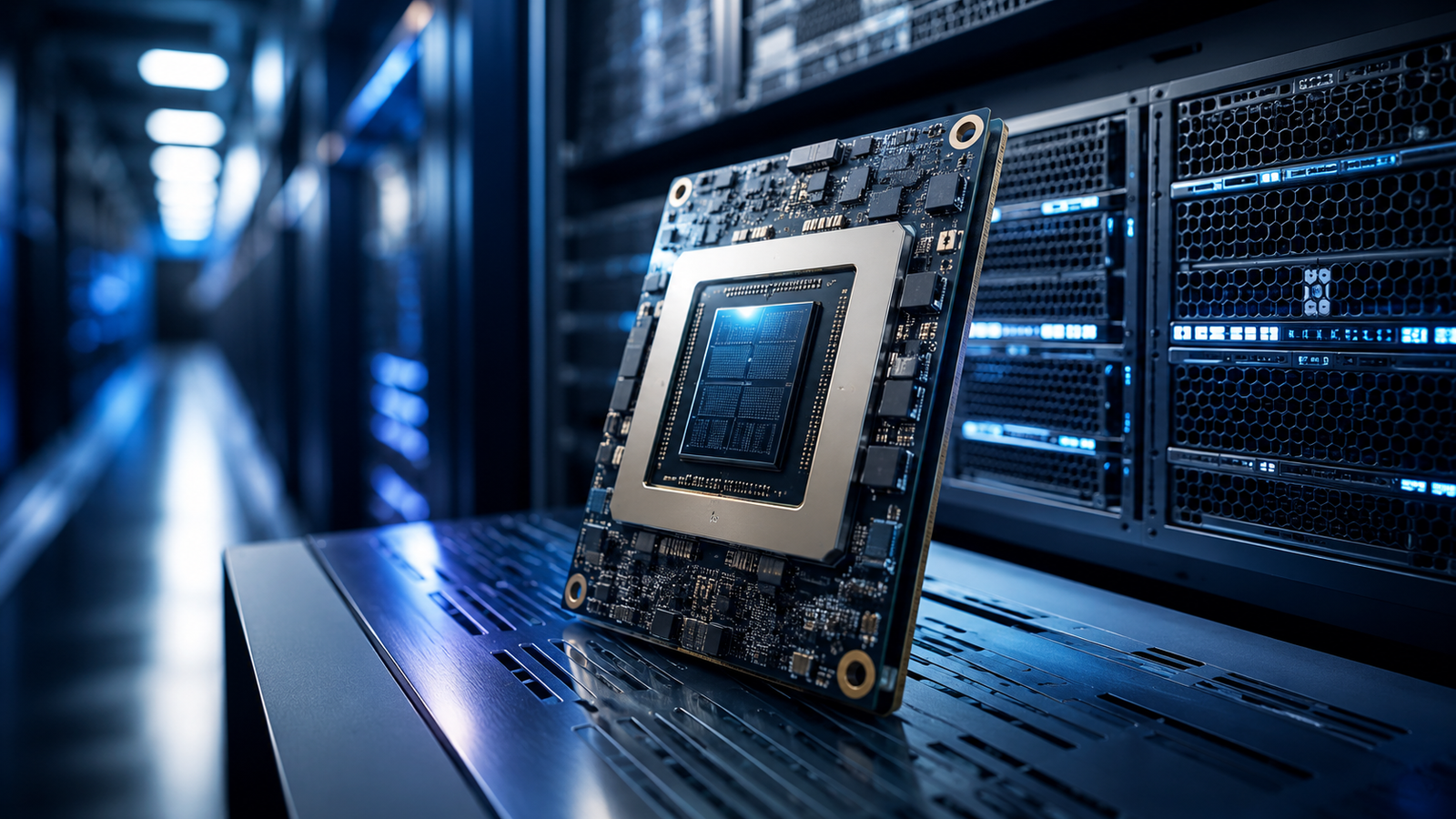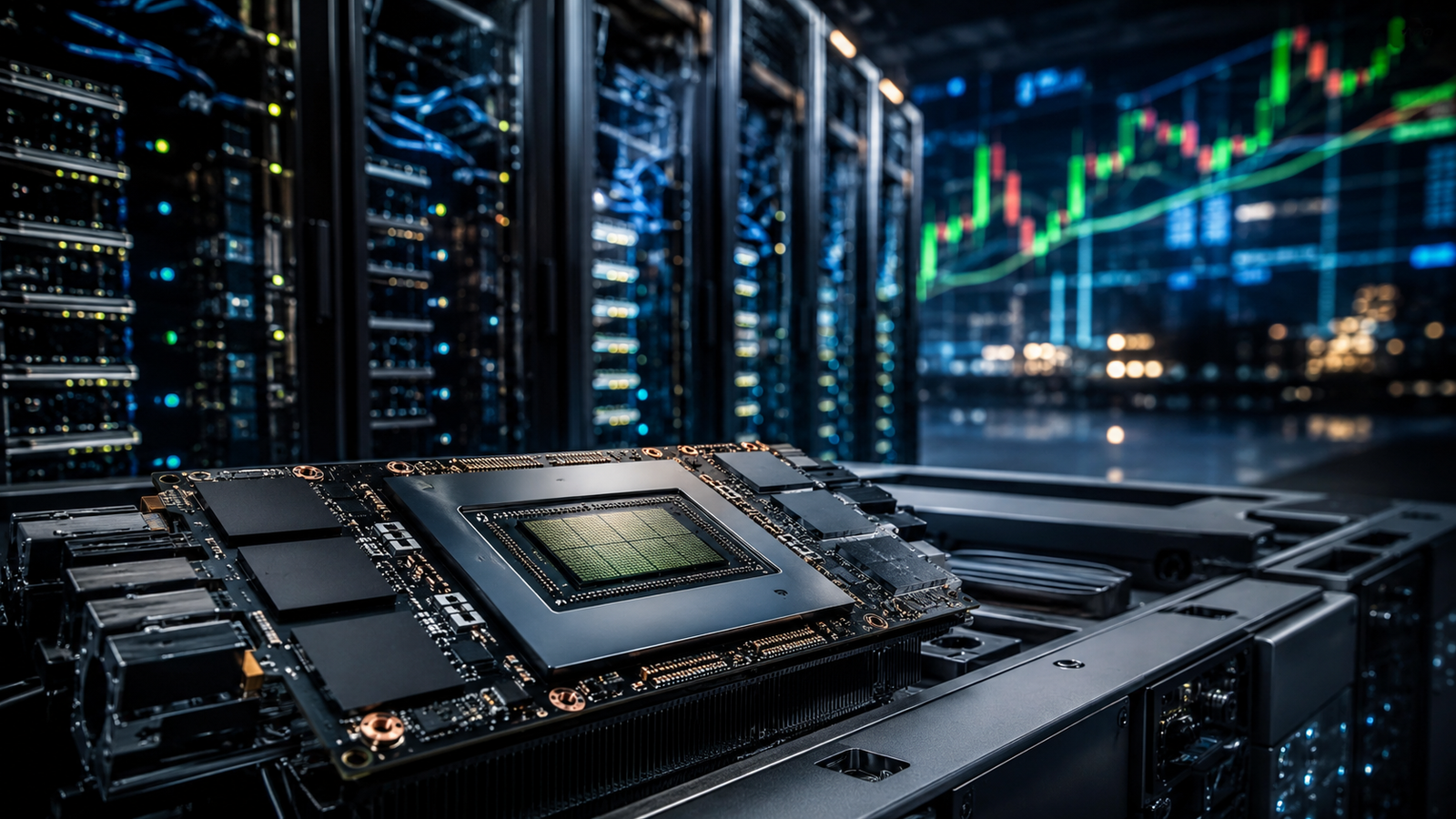
Nvidia has once again delivered the kind of earnings report that would normally send Wall Street into celebration mode. Instead, the market’s reaction was more cautious. That tension is the real story for investors: artificial intelligence spending is still accelerating, Nvidia remains the dominant force in AI infrastructure, and yet the stock’s muted response shows that investor expectations have become extraordinarily difficult to exceed.
For technology investors, Nvidia’s latest quarter is more than a single-company earnings event. It is a market-wide signal about where capital is flowing, how long the AI infrastructure boom may last, and which parts of the semiconductor supply chain could benefit next.
Nvidia Delivers Another Record Quarter
Nvidia reported record fiscal first-quarter revenue of $81.6 billion, up 20% from the previous quarter and 85% from a year earlier, according to the company’s investor relations release. Its Data Center segment, the core engine of Nvidia’s AI growth story, generated $75.2 billion in revenue, up 92% year over year. Nvidia also announced an additional $80 billion share repurchase authorization and increased its quarterly dividend from $0.01 to $0.25 per share.
Those numbers confirm what investors have been debating for months: AI infrastructure spending is not cooling yet. Cloud providers, enterprise technology companies, hyperscalers, and AI model developers continue to require massive computing capacity, and Nvidia remains the central supplier of the chips, systems, and software stack powering that buildout.
Investor’s Business Daily reported that Nvidia’s adjusted earnings per share rose 130% year over year to $1.87, while revenue rose 85% to $81.6 billion. The company also projected second-quarter sales of $91 billion, implying continued growth momentum. Despite that, Nvidia shares slipped after the report, closing down 1.8% the following day, according to the publication.
Why the Stock Did Not Surge
The muted reaction does not mean Nvidia’s results were weak. The more important takeaway is that expectations have become extremely high.
Investopedia reported that Nvidia’s stock fell slightly even after posting record results, noting that investors may have already priced in strong AI chip demand. The report also cited analyst commentary suggesting that Nvidia’s recent rally made it harder for even strong earnings to generate another sharp move higher.
That is an important shift for investors. In earlier phases of the AI trade, earnings beats often triggered large stock gains because Wall Street was still revising its assumptions upward. Now, Nvidia is widely understood to be the leader in AI infrastructure. That means the market is no longer simply asking whether Nvidia can grow. It is asking whether Nvidia can grow faster than already aggressive expectations.
This is where valuation discipline becomes critical. A strong company can still become a difficult investment if the stock price already reflects years of optimistic growth. Nvidia’s earnings reinforce the long-term AI demand story, but the near-term market response shows investors are becoming more selective.
AI Infrastructure Is Still the Core Technology Trade
For the broader technology sector, Nvidia’s numbers suggest that AI capital expenditure remains one of the most important investment themes of 2026. The spending cycle extends beyond graphics processing units. It includes high-bandwidth memory, advanced packaging, networking equipment, power infrastructure, cooling systems, data-center real estate, and AI-optimized servers.
The Guardian reported that analysts viewed Nvidia’s performance as a broader referendum on the AI buildout, given the company’s central role in supplying the infrastructure used by major technology companies.
That framing matters. Nvidia is not only a semiconductor story. It is a proxy for the scale and durability of AI infrastructure investment across the economy. If hyperscalers continue spending aggressively, the beneficiaries may include not only Nvidia, but also companies tied to memory chips, server components, data-center construction, energy infrastructure, and advanced networking.
The Second-Derivative AI Trade Is Gaining Attention
The next phase of the AI investment cycle may not be about simply buying the most obvious winner. Investors are increasingly watching second-derivative beneficiaries: companies that benefit from Nvidia-led AI growth but may not yet carry the same valuation premium.
Memory chips are one example. Barron’s reported that Micron shares rose after strong gains in South Korean memory-chip stocks, with SK Hynix and Samsung also advancing. The report linked the move to renewed confidence in memory demand driven by AI data-center construction.
This is a key development. AI systems require enormous memory bandwidth and storage capacity. As model sizes expand and inference workloads grow, memory bottlenecks become more important. That makes high-bandwidth memory, DRAM, and advanced storage increasingly strategic parts of the AI supply chain.
For investors, this means the AI trade may broaden. Nvidia may remain the flagship name, but the next wave of upside could come from suppliers that support the broader infrastructure stack. The challenge is separating durable demand from short-term momentum.
Analyst Optimism Remains Strong, but Risk Is Rising
Wall Street remains broadly constructive on Nvidia. Investor’s Business Daily noted that analysts issued at least 20 price-target hikes after Nvidia’s report, with major firms maintaining positive views on the company’s AI leadership and upcoming product roadmap.
Still, the risk profile has changed. Nvidia is now operating from a much larger revenue base, which makes percentage growth harder to sustain over time. Investors also need to monitor whether AI spending translates into profitable end-market adoption for Nvidia’s customers. If cloud providers continue investing heavily but struggle to generate returns from AI services, capex growth could eventually slow.
Another risk is concentration. Nvidia’s Data Center segment now represents the overwhelming majority of its revenue. That concentration has been a strength during the AI boom, but it also makes the company more exposed to any shift in hyperscaler spending plans, supply-chain constraints, export controls, or competitive pressure.
The valuation question is not whether Nvidia is a great company. The question is how much future greatness is already reflected in the stock.
What Investors Should Watch Next
Investors should focus on three signals over the next several quarters.
First, watch hyperscaler capital expenditure guidance. If major cloud companies keep expanding AI infrastructure budgets, the Nvidia growth story remains well supported. Any sign of capex moderation would be important for the entire AI supply chain.
Second, watch memory and networking demand. Strength in companies linked to high-bandwidth memory, advanced switching, optical networking, and AI servers would suggest the AI buildout is broadening beyond Nvidia.
Third, watch market reaction to strong earnings. If companies continue beating estimates but stocks fail to rally, that may indicate the sector is entering a more valuation-sensitive phase. In that environment, earnings quality, free cash flow, and margin durability become more important than headline growth alone.
Key Investment Insight
Nvidia’s latest quarter confirms that AI infrastructure remains one of the strongest growth engines in technology. But the stock’s muted reaction shows that the easy phase of the AI trade may be over. Investors should avoid treating every AI-linked stock as an automatic winner and instead focus on valuation, supply-chain positioning, and evidence of sustained demand.
The most actionable opportunity may be in companies that benefit from the AI buildout without carrying the same level of expectation risk as Nvidia. Memory chips, advanced networking, AI servers, data-center infrastructure, and power-management technologies deserve close attention.
For long-term investors, Nvidia remains a central benchmark for the AI economy. For tactical investors, the broader AI infrastructure ecosystem may offer more attractive entry points as the market becomes more selective.
MoneyNews.Today will continue tracking the technology stories, earnings signals, and market trends that matter most to investors every day.