
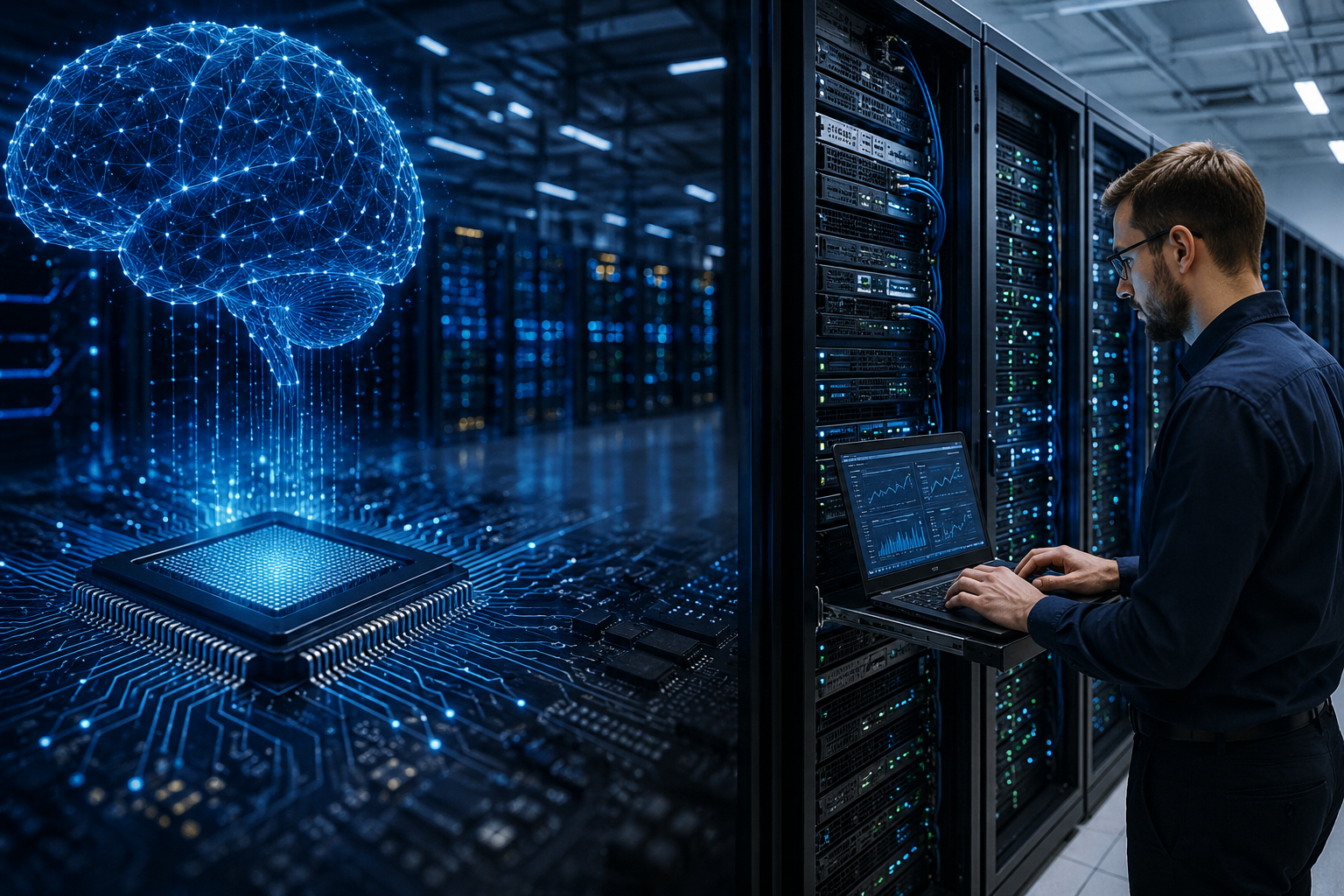
The artificial intelligence boom is no longer just a technology story—it is increasingly becoming the central force shaping global equity markets.
That reality came into sharper focus this week after Citigroup raised its year-end target for the S&P 500 to 8,100, citing stronger-than-expected corporate earnings and what analysts describe as an ongoing AI “supercycle.” The upgrade reflects growing confidence that massive investment in artificial intelligence infrastructure will continue to drive profit growth across multiple sectors of the economy, from semiconductors and cloud computing to power generation and industrial equipment.
For investors, the move is significant. Major Wall Street firms rarely increase market targets unless they see a compelling fundamental catalyst. In this case, Citigroup believes AI-related spending is evolving from a short-term trend into a multi-year investment cycle capable of supporting higher valuations and sustained earnings growth.
As investors search for the next phase of market leadership, the AI supercycle is rapidly becoming one of the most important themes to watch.
AI Spending Continues to Fuel Market Optimism
The latest target increase comes as companies across industries continue to accelerate spending on artificial intelligence technologies.
According to Reuters, Citigroup analysts highlighted robust earnings growth and continued capital investment in AI infrastructure as key reasons behind their more bullish outlook. The bank’s revised forecast suggests that the economic impact of AI may be larger and more durable than previously expected.
Over the past two years, technology giants have collectively committed hundreds of billions of dollars toward building AI capabilities. Data centers are expanding at record rates, cloud providers are increasing infrastructure investments, and semiconductor manufacturers are racing to meet demand for advanced AI chips.
The scale of spending has surprised many analysts.
Research from McKinsey estimates that generative AI could contribute between $2.6 trillion and $4.4 trillion annually to the global economy through productivity gains and new business opportunities. Meanwhile, IDC projects global AI spending will continue growing at a double-digit pace throughout the decade as organizations integrate AI into operations, customer service, software development, healthcare, manufacturing, and financial services.
This sustained investment cycle is one reason why Wall Street remains increasingly optimistic about future earnings growth.
Why the AI Infrastructure Buildout Matters
Many investors initially viewed artificial intelligence as primarily a software story. However, the current investment landscape reveals a much broader opportunity set.
Every AI model requires enormous computing resources. Those resources depend on a complex ecosystem that includes:
- Advanced semiconductors and AI accelerators
- Data center construction and expansion
- Cloud computing infrastructure
- Networking equipment
- Electrical systems and power management
- Energy generation and transmission
- Cooling and thermal management technologies
As a result, AI spending is benefiting far more than just technology companies.
The infrastructure supporting artificial intelligence has become one of the largest capital investment themes in the global economy. Similar to how the internet boom created opportunities across telecommunications, networking, software, and hardware companies, today’s AI expansion is creating winners across multiple sectors.
This broadening impact is one of the reasons investors continue assigning premium valuations to companies positioned within the AI supply chain.
Earnings Growth Remains the Key Driver
One of the most important factors supporting Citigroup’s outlook is corporate earnings growth.
Historically, sustained stock market advances require strong earnings expansion. While valuation multiples can fluctuate, long-term market performance ultimately depends on a company’s ability to generate profits.
Recent earnings reports from major technology firms have reinforced investor confidence that AI investments are translating into real financial results.
Many companies are reporting:
- Increased demand for AI-related products and services
- Higher cloud computing revenue
- Expanding margins through automation and efficiency gains
- Improved customer engagement through AI-powered tools
This transition from AI hype to measurable earnings growth is a critical development for investors.
Wall Street is becoming increasingly focused on whether AI can drive not only revenue growth but also productivity improvements across the broader economy. If businesses can use AI to reduce costs, improve efficiency, and accelerate innovation, profit margins could expand across numerous industries.
That potential is helping support higher market forecasts despite ongoing concerns about interest rates and economic uncertainty.
The Sectors Investors Should Watch
While mega-cap technology companies continue to dominate headlines, the AI supercycle is creating opportunities across a much wider investment universe.
Semiconductors
Chip manufacturers remain at the center of AI development. Advanced processors and AI accelerators are essential for training and running large-scale AI models.
Demand for high-performance computing chips continues to exceed supply in many areas, making semiconductors one of the most direct beneficiaries of AI spending.
Cloud Infrastructure
Cloud providers serve as the backbone of modern AI applications. As businesses increasingly adopt AI tools, demand for cloud computing resources continues to rise.
Companies providing storage, computing power, and AI services stand to benefit from long-term growth trends.
Data Centers
The rapid expansion of AI workloads is driving unprecedented demand for data center capacity.
Industry forecasts suggest that global data center construction and expansion could remain elevated for years as organizations build the infrastructure necessary to support increasingly sophisticated AI systems.
Power and Utilities
One of the less discussed beneficiaries of AI is the energy sector.
Artificial intelligence requires substantial electricity consumption. As data centers proliferate, demand for reliable power generation and grid infrastructure is expected to increase significantly.
Utilities, independent power producers, and companies involved in electrical infrastructure development may become important participants in the AI investment story.
Networking and Industrial Equipment
AI systems depend on high-speed networking equipment and advanced industrial technologies.
Manufacturers producing switches, routers, cooling systems, and electrical components are increasingly benefiting from rising AI-related capital expenditures.
Risks Investors Should Not Ignore
Despite growing enthusiasm, investors should remain mindful of potential risks.
Valuations across portions of the AI ecosystem have risen significantly, increasing the possibility of volatility if growth expectations are not met.
In addition, macroeconomic challenges remain. Interest rate uncertainty, geopolitical tensions, supply chain disruptions, and regulatory developments could affect both technology spending and overall market sentiment.
Another key risk is execution.
While AI promises transformational productivity gains, investors will closely monitor whether companies can convert massive capital expenditures into sustainable profits.
The long-term opportunity remains substantial, but market leadership could shift quickly if earnings growth fails to justify current expectations.
The Bigger Picture
Citigroup’s decision to raise its S&P 500 target reflects a growing consensus among institutional investors that artificial intelligence is reshaping the investment landscape.
The AI supercycle is no longer confined to technology companies. It is influencing capital allocation decisions across industries, driving infrastructure investment, supporting earnings growth, and reshaping expectations for future economic expansion.
Whether investors focus on semiconductors, cloud computing, power generation, data centers, or networking equipment, the common theme remains the same: artificial intelligence is becoming one of the most powerful drivers of corporate profitability and market performance.
For investors seeking long-term opportunities, understanding where AI spending is flowing—and which companies stand to benefit most—may be one of the most important tasks in today’s market environment.
Stay informed with MoneyNews.Today for daily investor insights, market-moving developments, and in-depth analysis of the trends shaping the future of investing.




