
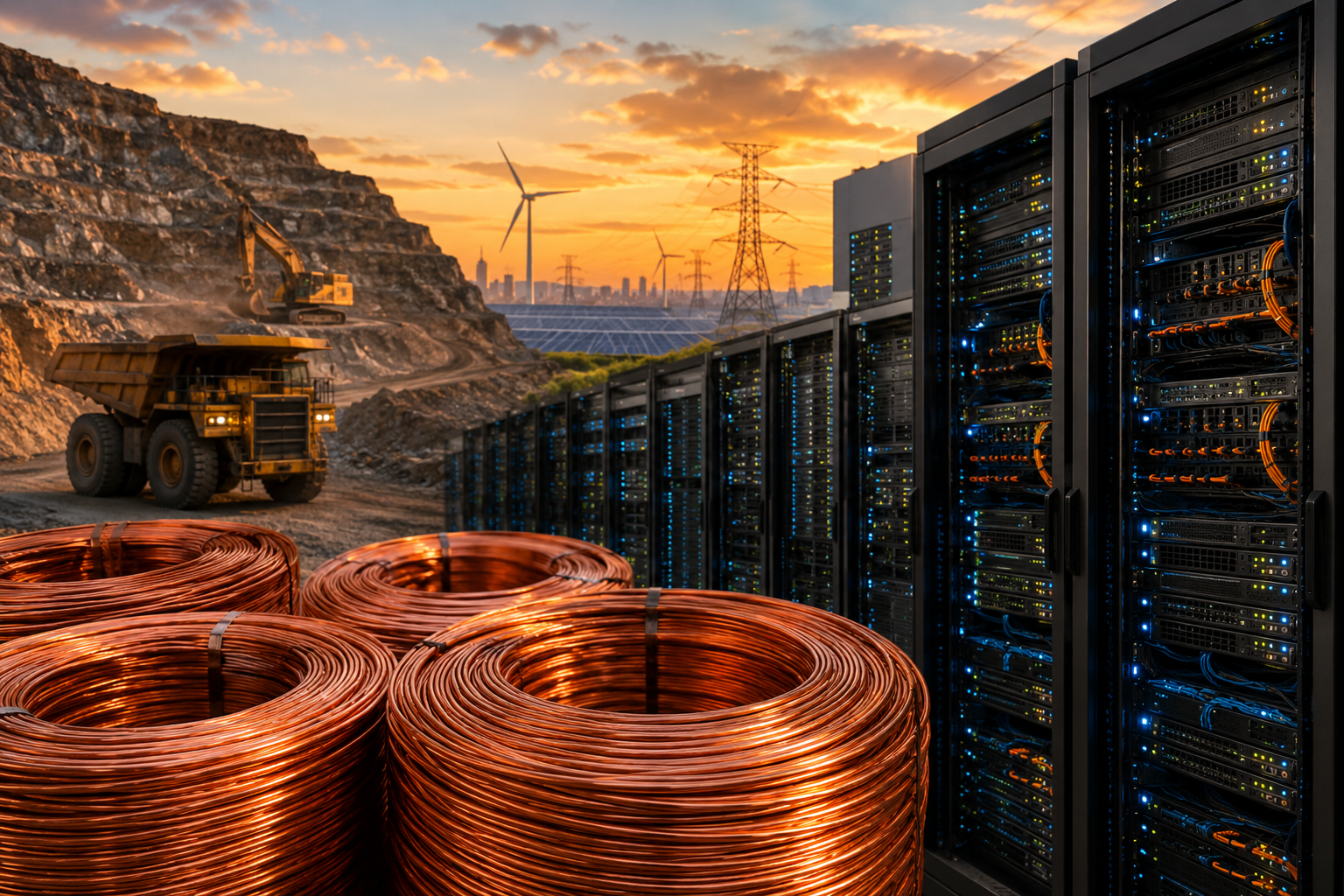
Artificial intelligence may be powered by software, algorithms, and advanced semiconductors—but beneath the surface of the AI revolution lies a less glamorous commodity that is becoming increasingly critical to the future of global technology: copper.
As investors focus on AI chipmakers, cloud computing giants, and data-center operators, a growing number of analysts are warning that one of the biggest beneficiaries of the AI boom may be found in the mining sector. Demand for copper is accelerating across multiple industries, fueled by AI infrastructure expansion, power-grid modernization, electric vehicles, renewable energy projects, and global electrification efforts.
At the same time, supply growth is struggling to keep pace.
The result is a widening imbalance that has pushed copper back into the spotlight as one of the most compelling long-term investment themes in global markets. Recent geopolitical tensions and concerns about supply-chain resilience have only strengthened investor interest in strategic metals, with copper increasingly viewed as an essential resource for the next phase of economic and technological growth.
For investors seeking exposure to long-term structural trends, copper may be emerging as one of the most important commodities of the decade.
The Hidden Foundation of the AI Boom
The rapid rise of artificial intelligence has triggered an unprecedented wave of infrastructure investment.
Major technology companies are spending billions of dollars on data centers, cloud-computing facilities, networking equipment, and power infrastructure to support increasingly sophisticated AI applications. According to estimates from McKinsey, Goldman Sachs, and industry researchers, AI-related capital expenditures could reach hundreds of billions of dollars annually over the coming years.
What many investors overlook is that every AI data center requires enormous amounts of copper.
Copper is used extensively in electrical wiring, power systems, cooling technologies, transformers, networking equipment, and grid connections. As AI workloads become more demanding, electricity consumption rises, increasing the need for both energy infrastructure and the copper required to build it.
Goldman Sachs has described copper as “the new oil” of electrification because of its essential role in modern infrastructure. The AI boom is now adding another powerful source of demand to an already tight market.
The implications for investors are significant.
Unlike software companies that can scale rapidly, mining projects often require years—or even decades—to move from discovery to production. This creates a structural challenge when demand accelerates faster than supply can respond.
Supply Growth Is Falling Behind
While demand projections continue rising, copper producers face mounting challenges.
According to Reuters commodity coverage and industry mining reports, many of the world’s largest copper-producing regions are experiencing declining ore grades, permitting delays, labor disputes, and infrastructure constraints. These issues have made it increasingly difficult to expand production at the pace required to meet future demand.
Several major mining jurisdictions, including parts of South America, continue facing political and regulatory uncertainties that could affect future output.
Chile and Peru, which together account for a substantial share of global copper production, have encountered operational disruptions and investment challenges in recent years. At the same time, environmental permitting requirements have become more stringent in many countries, extending project development timelines.
The International Energy Agency (IEA) has repeatedly warned that global supplies of critical minerals may struggle to keep pace with energy-transition goals unless significant investment occurs across the mining sector.
Copper sits at the center of that challenge.
Many analysts now forecast supply deficits emerging later this decade, potentially creating upward pressure on prices if new production fails to materialize quickly enough.
Why This Matters for Investors
Commodity markets often experience cycles of oversupply and undersupply.
What makes copper unique is the breadth of demand drivers supporting the market simultaneously.
Artificial Intelligence Infrastructure
The construction of AI-focused data centers represents a major new source of copper demand. Large-scale computing facilities require extensive electrical infrastructure, power transmission systems, and cooling networks.
As AI adoption expands globally, these requirements are expected to increase significantly.
Power Grid Expansion
Electric grids across North America, Europe, and Asia require substantial upgrades to support growing electricity consumption. Renewable energy integration, data-center growth, and increased electrification all depend on expanded transmission capacity.
Copper remains a critical component of those investments.
Electric Vehicles
The transportation sector continues shifting toward electrification.
Electric vehicles typically require significantly more copper than traditional internal combustion engine vehicles due to batteries, motors, charging systems, and electrical wiring.
As EV adoption expands, copper demand is expected to rise alongside it.
Renewable Energy Development
Wind farms, solar projects, battery storage facilities, and other clean-energy initiatives rely heavily on copper-intensive infrastructure.
These projects represent another long-term source of demand growth.
Taken together, these trends create a powerful investment narrative that extends well beyond any single industry.
Geopolitical Risks Are Increasing the Appeal of Strategic Metals
Recent geopolitical tensions have added another layer of complexity to global commodity markets.
Governments increasingly view access to critical minerals as a matter of economic and national security. The ability to secure reliable supplies of copper and other strategic resources has become a key policy objective across many developed economies.
The United States, Canada, Australia, and European nations have all announced initiatives aimed at strengthening domestic supply chains for critical minerals.
Investors are paying close attention because supply disruptions can significantly impact commodity prices and company profitability.
In periods of geopolitical uncertainty, strategic resources often attract additional investor interest as markets assess potential risks to future supply availability.
Copper’s importance to technology, energy, defense, and industrial infrastructure places it at the center of these discussions.
Future Trends to Watch
Several developments could shape the copper market over the next decade.
New Mine Development
Mining companies are accelerating efforts to bring new projects online. Investors should monitor development-stage assets with significant resource potential, particularly in stable mining jurisdictions.
AI Infrastructure Spending
Technology companies continue announcing massive investments in AI infrastructure. Future capital expenditure plans from cloud providers and data-center operators may provide important clues about future copper demand.
Grid Modernization Projects
Government investments in energy infrastructure and transmission networks could further strengthen long-term demand.
Consolidation Across the Mining Sector
As supply concerns intensify, mergers, acquisitions, and strategic partnerships may increase among mining companies seeking access to high-quality copper assets.
Investors should watch for corporate activity that signals growing competition for future production capacity.
Key Investment Insight
Copper is increasingly becoming one of the most important commodities underpinning the modern economy.
While investors often associate the AI revolution with semiconductor stocks and technology companies, the physical infrastructure supporting that revolution requires vast amounts of copper. Combined with demand from electrification, renewable energy, electric vehicles, and power-grid expansion, this creates a powerful long-term growth story.
If supply constraints persist, copper miners could emerge as some of the biggest indirect beneficiaries of the AI boom. Investors should closely monitor major producers, royalty companies, and development-stage mining projects capable of bringing new supply to market over the coming years.
The most successful investment opportunities are often found where multiple long-term trends intersect. Today, copper sits at the crossroads of artificial intelligence, electrification, energy transition, and infrastructure modernization.
Stay informed with MoneyNews.Today for daily investor insights, market-moving commodity developments, and in-depth analysis of the trends shaping the future of global investing.




