
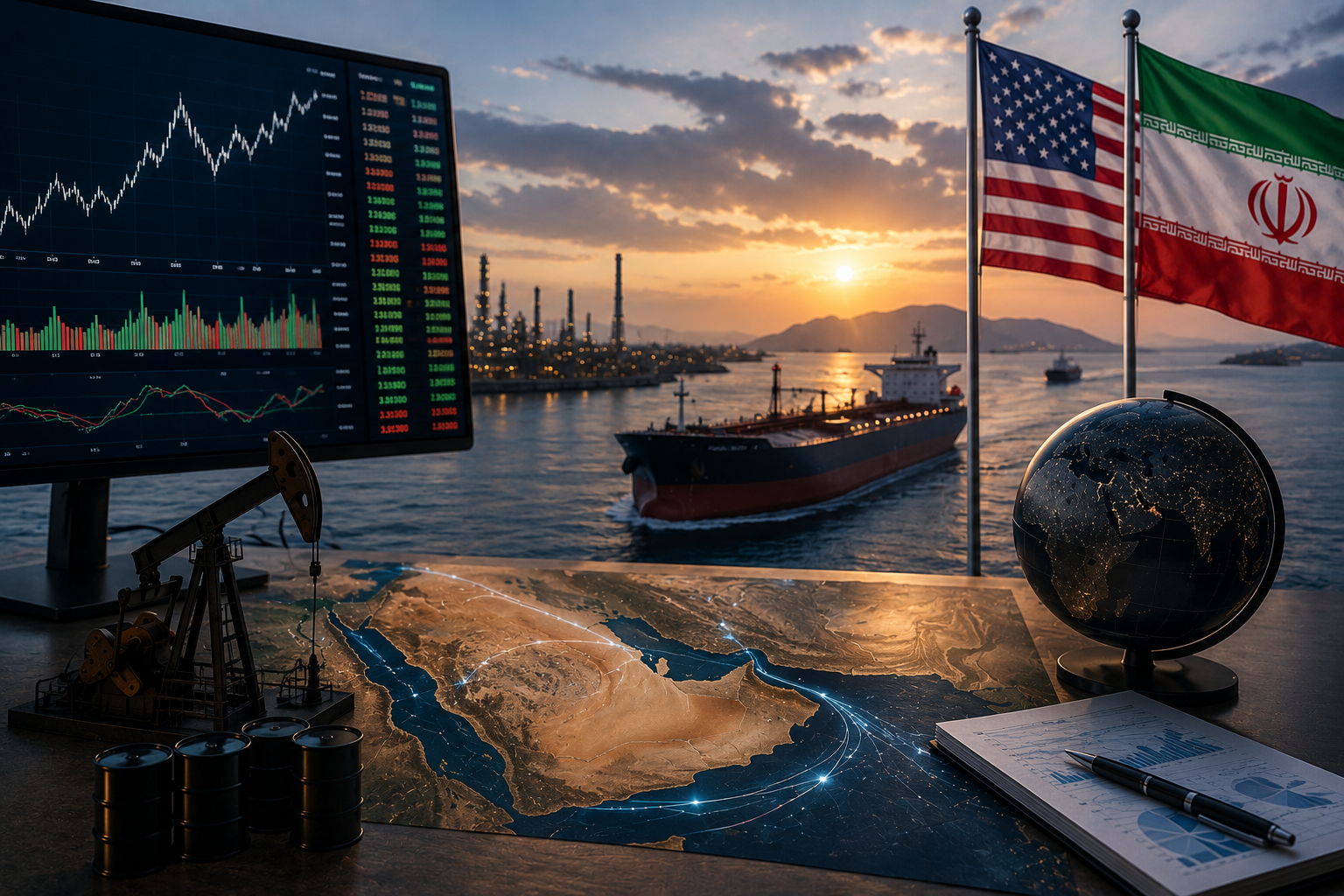
For much of 2026, artificial intelligence, technology stocks, and Federal Reserve policy have dominated investor conversations. Yet this week, another force reminded markets of its enduring influence: geopolitics.
Investors worldwide are closely monitoring diplomatic developments between the United States and Iran after reports of progress helped calm market nerves. While signs of de-escalation have provided temporary relief to equities and risk assets, concerns surrounding energy supplies and the security of critical shipping routes in the Middle East continue to shape market sentiment.
At the center of investor attention is the Strait of Hormuz, one of the most strategically important waterways in the global economy. Any disruption to energy flows through the region could quickly affect oil prices, inflation expectations, central bank policy, and ultimately the direction of financial markets.
For investors, the situation serves as a powerful reminder that geopolitical events often influence markets not through headlines alone, but through their impact on energy prices and economic growth. As diplomatic efforts continue, understanding the connection between geopolitics and market performance has become increasingly important.
Why Investors Are Focused on U.S.-Iran Relations
The relationship between the United States and Iran has long been one of the most significant geopolitical factors affecting global energy markets.
The Middle East remains a vital source of global oil production, and tensions involving major regional players frequently influence commodity prices, supply chain expectations, and investor risk appetite.
According to Reuters reporting on June 11, markets have responded positively to signs of diplomatic progress. Investors generally welcome efforts that reduce the likelihood of military escalation or disruptions to international trade routes.
However, markets remain cautious.
Even when diplomatic discussions appear constructive, uncertainty surrounding future developments often keeps risk premiums embedded in energy markets. Investors understand that geopolitical conditions can change rapidly, making ongoing monitoring essential.
The current situation highlights how political developments can quickly become economic and financial market issues.
The Critical Importance of the Strait of Hormuz
Much of the market’s concern centers on the Strait of Hormuz.
Located between the Persian Gulf and the Gulf of Oman, the waterway serves as one of the world’s most important energy transportation corridors.
According to data from the U.S. Energy Information Administration (EIA), a significant portion of global oil and liquefied natural gas exports pass through the Strait of Hormuz each day.
Any threat to shipping activity in the region can create immediate concerns regarding:
- Global oil supply
- Energy prices
- Shipping costs
- Inflation pressures
- Economic growth expectations
Because energy remains a foundational input for nearly every industry, disruptions can ripple through the global economy far beyond the energy sector itself.
This explains why investors often react strongly to developments involving the region.
Oil Prices Remain the Market’s Geopolitical Barometer
While headlines may drive short-term market reactions, oil prices often provide the clearest signal of how investors are assessing geopolitical risks.
Historically, rising geopolitical tensions tend to increase crude oil prices as traders account for potential supply disruptions.
When oil prices move significantly higher, the effects can spread across multiple areas of the economy:
Higher Transportation Costs
Businesses face increased expenses for shipping goods and managing logistics networks.
Increased Manufacturing Costs
Energy-intensive industries often experience margin pressure as fuel and input costs rise.
Consumer Spending Challenges
Higher gasoline and energy costs can reduce disposable income, affecting retail spending and economic activity.
Inflation Concerns
Persistent increases in energy prices can complicate efforts by central banks to maintain price stability.
Because of these factors, investors frequently view oil as the primary transmission mechanism between geopolitical developments and broader financial markets.
Why This Matters for Federal Reserve Policy
One of the most important implications of higher oil prices involves monetary policy.
Over the past year, investors have closely followed inflation trends and Federal Reserve communications in search of clues about future interest-rate decisions.
Markets generally prefer a stable or declining inflation environment because it increases the likelihood of accommodative monetary policy.
However, a sustained rise in energy prices could complicate that outlook.
If oil prices remain elevated or continue climbing, inflationary pressures could re-emerge across various sectors of the economy.
This would present a challenge for policymakers attempting to balance economic growth with price stability.
According to numerous economists and market strategists, energy-driven inflation remains one of the most significant risks capable of altering interest-rate expectations in the near term.
For investors, this connection makes geopolitical developments especially relevant.
A shift in inflation expectations could influence everything from bond yields and equity valuations to currency markets and sector performance.
How Different Sectors Could Be Impacted
The market impact of U.S.-Iran developments is unlikely to be uniform.
Certain sectors may benefit from higher energy prices, while others could face increased pressure.
Energy Producers
Oil and gas companies often benefit from rising crude prices, which can improve revenue and profitability.
Defense Contractors
Periods of geopolitical uncertainty frequently increase investor interest in defense-related businesses due to expectations of higher government spending.
Transportation Companies
Airlines, shipping firms, and logistics providers may experience higher operating costs if fuel prices increase substantially.
Consumer Discretionary Stocks
Higher energy expenses can reduce consumer purchasing power, potentially affecting spending patterns.
Technology and Growth Stocks
Growth-oriented sectors may be indirectly affected if higher inflation influences interest-rate expectations and valuation multiples.
Understanding these relationships can help investors identify both opportunities and risks during periods of geopolitical uncertainty.
Future Trends to Watch
Several developments could shape market sentiment in the weeks ahead.
Diplomatic Progress
Continued engagement between the United States and Iran could help reduce risk premiums currently embedded in energy markets.
Oil Market Reactions
Crude oil prices remain one of the most important indicators of investor confidence regarding regional stability.
Federal Reserve Communications
Investors should monitor how policymakers evaluate energy-related inflation risks in upcoming statements and economic projections.
Global Economic Data
Economic reports may provide insight into whether higher energy costs are affecting business activity and consumer demand.
Regional Security Developments
Any changes involving shipping routes, energy infrastructure, or military activity could quickly influence market sentiment.
Why Diversification Remains Critical
The current geopolitical environment reinforces a lesson investors have learned repeatedly throughout market history: diversification matters.
While artificial intelligence, cloud computing, and digital transformation continue driving long-term growth opportunities, external events can quickly reshape short-term market dynamics.
A diversified portfolio that includes exposure to various sectors, asset classes, and economic themes may be better positioned to navigate unexpected developments.
Investors who understand the interconnected nature of geopolitics, energy markets, inflation, and monetary policy are often better prepared to respond when market conditions shift.
Key Investment Insight
Energy prices remain the most important link between geopolitical developments and financial markets. While recent diplomatic progress between the United States and Iran has helped calm investor concerns, risks surrounding oil supplies and the Strait of Hormuz continue to warrant close attention.
A sustained increase in oil prices could reignite inflation concerns, influence Federal Reserve policy expectations, and create new volatility across equities, bonds, and commodities. Investors should closely monitor energy markets, inflation indicators, and geopolitical developments while maintaining diversified exposure to sectors positioned to benefit from changing economic conditions.
As global events continue shaping investment opportunities, stay connected with MoneyNews.Today for daily investor insights, market-moving developments, and in-depth analysis of the trends influencing today’s financial markets and tomorrow’s opportunities.




