The artificial intelligence investment story has found a powerful new source of validation—and it is coming from one of the most critical yet often overlooked segments of the semiconductor industry. As investors continue debating whether the AI boom can justify the trillions of dollars being poured into data centers and computing infrastructure, Micron Technology has delivered a compelling answer.
The memory-chip giant reported record quarterly revenue and profit on June 25, fueled by surging demand for AI-related memory products. Even more striking, the company revealed that key AI memory products are effectively sold out through the remainder of 2026, underscoring the intensity of demand across the semiconductor supply chain.
The announcement immediately captured the attention of Wall Street, helping spark a broader rally in technology stocks and reinforcing confidence in the AI infrastructure trade. For investors searching for evidence that artificial intelligence spending remains strong despite valuation concerns and recent market volatility, Micron’s results may represent one of the clearest signals yet.
More importantly, the results highlight an emerging reality: memory has become one of the most direct ways to gain exposure to the ongoing AI revolution.
The Hidden Engine Behind Artificial Intelligence
Much of the public discussion surrounding AI focuses on powerful graphics processing units (GPUs), advanced software models, and technology giants racing to develop next-generation applications.
However, memory has become equally essential to the AI ecosystem.
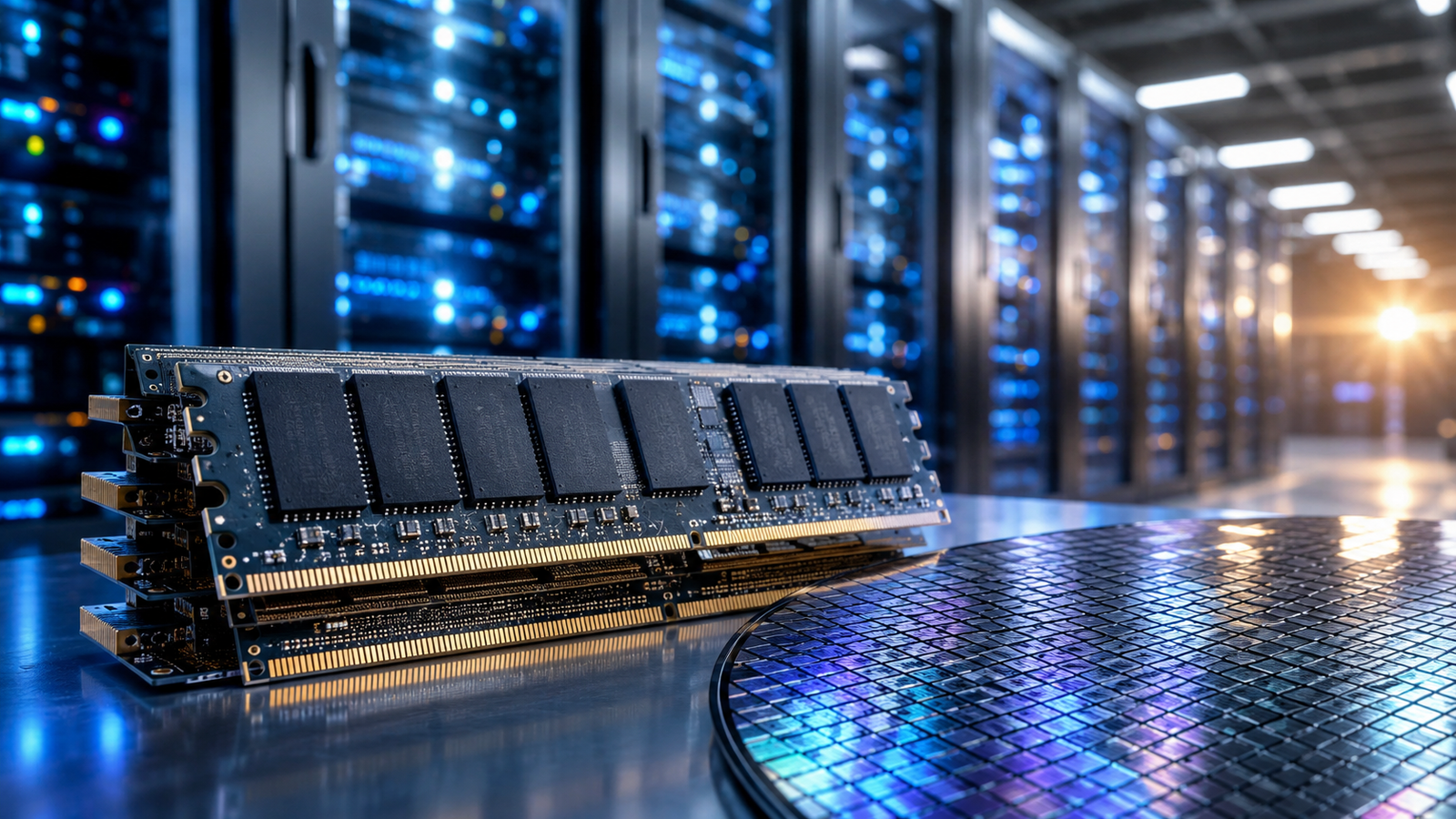
Modern AI systems process enormous datasets and require rapid access to vast amounts of information. This demand has elevated memory technologies such as High-Bandwidth Memory (HBM) and advanced DRAM solutions from supporting components to mission-critical infrastructure.
Every major AI accelerator relies on memory to function efficiently.
Without sufficient memory capacity and bandwidth, even the most powerful processors cannot achieve their full potential.
As a result, demand for advanced memory products has surged alongside the broader AI boom.
Micron’s latest results provide compelling evidence that this trend is accelerating rather than slowing.
According to AFP and Reuters reporting, the company delivered record financial performance driven largely by AI-related demand and disclosed that significant portions of its advanced memory production capacity have already been committed to customers through the end of 2026.
For investors, this represents a crucial indicator of future industry demand.
Why Being “Sold Out” Matters
One of the most important details from Micron’s report was management’s statement that key AI memory products are effectively sold out for the remainder of the year.
This development carries significant implications for the broader technology sector.
When customers commit to future purchases months or even years in advance, it suggests confidence that AI infrastructure spending will continue growing.
Large cloud providers, enterprise customers, and semiconductor manufacturers are not merely responding to current demand—they are positioning themselves for future expansion.
The fact that customers are locking in supply ahead of time indicates concerns about availability and potential shortages.
Historically, semiconductor markets have been highly cyclical, characterized by periods of oversupply followed by sharp downturns.
Today’s AI-driven environment appears different.
Many analysts argue that demand is being driven by a structural technology transition rather than a temporary economic cycle.
If that assessment proves correct, memory suppliers could benefit from sustained pricing power and stronger profit margins over an extended period.
For investors, that creates a significantly different investment opportunity than traditional semiconductor cycles have offered.
AI Infrastructure Spending Remains Strong
Micron’s results arrive at a particularly important moment for financial markets.
Earlier this week, technology stocks experienced a significant selloff amid concerns that AI-related spending might be slowing.
The decline erased more than $1 trillion in market value from technology companies as investors questioned whether hyperscale cloud providers could continue investing aggressively in AI infrastructure.
Micron’s performance has helped ease some of those concerns.
The company’s results suggest that major customers remain committed to expanding AI capabilities despite economic uncertainty, elevated interest rates, and ongoing discussions about valuation levels.
This aligns with broader trends observed throughout the technology sector.
Major cloud providers including Microsoft, Amazon, Alphabet, and Meta continue allocating substantial capital toward AI initiatives. Industry research from firms such as McKinsey, Gartner, and IDC indicates that enterprise AI spending remains a top strategic priority for businesses across multiple industries.
The growing adoption of generative AI, machine learning applications, and advanced automation systems continues driving demand for computing resources.
Memory sits at the center of this expansion.
Why Memory May Be One of the Best AI Investment Themes
For much of the AI boom, investors have focused primarily on companies developing AI models or producing advanced processors.
However, Micron’s results highlight why memory manufacturers deserve greater attention.
Unlike some areas of the AI ecosystem where future winners remain uncertain, memory demand benefits from nearly every AI deployment.
Whether organizations are training large language models, operating inference systems, or building AI-powered applications, memory requirements continue increasing.
This creates several potential advantages for investors:
Broad Exposure to AI Growth
Memory suppliers benefit regardless of which AI platform or model ultimately gains market share.
Increasing Pricing Power
Strong demand and limited supply can support higher pricing and improved profitability.
Infrastructure Expansion
Every new AI data center requires significant memory capacity.
Long-Term Demand Drivers
AI adoption remains in its early stages across many industries, suggesting future demand growth.
This combination of factors has prompted many analysts to view memory as one of the most compelling infrastructure plays within the broader AI landscape.
Future Trends Investors Should Watch
While Micron’s results provide encouraging signals, investors should continue monitoring several key developments.
High-Bandwidth Memory Demand
HBM has become one of the fastest-growing segments within the semiconductor industry.
Continued growth could support strong earnings across memory suppliers.
Semiconductor Capacity Expansion
Companies throughout the industry are increasing investments in manufacturing facilities and production capabilities.
Future capacity additions will influence pricing and supply dynamics.
AI Capital Spending
Spending plans from hyperscale cloud providers remain critical indicators of future demand.
Supply Constraints
Persistent shortages could create opportunities for memory manufacturers but may also impact broader technology supply chains.
Global Competition
International competition among semiconductor producers continues shaping industry investment and innovation trends.
Key Investment Insight
Micron’s record results offer one of the strongest confirmations yet that the AI infrastructure boom remains firmly intact.
The company’s sold-out AI memory products and record financial performance suggest that demand continues outpacing supply, reinforcing expectations for sustained investment throughout the semiconductor ecosystem.
For investors, memory has emerged as one of the clearest and most direct ways to participate in AI infrastructure growth.
Rather than focusing exclusively on AI software developers or GPU manufacturers, investors should closely monitor memory suppliers, semiconductor equipment companies, advanced packaging providers, and other infrastructure enablers supporting the AI economy.
The next phase of the AI revolution will require enormous amounts of computing power—and every processor powering that future will need memory.
As the industry continues evolving, understanding these foundational technologies may prove just as important as identifying the next breakthrough AI application. Stay informed with MoneyNews.Today for daily market insights, technology analysis, and investor-focused coverage of the trends shaping tomorrow’s economy.