
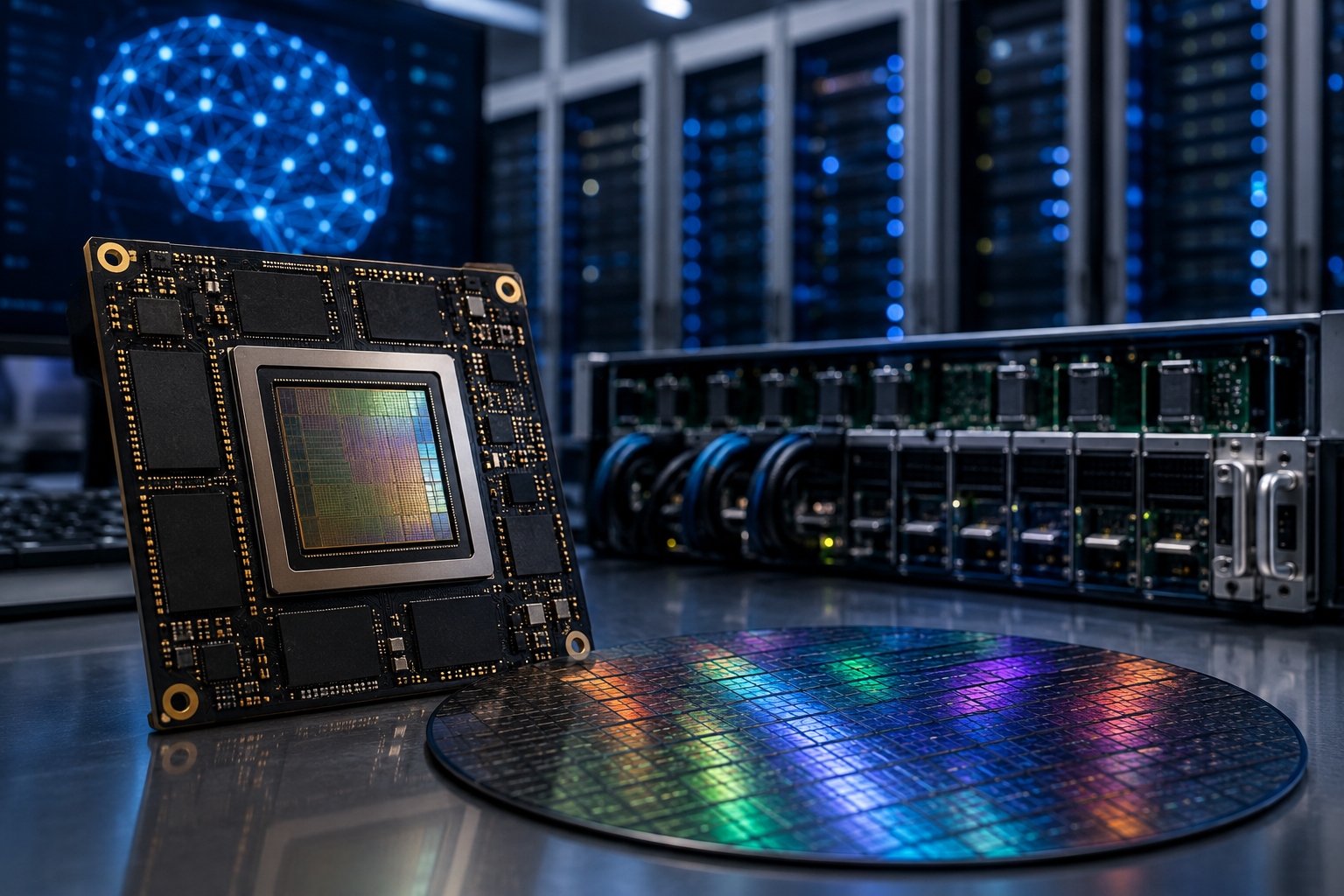
The artificial intelligence revolution may be entering its next major phase—and it is no longer just about building the most powerful AI models. Increasingly, the competition is shifting deeper into the technology stack, where custom-designed AI chips are emerging as the newest battleground among the world’s largest technology companies.
Fresh reports that OpenAI’s custom AI chip initiative is receiving support from Broadcom have intensified investor focus on a rapidly evolving trend: the move toward proprietary AI hardware. As demand for AI computing power continues to surge, companies are seeking greater control over their infrastructure, reducing reliance on traditional GPU suppliers while pursuing better performance, lower costs, and strategic independence.
For investors, this development could mark one of the most significant shifts in the AI ecosystem since the launch of generative AI. While companies such as Nvidia have dominated the first phase of the AI boom, the next wave of winners may emerge from a broader group of businesses involved in custom silicon design, advanced packaging, networking equipment, semiconductor manufacturing, and power infrastructure.
The implications extend far beyond chipmakers alone.
The AI Hardware Race Is Accelerating
The AI industry’s explosive growth has created unprecedented demand for computing resources. Training and operating large language models requires massive amounts of processing power, driving billions of dollars in spending on data centers and advanced semiconductors.
Nvidia has been one of the primary beneficiaries of this trend, becoming one of the world’s most valuable companies by supplying the GPUs that power much of today’s AI infrastructure.
However, success has also created challenges.
Many technology companies have become increasingly concerned about the costs associated with purchasing third-party AI accelerators. As AI deployment expands across cloud computing, enterprise software, consumer applications, and autonomous systems, infrastructure expenses have become a major strategic consideration.
This has sparked growing interest in custom AI chips.
According to reports highlighted by Yahoo Finance, OpenAI is advancing efforts to develop proprietary AI hardware with support from Broadcom, a company known for its expertise in custom semiconductor design. The initiative reflects a broader industry movement toward vertical integration, where companies seek greater control over critical technologies rather than depending entirely on external suppliers.
For investors, the trend mirrors earlier shifts seen in industries such as smartphones, cloud computing, and electric vehicles, where companies increasingly built proprietary technologies to improve efficiency and competitive differentiation.
Why Custom Silicon Matters
The economics of AI provide a compelling reason for companies to invest in proprietary hardware.
Training advanced AI models can require thousands of high-performance processors operating simultaneously. Inference—the process of deploying AI models for real-world use—also generates substantial computing costs.
Custom-designed chips offer several potential advantages:
- Lower operating costs
- Improved energy efficiency
- Optimized performance for specific AI workloads
- Reduced supply-chain dependence
- Greater control over future product development
Major technology companies have already demonstrated the value of this strategy.
Alphabet developed its Tensor Processing Units (TPUs) to support AI workloads across Google Cloud and internal services. Amazon introduced Trainium and Inferentia chips to power AI applications on Amazon Web Services. Microsoft has expanded investments in custom AI silicon to support Azure’s growing AI ecosystem.
OpenAI’s reported efforts represent another step in this direction.
Rather than relying solely on off-the-shelf solutions, AI developers increasingly want hardware specifically designed for their own models and workloads.
This trend could fundamentally reshape the economics of the AI industry over the next decade.
Beyond Nvidia: A Broader Investment Opportunity
One of the most important takeaways for investors is that the AI opportunity is becoming increasingly diversified.
During the first phase of the AI boom, much of investor attention centered on companies directly involved in AI model development or GPU production.
The next phase may create a wider range of winners.
Custom AI chip development requires a complex ecosystem involving multiple specialized industries.
These include:
Semiconductor Design
Companies involved in chip architecture, intellectual property licensing, and custom silicon engineering stand to benefit from growing demand for proprietary AI processors.
Broadcom’s involvement with OpenAI highlights how critical design expertise has become in the evolving AI landscape.
Advanced Packaging
As AI chips become more powerful, advanced packaging technologies are becoming increasingly important.
Industry leaders including Taiwan Semiconductor Manufacturing Company (TSMC), Amkor Technology, and other packaging specialists are investing heavily in next-generation manufacturing capabilities.
Analysts have repeatedly identified advanced packaging as a major bottleneck in AI supply chains.
Networking Infrastructure
The growth of AI clusters requires increasingly sophisticated networking equipment to connect thousands of processors efficiently.
Companies providing high-speed interconnect solutions, optical networking systems, and data-center communications technologies could experience substantial demand growth.
Semiconductor Manufacturing
Custom chips still require access to advanced fabrication facilities.
Foundries such as TSMC remain essential to producing the next generation of AI processors, regardless of who designs them.
Power and Cooling Infrastructure
Perhaps one of the most overlooked beneficiaries of the AI boom is the energy sector.
AI workloads consume enormous amounts of electricity, driving investments in power generation, grid modernization, cooling technologies, and energy-efficient data-center infrastructure.
According to estimates from organizations including McKinsey and the International Energy Agency, AI-related power demand is expected to grow significantly throughout the decade.
Why Vertical Integration Is Becoming a Strategic Priority
The move toward proprietary AI hardware reflects broader concerns about supply-chain resilience and competitive advantage.
Over the past several years, demand for AI chips has frequently exceeded available supply. Companies have faced challenges securing enough hardware to support rapidly expanding AI initiatives.
Developing custom chips offers several strategic benefits beyond cost savings.
Organizations gain greater visibility into product roadmaps, reduce dependency on external suppliers, and can optimize hardware specifically for their own software environments.
This strategy resembles approaches used successfully by companies such as Apple, which transformed its competitive position through the development of proprietary silicon.
Investors should recognize that AI companies increasingly view hardware as a strategic differentiator rather than a commodity input.
That shift may drive substantial capital investment across the semiconductor ecosystem for years to come.
Future Trends Investors Should Watch
Several developments could shape the next chapter of the AI infrastructure story.
Expansion of Proprietary AI Chips
More technology firms are likely to introduce custom processors as AI workloads become larger and more specialized.
Growth in AI Infrastructure Spending
Cloud providers and enterprises continue investing aggressively in AI deployment, creating opportunities throughout the hardware supply chain.
Semiconductor Supply-Chain Innovation
Advanced packaging, chiplet architectures, and next-generation manufacturing technologies could emerge as critical competitive advantages.
Energy Infrastructure Investments
Growing AI power requirements may create investment opportunities in utilities, data-center energy systems, and power-generation technologies.
Strategic Partnerships
Collaborations between AI developers, chip designers, foundries, and networking companies will likely become increasingly important as infrastructure complexity rises.
Key Investment Insight
The next phase of the AI revolution may be defined less by who builds the best models and more by who controls the underlying infrastructure.
OpenAI’s reported collaboration with Broadcom underscores a broader industry shift toward vertically integrated AI ecosystems and proprietary hardware solutions.
For investors, this means the opportunity set is expanding beyond AI software and model developers.
Companies involved in custom silicon, semiconductor design, advanced packaging, networking equipment, manufacturing, power systems, and data-center infrastructure may become some of the most important beneficiaries of long-term AI adoption.
The AI story is evolving from a software narrative into a full-stack infrastructure transformation. Investors who understand the broader ecosystem may be better positioned to identify the next generation of market leaders.
Stay informed with MoneyNews.Today for daily investor insights, emerging industry trends, and expert analysis of the technologies shaping the future of global markets.




