
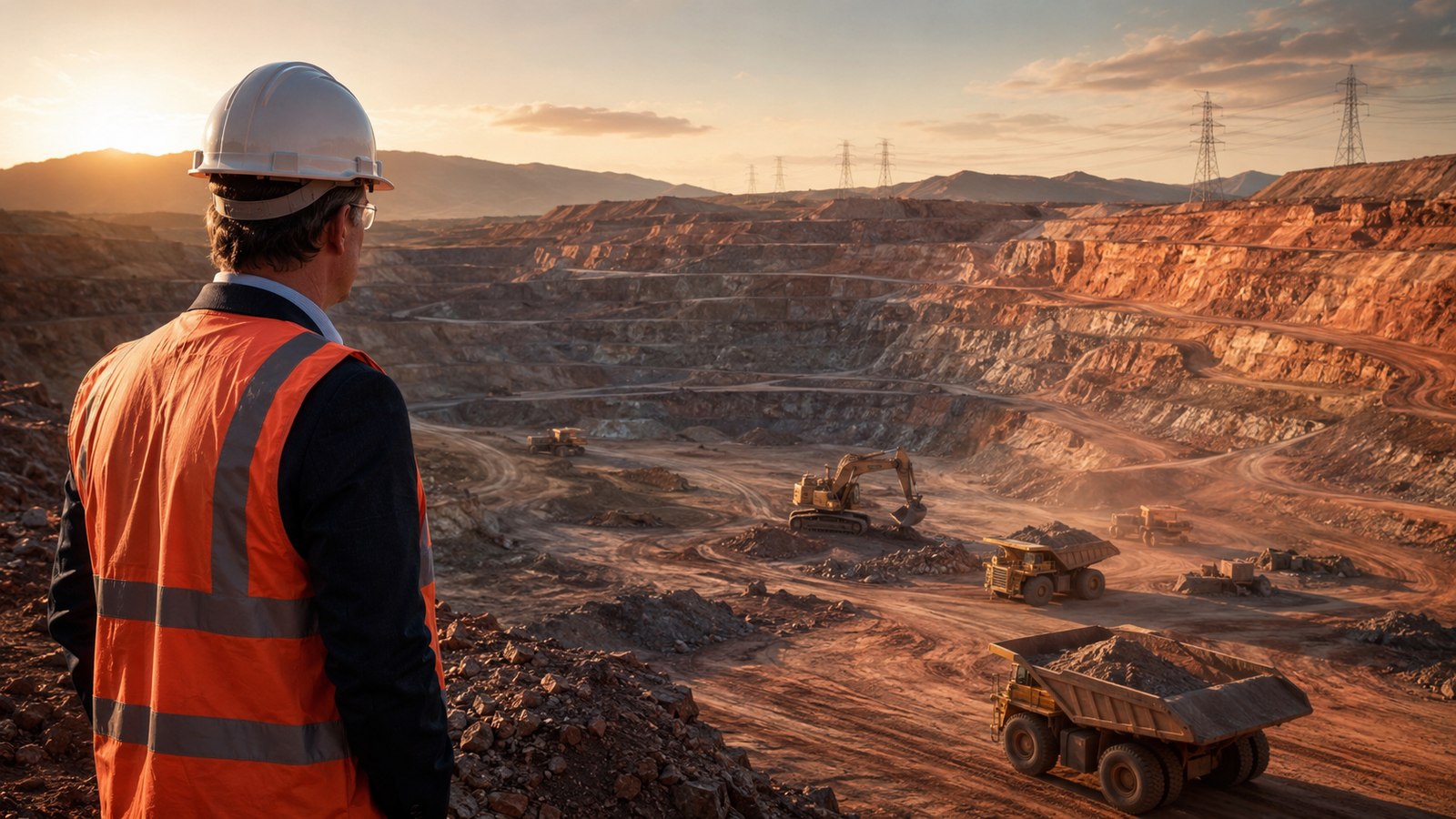
A leadership transition at the world’s largest mining company is capturing the attention of investors worldwide—and for good reason. As Brandon Craig prepares to take the helm at BHP, he inherits a mining industry undergoing one of the most significant transformations in decades. The decisions made over the next several years could influence not only BHP’s future but also the global supply of critical minerals needed to power artificial intelligence, electrification, renewable energy, and data-center expansion.
At the center of this transformation is copper.
Long considered a foundational industrial metal, copper has emerged as one of the most strategically important commodities in the modern economy. From electric vehicles and renewable energy systems to AI-driven data centers and power-grid upgrades, demand forecasts continue pointing toward a future that requires substantially more copper than the world currently produces.
Against this backdrop, investors are closely watching how BHP’s incoming CEO allocates capital, approaches growth opportunities, manages rising operating costs, and positions the mining giant for what many analysts believe could be a decade-long structural supply shortage.
The stakes could hardly be higher.
A Critical Leadership Change at a Pivotal Time
According to Reuters reporting on June 25, Brandon Craig will assume leadership of BHP during a period of significant opportunity and uncertainty for the mining sector.
The company faces several major strategic decisions, including:
- Expanding copper production
- Evaluating uranium opportunities
- Managing rising labor and operating costs
- Assessing potential acquisitions
- Navigating geopolitical and regulatory challenges
- Supporting long-term growth initiatives
Unlike previous mining cycles driven largely by construction and industrial activity, today’s demand outlook is increasingly tied to technological transformation.
Artificial intelligence, electrification, energy security, and digital infrastructure have become powerful new demand drivers for critical minerals.
As a result, investors are paying close attention to how major mining companies position themselves for this evolving landscape.
For BHP, the challenge is not simply producing more commodities—it is determining which commodities will create the most value over the coming decade.
Why Copper Has Become the Most Important Industrial Metal
Few commodities have attracted as much investor interest as copper in recent years.
Often referred to as “the metal of electrification,” copper plays a vital role in virtually every aspect of the modern energy transition.
Electric vehicles require significantly more copper than traditional internal combustion vehicles. Renewable energy systems such as solar and wind farms depend heavily on copper wiring and transmission infrastructure. Power grids require extensive upgrades to support growing electricity demand.
Now, artificial intelligence is adding another major source of consumption.
The rapid expansion of AI data centers is increasing demand for power infrastructure, electrical equipment, cooling systems, networking hardware, and transmission capacity—all of which require substantial amounts of copper.
According to research from organizations including the International Energy Agency (IEA), McKinsey, and major investment banks such as Goldman Sachs and Morgan Stanley, global copper demand is expected to grow significantly throughout the next decade.
At the same time, bringing new copper mines into production has become increasingly difficult.
Environmental permitting challenges, geopolitical risks, declining ore grades, and rising development costs continue limiting supply growth.
This imbalance has strengthened the investment case for copper producers.
BHP’s Copper Strategy Could Signal Industry Confidence
One of the most important questions investors are asking is whether BHP will accelerate investment in copper expansion projects.
Large-scale mining projects require billions of dollars in capital and often take many years to develop.
As a result, investment decisions by industry leaders frequently serve as indicators of long-term confidence in commodity demand.
If BHP increases spending on copper development, many investors will interpret it as a sign that management expects supply shortages and strong pricing conditions to persist.
This could have implications across the mining sector.
Competitors such as Rio Tinto, Freeport-McMoRan, Teck Resources, and other major producers are also evaluating growth opportunities in critical minerals.
The industry’s collective investment decisions may help determine whether future supply can keep pace with rising global demand.
For investors, capital allocation strategies often reveal more about management’s outlook than public commentary alone.
Uranium and the Energy Transition Opportunity
Beyond copper, uranium represents another area attracting increased investor attention.
The global push toward decarbonization has renewed interest in nuclear power as governments seek reliable, low-carbon energy sources capable of supporting growing electricity demand.
This trend is particularly relevant given the rapid expansion of AI infrastructure.
Data centers consume enormous amounts of electricity, and many technology companies are exploring nuclear energy partnerships to secure long-term power supplies.
As utilities, governments, and corporations seek stable energy solutions, uranium demand forecasts have improved significantly.
If BHP chooses to expand exposure to uranium-related opportunities, investors may view the move as an effort to capitalize on another long-term structural growth trend.
The combination of electrification, AI adoption, and energy security concerns has transformed uranium from a niche commodity into a strategically important resource.
Rising Costs Present a Major Challenge
While long-term demand prospects remain favorable, BHP’s new leadership team must also address a less encouraging reality: rising mining costs.
The industry continues facing challenges related to:
- Labor shortages
- Wage inflation
- Equipment expenses
- Energy costs
- Regulatory compliance
- Supply-chain disruptions
These factors can significantly impact project economics and profitability.
Even when commodity prices are strong, rising operating expenses can reduce returns on investment.
For investors, cost management will be a critical area to monitor.
Successful mining companies are increasingly focusing on automation, technology integration, operational efficiency, and productivity improvements to offset inflationary pressures.
BHP’s ability to balance growth ambitions with disciplined capital allocation could become a key differentiator.
Why Mergers and Acquisitions Remain in Focus
Another major question facing investors is whether BHP will pursue future acquisitions.
Organic growth opportunities in mining are often limited by permitting timelines and development complexity. Acquisitions can provide faster access to critical resources, particularly in sectors where high-quality assets are becoming increasingly scarce.
Industry analysts have frequently suggested that copper and critical-mineral assets could remain attractive acquisition targets as demand continues growing.
The strategic rationale is straightforward.
Securing existing production or advanced-stage development projects may prove more efficient than building entirely new operations from scratch.
If BHP signals interest in acquisitions, it could trigger broader speculation across the mining industry and increase attention on smaller developers with attractive resource portfolios.
Future Trends Investors Should Watch
Several developments could shape BHP’s strategic direction and broader mining-sector performance over the coming years.
Copper Supply Growth
Investors should monitor new project approvals, expansion plans, and production forecasts across the industry.
AI Infrastructure Demand
The growth of AI data centers and power infrastructure continues creating additional demand for copper and other critical minerals.
Uranium Market Developments
Nuclear energy investment trends may influence future opportunities within the mining sector.
Capital Allocation Decisions
How BHP balances dividends, project development, acquisitions, and shareholder returns will remain a major focus.
Global Energy Transition Policies
Government support for electrification, renewable energy, and grid modernization could significantly impact long-term commodity demand.
Key Investment Insight
Copper remains one of the most important commodities for investors to watch over the next decade.
The convergence of electrification, artificial intelligence, renewable energy expansion, and power-grid modernization is creating powerful structural demand drivers that could support long-term growth throughout the mining sector.
BHP’s new CEO enters the role at a pivotal moment when strategic decisions regarding copper expansion, uranium opportunities, capital allocation, and potential acquisitions could shape the company’s future and provide valuable signals about broader industry expectations.
Investors should pay close attention not only to BHP’s actions but also to investment decisions from major miners across the sector. Any acceleration in spending by BHP, Rio Tinto, or other industry leaders may indicate growing confidence that copper supply shortages are likely to persist well into the next decade.
As critical minerals become increasingly central to the global economy, understanding the companies producing them may prove just as important as tracking the technologies driving demand. Stay informed with MoneyNews.Today for daily investor insights, mining-sector analysis, and market-moving developments shaping the future of global resource markets.




