
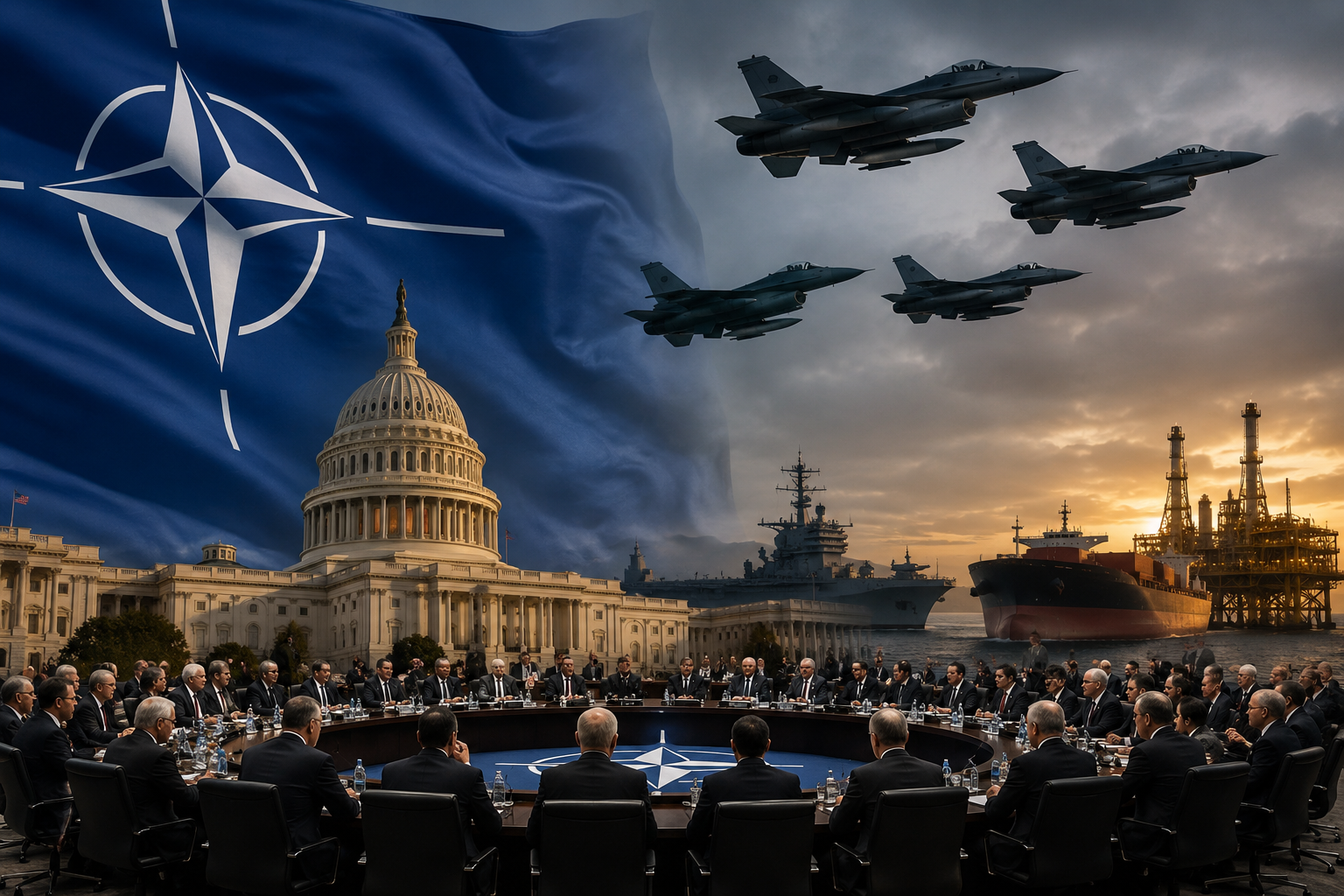
Global investors entered Tuesday’s trading session with renewed attention on geopolitics as NATO leaders gathered in Ankara for one of the alliance’s most closely watched summits in years. While corporate earnings and central bank policy remain key market drivers, the summit has introduced another major variable that could influence defense spending, energy markets, and investor sentiment throughout the second half of 2026.
President Donald Trump used the opening of the summit to urge NATO allies to accelerate defense spending commitments, arguing that member nations must take greater responsibility for collective security amid rising geopolitical tensions. The discussions come at a time when instability in the Middle East—including renewed security concerns surrounding the Strait of Hormuz following recent tanker attacks—has increased the importance of military preparedness and energy security.
For investors, the summit extends beyond diplomacy. It has the potential to shape government procurement budgets, defense industry revenues, commodity prices, and capital flows into sectors viewed as geopolitical hedges.
Defense Spending Returns to the Spotlight
Defense has steadily become one of the strongest-performing investment themes of the past several years, supported by increased military budgets across North America and Europe. Russia’s continued security threat, instability in the Middle East, and growing strategic competition with China have encouraged governments to prioritize military modernization.
President Trump’s renewed pressure on allies to increase defense expenditures reinforces expectations that many NATO members could accelerate spending beyond existing commitments. Several alliance members have already announced plans to reach or exceed NATO’s long-standing target of allocating at least 2% of GDP to defense, while others continue expanding procurement programs covering missile defense, cybersecurity, intelligence systems, drones, naval assets, and advanced aircraft.
For major defense contractors, additional government spending often translates into long-term revenue visibility through multi-year procurement contracts. Aerospace manufacturers, missile system developers, radar suppliers, satellite communications companies, and cybersecurity providers could all benefit if governments formalize additional commitments during or after the summit.
According to Reuters’ July 7 summit coverage, defense spending remains one of the primary agenda items alongside regional security discussions, making investor attention particularly focused on any new funding announcements or strategic initiatives.
Middle East Tensions Keep Energy Markets on Edge
The geopolitical backdrop extends well beyond Europe.
Recent tanker attacks and heightened security concerns around the Strait of Hormuz have once again highlighted one of the world’s most important energy chokepoints. Roughly one-fifth of global oil supplies typically transit through the waterway, making any disruption a significant concern for energy markets.
Although oil prices have remained relatively stable compared with previous geopolitical crises, traders continue pricing in a geopolitical risk premium as military tensions remain elevated.
Should security conditions deteriorate further, crude oil prices could experience increased volatility. Higher energy prices would likely influence inflation expectations, central bank policy, transportation costs, and corporate earnings across numerous industries.
Conversely, successful diplomatic coordination among NATO members and regional partners could ease market concerns and reduce geopolitical risk premiums over time.
Why Investors Are Paying Close Attention
Markets increasingly recognize that geopolitics can have a direct impact on investment performance.
Military conflicts, sanctions, shipping disruptions, cybersecurity threats, and changes in defense policy often create winners and losers across multiple sectors. Investors have already witnessed this dynamic during previous geopolitical events, where defense companies, energy producers, cybersecurity firms, and commodity producers frequently outperformed broader equity markets during periods of heightened uncertainty.
The NATO summit could influence:
- Defense procurement spending across Europe and North America.
- Aerospace manufacturing demand.
- Cybersecurity investments protecting military and government infrastructure.
- Oil and natural gas price expectations.
- Safe-haven assets including gold and U.S. Treasury securities.
- Currency markets, particularly the U.S. dollar and euro.
Institutional investors will also monitor whether summit outcomes affect fiscal policy, government borrowing, or broader economic confidence.
Defense Stocks Could Remain Long-Term Beneficiaries
The defense industry has become increasingly attractive to long-term investors because government contracts typically provide predictable revenue streams extending over many years.
Unlike many cyclical industries, defense companies often experience relatively stable demand regardless of economic conditions, particularly during periods of geopolitical uncertainty.
Companies involved in missile defense systems, advanced aerospace technologies, unmanned aerial vehicles, military software, secure communications, and space-based defense capabilities could remain central beneficiaries if NATO members commit to expanded modernization efforts.
Investors should also recognize that defense supply chains extend well beyond traditional weapons manufacturers. Semiconductor companies supplying advanced chips, artificial intelligence software providers, industrial manufacturers, satellite operators, and engineering firms may also benefit from increased military technology investments.
Energy Security Becomes an Investment Theme Again
Energy security has returned as a strategic priority for governments worldwide.
The combination of geopolitical instability, supply chain resilience initiatives, and national security concerns continues encouraging investment across traditional energy infrastructure, liquefied natural gas facilities, strategic petroleum reserves, and renewable energy systems designed to improve long-term energy independence.
If tensions surrounding the Strait of Hormuz intensify, oil prices could move higher, benefiting energy producers while increasing costs for transportation, manufacturing, and consumer sectors.
On the other hand, easing geopolitical tensions could reduce inflationary pressures and improve the outlook for broader equity markets.
For investors, monitoring geopolitical developments has become nearly as important as following corporate earnings reports.
What Analysts Are Watching
Beyond political headlines, analysts are closely monitoring whether summit discussions produce tangible policy commitments.
Key areas include:
- New defense spending pledges from NATO members.
- Expanded procurement agreements for military equipment.
- Additional sanctions or security measures affecting global trade.
- Enhanced military cooperation surrounding maritime security.
- Joint investments in cybersecurity and artificial intelligence for defense applications.
Market participants will likely react more strongly to concrete funding announcements than to political rhetoric alone.
Reuters’ broader “Take Five: Warsh and Peace” market analysis also identified geopolitics as one of the week’s dominant investment themes alongside Federal Reserve communications and earnings expectations, underscoring how interconnected political developments have become with financial markets.
Credible Sources Reinforce the Market Narrative
Investor attention surrounding the summit has been supported by reporting from Reuters, one of the world’s leading financial news organizations covering global political and economic developments.
In addition to Reuters’ live NATO Summit coverage, investors continue monitoring official NATO communications, government statements from participating member nations, defense ministry announcements, and market commentary from major investment banks assessing the implications for defense, aerospace, energy, and industrial sectors.
These sources provide critical context as markets evaluate whether current geopolitical tensions represent temporary volatility or the beginning of a longer-term increase in global defense investment.
Key Investment Insight
The NATO summit reinforces that geopolitics has become a major investment driver alongside monetary policy and corporate earnings. Investors should closely monitor announcements related to defense budgets, military procurement, maritime security, and energy infrastructure, as these developments could influence defense contractors, aerospace suppliers, cybersecurity firms, energy producers, and commodity markets throughout the remainder of 2026.
While geopolitical uncertainty can increase market volatility, it also creates opportunities for investors positioned in sectors that benefit from higher government spending and strategic infrastructure investment.
As governments adapt to an increasingly complex global security environment, defense and energy security are likely to remain structural investment themes rather than short-term market reactions.
Stay with MoneyNews.Today for trusted daily coverage of the market-moving political, economic, and industry developments that matter most to investors.




