
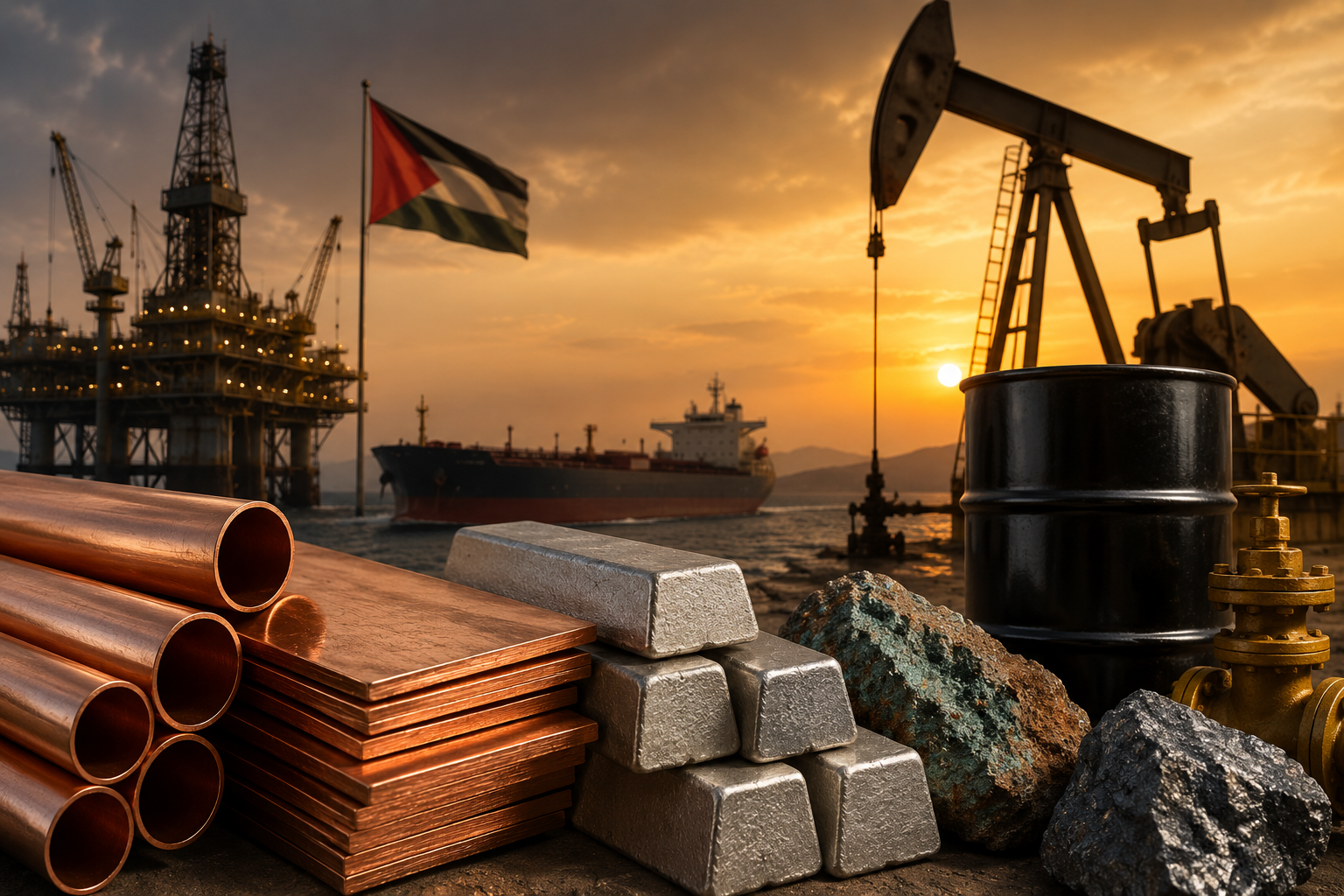
Geopolitical risk has once again become one of the most influential forces shaping global commodity markets. As renewed tensions in the Middle East pushed oil prices modestly higher on Tuesday, investors quickly shifted their attention to the broader implications for energy, industrial metals, inflation, and global supply chains. While equity markets continue to focus on artificial intelligence and the upcoming earnings season, commodity traders are increasingly weighing the possibility that geopolitical instability could disrupt the flow of critical raw materials at a time when global manufacturing and energy demand remain resilient.
Oil prices advanced as markets responded to renewed uncertainty in the Middle East, while investors also monitored supply-chain risks affecting industrial metals. Although the immediate market reaction remained measured, the developments underscore how quickly geopolitical events can influence commodity prices and investor sentiment.
For investors, the latest developments reinforce an important reality: geopolitical uncertainty is no longer just a short-term trading catalyst. It has become a structural investment factor that could continue supporting energy producers, mining companies, and strategic commodity markets while simultaneously creating new inflationary pressures for the global economy.
Commodity Markets Remain Highly Sensitive to Geopolitical Developments
The Middle East continues to play a central role in global energy markets.
The region accounts for a significant share of worldwide crude oil production and exports, making any increase in geopolitical tensions an immediate concern for commodity traders. Even without direct disruptions to production, uncertainty surrounding transportation routes, shipping security, or regional stability can push oil prices higher as markets price in additional risk.
Reuters reported that renewed tensions helped lift crude prices on July 7, reflecting investors’ growing caution about potential supply disruptions.
History has repeatedly shown that commodity markets often respond rapidly to geopolitical developments, particularly when they involve major energy-producing regions. Price volatility can emerge long before actual supply interruptions occur, as traders seek to protect against future shortages.
This sensitivity extends well beyond oil.
Industrial metals—including copper, aluminum, nickel, zinc, and steel-making materials—also react to geopolitical uncertainty because global supply chains remain deeply interconnected.
Why Energy Prices Matter Beyond the Oil Sector
Higher oil prices affect far more than energy companies.
Crude oil serves as a key input across transportation, manufacturing, chemicals, agriculture, aviation, and logistics. Rising energy costs typically increase operating expenses throughout the global economy, creating ripple effects across multiple industries.
For mining companies, higher fuel prices can increase extraction and transportation costs. However, stronger commodity prices often offset these expenses by improving revenue for producers of oil, natural gas, and certain industrial metals.
Institutional investors therefore monitor energy markets not only as a standalone investment opportunity but also as an important indicator of broader inflation trends.
If geopolitical tensions continue to support elevated oil prices, central banks may face renewed challenges in bringing inflation fully under control.
Industrial Metals Remain Essential to Global Growth
While oil dominates headlines during geopolitical events, industrial metals remain equally important for long-term investors.
Copper continues to be viewed as one of the world’s most economically significant commodities due to its widespread use in:
- Electrical infrastructure
- Renewable energy systems
- Electric vehicles
- Artificial intelligence data centers
- Construction
- Telecommunications
Similarly, aluminum plays a vital role in transportation, aerospace, packaging, and clean-energy infrastructure.
Demand for these materials remains supported by several long-term structural trends, including electrification, artificial intelligence infrastructure, renewable energy investment, and modernization of power grids.
Even if global economic growth moderates, many analysts believe these secular demand drivers will continue supporting strategic metals over the coming decade.
Supply Chain Risks Continue to Influence Mining Markets
Geopolitical uncertainty also raises concerns about global supply chains.
Mining operations depend on stable transportation networks, reliable shipping routes, access to processing facilities, and predictable international trade relationships.
Disruptions affecting any part of this system can create shortages, increase costs, and contribute to commodity price volatility.
The mining industry has spent several years adapting to supply-chain challenges following the pandemic and subsequent geopolitical conflicts.
Governments in the United States, Canada, and Europe continue promoting domestic production of critical minerals to reduce dependence on concentrated global supply chains.
This trend is expected to continue as nations prioritize energy security, defense capabilities, and advanced manufacturing.
Critical Minerals Are Becoming Strategic Assets
One of the most significant investment themes emerging in recent years is the growing importance of critical minerals.
Copper, lithium, rare earth elements, nickel, uranium, and graphite have become essential components of modern industrial policy.
These materials support industries including:
- Electric vehicles
- Battery manufacturing
- Artificial intelligence infrastructure
- Semiconductors
- Renewable energy
- Defense technologies
- Advanced manufacturing
Governments increasingly view reliable access to these resources as a matter of economic and national security.
As a result, investment in mining projects across North America continues expanding.
Canada and the United States remain among the world’s most attractive jurisdictions for developing strategic mineral resources, supported by government incentives, private investment, and long-term industrial demand.
Inflation Risks Are Returning to the Conversation
Commodity markets remain closely tied to inflation expectations.
If geopolitical tensions sustain higher oil and industrial metal prices, inflation could prove more persistent than policymakers currently anticipate.
Higher input costs eventually affect manufacturers, transportation companies, retailers, and consumers.
Central banks—including the U.S. Federal Reserve and the Bank of Canada—therefore continue monitoring commodity markets alongside traditional economic indicators.
While recent employment data has encouraged expectations of a more balanced monetary policy outlook, sustained commodity inflation could complicate future interest-rate decisions.
For investors, this creates an environment where commodity-producing companies may outperform during periods of renewed inflationary pressure.
Future Trends Investors Should Watch
Several developments could influence commodity markets during the second half of 2026.
Middle East Geopolitical Developments
Any escalation affecting major oil-producing regions or international shipping lanes could increase price volatility across energy markets.
Industrial Demand
Global manufacturing activity, infrastructure spending, and AI-driven data center construction will continue influencing demand for copper, aluminum, and other industrial metals.
Critical Mineral Investment
Government support for domestic mining projects in North America may accelerate investment opportunities across the sector.
Inflation Expectations
Commodity prices remain an important leading indicator for future inflation and central bank policy decisions.
Energy Transition
Long-term investments in renewable energy, battery storage, electric vehicles, and power grid modernization continue supporting structural demand for strategic metals.
Why This Matters for Investors
Commodity markets often perform differently from traditional equities during periods of geopolitical uncertainty.
Energy producers and mining companies can benefit from stronger commodity prices, while broader equity markets may experience increased volatility due to inflation concerns and higher operating costs.
This makes natural resources an important diversification tool within many investment portfolios.
Although short-term price movements remain difficult to predict, long-term demand fundamentals for energy and industrial metals remain supported by global infrastructure investment, artificial intelligence expansion, electrification, and strategic supply-chain diversification.
Reuters’ July 7 reporting highlights how quickly geopolitical developments can influence commodity markets, reinforcing the importance of monitoring both macroeconomic and geopolitical risks alongside corporate earnings.
Key Investment Insight
The renewed rise in geopolitical tensions serves as a reminder that commodity markets remain closely connected to global political developments. While immediate price movements may fluctuate with daily headlines, the broader investment outlook for energy and industrial metals continues to be supported by long-term structural demand and ongoing efforts to strengthen supply-chain resilience.
Investors should closely monitor oil prices, copper demand, aluminum markets, and critical mineral developments as indicators of both global economic activity and inflation risks. Companies involved in energy production, copper mining, aluminum manufacturing, and strategic critical minerals may continue benefiting if geopolitical uncertainty persists while infrastructure investment and AI-driven industrial demand remain strong.
As markets navigate an increasingly complex global landscape, informed investors will be better positioned to identify opportunities across commodities, mining, energy, and industrial sectors. Stay with MoneyNews.Today for trusted daily coverage of metals and mining, energy markets, global geopolitics, and the investment trends shaping tomorrow’s economy.




