
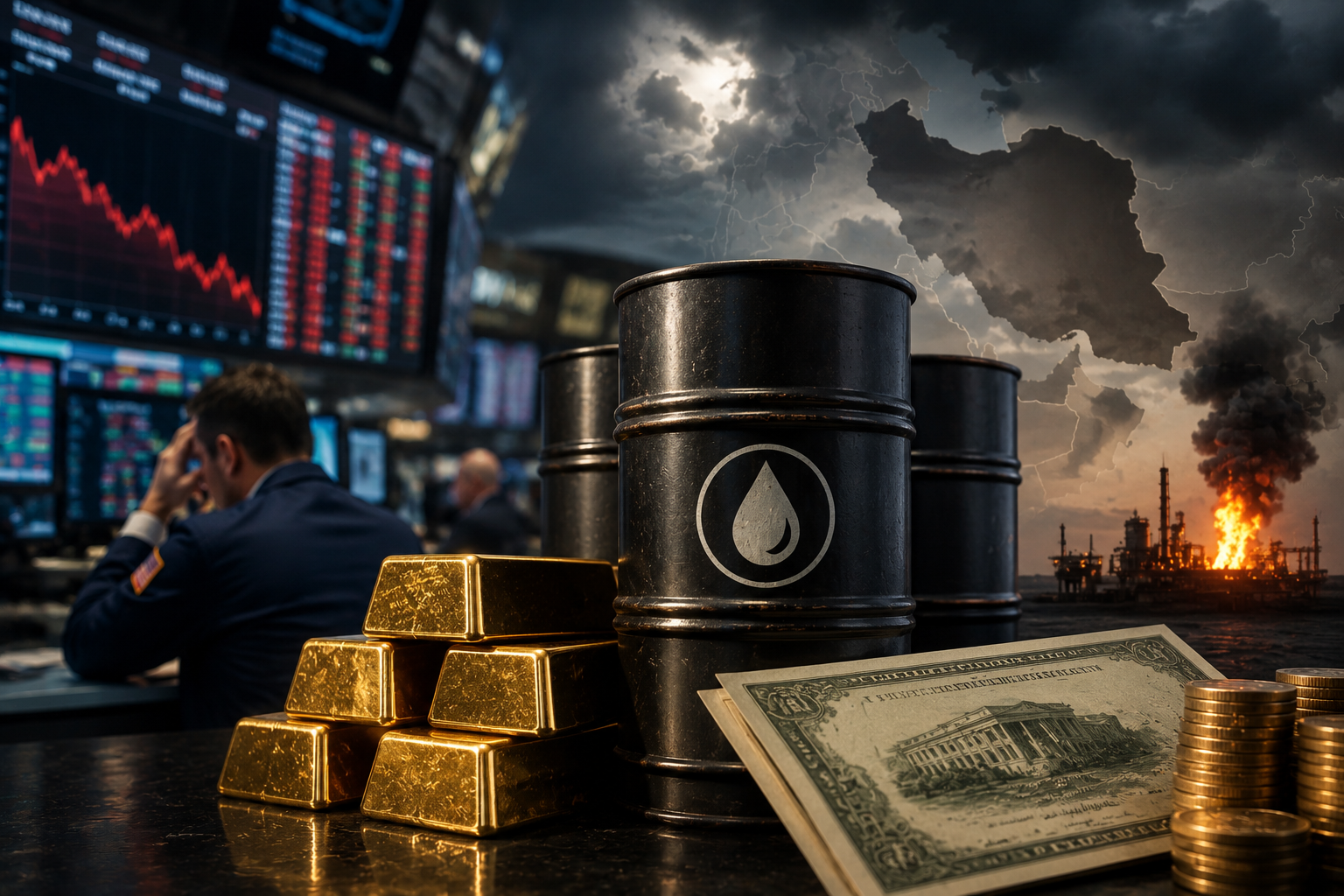
Wall Street’s attention shifted abruptly from earnings expectations to geopolitical risk after President Donald Trump signaled that the interim agreement with Iran was effectively over, raising concerns that the conflict could escalate further. The comments sent investors into a defensive stance, lifting energy prices, increasing demand for safe-haven assets, and pressuring major U.S. equity indexes as traders reassessed the outlook for inflation, corporate earnings, and global economic growth.
The renewed focus on geopolitics comes at a critical moment for financial markets. Investors were already preparing for the start of second-quarter earnings season, closely watching whether Corporate America could justify elevated market valuations. Instead, geopolitical uncertainty has become the dominant short-term market catalyst, reminding investors that global events can quickly overshadow economic fundamentals.
For investors, the key question is no longer just how companies performed during the last quarter—it is whether escalating geopolitical tensions could reshape market expectations for inflation, energy prices, interest rates, and corporate profitability over the coming months.
Geopolitical Risk Returns to the Forefront
Markets have spent much of 2026 balancing optimism over artificial intelligence, improving corporate earnings, and expectations for Federal Reserve policy against persistent geopolitical uncertainty.
President Trump’s latest remarks regarding Iran reignited concerns that military tensions in the Middle East could intensify, increasing the possibility of disruptions to global energy supplies and international trade.
According to Reuters, the comments prompted investors to reduce exposure to risk assets while increasing allocations to traditionally defensive investments, including energy stocks, gold, U.S. Treasury securities, and defensive equity sectors.
The reaction illustrates a familiar market pattern.
When geopolitical tensions rise, investors typically shift capital away from growth-oriented sectors and into assets perceived as more resilient during periods of uncertainty.
Technology stocks, consumer discretionary companies, and other high-growth sectors often experience increased volatility, while energy producers, defense contractors, utilities, healthcare companies, and precious metals frequently attract renewed investor interest.
Energy Markets Once Again Become the Focus
Perhaps the most immediate market response came from energy markets.
Oil prices climbed as traders assessed the possibility that any escalation involving Iran could affect crude oil production or transportation through strategically important shipping routes, including the Strait of Hormuz.
The Middle East remains one of the world’s most important energy-producing regions, and any threat to supply chains can quickly influence global crude prices.
Higher oil prices carry significant implications beyond the energy sector.
They can increase transportation costs, raise manufacturing expenses, contribute to higher consumer prices, and complicate central bank efforts to control inflation.
For investors, sustained increases in oil prices could create both opportunities and risks.
Integrated energy companies, oil producers, pipeline operators, and oilfield service firms often benefit from stronger commodity prices. However, higher fuel costs can pressure airlines, transportation companies, retailers, manufacturers, and other industries with significant energy exposure.
Market participants will closely monitor crude oil inventories, OPEC+ production decisions, and geopolitical developments for further indications of where energy prices may head next.
Defensive Rotation Reflects Growing Investor Caution
The market’s defensive rotation extended beyond commodities.
Investors also increased allocations toward traditionally lower-volatility sectors while reducing exposure to companies considered more economically sensitive.
Utilities, healthcare providers, consumer staples, and dividend-paying companies often outperform during periods of heightened uncertainty because their revenues tend to remain relatively stable regardless of economic conditions.
At the same time, demand for U.S. Treasury bonds increased as investors sought higher-quality assets capable of preserving capital during periods of market stress.
The CBOE Volatility Index (VIX)—commonly referred to as Wall Street’s “fear gauge”—also became an important indicator as traders monitored expectations for future market volatility.
Historically, geopolitical events capable of affecting global energy markets have produced temporary increases in market volatility, particularly when uncertainty surrounds military developments or diplomatic negotiations.
Why Earnings Season Matters Even More
While geopolitical headlines currently dominate market sentiment, corporate earnings remain the next major test for U.S. equities.
Analysts expect investors to closely examine not only financial results but also executive commentary regarding:
- Consumer demand
- Capital expenditure plans
- Supply chain stability
- Inflation pressures
- Hiring trends
- International operations
- Future earnings guidance
Companies with significant exposure to international markets may face additional questions regarding geopolitical risk management and contingency planning.
Investors will also evaluate whether higher energy prices are beginning to affect operating margins across industries.
Forward guidance could prove more influential than historical earnings results if management teams revise expectations to account for increased geopolitical uncertainty.
According to analysts cited by Reuters and Bloomberg, earnings guidance during uncertain macroeconomic environments often has a greater influence on stock performance than headline earnings alone.
Federal Reserve Policy Could Become More Complicated
Geopolitical developments are also influencing expectations surrounding Federal Reserve policy.
If rising oil prices contribute to renewed inflationary pressure, policymakers may become more cautious about lowering interest rates.
Persistent inflation remains one of the Federal Reserve’s primary concerns, and sustained increases in energy costs could delay monetary easing that investors have anticipated later this year.
This dynamic creates a challenging environment for equity markets.
Lower interest rates generally support higher stock valuations by reducing borrowing costs and increasing corporate investment.
However, if inflation remains elevated because of higher commodity prices, the Federal Reserve may need to maintain restrictive policy for longer than markets currently expect.
Investors should therefore monitor both inflation data and developments in energy markets alongside upcoming Federal Reserve communications.
Sectors That Could Benefit—or Face Headwinds
Periods of geopolitical uncertainty rarely affect all industries equally.
Several sectors could potentially benefit if tensions remain elevated:
- Energy producers and integrated oil companies
- Defense and aerospace manufacturers
- Cybersecurity firms
- Precious metals producers
- Utilities and defensive dividend-paying stocks
Conversely, sectors facing greater challenges could include:
- Airlines and transportation companies
- Consumer discretionary retailers
- Travel and hospitality businesses
- Manufacturers with energy-intensive operations
- Highly valued growth stocks sensitive to higher interest rates
Diversification remains one of the most effective risk-management strategies during periods of elevated geopolitical uncertainty.
Rather than attempting to predict geopolitical outcomes, many institutional investors focus on maintaining balanced portfolios capable of performing across multiple economic scenarios.
Future Trends Investors Should Watch
Several developments are likely to determine market direction over the coming weeks.
First, investors will closely monitor diplomatic developments involving Iran and any changes in military activity across the Middle East.
Second, movements in crude oil prices will provide an important signal regarding how markets perceive potential supply risks.
Third, the upcoming corporate earnings season will reveal whether geopolitical uncertainty is beginning to influence business confidence, consumer demand, and capital investment decisions.
Finally, inflation data and Federal Reserve communications will remain critical, particularly if higher energy prices begin influencing broader economic indicators.
Together, these factors are expected to shape investor sentiment during the second half of 2026.
Key Investment Insight
The latest market reaction underscores how quickly geopolitical events can reshape investor sentiment, even when underlying economic fundamentals remain relatively stable. While artificial intelligence, corporate earnings, and long-term growth themes continue to support U.S. equities, geopolitical developments have become the dominant short-term driver of market volatility.
Investors should closely monitor crude oil prices, the VIX volatility index, Treasury yields, and corporate earnings guidance for signs of how businesses are responding to increased uncertainty. Maintaining diversified exposure across defensive sectors, quality companies with strong balance sheets, and long-term structural growth themes may help investors navigate periods of elevated market volatility while remaining positioned for future opportunities.
Stay informed with MoneyNews.Today for daily investor-focused analysis, breaking market developments, and actionable insights covering stocks, artificial intelligence, technology, crypto, commodities, politics, and the global economy.




