The artificial intelligence trade is entering a new phase—and it’s no longer just about models or applications. It’s about raw power.
Across Wall Street and Silicon Valley, one theme is dominating investor conversations: there simply isn’t enough compute to meet surging AI demand. From hyperscalers to startups, companies are racing to secure chips, build data centers, and lock in energy supply, triggering what analysts now describe as a multi-year infrastructure supercycle.
According to recent analysis from JPMorgan and coverage in Investor’s Business Daily (April 22, 2026), global AI-related capital expenditures are on track to reach hundreds of billions of dollars annually, with demand for compute resources significantly outpacing supply. The implication is clear: AI’s next winners won’t just be software leaders—they’ll be the companies that control the infrastructure powering it.
The Real Bottleneck: Compute, Not Innovation
For much of the past two years, the AI narrative centered around breakthroughs in large language models, generative AI tools, and enterprise adoption. But as these technologies scale, a new constraint has emerged—compute capacity.
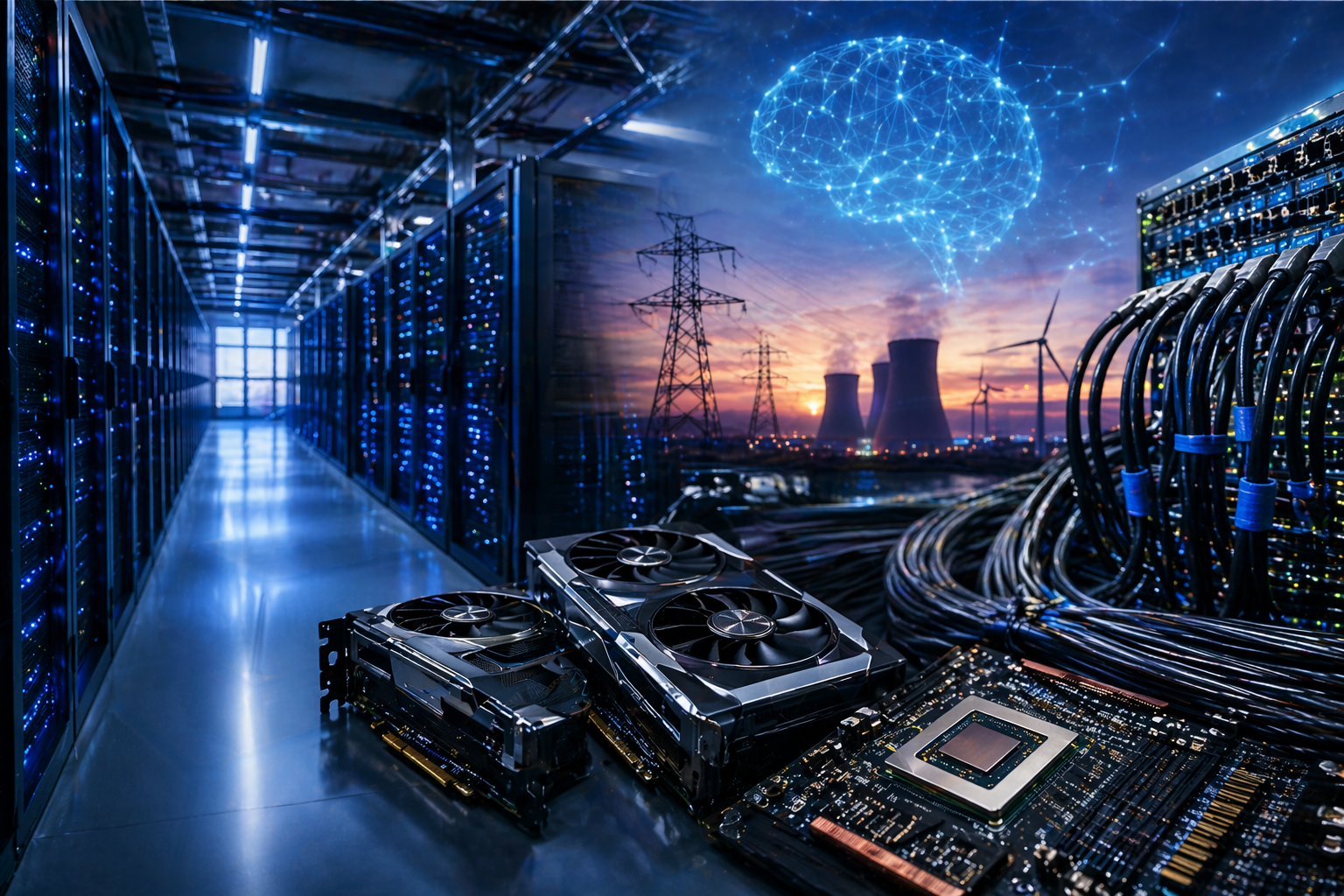
Training and deploying advanced AI models requires massive amounts of processing power, primarily driven by high-performance GPUs and specialized AI chips. Companies like NVIDIA Corporation have already seen explosive demand for their hardware, but even their aggressive production ramp has struggled to keep pace.
The issue isn’t limited to chips. It extends across the entire stack:
- Data centers are reaching capacity limits
- Electricity demand is surging as AI workloads consume more power
- Cooling infrastructure is becoming a critical constraint in scaling operations
According to JPMorgan analysts, the industry is now facing a “compute scarcity cycle”, where limited supply of infrastructure could slow AI deployment—even as demand continues to skyrocket.
Why This Matters for Investors
This shift fundamentally changes how investors should approach the AI opportunity.
Instead of focusing solely on application-layer companies—chatbots, SaaS tools, or AI-driven platforms—the market is increasingly rewarding infrastructure providers. These are the businesses enabling AI at scale, often with more predictable revenue streams and stronger pricing power.
Major cloud players like Microsoft Corporation, Amazon.com, Inc., and Alphabet Inc. are aggressively expanding their data center footprints, investing billions to secure capacity and maintain competitive advantage.
At the same time, semiconductor companies remain at the center of the trade. NVIDIA continues to dominate high-end AI chips, but competitors and partners—including custom silicon efforts by hyperscalers—are rapidly scaling to capture a share of the market.
The result is a broadening AI investment landscape, where value creation extends far beyond software and into physical infrastructure.
The Data Center Boom: A New Industrial Cycle
Perhaps the clearest manifestation of this trend is the explosion in data center investment.
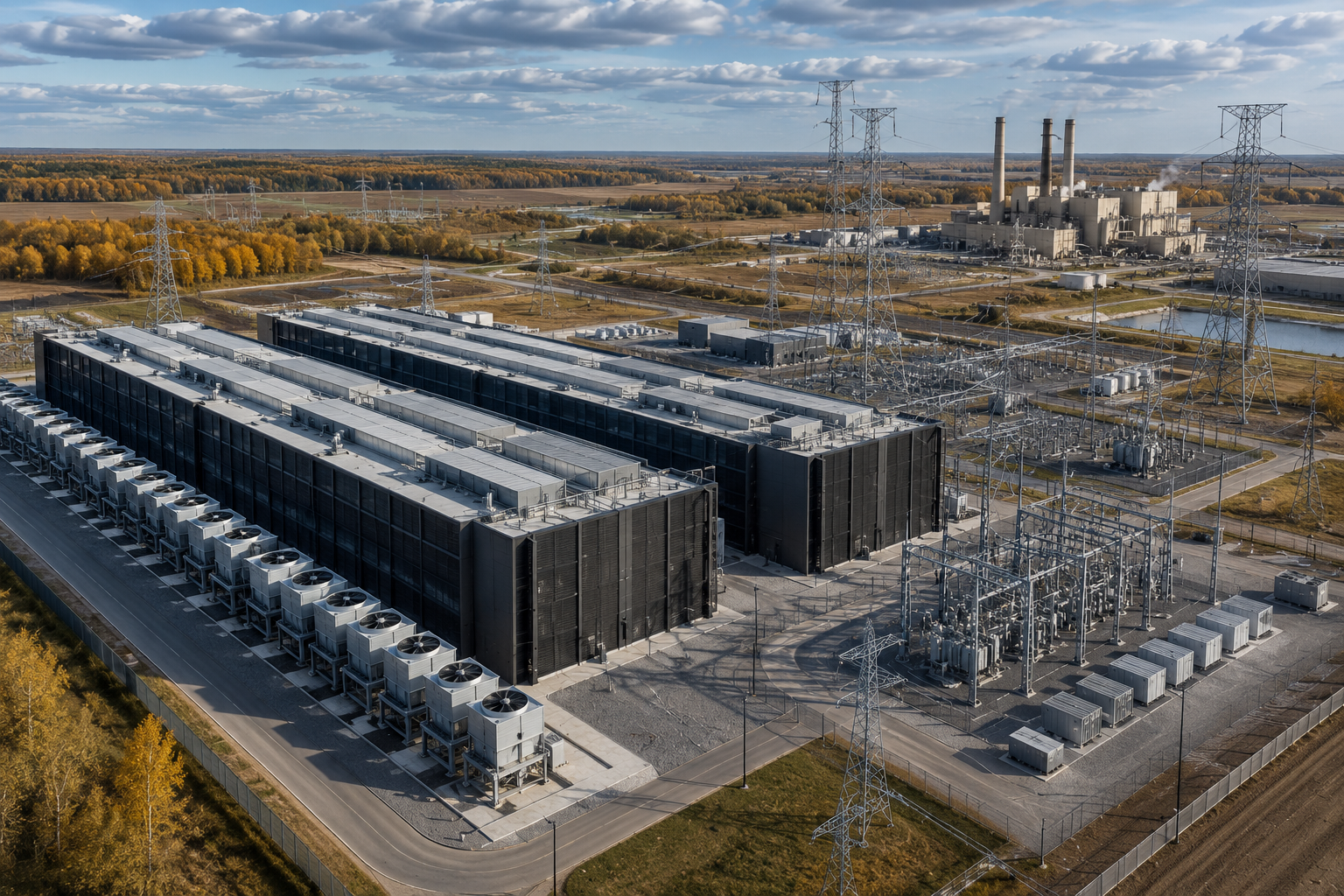
According to industry estimates cited by Investor’s Business Daily, hyperscalers and enterprise players are collectively committing tens of billions annually to expand data center capacity. This includes not only building new facilities but also upgrading existing ones to handle increasingly demanding AI workloads.
What makes this cycle particularly compelling is its capital intensity and duration. Unlike previous tech trends, which could scale relatively quickly through software, AI infrastructure requires:
- Land acquisition
- Construction timelines
- Power grid integration
- Long-term hardware deployment
This creates multi-year visibility for revenue growth across a wide range of industries, from construction and engineering to energy and hardware manufacturing.
For investors, this is reminiscent of past infrastructure booms—such as the telecom buildout of the early 2000s—but with a modern AI-driven twist.
Energy: The Hidden Constraint in AI Expansion
One of the most underappreciated aspects of the AI boom is its impact on energy demand.
AI workloads are extremely power-intensive, with some estimates suggesting that large-scale data centers can consume as much electricity as small cities. As a result, energy availability is quickly becoming a limiting factor in AI expansion.
Utilities and energy providers are now being pulled into the AI ecosystem, as tech companies seek long-term power agreements to secure their operations. This has led to increased interest in:
- Renewable energy projects
- Nuclear power as a stable baseload source
- Grid modernization initiatives
For investors, this creates a compelling cross-sector opportunity. AI is no longer just a tech story—it’s increasingly an energy and industrial story as well.
Semiconductors: Still at the Core
Despite the broader infrastructure narrative, semiconductors remain the backbone of the AI revolution.
Demand for advanced chips continues to outstrip supply, driving strong pricing power and margin expansion for leading manufacturers. NVIDIA Corporation remains the dominant player, but the competitive landscape is evolving rapidly.
Hyperscalers are investing heavily in custom AI chips, aiming to reduce reliance on third-party suppliers and optimize performance for their specific workloads. Meanwhile, traditional chipmakers are ramping up production capacity to meet demand.
This dynamic creates both opportunities and risks:
- Opportunities in companies supplying critical components and manufacturing equipment
- Risks related to potential oversupply if capacity expansions outpace demand in later years
For now, however, the balance remains firmly tilted in favor of suppliers.
Future Trends to Watch
As the AI compute shortage continues to shape the market, several key trends are emerging:
1. Vertical Integration by Big Tech
Companies like Amazon.com, Inc. and Microsoft Corporation are moving toward greater control over their infrastructure stacks—from chips to cloud services. This could further consolidate power among a few dominant players.
2. Geographic Expansion of Data Centers
To address capacity constraints, companies are expanding data center footprints globally, including in regions with cheaper energy and favorable regulatory environments.
3. Innovation in Efficiency
As costs rise, there is growing focus on improving the efficiency of AI models and hardware. Techniques such as model compression and optimized architectures could help alleviate some pressure on compute demand.
4. Regulatory and Environmental Pressures
Governments are beginning to scrutinize the environmental impact of large-scale data centers, particularly in terms of energy consumption and water usage. This could influence future investment decisions.
Credible Signals from the Market
The narrative around AI compute scarcity isn’t speculative—it’s being reinforced by real-world data and credible sources.
- JPMorgan analysts highlight the scale of upcoming AI-related capex and the growing imbalance between supply and demand.
- Investor’s Business Daily reports increasing concern among enterprises about securing sufficient compute resources.
- Major earnings calls from tech companies consistently emphasize infrastructure investment as a top priority.
Together, these signals point to a structural shift in the AI market, where infrastructure—not just innovation—determines competitive advantage.
Key Investment Insight
The most important takeaway for investors is straightforward: the real scarcity in AI today is compute, not models.
That has several practical implications:
- Prioritize exposure to data center operators and cloud infrastructure providers
- Watch semiconductor leaders and supply chains for continued upside
- Consider indirect beneficiaries, including energy and industrial companies supporting AI expansion
At the same time, remain mindful of valuation risks. Many AI-related stocks have already seen significant gains, and volatility is likely as the market adjusts to evolving supply-demand dynamics.
Positioning for the Next Phase of AI
The AI boom is far from over—but it is evolving.
What began as a software-driven revolution is rapidly transforming into a capital-intensive infrastructure race, with profound implications for markets and investment strategies. As compute becomes the defining constraint, the companies that can build, scale, and sustain that infrastructure will shape the next chapter of AI growth.
For investors, the opportunity lies in recognizing this shift early—and positioning accordingly.
Stay with MoneyNews.Today for daily, actionable insights on the trends shaping global markets and the investment opportunities that follow.