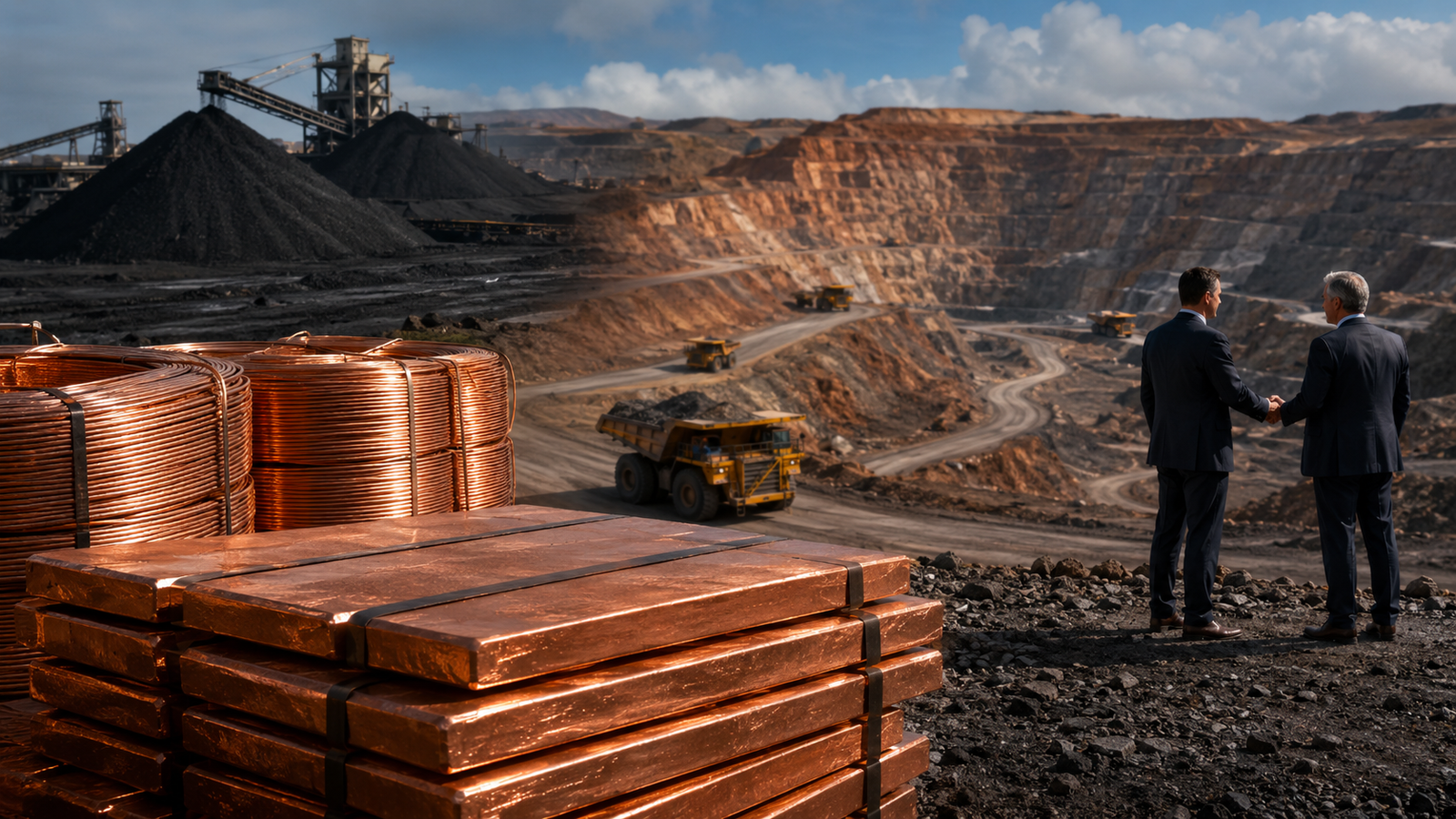
Anglo American is moving another major step away from coal and toward copper, and investors should pay close attention. The mining giant agreed on May 18, 2026, to sell its Australian steelmaking coal portfolio to privately held Dhilmar for up to $3.875 billion, a transaction that clears another obstacle ahead of Anglo’s planned merger with Canada’s Teck Resources. For markets, the deal is not only about exiting coal. It is about building one of the world’s most important copper-focused mining platforms at a time when electrification, grid expansion, AI data centers, and energy-security policies are increasing demand for critical metals.
The Wall Street Journal reported that Anglo American will sell its Australian steelmaking coal assets to Dhilmar for up to $3.875 billion in cash, including a $2.3 billion upfront payment and as much as $1.575 billion linked to future pricing conditions. The assets include Moranbah North in Queensland, which was previously shut after a fire in March 2025. The sale follows the collapse of an earlier agreement with Peabody Energy and is expected to close by the first quarter of 2027.
For investors, this is one of the clearest signals yet that large diversified miners are repositioning around future-facing metals. Coal is being monetized. Copper is becoming the strategic center of gravity.
Why This Matters for Investors
The mining sector is going through a structural reset. For much of the previous commodity cycle, diversified miners were valued on their ability to generate cash from iron ore, coal, and traditional bulk commodities. The next cycle is increasingly focused on copper, lithium, nickel, uranium, rare earths, and other materials tied to electrification, grid reliability, electric vehicles, defense systems, and AI infrastructure.
Anglo’s coal sale fits directly into that shift. London South East, citing Sharecast, reported that Anglo agreed to sell its Australian steelmaking coal mines to Dhilmar for up to $3.9 billion, with $2.3 billion payable at completion and up to $1.6 billion through a price-linked earnout. Anglo said proceeds will be used to reduce net debt.
Debt reduction matters because the company is also preparing for its merger with Teck Resources. A cleaner balance sheet can give the combined company more flexibility to fund copper growth projects, return capital, manage integration costs, and navigate commodity-price volatility.
The transaction also simplifies Anglo’s portfolio. Chief Executive Duncan Wanblad said the agreement represents “another major step in the simplification” of Anglo’s portfolio ahead of completing the Teck merger, and that the sale will complete Anglo’s exit from steelmaking coal.
The Teck Merger Changes the Copper Map
The planned Anglo American–Teck combination is central to the investment story. Teck is one of Canada’s most important mining companies, with major copper exposure and a strategic position in critical minerals. A combined Anglo Teck would bring together large-scale copper assets, growth projects, and a Canadian corporate center at a time when governments and investors are looking for secure supplies of transition metals.
The Times reported that the combined Anglo Teck group is expected to be strongly focused on copper, with headquarters in Vancouver and a primary listing in London. The same report noted that Duncan Wanblad is expected to become CEO of Anglo Teck, with Teck’s Jonathan Price as deputy CEO.
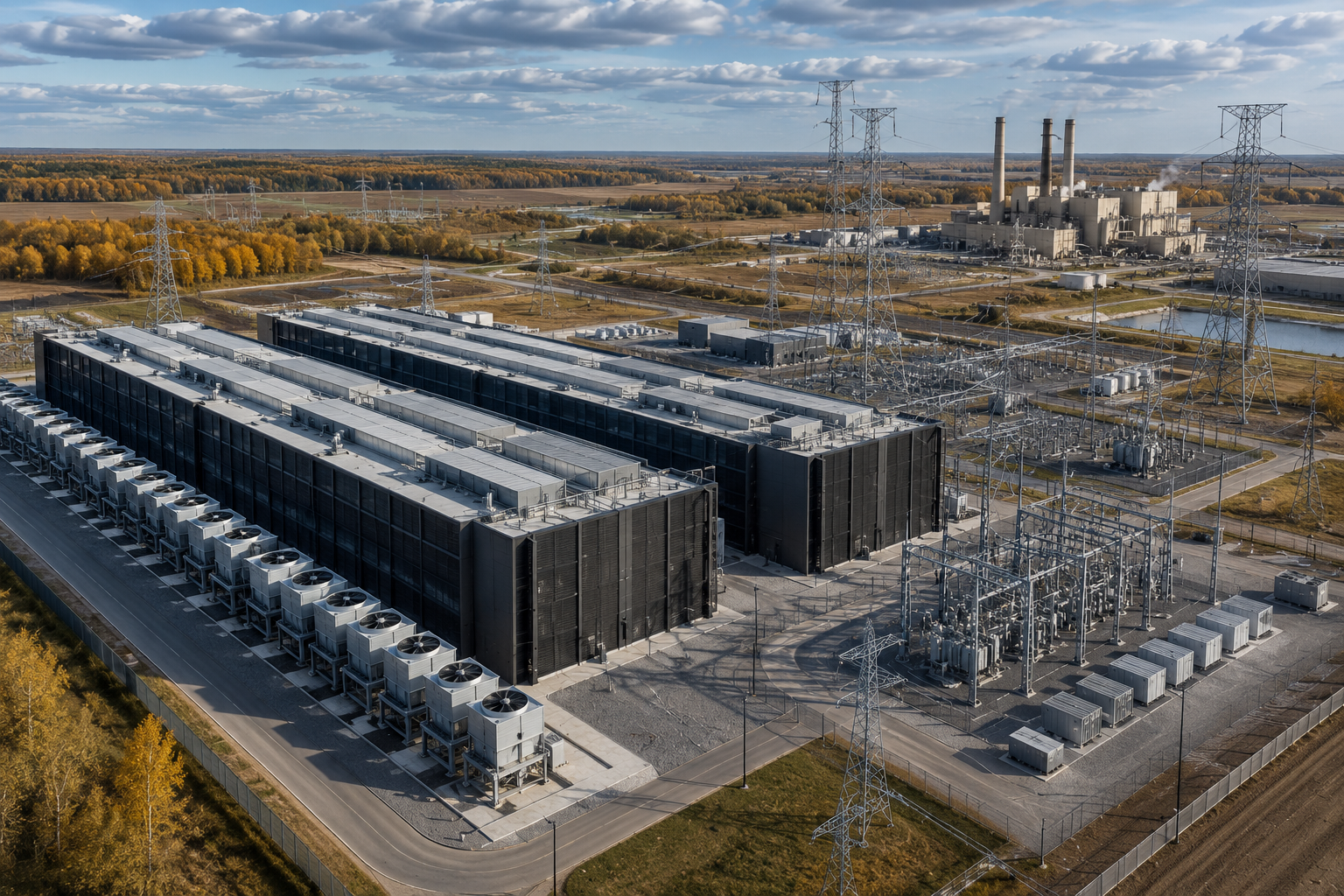
That matters because copper is increasingly treated as both a commodity and a strategic infrastructure metal. Electric grids require copper. Renewable energy systems require copper. Data centers require copper. Electric vehicles, charging networks, transmission upgrades, and industrial electrification all require large volumes of copper.
For investors, the logic is straightforward: if demand for electrification and power infrastructure keeps rising, miners with scalable copper production and long-life assets may command premium valuations.
Coal Exit, Copper Focus
Anglo’s exit from steelmaking coal does not mean coal demand disappears. Steelmaking coal remains important for blast-furnace steel production. But from an investor-positioning perspective, Anglo is clearly choosing portfolio simplification and future-facing metals over continued coal exposure.
The deal also follows Anglo’s earlier sale of its Jellinbah interest for approximately $1 billion, bringing aggregate cash proceeds from its steelmaking coal exit to up to $4.9 billion, according to Anglo commentary cited by London South East.
That total is meaningful. It gives Anglo financial ammunition as it moves through a major merger cycle. It also sends a signal to the market: coal cash flows are being converted into balance-sheet strength and strategic optionality.
Investors should also note that the coal sale has execution risk. The transaction is subject to regulatory approvals, competition approvals, and pre-emption rights, according to reports on the deal. News.com.au reported that the assets include several central Queensland mines and joint ventures, including Moranbah North, Grosvenor, Capcoal, Roper Creek, Dawson South, and Theodore South.
That means the deal is important, but not yet fully complete. Investors should monitor closing conditions, buyer financing, regulatory review, and any further dispute developments linked to the prior Peabody transaction.
The Peabody Collapse Still Matters
The new Dhilmar agreement comes after a previous deal with Peabody Energy collapsed. WSJ reported that Anglo’s earlier $3.78 billion sale agreement with Peabody fell apart after the Moranbah North fire, and that Anglo is continuing arbitration against Peabody even after reaching the new agreement with Dhilmar.
This matters because it highlights operational and legal complexity around mining transactions. Investors should not treat asset sales as automatic until they close. Mining deals often involve environmental liabilities, operational risks, labor considerations, regulatory reviews, commodity-price clauses, and legal contingencies.
Still, the new Dhilmar agreement suggests Anglo remains committed to completing the coal exit and preserving the strategic direction of the Teck merger.
Why Copper Consolidation Is Bullish for the Sector
The larger takeaway is that copper consolidation remains a powerful investment theme. Large, high-quality copper assets are scarce. New mines are difficult to permit, expensive to build, and often located in politically complex jurisdictions. At the same time, demand growth is being supported by electrification, grid modernization, AI infrastructure, industrial automation, and energy transition investment.
That combination creates a strategic premium for established copper producers. Companies with operating mines, expansion projects, strong jurisdictions, and access to capital may become increasingly attractive to institutional investors.
The Anglo-Teck combination could pressure other large miners to consider deals, partnerships, divestitures, or portfolio reshuffling. If copper remains the preferred transition metal, investors may see more M&A activity across Canada, Australia, Latin America, and Africa.
For Canadian investors specifically, Teck remains an important name to watch. The planned combined company’s Canadian headquarters could strengthen Canada’s profile in global critical minerals and reinforce investor interest in Toronto-listed mining equities.
What Investors Should Watch Next
The first item to monitor is transaction closing. Anglo expects to complete the Dhilmar sale after required approvals, and investors should watch whether the deal progresses smoothly toward the expected early-2027 closing timeline.
Second, investors should track copper prices. A stronger copper market would improve investor enthusiasm for the Anglo-Teck combination, while a sharp decline could reduce near-term excitement even if the long-term thesis remains intact.
Third, watch balance-sheet strategy. Anglo said proceeds will reduce net debt, which should improve financial flexibility. Investors should assess whether the combined company prioritizes deleveraging, growth capex, dividends, buybacks, or project development.
Fourth, monitor regulatory and political reaction. Large mining mergers can attract attention from governments, especially when critical minerals, national champions, and headquarters location are involved.
Finally, investors should watch read-throughs for other copper names. If the market rewards Anglo and Teck for sharpening their copper exposure, capital may rotate toward other copper producers, developers, royalty companies, and critical-minerals infrastructure plays.
Key Investment Insight
The key investment insight is that Anglo’s coal sale is not just a divestiture. It is a portfolio transformation signal. The company is exiting steelmaking coal, reducing debt, and preparing to combine with Teck to create a copper-centered mining platform with major relevance to electrification and infrastructure spending.
For investors, this supports the long-term copper consolidation theme. Teck, Anglo American, copper miners, mining royalty companies, and Canadian critical-minerals names deserve close attention as capital moves toward assets tied to power demand, grid expansion, and energy transition infrastructure.
The opportunity is clear: copper is becoming more strategically important, and large-scale producers may become harder to replace. The risk is also clear: mining deals are complex, commodity prices are volatile, and regulatory execution matters.
Investors should view the Dhilmar sale as a bullish strategic step, but not as a risk-free catalyst. The strongest approach is to monitor closing milestones, copper-price trends, merger integration updates, and management’s capital-allocation plan.
As global miners reposition for the next commodity cycle, stay with MoneyNews.Today for daily investor-focused coverage, market-moving mining deals, critical-minerals trends, and actionable analysis across metals, energy, technology, and global markets.