
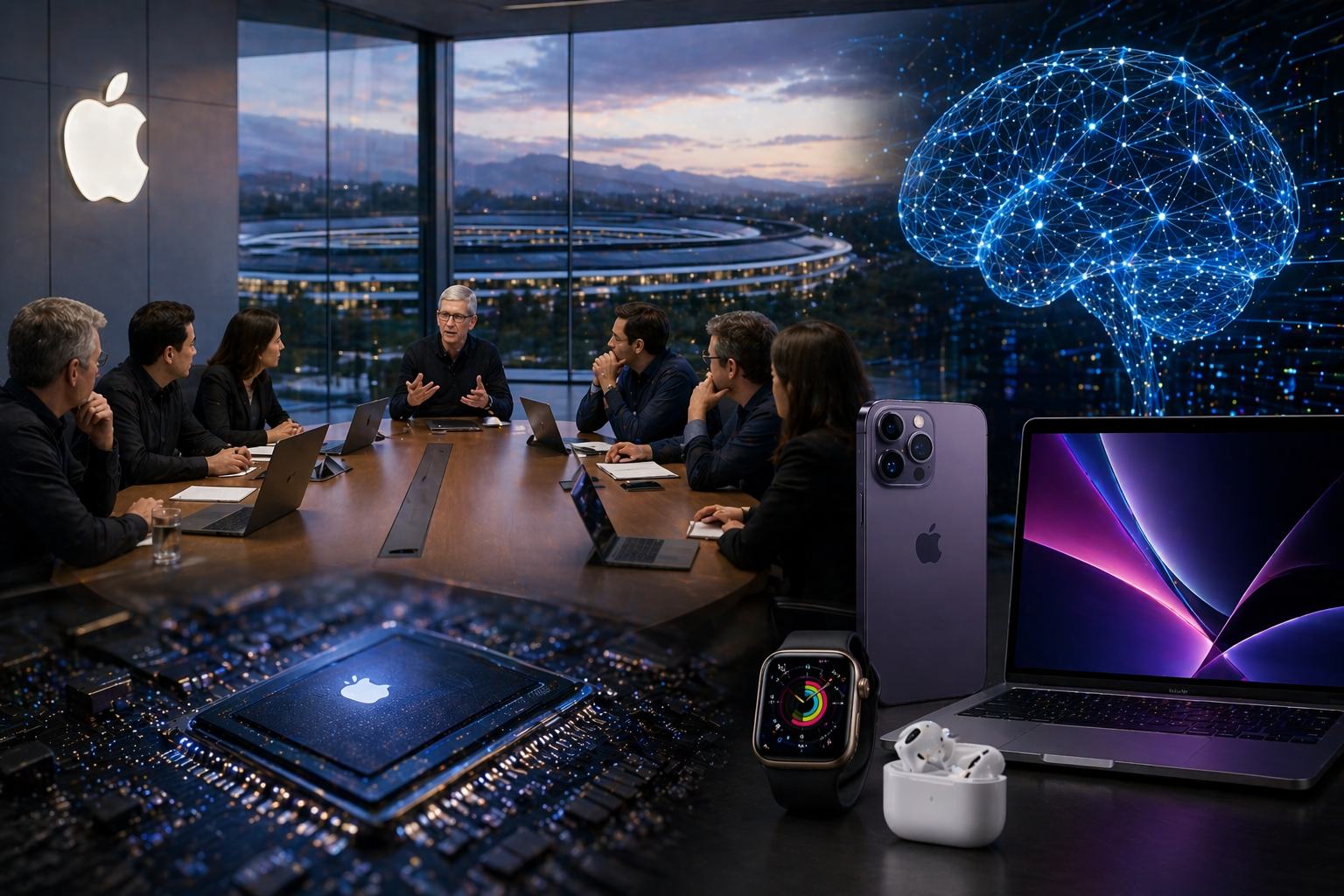
The artificial intelligence race is no longer confined to cloud giants and chipmakers—it’s now hitting the core of consumer technology. And when Apple Inc. makes a structural shift, markets pay attention.
Fresh reports from Bloomberg and Reuters (April 2026) reveal that Apple has initiated a high-level leadership reshuffle, aligning its product and software divisions more closely around artificial intelligence. For a company known for deliberate, measured moves, this signals something more urgent: Apple is accelerating its AI strategy to remain competitive in a market rapidly being reshaped by generative AI and intelligent computing.
For investors, this is more than an internal reorganization—it’s a clear indication that Apple is entering a new phase of AI-driven innovation, capital investment, and ecosystem expansion.
A Strategic Shift at the Core of Apple
Apple has historically approached new technologies with caution, prioritizing refinement over speed. But the current AI landscape is forcing a different approach.
Competitors like Microsoft Corporation and Alphabet Inc. have aggressively integrated AI into their ecosystems—from cloud platforms to productivity tools—capturing both market share and investor enthusiasm.
Apple’s reshuffle is designed to break down internal silos, bringing hardware, software, and AI development into tighter alignment. This is critical because Apple’s competitive advantage lies in its vertically integrated ecosystem, where devices, operating systems, and services work seamlessly together.
By embedding AI deeper into this ecosystem, Apple is aiming to:
- Enhance user experience across devices (iPhone, Mac, iPad)
- Expand AI-driven services and subscriptions
- Strengthen its competitive positioning in next-generation computing
Why This Matters for Investors
Apple’s move signals a shift in how the company will allocate capital and drive growth over the coming years.
AI is not a one-time upgrade—it requires ongoing investment in infrastructure, talent, and product development. This suggests that Apple’s capital expenditure (capex) profile could increase meaningfully, particularly in areas such as:
- Custom silicon and AI chips
- Data centers and cloud infrastructure
- On-device AI processing capabilities
For investors, this introduces a new growth narrative: Apple as an AI platform company, not just a hardware and services giant.
It also opens the door to second-order opportunities across Apple’s supply chain and partner ecosystem.
The Hardware Advantage: AI at the Edge
One of Apple’s biggest differentiators in the AI race is its focus on on-device processing, often referred to as “edge AI.”
Unlike cloud-heavy approaches used by some competitors, Apple has been investing heavily in custom silicon—such as its M-series and A-series chips—to enable AI capabilities directly on devices. This approach offers several advantages:
- Faster performance with lower latency
- Enhanced privacy (data stays on-device)
- Reduced reliance on cloud infrastructure
The reshuffle suggests Apple is doubling down on this strategy, integrating AI more deeply into its hardware roadmap.
For investors, this reinforces the importance of companies involved in:
- Advanced semiconductor manufacturing
- Chip design and fabrication
- Hardware components supporting AI workloads
Services and Monetization: The Next Growth Engine
Beyond hardware, AI integration could significantly enhance Apple’s high-margin services business.
AI-driven features could be embedded into:
- iCloud and storage optimization
- Apple Music and content recommendations
- Health and fitness tracking through Apple Watch
- Productivity tools and personal assistants
This creates opportunities for new subscription tiers and premium features, potentially increasing average revenue per user (ARPU).
According to industry analysis from firms like McKinsey, AI has the potential to unlock trillions in economic value across consumer applications, particularly through personalization and automation. Apple’s ecosystem positions it well to capture a meaningful share of this value.
Competitive Pressure Is Driving Urgency
Apple’s accelerated push into AI comes amid intensifying competition.
- Microsoft Corporation has integrated AI deeply into its software ecosystem, including Office and Azure.
- Alphabet Inc. continues to lead in AI research and deployment across search and cloud services.
- Hardware competitors are also exploring AI-enhanced devices, increasing pressure on Apple to innovate.
This competitive landscape is forcing Apple to move faster than it traditionally has, which could lead to:
- Shorter product innovation cycles
- Increased R&D spending
- More aggressive feature rollouts
For investors, this dynamic creates both opportunity and risk—faster innovation can drive growth, but it also raises execution challenges.
Supply Chain and Ecosystem Opportunities
Apple’s AI pivot will have ripple effects across its extensive global supply chain.
Companies involved in:
- Semiconductor manufacturing
- Memory and storage components
- Advanced materials
- Assembly and production
could all benefit from increased demand as Apple ramps up AI-focused hardware production.
In particular, AI workloads require higher-performance components, which often carry better margins. This could create a positive earnings tailwind for key suppliers.
Additionally, software developers within Apple’s ecosystem may gain new opportunities to build AI-powered applications, further strengthening the platform.
Future Trends to Watch
As Apple executes its AI strategy, several key trends will shape its trajectory:
1. Deeper Integration Across Devices
Expect AI features to become more tightly integrated across Apple’s product lineup, creating a more seamless and intelligent user experience.
2. Expansion of Custom Silicon
Apple is likely to continue investing in proprietary chips optimized for AI workloads, reducing reliance on third-party suppliers.
3. Privacy-Centric AI Development
Apple’s emphasis on privacy could differentiate its AI offerings, particularly as regulatory scrutiny around data usage increases.
4. Potential Partnerships and Acquisitions
To accelerate its AI capabilities, Apple may pursue strategic partnerships or acquisitions, particularly in areas like machine learning and data analytics.
Credible Signals from the Market
The significance of Apple’s reshuffle is reinforced by credible reporting and broader industry trends:
- Bloomberg and Reuters (April 2026) highlight the leadership changes and strategic realignment.
- Analyst commentary points to increasing AI-related capex across major tech companies.
- Industry research from McKinsey underscores the transformative economic impact of AI adoption.
These signals collectively indicate that Apple’s move is not isolated—it’s part of a broader industry shift toward AI-driven growth.
Key Investment Insight
Apple’s strategic pivot underscores a critical reality: AI is becoming the central battleground in technology—and Apple is committing to compete at scale.
For investors, this translates into several actionable considerations:
- Maintain exposure to large-cap tech leaders driving AI adoption
- Watch Apple’s supply chain and semiconductor partners for indirect upside
- Monitor capex trends as a signal of long-term growth investment
- Stay alert to valuation shifts as markets reprice Apple’s AI potential
At the same time, investors should remain mindful of execution risks, including the challenge of integrating AI seamlessly into Apple’s ecosystem while maintaining its high standards for user experience.
A New Chapter for Apple—and the AI Market
Apple’s reshuffle marks the beginning of a new chapter—not just for the company, but for the broader technology landscape.
As AI becomes more deeply embedded in everyday devices, the lines between hardware, software, and services will continue to blur. Companies that can integrate these elements effectively will define the next generation of market leaders.
Apple’s move suggests it intends to be one of them.
Stay with MoneyNews.Today for daily, in-depth insights into the trends shaping global markets and the opportunities investors need to watch.




