
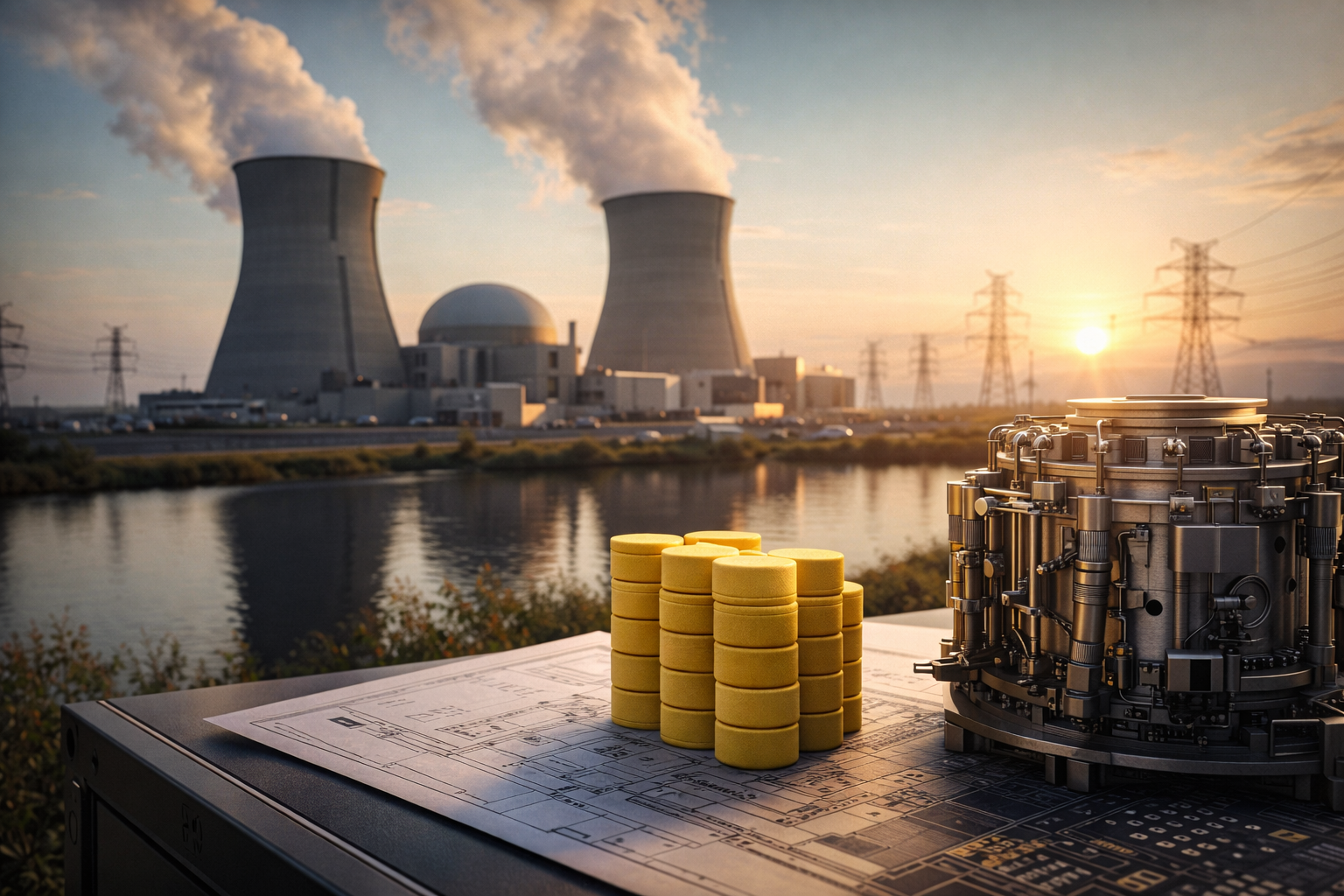
The artificial intelligence boom is triggering an unexpected ripple effect across global markets—and it’s not in software, chips, or cloud computing. It’s in nuclear energy.
As AI data centers multiply and computational workloads surge, the demand for reliable, around-the-clock electricity is skyrocketing. Traditional power sources are struggling to keep pace, and renewables alone cannot provide the consistent baseload energy required. The result? A renewed and rapidly accelerating push into nuclear energy—particularly small modular reactors (SMRs)—across the United States and Canada.
According to recent reporting from Financial Times and Reuters (April 15, 2026), policymakers and private firms are ramping up nuclear investments at a pace not seen in decades. What was once considered a controversial or sidelined energy source is now being repositioned as a critical pillar of the AI-driven economy.
For investors, this marks the early stages of what could become a multi-decade structural investment theme.
The AI Boom Is Rewriting the Energy Equation
The rise of artificial intelligence has fundamentally altered global energy demand forecasts.
Training large-scale AI models and running inference workloads require enormous computing power. Hyperscale data centers—already among the largest energy consumers—are expanding rapidly to meet this demand. Some estimates suggest that next-generation AI data centers could consume multiple gigawatts of electricity, rivaling the output of major power plants.
This creates a critical challenge:
- Renewable energy sources like solar and wind are intermittent
- Natural gas faces regulatory and environmental pressures
- Grid infrastructure is already under strain in key regions
Nuclear energy, long overlooked, is uniquely positioned to fill this gap. It offers:
- Reliable baseload power
- Zero direct carbon emissions
- Scalability for large industrial applications
As a result, nuclear is no longer just part of the energy transition—it is becoming central to the AI infrastructure buildout.
Small Modular Reactors (SMRs): The Game Changer
At the heart of this nuclear resurgence is the emergence of small modular reactors (SMRs).
Unlike traditional nuclear plants, which are large, expensive, and time-consuming to build, SMRs are designed to be:
- Smaller and more flexible
- Factory-built and modular
- Faster and cheaper to deploy
This makes them particularly well-suited for powering data centers and industrial hubs.
Governments in the U.S. and Canada are actively supporting SMR development through:
- Funding programs
- Regulatory streamlining
- Public-private partnerships
Private sector interest is also surging. Tech companies, energy firms, and infrastructure investors are exploring SMR deployments as a way to secure long-term, stable power for AI operations.
The implication is clear: SMRs could become the backbone of next-generation energy infrastructure, particularly in high-demand AI corridors.
Why This Matters for Investors
The convergence of AI and nuclear energy is creating a new investment landscape—one that extends far beyond traditional tech stocks.
1. A Multi-Layered Investment Opportunity
The nuclear value chain is broad, offering exposure across multiple segments:
- Uranium Producers: Rising demand for nuclear fuel is already driving interest in uranium markets. Supply constraints and underinvestment in mining could support long-term price appreciation.
- SMR Developers: Companies focused on next-generation reactor technologies stand to benefit from growing adoption and government support.
- Engineering & Construction Firms: Building nuclear infrastructure requires specialized expertise, creating opportunities for industrial players.
- Grid and Transmission Providers: Expanding nuclear capacity will require upgrades to grid infrastructure, particularly in North America.
This layered opportunity set allows investors to gain exposure at different points along the value chain, depending on risk tolerance and time horizon.
2. Policy Tailwinds Are Strengthening
Government support is a critical driver of nuclear investment—and the policy environment is shifting rapidly.
In both the U.S. and Canada, nuclear energy is increasingly being framed as:
- A national security priority
- A climate solution
- A strategic asset in the AI race
This shift is translating into tangible support, including subsidies, tax incentives, and regulatory reforms.
For investors, policy alignment reduces risk and increases the likelihood of long-term project viability—key factors in capital-intensive industries like nuclear.
3. Supply Constraints Could Drive Commodity Upside
The uranium market is already showing signs of tightening.
Years of underinvestment have limited supply growth, while demand is now accelerating due to:
- New reactor construction
- Reactor life extensions
- Strategic stockpiling by governments
This imbalance could create a favorable environment for uranium prices, benefiting mining companies and related equities.
As with other commodities tied to structural trends, early positioning may be critical.
The Strategic Shift: From Renewables to Reliability
One of the most important aspects of this trend is the evolving energy narrative.
For years, the focus of the energy transition was on renewables. While solar and wind remain essential, their limitations are becoming more apparent in the context of AI-driven demand.
Investors are now recognizing that the future energy mix will likely include:
- Renewables for sustainability
- Nuclear for reliability
- Energy storage for flexibility
This hybrid model underscores the importance of energy diversification, with nuclear playing a central role.
Future Trends to Watch
As nuclear investment accelerates, several key trends are likely to shape the market:
Rapid Expansion of SMR Projects
Expect a wave of announcements related to SMR deployments, particularly near data center hubs and industrial zones.
Tech-Energy Partnerships
Collaboration between technology companies and energy providers will intensify, as firms seek to secure dedicated power sources for AI operations.
Regulatory Acceleration
Governments may fast-track approvals for nuclear projects, reducing development timelines and unlocking capital flows.
Global Competition for Energy Leadership
Countries that successfully scale nuclear infrastructure could gain a competitive edge in AI, attracting investment and talent.
Key Investment Insight
The intersection of AI and nuclear energy represents a rare convergence of two powerful megatrends.
For investors, the key takeaway is clear: the AI revolution is not just digital—it is deeply physical, requiring massive investments in energy infrastructure.
This creates opportunities in:
- Uranium and nuclear fuel markets
- SMR technology developers
- Grid and energy infrastructure companies
While risks remain—particularly around regulation and project execution—the long-term trajectory appears increasingly favorable.
In many ways, nuclear energy is transitioning from a niche sector to a core pillar of the modern economy, driven by the relentless growth of AI.
The resurgence of nuclear energy is a reminder that transformative technologies often have unexpected second-order effects. As AI continues to reshape industries, it is also redefining the fundamentals of energy demand—and opening new pathways for investment.
For those looking to position ahead of the next major structural shift, this is a trend that cannot be ignored.
Stay with MoneyNews.Today for daily, forward-looking insights that connect the dots between emerging technologies, global markets, and actionable investment opportunities.




