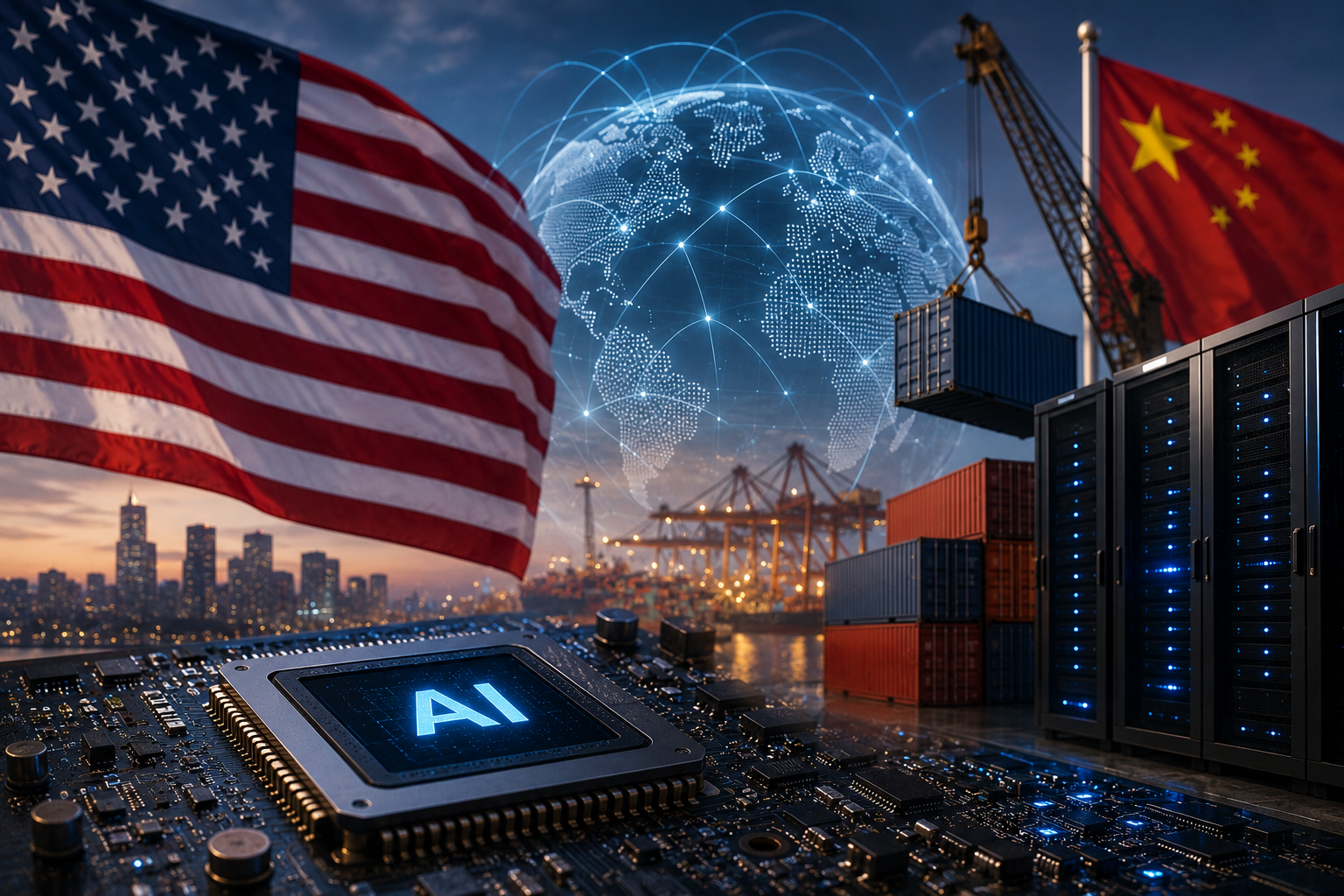
Artificial intelligence is no longer just a technology race — it has become a geopolitical and economic arms race.
The United States is now moving aggressively to ensure American AI infrastructure dominates global markets as competition with China intensifies across semiconductors, cloud computing, cybersecurity, and advanced digital systems. According to a Reuters report published May 21, 2026, the Trump administration is preparing a sweeping “ExportAI Initiative” that would channel billions of dollars in financing through the U.S. Export-Import Bank to support exports of American AI technologies worldwide.
The initiative signals a major shift in how Washington views AI: not simply as a private-sector innovation story, but as a strategic national asset tied directly to economic power, military influence, and global technological leadership.
For investors, the implications could be enormous.
The proposed financing effort could unlock a new wave of international demand for U.S.-made AI chips, data-center infrastructure, cloud services, cybersecurity systems, networking hardware, and defense-related AI technologies. It may also deepen the connection between government policy and the future growth trajectory of major technology firms.
As AI increasingly becomes a cornerstone of geopolitical competition, investors are beginning to recognize that government-backed industrial policy could become one of the strongest drivers of the next decade’s market leadership.
AI Is Becoming the New Strategic Infrastructure
Over the last several years, governments around the world have shifted from treating AI as an emerging technology trend to viewing it as essential national infrastructure.
Much like oil, telecommunications, and semiconductors shaped previous eras of economic dominance, artificial intelligence is now seen as foundational to future military, industrial, and economic power.
The United States and China are at the center of this competition.
China has already committed massive state-backed resources toward AI development, semiconductor manufacturing, smart infrastructure, and digital trade expansion through various industrial initiatives. Chinese firms have expanded aggressively into emerging markets across Asia, Africa, Latin America, and the Middle East by offering digital infrastructure packages, cloud systems, surveillance technology, and telecommunications equipment.
Now, Washington appears determined to counter that influence.
According to Reuters, the proposed ExportAI Initiative would leverage financing capabilities through the U.S. Export-Import Bank to make American AI technologies more competitive internationally. The goal is to help U.S. companies secure contracts and partnerships in fast-growing emerging markets where digital infrastructure spending is accelerating rapidly.
This is not merely about technology exports.
It is about shaping who controls the next generation of global digital infrastructure.
Why This Matters for Investors
The investment implications of government-backed AI financing extend far beyond semiconductor companies alone.
If implemented at scale, the initiative could strengthen demand across an entire ecosystem of industries tied to AI deployment and infrastructure expansion.
Several sectors stand to benefit directly:
Semiconductor Manufacturers
Companies producing advanced AI chips remain central beneficiaries of global AI expansion.
NVIDIA continues dominating the AI accelerator market, while firms such as Advanced Micro Devices and Intel are aggressively positioning themselves to compete for AI-related demand growth.
Government-backed export financing could further increase international demand for U.S.-designed semiconductors, particularly in regions seeking alternatives to Chinese technology providers.
Cloud Infrastructure Providers
Major hyperscalers including Microsoft, Amazon, and Alphabet are investing billions into global AI infrastructure expansion.
If U.S.-backed financing helps foreign governments and enterprises adopt American AI systems, cloud providers could see substantial long-term growth opportunities through international data-center expansion and AI service adoption.
Cybersecurity and Defense Technology
AI infrastructure increasingly overlaps with national security priorities.
Defense-tech firms, cybersecurity providers, and advanced surveillance technology companies may benefit as governments prioritize trusted AI ecosystems tied to U.S.-aligned infrastructure networks.
This dynamic could create opportunities across sectors tied to secure communications, autonomous systems, military AI, and critical infrastructure protection.
Data-Center and Energy Infrastructure
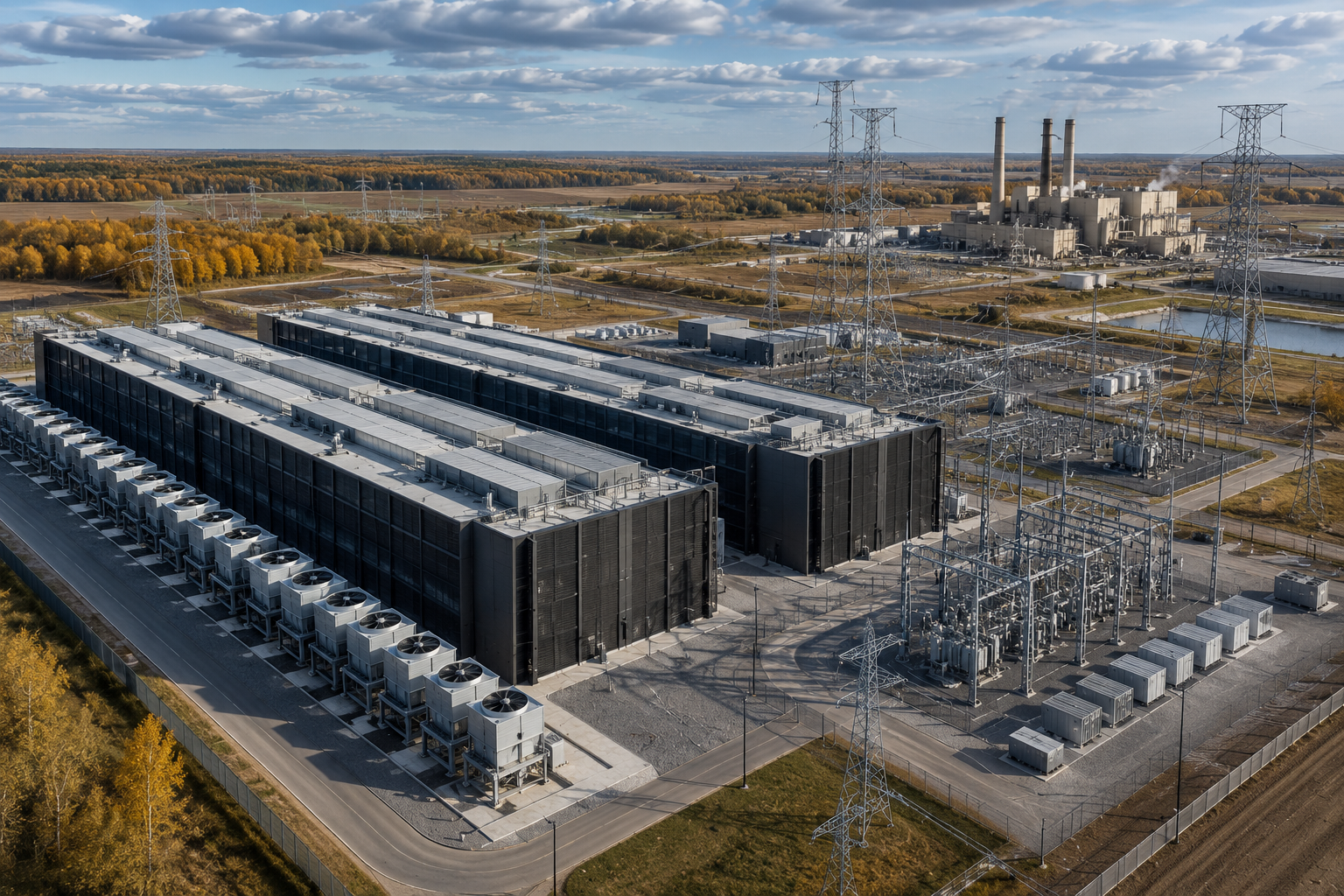
AI systems require enormous computational and energy resources.
As global AI adoption accelerates, demand for data centers, networking equipment, cooling systems, utilities, and power infrastructure could rise substantially. Investors are already seeing AI-driven demand reshape energy markets and utility investment strategies.
The AI Cold War Is Accelerating
The ExportAI Initiative reflects a broader reality increasingly discussed across financial markets and geopolitical circles: the emergence of an AI Cold War between the United States and China.
Recent years have already seen escalating tensions surrounding:
- Semiconductor export controls
- Advanced chip restrictions
- Supply-chain reshoring
- Rare earth mineral competition
- Data sovereignty laws
- Cybersecurity concerns
- Strategic infrastructure investment
The AI race is now becoming deeply integrated into trade policy and industrial strategy.
Washington’s export financing push suggests the U.S. government recognizes that private-sector innovation alone may not be sufficient to secure long-term global leadership.
Instead, policymakers appear increasingly willing to combine government financing, export incentives, industrial policy, and strategic alliances to support American technology dominance abroad.
For investors, this introduces a critical new factor into technology investing: geopolitics.
AI-related companies may increasingly benefit not only from commercial demand but also from direct government support and strategic policy alignment.
Emerging Markets Could Become the Next AI Battleground
One of the most important aspects of the initiative is its focus on emerging markets.
Countries across Southeast Asia, the Middle East, Africa, and Latin America are rapidly investing in digital infrastructure, cloud computing, telecommunications, and AI-powered systems.
These regions represent enormous long-term growth opportunities for technology providers.
Historically, Chinese firms gained substantial influence in many emerging markets through infrastructure financing initiatives and cost-competitive technology offerings.
The U.S. now appears focused on challenging that advantage by offering financing support tied to American AI systems and infrastructure.
This could create a major international growth runway for U.S. technology firms over the next decade.
Investors should pay close attention to companies positioned to benefit from expanding AI adoption in developing economies, particularly those with strong international partnerships and scalable infrastructure platforms.
Risks Investors Should Monitor
While the initiative may create significant growth opportunities, it also introduces new risks that investors cannot ignore.
Rising Geopolitical Tensions
Technology competition between the United States and China could continue escalating, potentially increasing market volatility and trade uncertainty.
Regulatory and Export Restrictions
Government involvement in AI exports may lead to stricter compliance requirements, licensing controls, and political oversight for technology firms.
Supply-Chain Constraints
AI infrastructure demand continues outpacing semiconductor production capacity in several key areas, creating ongoing supply bottlenecks.
Valuation Risks
Many AI-related companies already trade at elevated valuations following the sector’s historic rally. Investors should remain selective and focus on firms with durable competitive advantages and long-term revenue visibility.
Future Trends to Watch
Several developments could shape the next phase of AI-related investing:
Sovereign AI Infrastructure
Governments worldwide are increasingly building national AI capabilities rather than relying solely on foreign providers.
AI and Defense Convergence
Defense spending tied to autonomous systems, cybersecurity, and AI-powered intelligence could accelerate significantly.
Expansion of Export Financing
If successful, the ExportAI Initiative could expand into broader financing support for semiconductors, quantum computing, advanced networking, and digital infrastructure projects.
Energy Demand Growth
AI data centers are dramatically increasing electricity consumption, creating ripple effects across utilities, nuclear energy, and natural gas infrastructure markets.
Key Investment Insight
The U.S. government’s push to finance AI exports marks a turning point in the global AI race and highlights how deeply geopolitics is becoming intertwined with technology investing.
Investors should closely monitor companies positioned at the center of AI infrastructure expansion, including semiconductor manufacturers, cloud providers, cybersecurity firms, data-center operators, and defense-tech companies benefiting from government-backed growth initiatives.
At the same time, the growing intersection between industrial policy and private-sector innovation means geopolitical developments may increasingly shape market leadership across the technology sector.
As AI evolves into a defining strategic industry for the global economy, investors who understand both the technological and geopolitical dimensions of the market may be best positioned to capitalize on the next phase of growth.
Stay ahead of the markets with more daily investor insights and breaking financial analysis at MoneyNews.Today.