
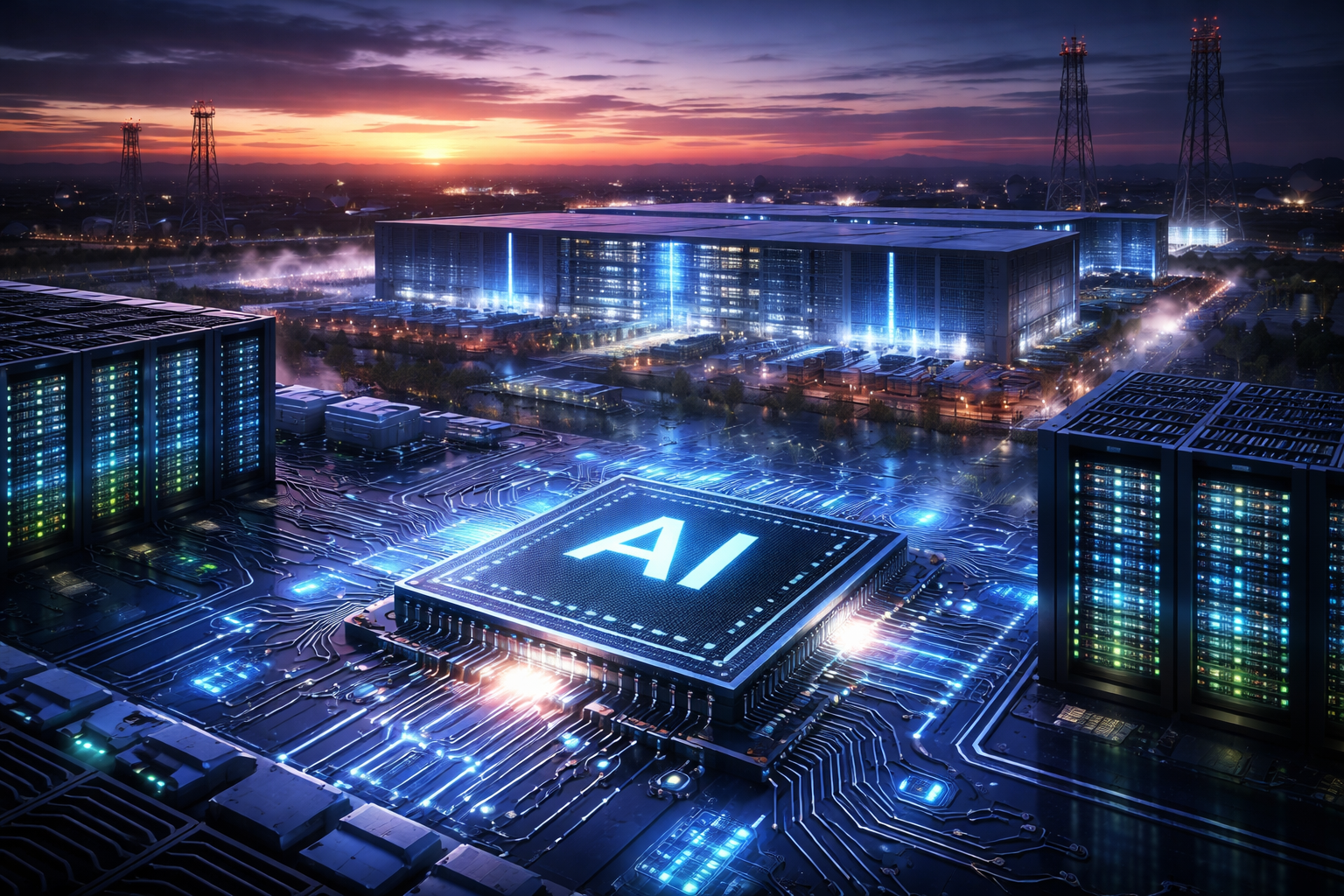
The artificial intelligence race is no longer just about innovation—it’s about infrastructure. Across Wall Street and Silicon Valley, one theme is dominating investor conversations in March 2026: the unprecedented surge in capital spending on AI data centers, chips, and compute capacity. From hyperscalers to enterprise software giants, companies are rapidly scaling their AI capabilities to meet exploding demand—and investors are paying close attention.
Recent reporting from Bloomberg and Reuters highlights a clear trend: Big Tech is committing tens of billions of dollars toward AI infrastructure, signaling that the next phase of the AI boom will be defined not just by applications, but by the hardware and energy systems powering them.
The Infrastructure Arms Race Is Underway
The generative AI boom that began with tools like ChatGPT has evolved into a full-scale infrastructure race. Companies including Microsoft, Amazon, and Alphabet are dramatically increasing capital expenditures to expand their AI ecosystems.
These investments are flowing into three critical areas:
- Data Centers: Massive hyperscale facilities designed to handle AI workloads
- Custom AI Chips: Specialized processors optimized for machine learning tasks
- Energy Infrastructure: Power generation and cooling systems to support high-performance computing
According to recent estimates cited by Bloomberg, total AI-related capital expenditures from major tech firms could exceed $300 billion annually within the next few years. This marks a structural shift in how technology companies allocate capital—moving from software-driven growth to infrastructure-heavy expansion.
Why Enterprise Demand Is Driving the Surge
At the heart of this spending boom is a simple reality: enterprise demand for AI is accelerating faster than expected.
Corporations across industries—from healthcare to finance to manufacturing—are integrating AI into core operations. This includes:
- Automating workflows with generative AI
- Enhancing customer service with AI assistants
- Leveraging predictive analytics for decision-making
The result is a dramatic increase in demand for compute power. Unlike traditional software, AI models require continuous processing, retraining, and scaling—placing enormous pressure on infrastructure.
Nvidia, the dominant supplier of AI GPUs, has become a central player in this ecosystem. Its chips are widely used in training and deploying large language models, and demand continues to outstrip supply.
Reuters reports that long-term contracts for AI compute are becoming more common, as enterprises seek guaranteed access to capacity. This shift toward “compute as a utility” is creating recurring revenue streams for cloud providers while reinforcing the need for sustained infrastructure investment.
The Semiconductor Supercycle
One of the biggest beneficiaries of the AI infrastructure boom is the semiconductor industry.
Companies like Advanced Micro Devices and Intel are ramping up production of AI-focused chips, while also investing heavily in next-generation architectures. Meanwhile, Nvidia continues to dominate high-end GPU markets, benefiting from both pricing power and strong demand visibility.
This has led analysts to describe the current environment as a “semiconductor supercycle”—a prolonged period of elevated demand driven by structural shifts rather than short-term trends.
Key dynamics shaping this cycle include:
- Supply Constraints: Limited manufacturing capacity for advanced chips
- High Margins: Premium pricing for AI accelerators
- Long-Term Contracts: Increased visibility into future revenue
For investors, this creates opportunities not only in chipmakers but also across the broader semiconductor supply chain—including equipment manufacturers and materials providers.
Data Centers Become Strategic Assets
Data centers are emerging as one of the most critical—and capital-intensive—components of the AI ecosystem.
Hyperscalers are building next-generation facilities capable of handling AI workloads at scale. These data centers require:
- Advanced cooling systems
- High-density server racks
- Reliable, large-scale power sources
This has transformed data centers from passive infrastructure into strategic assets.
Real estate investment trusts (REITs) focused on data centers are seeing increased investor interest, as are companies involved in construction, cooling technologies, and grid infrastructure. The growing importance of these facilities is also driving consolidation and partnerships across the sector.
The Energy Factor: A Hidden Bottleneck
One of the most underappreciated aspects of the AI boom is its impact on energy demand.
AI data centers consume significantly more power than traditional computing infrastructure. As a result, energy availability is becoming a key constraint—and a major investment theme.
Tech companies are increasingly investing in:
- Renewable energy projects
- Nuclear power partnerships
- Grid modernization initiatives
This creates a powerful intersection between AI and the energy sector. Utilities and energy infrastructure companies are now directly tied to the growth of AI, opening up new opportunities for investors.
According to industry estimates cited in recent coverage, AI-related power demand could double within the next five years, placing additional strain on existing grids and accelerating the need for new energy solutions.
Why This Matters for Investors
The scale and speed of AI infrastructure investment signal a fundamental shift in the technology landscape. Unlike previous tech cycles driven primarily by software innovation, this phase is deeply rooted in physical infrastructure.
For investors, this has several important implications:
1. Broader Opportunity Set
The AI boom is no longer limited to software companies. It now spans:
- Semiconductors
- Cloud computing
- Data centers
- Energy and utilities
2. Long-Term Visibility
Infrastructure investments tend to have multi-year timelines, providing greater visibility into future growth compared to shorter product cycles.
3. Capital Intensity Risks
High levels of capital expenditure can pressure margins in the short term, particularly if demand expectations shift.
Future Trends to Watch
As the AI infrastructure race continues, several key trends are likely to shape the next phase of growth:
Custom Silicon Development
Companies like Microsoft and Alphabet are developing their own AI chips to reduce reliance on third-party suppliers and improve efficiency.
AI-as-a-Service Expansion
Cloud providers are packaging AI capabilities into scalable services, making advanced tools accessible to a broader range of businesses.
Regulatory and Geopolitical Factors
Export controls, trade policies, and national security concerns could influence supply chains and investment strategies.
Sustainability Pressures
The environmental impact of AI infrastructure is drawing increasing scrutiny, potentially leading to new regulations and investment requirements.
Key Investment Insight
AI infrastructure is rapidly becoming one of the most important long-term investment themes in global markets.
Investors should consider focusing on:
- Semiconductor leaders benefiting from AI chip demand
- Cloud providers with strong AI ecosystems
- Data center operators positioned for capacity expansion
- Energy and utility companies supporting increased power needs
At the same time, it’s critical to monitor risks related to overcapacity, regulatory changes, and evolving competitive dynamics.
The AI revolution is entering its most capital-intensive phase—and the winners will be those who control the infrastructure that powers it. As billions continue to flow into data centers, chips, and energy systems, investors have a unique opportunity to position themselves at the foundation of the next technological era.
Stay ahead of the market’s biggest trends with daily insights and investor-focused analysis from MoneyNews.Today.




