
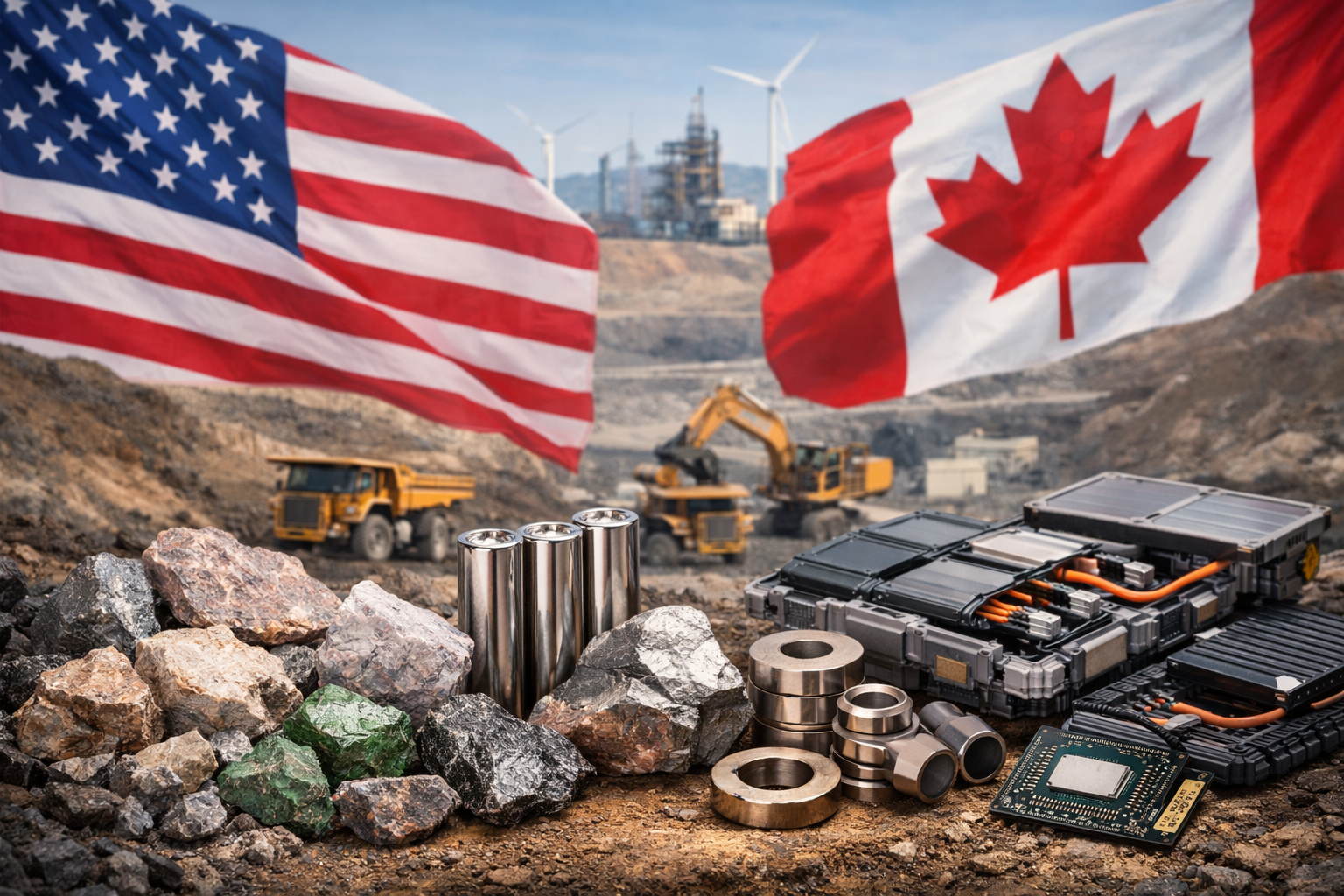
A quiet but powerful shift in global supply chains is gaining momentum—and investors are starting to take notice.
As geopolitical tensions reshape trade priorities, the United States and Canada are doubling down on a strategic partnership that could redefine the future of energy, technology, and manufacturing. The expansion of their critical minerals alliance marks a decisive move to secure domestic supply chains for essential resources like lithium, nickel, and rare earth elements—materials that are foundational to electric vehicles, clean energy systems, and advanced technologies.
With reliance on China increasingly viewed as a strategic vulnerability, this policy shift is not just political—it’s deeply economic. And for investors, it signals a new era of opportunity across mining, battery production, and industrial supply chains.
A Strategic Realignment of Global Supply Chains
Critical minerals have become one of the most important geopolitical assets of the 21st century.
These materials are essential for:
- Electric vehicle batteries
- Renewable energy infrastructure
- Semiconductors and advanced electronics
- Defense and aerospace technologies
Historically, China has dominated the global supply chain for many of these minerals, particularly rare earth elements. However, recent developments have prompted Western nations to reassess this dependency.
The United States, through initiatives led by the U.S. Department of Energy, is actively working with Canada to build a more resilient and diversified supply chain. According to Reuters, the expanded alliance focuses on increasing domestic production, processing capacity, and cross-border collaboration.
This is not a short-term adjustment—it’s a long-term strategic pivot.
Why Critical Minerals Matter More Than Ever
The importance of critical minerals is being amplified by two major global trends:
1. The Energy Transition
As countries move toward net-zero emissions, demand for clean energy technologies is surging. Lithium and nickel are key components in battery storage systems, while rare earth elements are essential for wind turbines and electric motors.
2. The Rise of Advanced Technologies
From artificial intelligence to next-generation semiconductors, modern technologies rely heavily on specialized materials. Ensuring a stable supply of these inputs is critical for maintaining technological leadership.
Together, these trends are driving unprecedented demand for critical minerals—making supply chain security a top priority for governments and corporations alike.
The U.S.-Canada Alliance: What’s Changing
The expanded partnership between the U.S. and Canada is focused on several key areas:
🔗 1. Supply Chain Integration
The two countries are working to create a seamless cross-border ecosystem for mining, processing, and manufacturing.
⛏️ 2. Increased Domestic Production
Efforts are underway to accelerate the development of mining projects in both countries, reducing reliance on imports.
🏭 3. Processing and Refining Capacity
Building facilities to process raw materials domestically is a critical component of the strategy.
🤝 4. Public-Private Collaboration
Governments are partnering with private companies to fund and develop critical infrastructure.
Canada, in particular, is rich in natural resources and is emerging as a key supplier of lithium, nickel, and other essential minerals. The U.S., meanwhile, brings technological expertise and industrial capacity to the partnership.
Why This Matters for Investors
The expansion of the U.S.-Canada critical minerals alliance has significant implications for multiple sectors.
1. Mining Sector Tailwinds
Domestic mining companies stand to benefit from increased government support, including funding, tax incentives, and streamlined regulations.
Companies involved in:
- Lithium extraction
- Nickel production
- Rare earth mining
could see increased demand and improved profitability.
2. Battery and EV Supply Chains
The push for secure mineral supply chains directly supports the growth of the electric vehicle industry. Automakers and battery manufacturers are likely to benefit from more stable and localized sourcing.
3. ESG and Sustainable Investing
Critical minerals are essential for clean energy technologies, making them a key component of ESG-focused investment strategies. The shift toward North American sourcing also aligns with transparency and sustainability goals.
4. Reduced Geopolitical Risk
Diversifying supply chains away from China reduces exposure to geopolitical disruptions, creating a more stable investment environment.
Signals from the U.S. Department of Energy and Reuters
Recent announcements from the U.S. Department of Energy highlight increased funding and policy support for critical mineral projects. These initiatives are aimed at accelerating domestic production and strengthening supply chain resilience.
Reuters reports that the expanded alliance includes commitments to:
- Jointly develop mining projects
- Share technological expertise
- Coordinate policy frameworks
These developments underscore the seriousness of the initiative and its potential long-term impact.
Additional signals include:
- Rising government investment in critical minerals
- Increased private sector participation
- Growing demand from EV and renewable energy industries
Together, these factors point to a structural shift in how critical resources are sourced and managed.
Future Trends to Watch
As the alliance evolves, several key trends will shape its impact on markets:
🌍 1. Global Supply Chain Realignment
Other countries may follow suit, creating regional supply chains and reducing reliance on dominant producers.
⚡ 2. EV Market Expansion
Continued growth in electric vehicle adoption will drive demand for lithium and nickel.
🏗️ 3. Infrastructure Development
New mining and processing facilities will be critical for meeting demand.
📜 4. Policy and Regulation
Government policies will play a central role in shaping the pace and direction of development.
🔄 5. Recycling and Innovation
Advances in recycling technologies could complement primary mining and reduce supply pressures.
Sector-Wide Opportunities
The critical minerals theme extends beyond mining, offering opportunities across the value chain:
- Mining Companies: Extraction and initial processing
- Refining and Processing Firms: Converting raw materials into usable inputs
- Battery Manufacturers: Producing energy storage systems
- Automakers: Integrating batteries into EVs
- Technology Firms: Utilizing materials in advanced products
This interconnected ecosystem creates multiple entry points for investors.
Key Investment Insight
The expansion of the U.S.-Canada critical minerals alliance represents a long-term structural shift that investors should not overlook.
Strategic Considerations:
- Focus on Domestic Producers:
Companies operating in North America are well-positioned to benefit from policy support and increased demand. - Diversify Across the Supply Chain:
Exposure to multiple segments—from mining to manufacturing—can help mitigate risk. - Monitor Policy Developments:
Government actions will be a key driver of growth and investment opportunities. - Align with ESG Trends:
Critical minerals play a central role in sustainable investing, making them attractive for long-term portfolios. - Think Long-Term:
The transition to secure, localized supply chains will take time but offers significant upside potential.
In essence, this is a geopolitical trend with direct investment implications.
Investor Takeaway: A New Era of Resource Strategy
The expansion of the U.S.-Canada critical minerals alliance marks a pivotal moment in the global economy. As nations prioritize supply chain security and technological independence, critical minerals are emerging as one of the most strategically important asset classes.
With strong policy backing, rising demand, and increasing investor interest, the sector is poised for sustained growth. For investors, the opportunity lies in recognizing the long-term implications of this shift and positioning portfolios accordingly.
As Reuters and official government sources suggest, this is more than a policy initiative—it’s a foundational change in how the world sources the materials that power its future.
Stay ahead of global policy shifts and market-moving trends with MoneyNews.Today—your trusted source for daily investor insights, expert analysis, and actionable financial news.




