
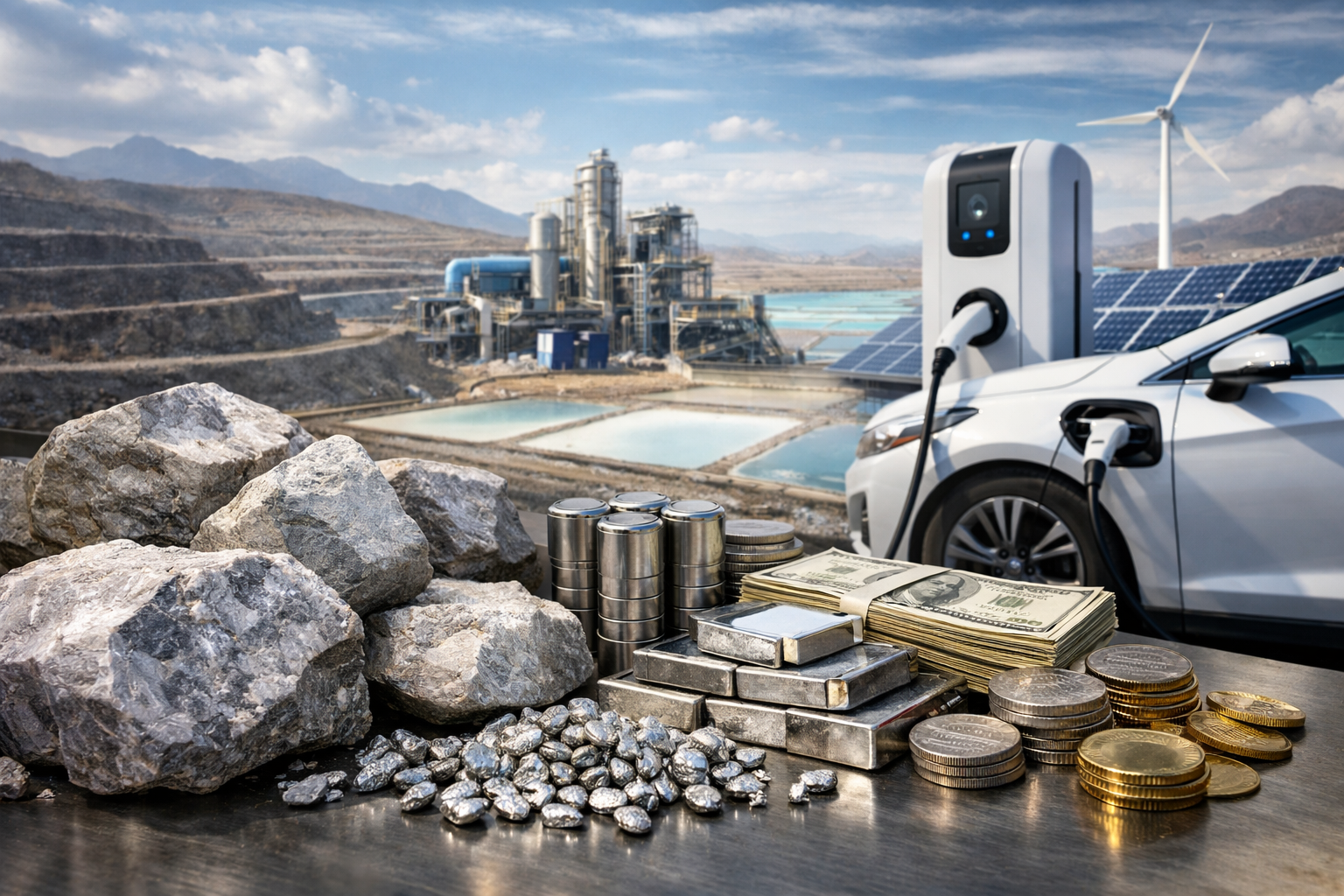
After one of the sharpest downturns in recent commodity cycles, lithium—the metal at the heart of the electric vehicle revolution—is showing signs of life again.
Following months of falling prices driven by oversupply and slowing EV demand growth, the market is beginning to stabilize. According to recent data from S&P Global and mining industry reports, lithium prices are finding a floor as producers cut output and demand expectations improve. For investors, this shift is sparking a critical question: is this the beginning of a recovery—or just a temporary pause in a longer downturn?
The answer could have significant implications not only for lithium producers but for the broader energy transition trade.
From Boom to Bust—and Now Stabilization
The lithium market has experienced extreme volatility over the past two years.
After surging to record highs during the peak of EV demand optimism, prices collapsed as supply outpaced demand and inventory levels rose. New mining projects, particularly in Australia and South America, flooded the market just as EV sales growth showed signs of moderation.
However, recent developments suggest that the worst of the downturn may be over.
According to S&P Global:
- Lithium prices have begun to stabilize after a prolonged decline
- Producers are implementing supply discipline, including production cuts and project delays
- EV demand forecasts are improving, particularly in key markets like the U.S. and Europe
This combination is helping to rebalance the market, creating the conditions for a potential recovery.
Why This Matters for Investors
Lithium is a cornerstone of the global energy transition, making its price dynamics highly relevant for investors across multiple sectors.
1. A Potential Bottoming Phase
Commodity cycles are often characterized by periods of extreme volatility followed by stabilization and recovery. The current environment may represent a bottoming phase for lithium prices.
Historically, these phases offer attractive entry points for long-term investors, as valuations tend to be depressed while fundamentals begin to improve.
2. Renewed Confidence in EV Demand
The outlook for electric vehicles remains a key driver of lithium demand. While growth slowed in recent quarters, long-term projections remain strong.
Governments worldwide continue to support EV adoption through:
- Incentives and subsidies
- Emissions regulations
- Infrastructure investment
Improving demand forecasts are reinforcing the view that lithium demand growth is intact, even if the trajectory is uneven.
3. Supply Discipline as a Market Stabilizer
One of the key factors behind the recent stabilization is a shift in producer behavior.
After aggressively expanding capacity during the boom, many companies are now:
- Scaling back production
- Delaying new projects
- Focusing on cost efficiency
This supply discipline is helping to reduce excess inventory and support prices—a critical step toward market recovery.
The Supply-Demand Rebalance
The lithium market is undergoing a classic rebalancing process.
Demand Side: Gradual Recovery
While EV sales growth slowed in some regions, underlying demand remains strong. Key drivers include:
- Continued adoption of electric vehicles
- Expansion of battery manufacturing capacity
- Growth in energy storage systems
Industry reports suggest that demand will continue to rise over the coming years, albeit at a more sustainable pace.
Supply Side: Adjusting to Reality
On the supply side, the rapid expansion of production has given way to a more cautious approach.
Mining companies are increasingly focused on:
- Maintaining profitability
- Managing costs
- Aligning production with demand
This shift is essential for restoring balance to the market.
Credible Signals from Industry Data
The stabilization trend is supported by data from S&P Global and other industry sources, which highlight:
- A slowdown in price declines
- Improved sentiment among market participants
- Early signs of tightening supply conditions
Analysts also note that lithium prices are approaching levels where marginal producers become unprofitable, naturally limiting further supply growth.
This dynamic often acts as a floor for commodity prices, reinforcing the case for stabilization.
Future Trends to Watch
As the lithium market evolves, several key trends will determine its trajectory:
1. EV Adoption Rates
The pace of electric vehicle adoption will remain the most important driver of lithium demand. Any acceleration—or slowdown—will have direct implications for prices.
2. Technological Developments
Advances in battery technology, including alternative chemistries, could influence demand for lithium. However, current technologies still rely heavily on lithium-based batteries.
3. New Supply Projects
The timing and scale of new mining projects will impact the supply-demand balance. Delays or cancellations could tighten the market further.
4. Geopolitical Factors
As lithium becomes a strategic resource, geopolitical considerations may influence supply chains and pricing dynamics.
Valuation Opportunity in Lithium Equities
One of the most compelling aspects of the current environment is the disconnect between lithium prices and equity valuations.
Many lithium-focused companies have seen significant declines in their stock prices during the downturn, reflecting:
- Lower commodity prices
- Reduced earnings expectations
- Negative market sentiment
However, if prices are indeed stabilizing, this could create an opportunity for valuation re-rating as market conditions improve.
Investors are increasingly viewing the sector through a long-term lens, focusing on:
- Asset quality
- Production costs
- Balance sheet strength
Actionable Takeaways for Investors
For those looking to capitalize on the evolving lithium market, a strategic approach is essential.
1. Consider Gradual Accumulation
Rather than attempting to time the exact bottom, investors may benefit from phased entry strategies, building positions over time.
2. Focus on High-Quality Producers
Companies with strong balance sheets, low production costs, and high-quality assets are better positioned to weather volatility and benefit from recovery.
3. Monitor Supply Discipline
Keep an eye on production decisions by major players. Continued supply discipline will be critical for sustaining price stability.
4. Diversify Across the Value Chain
Opportunities exist beyond mining, including:
- Battery manufacturers
- Processing and refining companies
- Recycling firms
5. Stay Alert to Market Signals
Commodity markets can change rapidly. Monitoring price trends, inventory levels, and demand indicators will be key.
The Bigger Picture: Lithium’s Role in the Energy Transition
Despite recent volatility, the long-term outlook for lithium remains closely tied to one of the most important global trends: the transition to clean energy.
As countries work to reduce carbon emissions and electrify transportation, demand for lithium is expected to grow significantly. This positions the metal as a strategic resource with enduring relevance.
The current stabilization phase may therefore represent not just a cyclical turning point, but a reset within a longer-term growth story.
Lithium prices appear to be finding their footing after a challenging period, supported by improving demand outlooks and greater supply discipline.
While uncertainty remains, the current environment offers a compelling setup for long-term investors willing to navigate short-term volatility. If the market continues to rebalance, this could mark the beginning of a new phase for lithium—and the broader energy transition trade.
Stay ahead of the latest developments in commodities and global markets with MoneyNews.Today—your trusted source for daily investor insights and actionable financial intelligence.




