
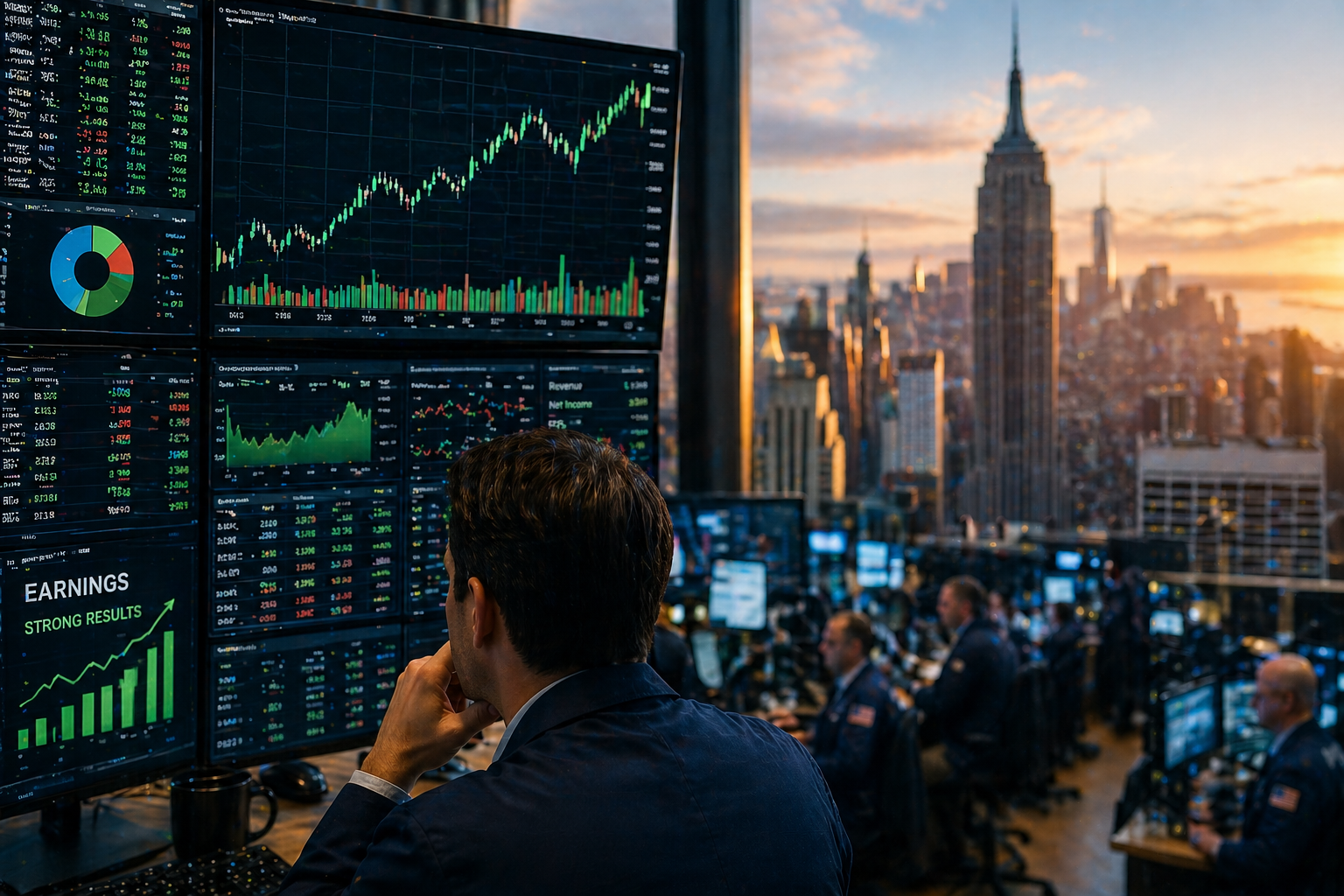
Financial markets are entering a new phase where policy uncertainty is becoming just as important as economic data. In Washington, ongoing debates around trade policy, tariffs, and artificial intelligence regulation are creating growing uncertainty for multinational corporations, many of which are now delaying investment decisions until clearer rules emerge.
According to Reuters and The Washington Post (April 27, 2026), companies across technology, manufacturing, and industrial sectors are increasingly cautious as regulatory direction remains unclear. This hesitation is beginning to influence corporate earnings outlooks, capital expenditure plans, and long-term strategic decisions.
For investors, this marks an important shift: policy risk is once again a central driver of market behavior.
Policy Uncertainty Becomes a Market Driver
Traditionally, markets have been driven by earnings, interest rates, and inflation expectations. However, policy uncertainty is now re-emerging as a key variable influencing investor sentiment.
Two major areas are currently shaping this uncertainty:
Trade and Tariff Policy
Ongoing discussions in Washington regarding tariffs, trade restrictions, and supply chain policies are creating uncertainty for multinational corporations. Companies with global operations are particularly exposed, as potential policy changes could impact costs, sourcing strategies, and international competitiveness.
AI Regulation
At the same time, policymakers are actively debating how artificial intelligence should be regulated. Key issues include data privacy, algorithmic transparency, national security, and the use of AI in critical infrastructure.
Reuters reports that technology companies are already adjusting investment strategies in response to the possibility of future regulatory constraints, particularly in AI development and deployment.
This combination of trade and technology policy uncertainty is creating a more complex environment for corporate planning.
Corporate Investment Decisions Are Slowing
One of the most immediate effects of policy uncertainty is a slowdown in corporate investment activity.
According to The Washington Post, several multinational firms are adopting a cautious “wait-and-see” approach, delaying large capital expenditures until regulatory frameworks become clearer. This includes investments in manufacturing expansion, AI infrastructure, and global supply chain restructuring.
When companies delay investment, it can directly affect future growth projections. Slower capital spending often leads to weaker revenue expansion and more conservative earnings guidance.
Bloomberg analysts note that policy uncertainty tends to reduce corporate risk appetite, especially in capital-intensive sectors such as technology, industrials, and energy.
For investors, this means greater uncertainty in forward earnings expectations.
Why This Matters for Investors
Policy uncertainty introduces a layer of unpredictability that cannot be easily modeled using traditional financial metrics.
Unlike inflation or interest rates, policy direction can shift quickly based on political negotiations, regulatory decisions, and legislative priorities. This creates several important implications:
- Lower earnings visibility: Companies may widen guidance ranges due to unclear policy outcomes
- Delayed investment cycles: Capital spending may be postponed until regulations are finalized
- Greater sector divergence: Some industries are more exposed to policy risk than others
Bloomberg data shows that earnings performance remains relatively strong in sectors such as technology, healthcare, and select industrials. However, companies with weaker balance sheets or higher cyclical exposure are experiencing more pressure, highlighting growing divergence across the market.
In this environment, policy risk is becoming a key factor in equity valuation.
AI Regulation Adds Strategic Uncertainty
Artificial intelligence is at the center of one of the most important policy debates in Washington.
Lawmakers are considering how to regulate rapidly advancing AI technologies without slowing innovation. Key topics include:
- Data privacy and usage rights
- Intellectual property protection
- National security concerns
- Accountability for AI-driven decisions
This regulatory uncertainty is particularly important for large technology companies investing heavily in AI infrastructure.
While AI remains one of the strongest long-term growth drivers in the global economy, unclear regulations create execution risk. Companies may face future compliance costs, restrictions on model deployment, or limitations on data usage.
Reuters reports that some firms are already incorporating regulatory scenarios into their AI investment planning, reflecting the growing importance of policy considerations in technology strategy.
Trade Policy and Global Supply Chain Risk
Trade policy uncertainty is also reshaping global supply chains.
Many multinational companies depend on complex cross-border production networks. Potential changes to tariffs or trade agreements could significantly impact costs and operational strategies.
Industrials, technology hardware manufacturers, and automotive companies are particularly exposed to these risks. Even the possibility of policy changes can influence long-term investment decisions.
The Washington Post highlights that companies are increasingly integrating policy risk into their planning models, leading to more conservative capital allocation strategies.
For investors, this means supply chain exposure is becoming an increasingly important factor in equity analysis.
Market Reaction: Cautious Stability
Despite rising policy uncertainty, financial markets have remained relatively stable. However, investor sentiment has shifted toward caution.
Capital is increasingly flowing toward companies with strong balance sheets, predictable cash flows, and lower exposure to regulatory risk.
This has contributed to greater dispersion in equity performance, with some sectors outperforming while others lag due to policy sensitivity.
Bloomberg analysts describe this environment as one where macroeconomic and policy risks are coexisting, requiring investors to balance financial fundamentals with political developments.
Future Trends to Watch
Several key developments will shape how policy uncertainty impacts markets going forward:
1. AI Regulatory Frameworks
Clear regulatory guidelines could reduce uncertainty and support renewed investment in technology.
2. Trade Policy Direction
Stability in trade relations would likely improve corporate confidence and capital spending.
3. Corporate Investment Trends
Tracking whether companies resume or delay capital expenditures will provide insight into business sentiment.
4. Sector Sensitivity to Policy
Industries such as technology, manufacturing, and energy will remain most affected by policy changes.
5. Political Cycle Influence
Policy direction may shift depending on legislative developments and political cycles.
Key Investment Insight
Policy uncertainty is becoming a defining feature of the current investment environment.
For investors, this requires a more selective and risk-aware approach:
- Focus on companies with limited exposure to regulatory disruption
- Prioritize firms with strong financial positions and flexible business models
- Monitor sectors most sensitive to trade and AI regulation developments
- Avoid overexposure to businesses with uncertain policy-dependent growth assumptions
In this environment, managing policy risk is just as important as identifying growth opportunities.
The increasing influence of policy on corporate decision-making highlights a structural shift in how markets function. As regulatory debates continue in Washington, investors must factor political risk into their analysis alongside traditional financial indicators.
Stay informed with MoneyNews.Today, your trusted source for daily investor insights, market analysis, and actionable financial intelligence.




