
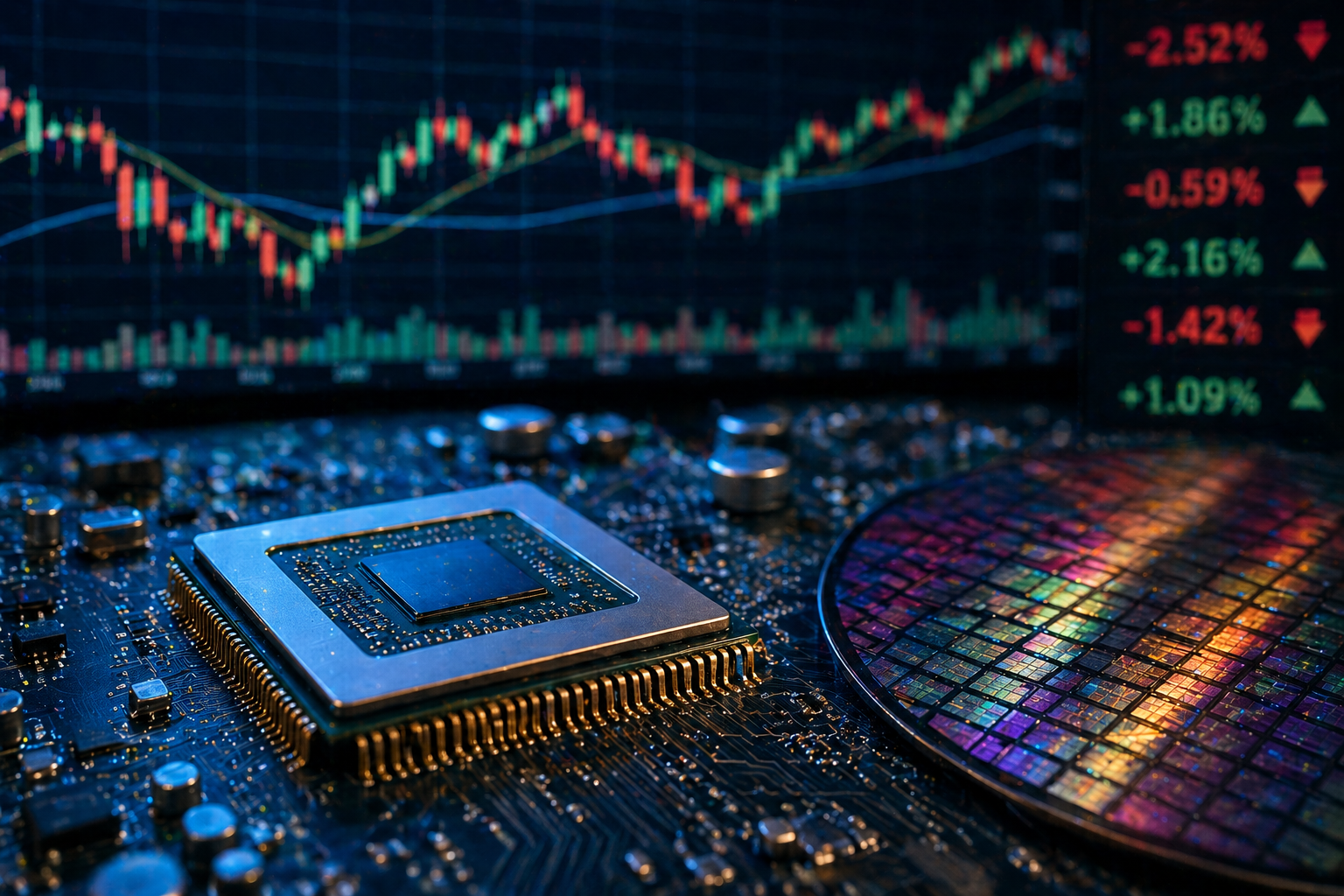
The semiconductor sector—long viewed as the backbone of the global digital economy—is entering a more complex phase. While artificial intelligence continues to drive explosive demand for high-performance chips, weakness in traditional end markets is creating a divergence that is fueling volatility across semiconductor equities.
This split narrative is becoming one of the most closely watched themes on Wall Street. According to Reuters and CNBC (April 27, 2026), investors are grappling with a market where strong AI-driven growth is colliding with cyclical softness in consumer electronics and industrial demand.
For investors, the takeaway is increasingly clear: semiconductor exposure is no longer uniform. Understanding where growth is concentrated—and where risks remain—is essential.
A Tale of Two Markets: AI Strength vs. Cyclical Weakness
At the heart of current volatility is a widening gap in demand across semiconductor end markets.
On one side, AI-related demand is accelerating rapidly. Cloud providers and technology firms are investing heavily in data centers and advanced computing infrastructure, driving strong demand for GPUs, AI accelerators, and high-performance processors. Reuters reports that demand in these segments continues to outpace supply, supporting both revenue growth and pricing power.
On the other side, traditional markets are lagging. Consumer electronics—including smartphones, PCs, and other devices—remain in a slow recovery phase following the post-pandemic demand normalization. Inventory levels are still adjusting, and consumer spending remains uneven.
Industrial and automotive segments, while relatively stable, are also experiencing mixed demand due to broader macroeconomic uncertainty.
This divergence is reshaping the semiconductor landscape into a more fragmented market, where performance varies significantly across companies and segments.
Why This Matters for Investors
The semiconductor industry has always been cyclical, but today’s environment introduces a structural shift.
In previous cycles, demand tended to rise and fall across the sector as a whole. Today, however, AI is decoupling parts of the industry from traditional cycles. This creates both opportunity and complexity.
For investors, several implications stand out:
- Broad exposure to semiconductor stocks may no longer capture the full upside of AI-driven growth
- Company-specific positioning is becoming a critical driver of performance
- Volatility is increasing as markets react to uneven demand signals
Bloomberg analysts note that dispersion within semiconductor equities is at elevated levels, reinforcing the idea that selectivity is now essential.
This is no longer a sector where a rising tide lifts all boats.
Earnings Highlight the Divide
Recent earnings reports across the semiconductor industry underscore the growing gap between winners and laggards.
Companies with strong exposure to AI infrastructure have reported robust revenue growth and optimistic forward guidance. These firms are benefiting from sustained demand for high-performance computing and data center expansion.
In contrast, companies more reliant on consumer electronics have delivered weaker results, with cautious outlooks reflecting ongoing demand uncertainty.
CNBC reports that while some chipmakers expect gradual improvement in non-AI segments, recovery timelines remain unclear and uneven.
This divergence is also influencing valuations. AI-focused semiconductor companies are trading at premium multiples, reflecting strong growth expectations, while others are facing valuation pressure.
For investors, understanding the source of earnings growth is becoming more important than headline performance.
The AI Premium—and Its Risks
The surge in AI-related demand has introduced a new dynamic: the “AI premium.”
Companies positioned in AI infrastructure are attracting significant investor interest, driving valuations higher. While this reflects genuine growth potential, it also introduces risk.
If AI spending slows, or if supply constraints ease faster than expected, these elevated valuations could come under pressure.
Additionally, heavy reliance on a single growth driver—AI—can increase exposure to sector-specific risks.
Reuters highlights that investors are increasingly focused on sustainability: whether current demand levels can be maintained over the long term, and how companies plan to manage growth as competition intensifies.
Balancing optimism with discipline is becoming a key challenge in this segment.
Supply Chains and Strategic Investment
Supply chain dynamics continue to play a critical role in shaping the semiconductor industry.
In response to strong demand—particularly in AI—companies are investing heavily in expanding manufacturing capacity. New fabrication plants, advanced process technologies, and strategic partnerships are being developed to support future growth.
At the same time, geopolitical considerations remain a key factor. Efforts to localize semiconductor production in the United States and allied regions are influencing investment decisions and supply chain strategies.
These developments are increasing capital intensity across the sector, which could impact margins in the near term but support long-term resilience.
For investors, understanding how companies navigate these challenges is critical to assessing their long-term potential.
Future Trends to Watch
Several trends are likely to shape the semiconductor sector in the coming months:
1. Continued AI-Driven Demand
AI will remain a primary growth driver, particularly in cloud computing and data center infrastructure.
2. Gradual Recovery in Consumer Markets
Consumer electronics demand is expected to recover gradually, though the pace remains uncertain.
3. Rising Capital Expenditure
Ongoing investment in manufacturing and technology development will define competitive positioning.
4. Geopolitical Influence
Trade policies and regional manufacturing initiatives will continue to impact supply chains and costs.
5. Valuation Adjustments
As growth expectations evolve, valuations may adjust, particularly in high-growth AI segments.
Key Investment Insight
The semiconductor sector is entering a phase of divergence, where not all exposure delivers equal returns.
Investors should focus on:
- Companies with strong ties to AI, cloud, and data center demand
- Firms demonstrating pricing power and margin resilience
- Businesses with balanced exposure across growth and cyclical segments
At the same time, caution is warranted for companies heavily reliant on consumer-driven demand, where recovery remains uncertain.
In this environment, targeted selection—not broad exposure—is the key to navigating volatility and capturing opportunity.
The evolving dynamics within the semiconductor industry reflect a broader transformation driven by artificial intelligence and shifting global demand patterns.
Stay ahead of these changes with MoneyNews.Today, your trusted source for daily investor insights, market analysis, and actionable strategies.




