
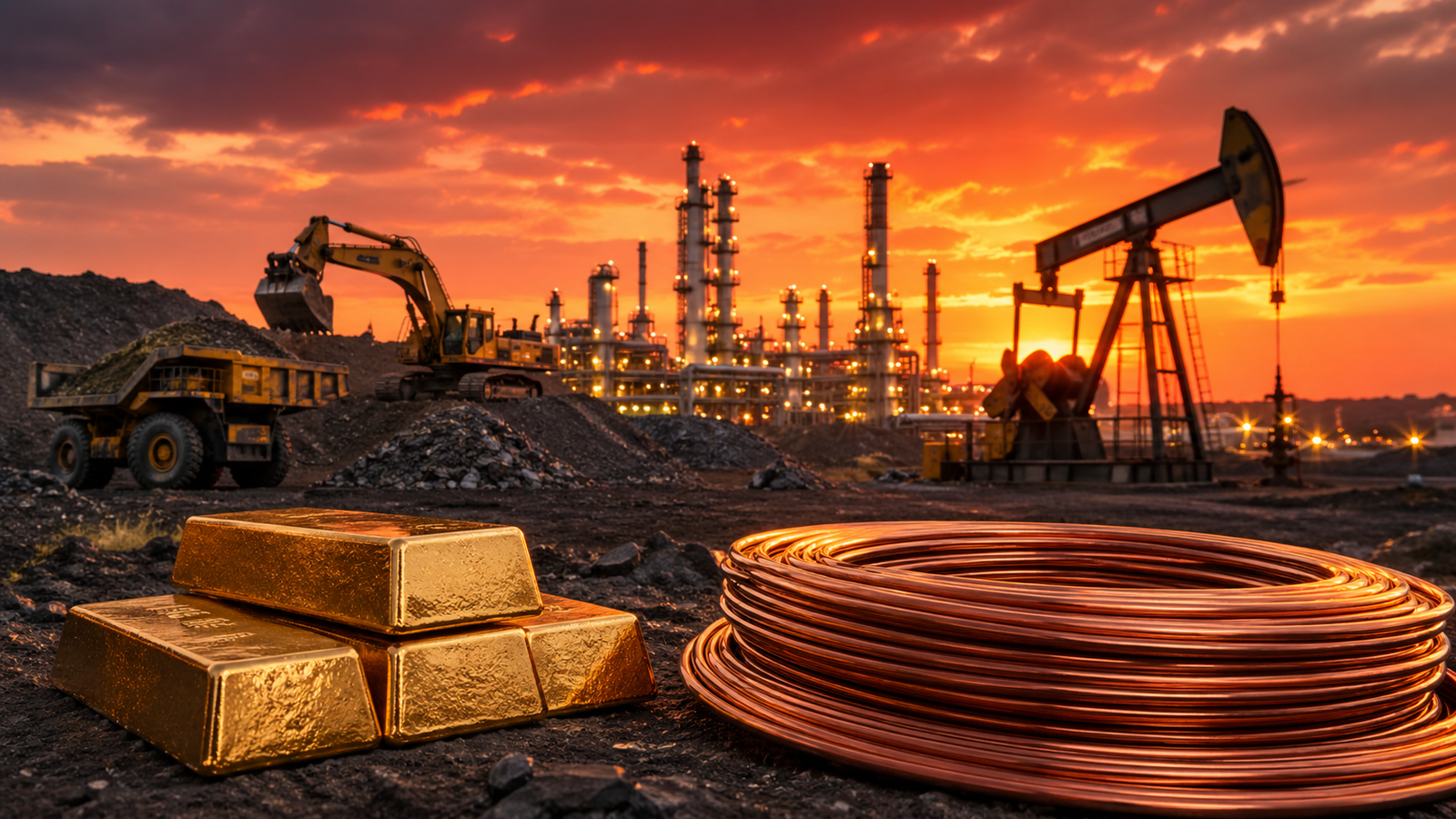
Global commodity markets are being reshaped in real time—and at the center of it all is energy. A sharp surge in oil prices, driven by escalating geopolitical tensions in the Middle East, is sending shockwaves across metals and mining, reigniting inflation fears and forcing investors to reassess the entire commodity complex.
On April 30, 2026, crude oil prices pushed above ~$125 per barrel, according to Reuters (April 30, 2026), marking one of the most significant macro developments of the year. The ripple effects are already visible: gold is rallying as a safe-haven asset, industrial metals are swinging amid uncertain demand, and mining companies are facing renewed cost pressures.
For investors, this is not just a commodity story—it’s a macro-driven reset that could redefine opportunities across energy, metals, and global markets.
Energy Shock: The Catalyst Behind Market Shifts
The surge in oil prices is the defining force behind today’s commodity market dynamics.
Geopolitical tensions in key oil-producing regions have disrupted supply expectations, pushing prices higher and injecting fresh volatility into global markets. But the impact of rising oil goes far beyond energy—it feeds directly into inflation, production costs, and investor sentiment.
Oil is a foundational input across the global economy. When prices rise sharply:
- Transportation and logistics costs increase
- Industrial production becomes more expensive
- Inflation expectations climb
This creates a cascading effect that reaches every corner of the commodity market, particularly metals and mining.
For investors, the key takeaway is clear: energy is no longer just one component of the commodity cycle—it is the primary driver.
Gold Shines as Safe-Haven Demand Returns
In times of uncertainty, capital tends to move toward stability—and few assets represent that better than Gold.
As oil prices surge and geopolitical risks intensify, gold is benefiting from renewed safe-haven demand. Investors are turning to the precious metal as a hedge against both inflation and market volatility.
This trend is consistent with historical patterns. During periods of:
- Rising inflation
- Geopolitical instability
- Market uncertainty
Gold has often outperformed other asset classes.
Recent market behavior reinforces this dynamic. As highlighted by Reuters (April 30, 2026), gold prices are trending higher alongside increased demand from institutional investors seeking protection against macro risks.
However, the story is not without nuance. Rising Treasury yields—another byproduct of inflation concerns—can sometimes limit gold’s upside, as higher yields increase the opportunity cost of holding non-yielding assets.
Still, in the current environment, the balance appears to favor gold.
Industrial Metals Caught in a Crosscurrent
While gold is benefiting from macro uncertainty, industrial metals are facing a more complex environment.
Metals such as copper, aluminum, and nickel are heavily influenced by global economic growth. In theory, higher energy prices could signal strong demand—but in reality, they are introducing uncertainty.
The challenge lies in conflicting signals:
- On one hand, infrastructure spending and long-term electrification trends support demand
- On the other, rising costs and macro uncertainty could slow economic activity
This tension is leading to increased volatility in industrial metal prices.
For example, copper—a key indicator of economic health—has been fluctuating as investors weigh the impact of higher energy costs against demand from sectors like renewable energy and electric vehicles.
This creates a difficult environment for both producers and investors, where short-term movements are driven more by macro headlines than by fundamental supply-demand dynamics.
Mining Companies Face a Margin Squeeze
Perhaps the most underappreciated aspect of the current environment is the pressure on mining companies themselves.
While higher commodity prices can boost revenues, rising energy costs are simultaneously increasing operating expenses. Mining is an energy-intensive industry, relying heavily on fuel and electricity for extraction, processing, and transportation.
As oil prices climb, so do:
- Fuel costs for heavy machinery
- Electricity costs for processing operations
- Transportation expenses for global distribution
The result is a margin squeeze—where higher revenues are offset by rising costs.
This dynamic is particularly challenging for companies with:
- High-cost operations
- Limited pricing power
- Weak balance sheets
Conversely, low-cost producers with efficient operations are better positioned to navigate this environment.
For investors, this underscores the importance of selectivity within the mining sector.
Why This Matters for Investors
The current commodity landscape reflects a broader shift toward macro-driven markets.
Rather than being driven purely by supply-demand fundamentals, prices are increasingly influenced by:
- Geopolitical developments
- Inflation expectations
- Monetary policy signals
This has several key implications:
1. Commodities as a Macro Hedge
Assets like gold are regaining their role as hedges against uncertainty, offering diversification benefits in volatile markets.
2. Energy as a Central Driver
Oil is now a critical factor influencing not just energy stocks, but the entire commodity complex.
3. Increased Volatility
With macro factors in play, commodity prices are likely to experience sharper and more frequent swings.
Credible Signals from the Market
The trends shaping today’s commodity markets are supported by multiple credible sources:
- Reuters (April 30, 2026) highlights the surge in oil prices and its impact on global markets
- Institutional analysis points to rising energy costs as a key driver of mining margins
- Broader market data shows increased investor flows into gold as a safe-haven asset
These signals collectively point to a market environment where macro forces are taking precedence over traditional drivers.
Future Trends to Watch
As the situation evolves, several trends will be critical for investors:
1. Oil Price Trajectory
Sustained high oil prices could reinforce inflation pressures and continue to impact commodity markets.
2. Geopolitical Developments
Any escalation or de-escalation in tensions could lead to sharp market reactions.
3. Monetary Policy Response
Central bank actions in response to inflation will influence both yields and commodity prices.
4. Demand Signals from Major Economies
Economic data from key regions, particularly China and the U.S., will provide insights into industrial metal demand.
Key Investment Insight
Energy is now the dominant force shaping the metals and mining sector.
For investors, this means:
- Viewing commodities through a macro lens, not just supply-demand dynamics
- Recognizing gold as a potential hedge in uncertain conditions
- Being selective with mining stocks, focusing on low-cost, high-efficiency producers
In practical terms, the current environment favors strategies that balance exposure to both defensive assets (like gold) and cyclical opportunities (in industrial metals), while carefully managing risk.
A Market Redefined by Macro Forces
The convergence of rising oil prices, geopolitical tensions, and inflation concerns is reshaping the global commodity landscape.
This is not a temporary shift—it reflects a broader transformation in how markets operate. Commodities are becoming increasingly sensitive to macro forces, and investors must adapt accordingly.
For those who can navigate this complexity, the current environment offers significant opportunities. But it also requires a disciplined approach, grounded in an understanding of both global economics and sector-specific dynamics.
Stay Ahead of the Market
As commodity markets continue to evolve, staying informed is essential. The interplay between energy, geopolitics, and metals will remain a key theme for investors in the months ahead.
Follow MoneyNews.Today for daily insights that cut through the noise—helping you identify the trends and opportunities shaping today’s global markets.




