
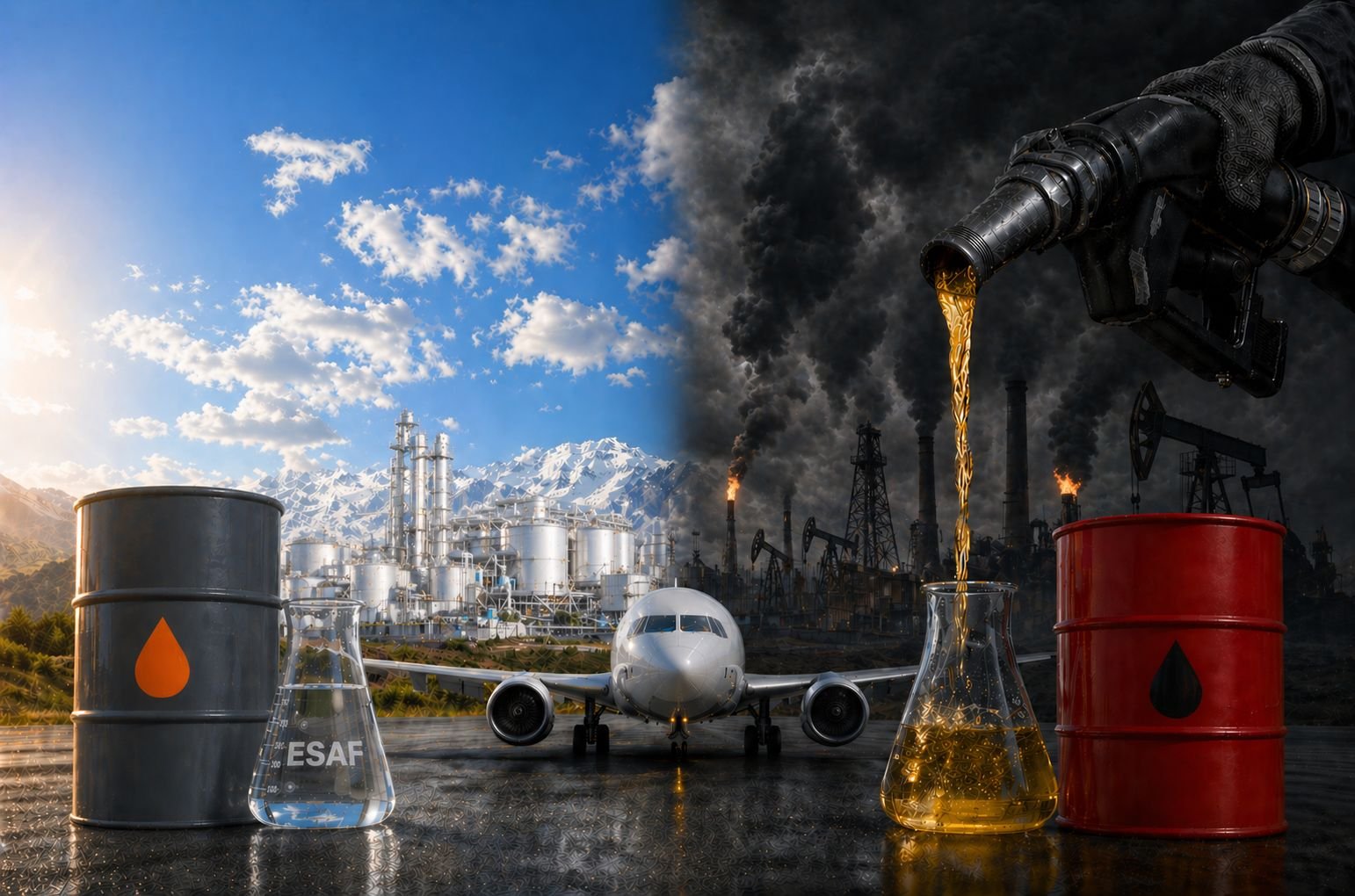
The Jet Fuel Supply Shock: A Synthetic Aviation Fuel (eSAF) Opportunity
The vulnerability of global oil and gas supply chains has come into clear and renewed focus since the beginning of 2026:
- Jet fuel prices have almost doubled since the Iranian conflict began in February 2026, forcing European airlines to cancel thousands of flights through the peak summer travel season.¹
- German airline Lufthansa announced it will cut 20,000 flights from its schedule through the fall to save on jet fuel costs.¹
- An estimate by Argus Media, based on Eurostat data, suggests that available commercial jet fuel stocks could only last three months in the United Kingdom, four in Portugal, five in Hungary, six in Denmark, seven in Italy and Germany and eight in France and Ireland.²
- Europe imports approximately a third of its jet fuel, largely from the Middle East, and is now trying to replenish those supplies with imports from the U.S. and Nigeria.¹
- The EU has legally mandated that 1.2% of all aviation fuel supplied at European airports must be synthetic e-fuel by 2030, escalating to 35% by 2050, with financial penalties imposed for non-compliance.³
- As of May 2025, 41 large-scale eSAF projects had been announced to supply the EU market, however only one has reached a final investment decision (FID).32
Behind all of this is a race that was already underway before the first strike on Iran.
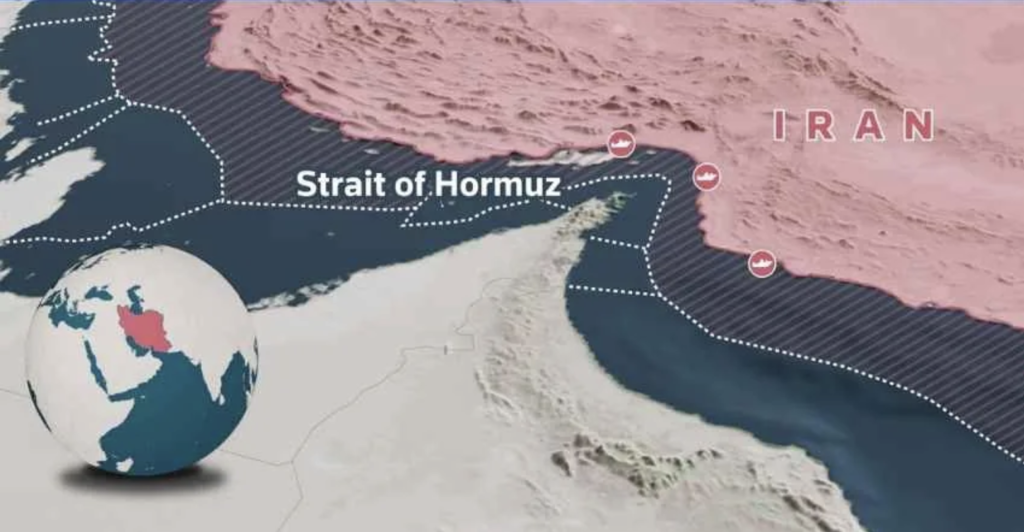
A race to find a way to produce aviation fuel that does not require drilling, Middle Eastern supply chains, or exposure to the Strait of Hormuz.
Fuel that can be domestically produced, renewable, and competitive in cost.
A company listed on the TSX Venture Exchange has been hard at work creating a solution.
✅ On January 20th, 2026, they announced a non-binding Expression of Interest (EOI) with Icelandair for 25 Million Litres of Synthetic Sustainable Aviation Fuel (eSAF) annually over 10 Years (totalling 250 million litres).¹⁰
✅ On January 27, 2026, they were issued a key U.S patent for their proprietary fuel synthesis reactor that produces high-performance, low-cost, and carbon-neutral synthetic fuels.¹⁸
✅ On April 13th 2026, they entered into a definitive Land Lease Agreement with the Municipality of Norðurþingi in respect of a 500 m² site at the Husavik Power Station in Iceland, where the company is now constructing its first demonstration facility.25
✅ In May 2026, they received a formal ‘Technical and Economic Assessment: Summary Findings’ from one of the most rigorous independent reviewers in the global synthetic fuels industry; Mr Robert Rapier is a seasoned chemical engineer with over three decades of international experience in the energy sector.¹⁵
✅ On May 27th, 2026, they announced that the construction of its geothermal-integrated synthetic fuel demonstration facility in Húsavík, Iceland, is currently six months ahead of schedule, and that first operations could now occur as soon as June 2026.37
✅ And they are deploying one of the most efficient electrolyzers31 in the world’s first geothermally integrated solid oxide electrolysis cell (SOEC) facility.¹⁹
The company is:
Syntholene Energy Corp.
TSXV: ESAF | FSE: 3DD0 | OTC: SYNTF

Oil Underpins Much of the Global Economy
Before understanding why Syntholene matters, it’s important to grasp the scale of global dependence on fossil fuels.
✅ Liquid fuels are indispensable to modern society, consumed at a rate of over 4 trillion litres per year, and growing.⁵
✅ Essentially, every kilogram of food in your supermarket was transported using some amount of diesel across road, rail, air, and water.
✅ Virtually every building material in your home was produced with energy derived from fossil feedstocks.
✅ Almost every flight you have ever taken burned kerosene refined from crude oil.
The Iranian conflict of early 2026 is an illustration of the ripple effects of supply chain interruption. Jet fuel prices in Europe almost doubled in just two months.¹ Airlines are cancelling summer flights.¹
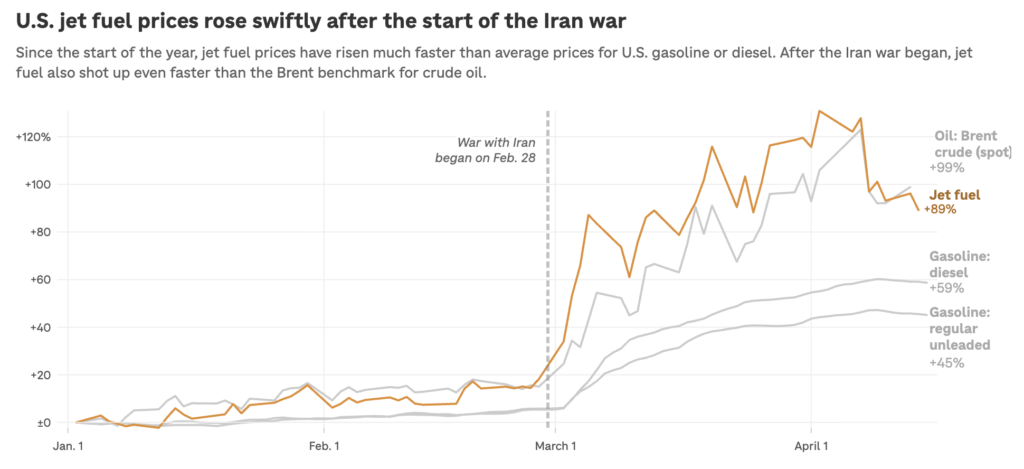
Brent crude: U.S. Energy Information Administration
“Any airlines that have not hedged their fuel costs are also at risk,” said George Shaw, senior insight analyst at trade intelligence firm Kpler, specifically flagging that Scandinavian carriers were among the first to respond by cutting flights.²
The Mandate Is Real – But The Supply Is Not
Against this backdrop, the EU’s ReFuelEU Aviation regulation is one of the most consequential pieces of energy legislation passed in recent years. It requires an average share of 1.2% synthetic eSAF across all aviation fuel supplied at EU airports in 2030, escalating to a minimum share of 5% by 2035, 10% by 2040, and 35% by 2050.³ The UK has implemented a parallel mandate reaching 10% SAF in 2030 and 22% in 2040, with an embedded synthetic aviation fuel (eSAF) sub-mandate.⁷
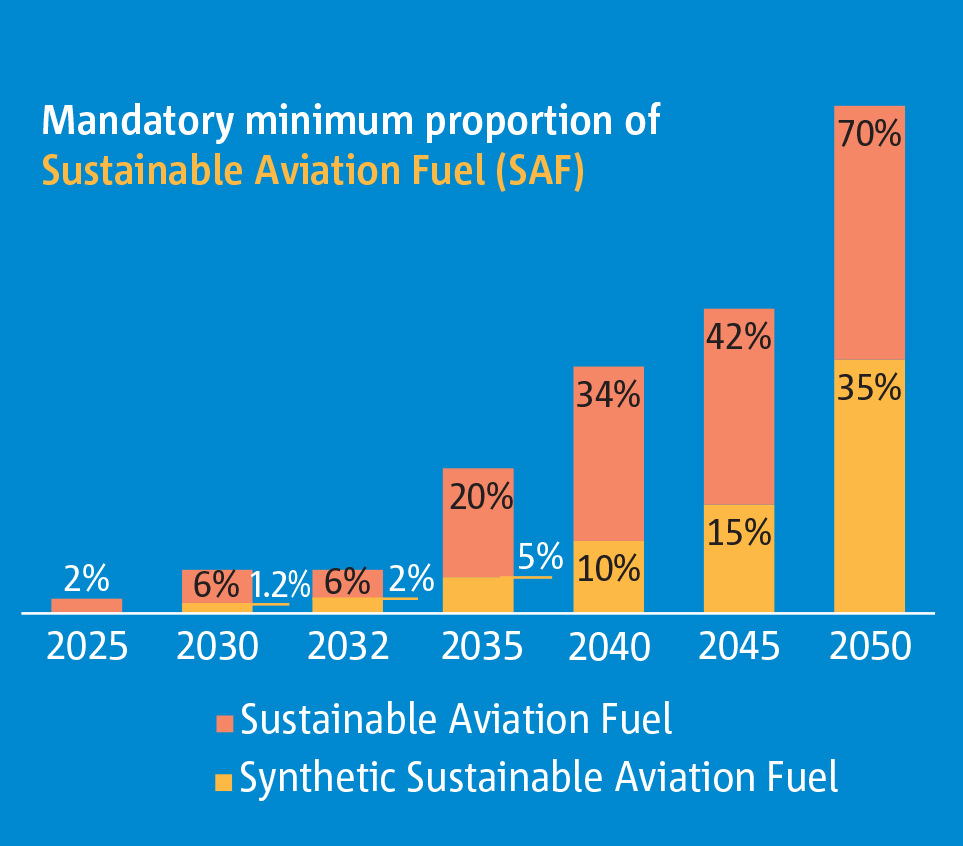
These are not merely aspirational targets. They are legally binding volumetric obligations with penalties for noncompliance.³ Jo Dardenne, Policy Officer at the directorate-general for mobility and transport, said at Sustainable Aviation Fuels Summit in Brussels on April 14, 2026, that the European Commission will not alter its ReFuelEU Aviation framework during next year’s scheduled evaluation.⁸
To meet the adopted mandates, Europe’s aviation industry is under pressure to start scaling production for synthetic aviation fuel (eSAF) according to a report published by Project SkyPower, a CEO-led initiative focused on accelerating take-off for e-SAF in Europe.⁹
Project SkyPower, which is backed by senior air transport sector leaders, has released economic modelling showing that the industry will need to raise between €15 billion and €20 billion capital investment by 2030 and a further €3 billion to €5 billion each year thereafter to achieve the scale required to meet SAF blending mandates.⁹
The EU has responded with an eSAF subsidy of up to €6 per litre 29 for airlines who purchase eSAF to meet the mandated consumption amount of 1.3% eSAF in 2030, escalating to 10% by 2040 and 35% by 2050.¹⁰
Despite mandated consumption of eSAF, scalability of supply remains a concern.
As of May 2025, 41 large-scale eSAF projects have been announced to supply the EU market, with a combined potential capacity of 2.8 million tonnes per year.⁴ Only one has reached Final Investment Decision (FID), the critical gating milestone in shifting these projects from planning to reality.32
Current EASA reference pricing for eSAF stands at €7,695 per tonne, or approximately €6.16 per litre in their 2024 Report Aviation Fuels Reference Prices for ReFuelEu Aviation.¹⁰ This represents roughly 4-10 times the average cost of conventional jet fuel.26 Creating high-performance, low-cost, and carbon-neutral synthetic fuel at an industrial scale is critical to the industry’s future.
Heathrow Airport, one of the world’s busiest international hubs, has committed over £80 million to incentivise airlines to use SAF in 2026 alone, targeting a 5.6% SAF uplift, 2% above the UK government mandate.¹¹
Matt Gorman, Heathrow’s Director of Sustainability, stated: “Sustainable Aviation Fuel is not a hypothetical concept for the future; it’s already producing real impact in 2026.”¹¹
And with jet fuel prices having almost doubled in recent months, the argument for sustainable, domestically produced synthetic aviation fuel has never been stronger.
Iceland: An Exceptional Geothermal Endowment
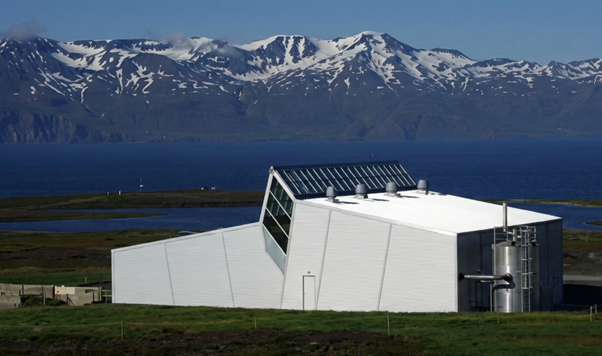
Every barrel of synthetic fuel requires energy. Specifically, low-cost, base-load, and low-carbon energy at the scale required for industrial production.
Grid electricity can be costly, and renewable energy isn’t always available when needed. Since synthetic fuel production relies heavily on energy, these factors can drive up overall cost. In fact, hydrogen production alone can make up as much as 70% of the total cost of producing synthetic sustainable aviation fuel (eSAF).¹⁵
Iceland is uniquely endowed with geothermal potential. If harnessed effectively, it could offer a unique solution to synthetic fuel production within the European Economic Zone.
First-of-a-kind modelling by the Clean Air Task Force and the University of Twente in the Netherlands estimated the superhot rock geothermal energy source potential worldwide.¹² While this modelling is preliminary, it suggests that Iceland has significant superhot rock geothermal energy resources.¹²
According to the modelling, 1% of Iceland’s superhot rock energy resources could provide 411 GW of energy capacity, enough to generate over 3,419,621 GWh of electricity.¹² Put another way, just 1% of Iceland’s superhot rock geothermal endowment is equivalent to 2 billion barrels of oil or 174 times the country’s 2021 electricity consumption.¹²
The Húsavík region in northeast Iceland, where Syntholene is building its demonstration facility, sits adjacent to the Hveravellir geothermal field.⁵
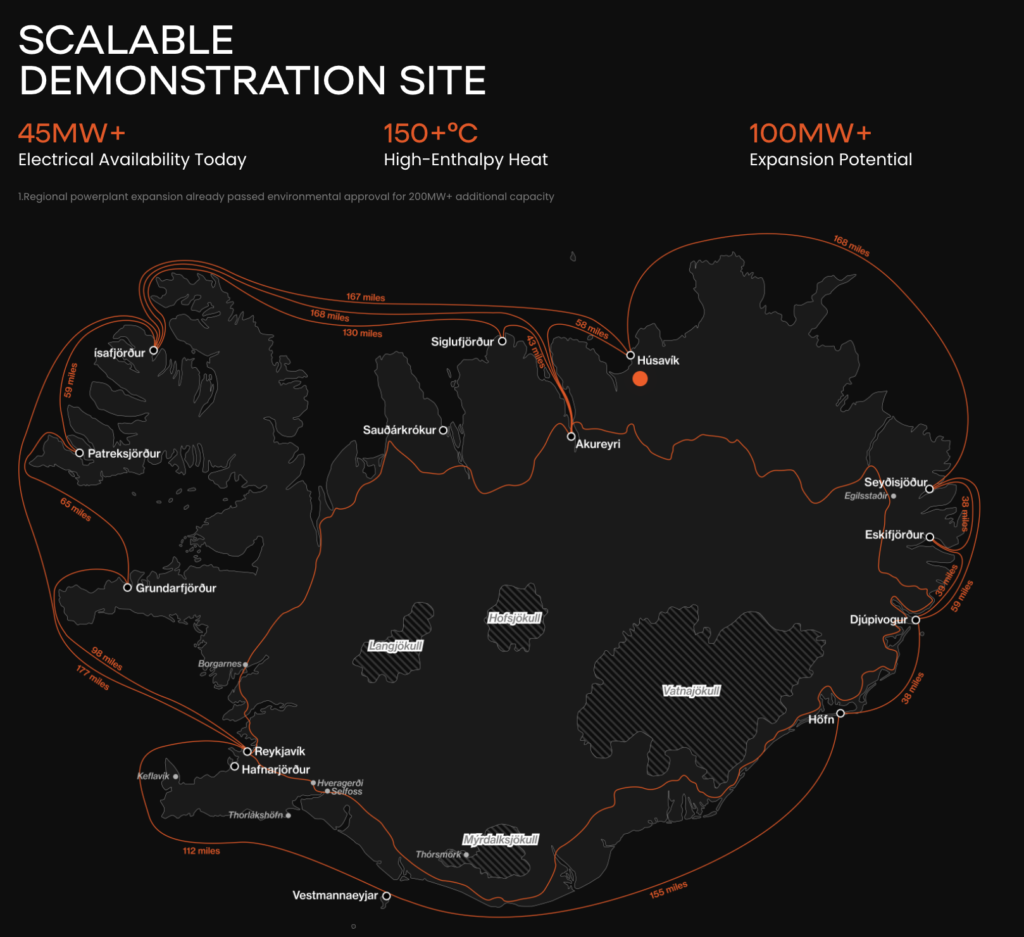
The region has already been assessed for an additional 200 MW or more of geothermal capacity.35 The Association of Municipalities in Northeast Iceland has formally identified the need to improve energy efficiency, with a particular focus on geothermal energy to support the region’s industrial and economic development.¹⁴
But here is the broader point that Syntholene’s CEO, Dan Sutton, makes during an interview with Investor News Network, Syntholene’s production model is not Iceland-exclusive:
“Iceland is where our core footprint will certainly be for these first few increments of commercial-scale production. But it’s entirely feasible that we could produce this fuel in various geothermally active regions around the world. Places like Alaska, Utah, Nevada, Indonesia, and Italy. There are a lot of places with really active geothermal resources.” 27
The company’s modular system could be deployed in any nation with sufficient access to geothermal, nuclear, or other low-cost thermal energy. The vision is energy sovereignty. Countries with the right access to clean, baseload thermal power could build their own synthetic fuel supply, decoupled from fossil feedstocks and the externalities typically associated with dependence on crude oil supply chains.
Creating The World’s First Geothermally Integrated SOEC
Syntholene Energy Corp. is commercialising a novel production pathway for low-cost, sustainable synthetic aviation fuel, with the target output being ultrapure synthetic jet fuel, which the Company seeks to manufacture at 70% lower cost than the nearest competing technology today.⁵
Its architecture is called the Hybrid Thermal Production System, and its defining characteristic is the integration of both geothermal electricity and geothermal steam into the hydrogen production process.
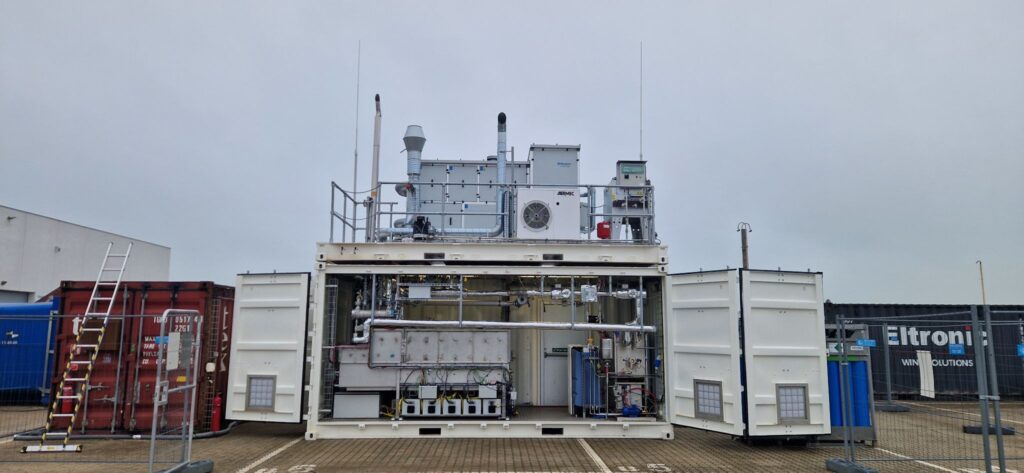
Hydrogen currently accounts for approximately 70% of the total eSAF production cost.¹⁵ Conventional electrolysis, whether alkaline or proton electron membrane (PEM), uses electricity alone to split water into hydrogen and oxygen.¹⁵
SOEC electrolysis, the technology at the heart of Syntholene’s system, operates at 700 to 850 degrees Celsius and can substitute heat for a portion of the electricity load.¹⁵ When that heat comes from geothermal steam rather than grid power, electricity consumption falls to under 37 kWh per kilogram of hydrogen, compared to 50 to 60 kWh/kg for PEM systems.¹⁵ The system achieves conversion efficiencies of up to 90% when fully integrated with geothermal heat inputs.¹⁵
The company’s electrolyser vendor, Dynelectro ApS of Denmark, describes itself as the developer of one of the world’s most energy-efficient electrolyser platform for hydrogen production in synthetic fuel applications.31
The Dynelectro 250 kW Dynamic Electrolyser Unit, the model specified for the Húsavík demonstration facility, has been demonstrated to produce up to 5.4 kg of hydrogen per hour within a standard container footprint, achieving 90% electrical efficiency with heat integration and 99.99% hydrogen purity.¹⁷
The platform reduces electrolyser stack degradation by a factor of five compared to conventional SOEC designs¹⁷, and was selected by Syntholene following a two-year technical and commercial evaluation process.¹⁶
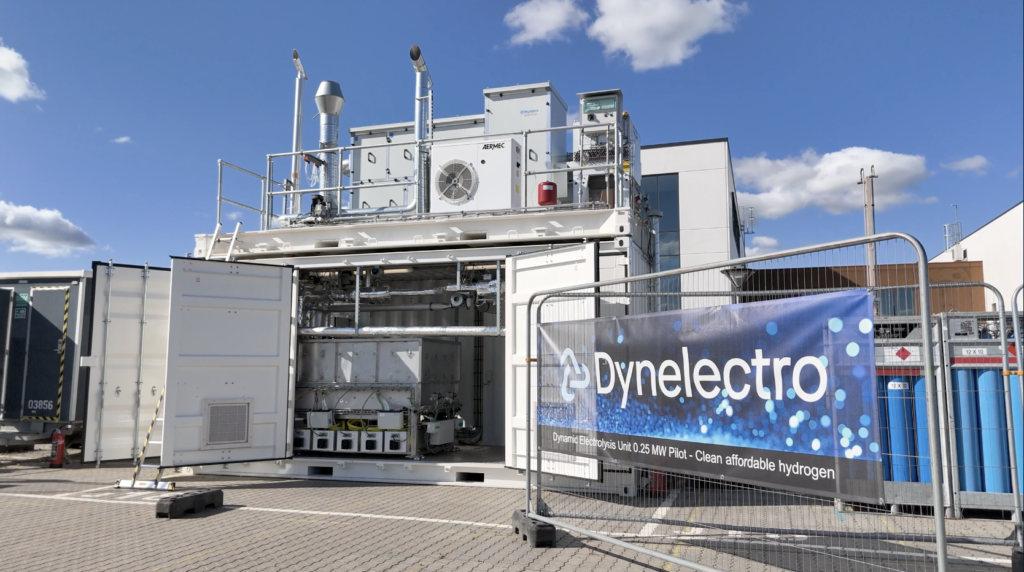
Syntholene is integrating its Hybrid Thermal Production System with what Dynelectro claims is the one of the world’s most energy-efficient electrolyser31, at a geothermal site in Iceland, to create the world’s first geothermally integrated SOEC production facility for synthetic aviation fuel.
Third-Party Technical Validation: The Robert Rapier Report
Robert Rapier is a chemical engineer with more than three decades of international experience in synthetic fuels. He holds degrees in chemistry, mathematics, and chemical engineering.¹⁵ He has led and reviewed projects across every major alternative fuel pathway, including gas-to-liquids, Fischer-Tropsch biomass-to-liquids, and vegetable-oil-to-diesel.¹⁵
He worked at ConocoPhillips on hydrogen production and FT upgrading challenges, served as an expert witness in the State of Mississippi’s fraud case against KiOR, and previously evaluated Carbon Recycling International’s geothermal-enabled methanol production in Iceland in a published Forbes investigation.¹⁵ His work has appeared in the Wall Street Journal, Washington Post, The Economist, and Forbes, and has been featured on 60 Minutes and CNBC.¹⁵
His formal assessment of Syntholene’s platform states:
“The design relies on proven science and commercially available components. Syntholene’s modelling suggests hydrogen could be produced at or below $2 per kilogram, competitive with steam methane reforming once carbon capture costs are included. With emissions below 4 kg CO2e per kg of hydrogen, the platform is positioned to qualify for the top tier of US clean hydrogen tax credits. In short, Syntholene Energy offers a credible path to low-cost, zero-carbon hydrogen and eSAF.”¹⁵
Rapier describes the engineering challenges ahead as integration problems rather than scientific unknowns. SOEC materials are commercially available and currently less supply-constrained than PEM alternatives. The platform’s modularity can reduce execution risk. The Iceland pilot aligns with global policy momentum, offering real-world validation in a predominantly renewable grid environment.¹⁵
Icelandair Has Signed a Non-Binding EOI For 250 Million Litres
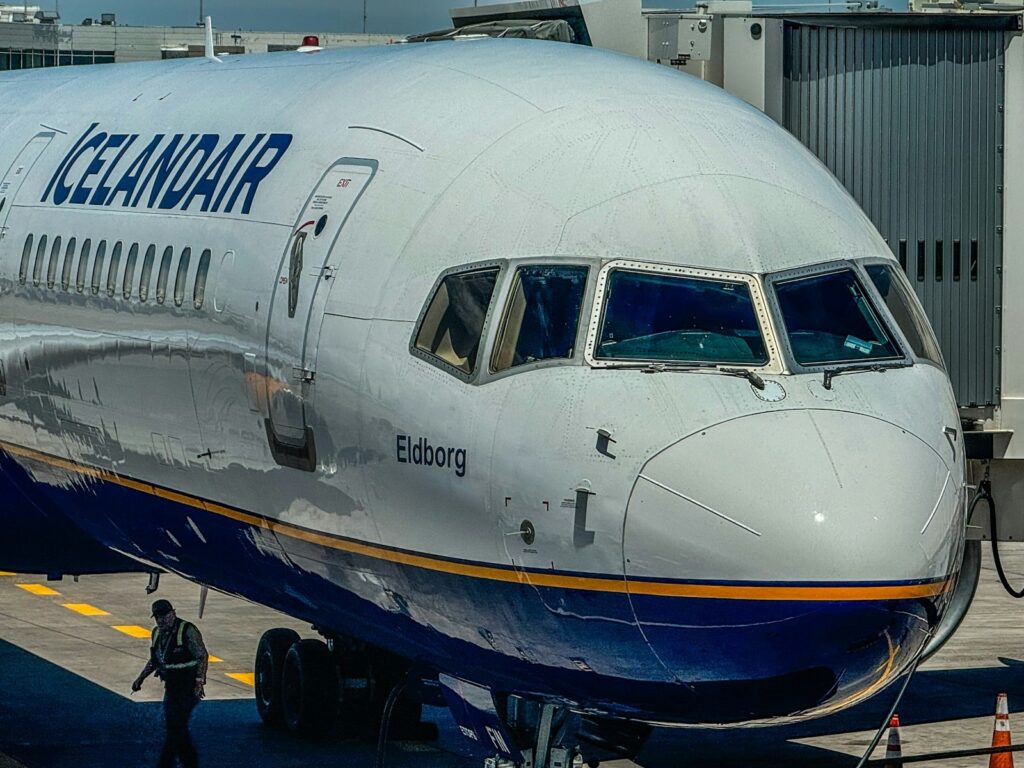
In January 2026, Syntholene announced receipt of a non-binding Expression of Interest (EOI) from Icelandair, Iceland’s flagship airline and transatlantic hub carrier.¹⁰
The agreement outlines Icelandair’s interest in purchasing 20,000 tonnes (approximately 25 million litres) of eSAF annually over 10 years, totalling 250 million litres, subject to scaled production and competitive pricing.¹⁰
Icelandair CEO Bogi Nils Bogason stated: “The transition to sustainable aviation fuel will only happen if production is scaled up and competitive pricing ensured. Working with Syntholene aligns with our focus on proportionately reducing carbon emissions while meeting regulatory SAF mandates.”¹⁰
Icelandair is based within the European Economic Zone, and operates between Europe and North America, exposing it to the EU’s mandated eSAF use obligations.
Demonstration Facility Construction Accelerating Ahead of Schedule
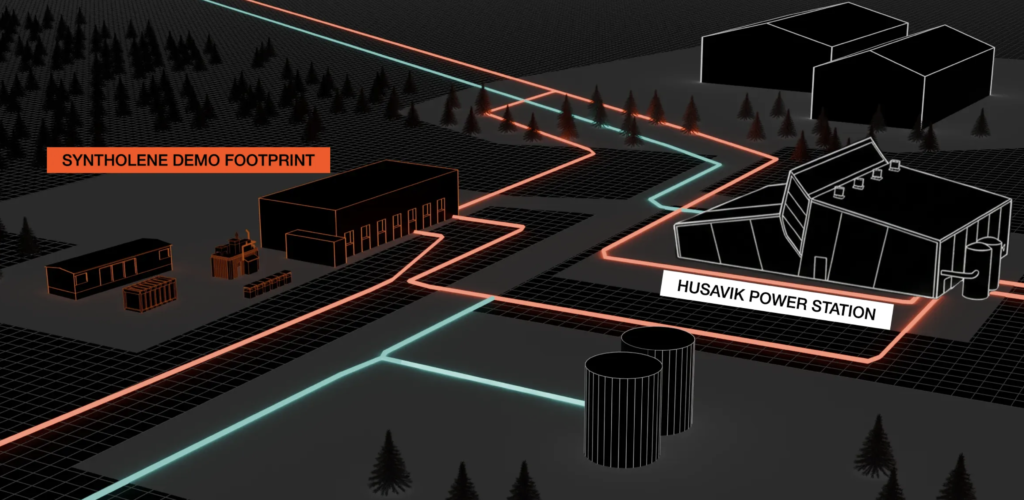
Syntholene’s geothermal-integrated demonstration facility in Húsavík, Iceland, is now ahead of schedule, with first operations potentially commencing as early as June 2026 following an accelerated six-month construction timeline.37
The Company has already completed several major engineering milestones, including fabrication of its proprietary Thermal Coupling heat exchanger system in just 42 days and operational commissioning of its solid oxide electrolyzer cell (SOEC) module ahead of schedule.37
Initial effects testing and real-world operational data gathering are expected to begin shortly after startup, with the Company now targeting publication of its first efficiency and technoeconomic data as early as Q4 2026.37
The site was selected for its co-location with geothermal infrastructure that provides both electrical power and industrial-grade thermal energy from a field with documented environmental assessment for significant capacity expansion.¹⁹ Syntholene believes the facility could become the world’s first demonstration of integrating geothermal heat with high-temperature electrolysis to produce low-cost synthetic fuel.37
Húsavík, Iceland Site Lease and Construction Permit in Hand
On April 14th 2026, Syntholene announced its site lease and construction permit for its first demonstration facility in Húsavík, Iceland.25 The location, anchored at a dormant but intact geothermal power station, offers a combination of existing infrastructure, accessible geothermal energy, and supportive local government.25
Syntholene has appointed HD ehf, a leading Icelandic engineering and construction services firm, as general contractor for its demonstration facility .25
Syntholene received municipal approval for its construction permit, marking a key regulatory milestone in the advancement of its demonstration facility.25 With municipal support and construction permits in hand, the company is assembling the key ingredients needed to demonstrate its Thermal Hybrid Production System in the field, for the first time.
Katrín Sigurjónsdóttir, Mayor of Norðurþing, stated, “The municipality of Norðurþing, owner of Húsavík Energy, is proud to support the development of Syntholene through its Demonstration Facility for non-fossil aviation fuel. Syntholene’s goals of the sensible use of geothermal energy to produce cost effective and environmentally friendly synthetic fuel for the benefit of society, align with the goals of the municipality of Norðurþing. We look forward to supporting this initiative to make possible the expansion of the project and meet domestic demand for aviation fuel.”25
Since securing a site lease and obtaining permits, Syntholene has begun on-site preparation and construction, including deploying its modular, containerised demonstration facility that integrates geothermal heat exchange and solid oxide electrolysis systems.25
70% Cost Reduction Target
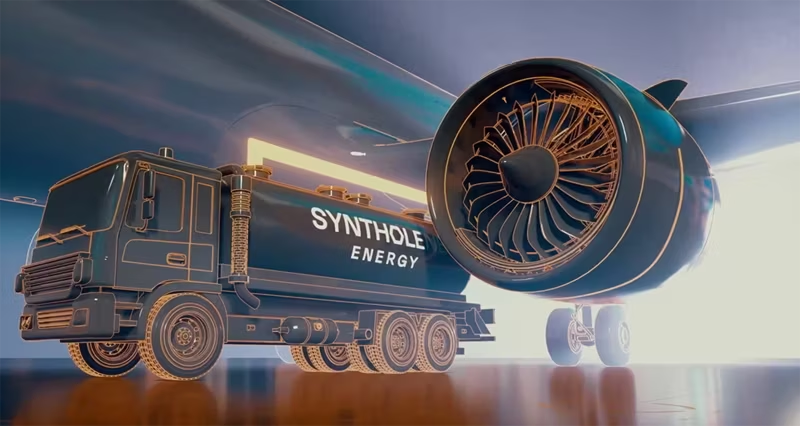
The numbers that matter most are production cost and the gap to fossil kerosene.
Conventional eSAF production costs approximately €7.11 per litre at EASA benchmark pricing.¹⁰ Fossil jet fuel traded at approximately €0.69 per litre before the current crisis, and at the time of this writing is fluctuating around double that.¹
Through its Hybrid Thermal Production System, Syntholene is targeting production costs of up to 70% lower than the nearest competing eSAF technology.⁵
A Team Of Experienced Operators
Syntholene’s team has extensive experience in scaling, financing and operating novel companies:
Dan Sutton, CEO, is a founder and infrastructure executive who built and scaled Tantalus Labs from zero to $20 million in annual revenue and 150 employees, including the design and construction of SUNLAB, a purpose-built facility that reduced energy demand by 90% per square foot compared to industry incumbents.²¹
Eiríkur Bragason, Project Manager, brings more than 25 years of geothermal energy development experience across 650 MW+ of deployed capacity, totalling approximately $3.3 billion in infrastructure. He served as COO of Arctic Green Energy and CEO of KS Orka Renewables, and previously led the Hellisheidi Geothermal Power Plant project in Iceland, the world’s largest geothermal facility at 300 MWe and 400 MWth.²¹
Jens Thordarson, former Chief Operating Officer of Icelandair, joined Syntholene’s Advisory Board in February 2026, bringing two decades of aviation operations expertise and direct relationships across Iceland’s energy and industrial sectors.²²
John Kutsch, Chief Engineer, leads Syntholene’s technical development, including the patented reactor architecture validated by the USPTO.¹⁸
Steve Oldham, Director, is a climate-tech executive specialising in scaling first-of-kind carbon management companies. As CEO of Carbon Engineering, he helped establish direct air capture and led over $100M in financings, culminating in a $1.6B acquisition by Occidental in 2023. He is now CEO of Captura Corp, advancing ocean-based carbon removal and raising $60M+ to date.²¹
Canon Byan, Director, is a founder and company builder with 25+ years in advanced energy. He co-founded Terrestrial Energy (NASDAQ: IMSR), Uranium Energy Corp (NYSE: UEC), and NioCorp (NASDAQ: NB). His expertise spans financial reporting, FP&A, economic modelling, and corporate development. At Terrestrial Energy, he helped raise over $1.5B, including a rare U.S. government loan guarantee.²¹
8 Reasons Why The Time to Watch Syntholene Energy Is Now
(TSXV: ESAF) (FSE: 3DD0) (OTC: SYNTF)
1. The Crisis Is Live.
Jet fuel prices in Europe have roughly doubled in two months due to Middle Eastern supply disruption. Airlines are cutting flights¹. Jet fuel stockpiles are declining.²
This is not a hypothetical energy security risk. It is happening right now.
2. The EU’s Mandate Is In Force And Confirmed.
EU authorities have confirmed that ReFuelEU Aviation SAF will stick to the mandates.⁸ Airlines must use eSAF from 2030 or face penalties.³
The demand is not discretionary.
3. The Supply Gap Is Enormous And Documented.
Europe had 41 large-scale eSAF projects under development as of mid-2025, few at FID.⁴ The 2030 market is projected to be undersupplied by 43% under optimistic scenarios.⁴
First movers could capture significant market share.
4. Iceland’s Energy Endowment Is Unique.
Just 1% of Iceland’s superhot geothermal rock resource could be equivalent to 411GW, or 2 billion barrels of oil per year.¹²
Syntholene is co-located to a high temperature geothermal resource.
5. The Technology Has Independent Validation.
Robert Rapier, whose synthetic fuel assessments have been cited in the Wall Street Journal and The Economist, has formally reviewed the platform and confirmed a credible pathway to sub-$2/kg hydrogen and commercial-scale eSAF.¹⁵
6. The Facility Is Under Construction.
This is not a company pitching a concept. Construction is underway in Húsavík.25 The Conceptual Design Report is complete.²⁰ The electrolyser vendor is selected and contracted.¹⁶
Significant milestones have been achieved.²⁰
7. The Model Is Engineered to be Replicable.
Syntholene’s modular production system could be deployed in any region with sufficient access to geothermal, nuclear, or other low-cost thermal energy.27 The Iceland demonstration facility aims to be the first proof of concept for a platform that addresses energy sovereignty, decoupling liquid fuel production from fossil feedstocks and any foreign supply chain.²⁰
8. The Company Is Advancing Faster Than Expected.
In May 2026, Syntholene announced that construction of its Iceland demonstration facility had accelerated by six months, with first operations now targeted for June 2026. Key engineering milestones, including the Company’s thermal coupling system and SOEC module, were completed ahead of schedule, positioning Syntholene to begin generating real-world operational and efficiency data as early as Q4 2026.37
For more information on Syntholene Energy Corp. (TSXV: ESAF | FSE: 3DD0 | OTC: SYNTF), please visit: syntholene.com or contact the team directly at comms @ syntholene (dot) com
Sources
¹ NPR. (2026, April 23). Airlines in Europe slash thousands of flights as Iran war cuts jet fuel supplies. https://www.npr.org/2026/04/23/nx-s1-5797307/europe-airlines-jet-fuel-costs
² Euronews. (2026, April 7). How serious will the jet fuel crisis in Europe become? https://www.euronews.com/my-europe/2026/04/07/how-serious-will-the-jet-fuel-crisis-in-europe-become
³ European Parliament and Council of the European Union. (2023). Regulation (EU) 2023/2405 of 18 October 2023 on ensuring a level playing field for sustainable air transport (ReFuelEU Aviation). https://eur-lex.europa.eu/eli/reg/2023/2405/oj
⁴ Transport Environment (T&E). (2025, June). The e-SAF market: Europe’s head start and the road ahead https://uploads.transportenvironment.org/production/files/202504_e-kerosene_report.pdf
⁵ Syntholene Energy Corp. (n.d.). About Syntholene. https://syntholene.com/
⁶ TravelPirates. (2026, April). Flight prices could jump 20% this summer. https://www.travelpirates.com/captains-log/united-airlines-fuel-cost-fare-increase-2026
⁷ UK Government. (2023). The Sustainable Aviation Fuel (SAF) mandate. https://www.gov.uk/government/publications/about-the-saf-mandate/the-saf-mandate-an-essential-guide
⁸ S&P Global (2026, April 14) EU to stick to SAF mandates, resists industry calls for change https://www.spglobal.com/energy/en/news-research/latest-news/refined-products/041426-eu-to-stick-to-saf-mandates-resists-industry-calls-for-change
⁹ AIN Online (2024, November 5). Euro Aviation Leaders Demand Urgent Investment in eSAF https://www.ainonline.com/aviation-news/air-transport/2024-11-04/air-transport-leaders-demand-urgent-investment-esaf
¹⁰ Syntholene Energy Corp. (2026, January 20). Syntholene Energy Corp secures Expression of Interest from Icelandair for 250 million litres of eSAF over 10 years. https://syntholene.com/syntholene-energy-corp-secures-expression-of-interest-from-icelandair-for-250-million-liters-of-synthetic-sustainable-aviation-fuel-esaf-over-10-years/
¹¹ Heathrow Airport. (2026, February 13). Heathrow boosts 2026 Sustainable Aviation Fuel (SAF) incentive to fly 2% above Government mandate. https://mediacentre.heathrow.com/pressrelease/detail/24780
¹² Clean Air Task Force. (2025). Superhot rock geothermal in Iceland: A potential renewable energy gamechanger. https://cdn.catf.us/wp-content/uploads/2025/06/22144812/Iceland-SHR-Regional-Assessment.pdf
¹³ Crux Investor. (2025, April). Scaling strategy underpins Syntholene Energy’s path to fuel cost competitiveness. https://www.cruxinvestor.com/posts/scaling-strategy-underpins-syntholene-energys-path-to-fuel-cost-competitiveness
¹⁴ Association of Municipalities in Northeast Iceland. (2020). Northeast Iceland development strategy 2020-2024. https://www.ssne.is/static/files/Soknaraaetlun/Uppbyggingarsjodur/northeast-iceland-development-strategy_goals-2020-2024-_enska-.pdf
¹⁵ Rapier, R. (2026, May). Syntholene Energy Corp. — technical and economic assessment: Summary findings. Independent report. https://syntholene.com/robert-rapier-report/
¹⁶ Syntholene Energy Corp. (2026, February 10). Syntholene Energy selects Dynelectro as electrolyzer technology vendor for synthetic fuel demonstration facility. https://syntholene.com/syntholene-energy-selects-dynelectro-developer-of-worlds-most-efficient-electrolyzer-as-vendor-for-synthetic-fuel-demonstration-facility/
¹⁷ Dynelectro. (n.d.). 250 kW Dynamic Electrolyser Unit. https://www.dynelectro.com/products/250kw-deu
¹⁸ Syntholene Energy Corp. (2026, January 27). Syntholene Energy Corp. announces issuance of key U.S. patent covering proprietary fuel synthesis reactor. https://syntholene.com/syntholene-energy-corp-announces-issuance-of-key-u-s-patent-covering-proprietary-fuel-synthesis-reactor/
²⁰ Syntholene Energy Corp. (2026, March 6). Syntholene Energy Corp. announces completion of Conceptual Design Report and Technoeconomic Analysis. https://syntholene.com/syntholene-energy-corp-announces-completion-of-conceptual-design-report-and-technoeconomic-analysis/
²¹ Syntholene Energy Corp. (n.d.). Team. https://syntholene.com/
²² Syntholene Energy Corp. (2026, February 5). Syntholene Energy Corp. announces nomination of Jens Thordarson to Advisory Board. https://syntholene.com/category/news/
²³ Allied Market Research. (n.d.). E-fuel market size, share and emerging trend analysis, 2030. https://www.alliedmarketresearch.com/e-fuel-market-A12837
²4 Government of Iceland https://www.government.is/topics/business-and-industry/energy/
25 Syntholene Energy Corp. (2026, April 14) Syntholene Energy Signs Site Lease and Receives Construction Permit at Historic Húsavík Power Station for Demonstration Facility https://syntholene.com/syntholene-energy-signs-site-lease-and-receives-construction-permit-at-historic-husavik-power-station-for-demonstration-facility/
26 International Air Transport Association (IATA). (2026) Jet Fuel Price Monitor https://www.iata.org/en/publications/economics/fuel-monitor/
27 Investing News. (3 Feb. 2026) “Syntholene Energy CEO Dan Sutton on the Future of E-Fuels.” YouTube www.youtube.com/watch?v=zdCYJPflmK4
28 ArcticPortal.org. (2025). Geothermal Energy in Iceland. Retrieved from Arcticportal.org website: https://arcticportal.org/energy-portlet/renewable-energy/geothermal
29 Reuters (2025, June 12) EU to subsidise high volume of greener aviation fuel to boost airline demand https://www.reuters.com/sustainability/boards-policy-regulation/eu-susbsidise-high-volume-greener-aviation-fuel-boost-airline-demand-2025-06-11/
30 Yahoo Finance (2026, April 5) Is the world running out of oil? Goldman Sachs weighs in https://ca.finance.yahoo.com/news/world-running-oil-goldman-sachs-113208224.html
31 Dynelectro; Dynamic Electrolyser Unit – 250 kW https://dynelectro.dk/products/250kw-deu
32 Argus Media (2025, May 15). Infinium takes FID on 100MW Texas e-fuels plant https://www.argusmedia.com/en/news-and-insights/latest-market-news/2690011-infinium-takes-fid-on-100mw-texas-e-fuels-plant
33 U.S. Energy Information Administration. (n.d.). Units and calculators explained. https://www.eia.gov/energyexplained/units-and-calculators
34 International Energy Agency. (2021). Sources of electricity generation [Data set]. https://www.iea.org/countries/iceland/electricity
35 Landsvirkjun (2017, January 16). Geothermal Sustainability Assessment Protocol https://gogn.lv.is/files/2017/2017-01-gsap-theistareykir-assessment-reportfinal.pdf
36 S&P Global (2025, June 5). Global SAF supply to fall 23 million mt short of demand by 2035: SkyNRG https://www.spglobal.com/energy/en/news-research/latest-news/agriculture/060525-global-saf-supply-to-fall-23-million-mt-short-of-demand-by-2035skynrg
37 Syntholene Energy Corp. (2026, May 27) Syntholene Accelerates Construction of Demonstration Facility by Six Months, Now Targeting Completion in June 2026 https://syntholene.com/syntholene-accelerates-construction-of-demonstration-facility-by-six-months-now-targeting-completion-in-june-2026/
Disclaimer:
This article is a paid advertisement. SmallCap Communications Inc. and its owners, managers, employees, and assignees (collectively “the Publisher”) are often paid by profiled companies or third parties to organize marketing campaigns, which include the creation and dissemination of these types of communications. In this case, in an effort to enhance public awareness of Syntholene Energy Corp. (“SEC” or the “Company”) and its securities, SEC has provided the Publisher with a budget of approximately three hundred thousand CAD to cover the costs associated with the creation and distribution of this communication. The Publisher may retain any excess sums after expenses as its compensation. This compensation should be viewed as a major conflict with our ability to be unbiased.
This communication is intended to provide an overview of the business of SEC. It has been prepared for information purposes only and does not purport to be complete. This communication is not, and should not be construed to be, an offer to sell or a solicitation of an offer to buy any security. Neither this communication nor the Publisher purports to provide a complete analysis of any company or its financial position. The information in this communication is not intended to be relied upon as advice to investors or potential investors and does not take into account the investment objectives, financial situation or needs of any particular investor. This communication should not be construed as legal, financial or tax advice to any individual, as each individual’s circumstances are different. Investing in securities, particularly microcap securities, is speculative and carries a high degree of risk. The Publisher is not, and does not purport to be, a broker-dealer or registered investment adviser. This communication is not, and should not be construed to be, personalized investment advice directed to or appropriate for any particular investor.
Any investment should be made only after consulting a professional investment advisor and only after reviewing the financial statements and other pertinent corporate information about the company. Further, readers are advised to read and carefully consider the Risk Factors identified and discussed in the advertised company’s SEDAR+ and/or other government filings. Investing in securities, particularly microcap securities, is speculative and carries a high degree of risk. Past performance does not guarantee future results.
This communication is based on information generally available to the public and on interviews with company management, and does not (to the Publisher’s knowledge, as confirmed by SEC) contain any material, non-public information. The information on which it is based is believed to be reliable. Nevertheless, the Publisher cannot guarantee the accuracy or completeness of the information and does not undertake any responsibility to update this publication. The market and industry data used in this publication have been obtained from the Publisher’s research, from surveys or studies conducted by third parties, publicly available information and industry publications. The publicly available information and the surveys, studies and publications provided by third parties generally state that the information contained therein has been obtained from sources believed to be reliable, but they do not guarantee the accuracy and completeness of that information. The Publisher has not independently verified the information. As a result, neither the advertised company, the Publisher, nor any party acting on either of their behalf can guarantee the accuracy or completeness of such information. Similarly, the Publisher believes its internal research and the advertised company’s internal research are reliable, but such research has not been verified by any independent sources.
All references herein to “$” or “dollars” are to United States dollars unless otherwise specified.
No stock exchange, securities commission or other regulatory authority has approved or disapproved of the information in this publication. This publication does not constitute an offer to sell or the solicitation of an offer to buy, nor shall there be any sale of securities of the advertised company in any jurisdiction in which an offer, solicitation or sale would be unlawful prior to registration or qualification under the securities laws of such jurisdiction. The securities of the advertised company described herein have not been and will not be registered under United States federal or state securities laws and may not be offered or sold in the United States, or to, or for the account or benefit of, “U.S. Persons” as such term is defined in Regulation S under the United States Securities Act of 1933, as amended, unless an exemption from registration is available.
SHARE OWNERSHIP
The Publisher does not own any shares of SEC and has no information concerning share ownership by others of SEC. The Publisher cautions readers to beware that third parties may liquidate shares of the profiled companies at any time, including at or near the time you read the articles on this website, and this has the potential to hurt share prices. Frequently, companies profiled in such articles experience a large increase in volume and share price during the course of investor awareness marketing, which often ends as soon as the investor awareness marketing ceases. The investor awareness marketing may be as brief as one day, after which a large decrease in volume and share price may likely occur.
FORWARD LOOKING STATEMENTS
This publication contains forward-looking statements within the meaning of applicable securities laws. . The use of any of the words “expect”, “anticipate”, “aims”, “continue”, “estimate”, “objective”, “may”, “will”, “project”, “should”, “believe”, “plans”, “intends” and similar expressions are intended to identify forward-looking information or statements. All statements, other than statements of historical fact, including but not limited to statements regarding commercial scalability, the political, workforce, and infrastructure environments resulting from governmental and private sector priorities, cost reduction and cost competitiveness, the demonstration facility, potentials of the Húsavík and Norðurþingi regions, the Company’s ability to execute on its plans for advancement and commercialization of its technology, technical and economic viability, anticipated geothermal power availability, anticipated benefit of eFuel, anticipated offtake or sales agreements, anticipated benefit of the Company’s intellectual property rights, future commercial opportunities, are forward-looking statements.
The forward-looking statements and information are based on certain key expectations and assumptions including without limitation the assumption that the Company will be able to execute its business plan in the manner and timeline set forth in its public disclosure or at all, that the Company’s engaged service providers have the skills to advance the Company’s business plans, that the Husavik region will offer the expected benefits to support advancement of the Company’s business plan, that the eFuel will have its expected benefits, that there will be market adoption, that the Company’s review of the competitive landscape and that its understanding of being the world’s first Company to have geothermal-SOEC integration remain accurate, that any potential competitors to the Company would not be able to develop or execute geothermal-SOEC integration as quickly or as well as the Company, that the Company will be able to produce the eFuel at competitive pricing in the range anticipated or at all, that the proposed validation testing will be able to be completed, and that the results from such tests will validate the Company’s technology and support further commercialization, that geothermal heat will be available to the Company at the necessary levels, that the proposed demonstration facility will be completed as anticipated and on time and on budget, that the Company will continue to have access to skilled personnel with relevant experience, that regulatory requirements remain favourable for the Company, and that the Company will be able to access financing as needed to fund its business plan. Although the expectations and assumptions on which such forward-looking statements and information are based are believed to be reasonable, undue reliance should not be placed on the forward-looking statements and information because no assurance can be given that they will prove to be correct. Since forward-looking statements and information address future events and conditions, by their very nature, they involve inherent risks and uncertainties.
Actual results could differ materially from those currently anticipated due to a number of factors and risks, including, without limitation, the Company’s ability to complete the testing, that the results of test will support continued commercialization of the Company’s technology, that the engaged service providers do not have the necessary skills to and do not advance the Company’s business plan, that there are competitors in geothermal-SOEC integration that are unknown to the Company, that the Company may not be able to produce eFuel at the targeted prices or at a price that is lower than potential competitors, that definitive commercial purchase orders for Syntholene’s eFuel may not materialize, the Company’s ability to meet production targets, realize projected economic benefits, overcome technical challenges, secure financing, maintain regulatory compliance, manage geopolitical risks, and successfully negotiate definitive terms. Neither Publisher nor the Company undertakes any obligation to update or revise these forward-looking statements, except as required by applicable securities laws.
Readers are advised to exercise caution and not to place undue reliance on these forward-looking statements.
FUTURE ORIENTED FINANCIAL INFORMATION
This publication contains future-oriented financial information and financial outlook information (collectively, “FOFI”) about the cost and pricing of the eFuel product that the Company is seeking to commercialize, which is subject to the same assumptions, risk factors, limitations, and qualifications as set forth in the above paragraphs. FOFI contained in this publication was made as of the date hereof and was provided for the purpose of describing the anticipated effects of advancement of the Company’s business operations. The Company’s actual results, performance or achievement could differ materially from those expressed in, or implied by, such FOFI. Both the Publisher and the Company disclaim any intention or obligation to update or revise any FOFI contained in this publication, whether as a result of new information, future events or otherwise, unless required pursuant to applicable law. Readers are cautioned that the FOFI contained herein should not be used for purposes other than for which it is disclosed herein.
Readers are advised to exercise caution and not to place undue reliance on the forward-looking statements and FOFI in this publication.
HISTORICAL INFORMATION
Any graphs, tables or other information demonstrating the historical performance or current or historical attributes of SEC or any other entity contained in this document are intended only to illustrate historical performance or current or historical attributes of SEC or such




