
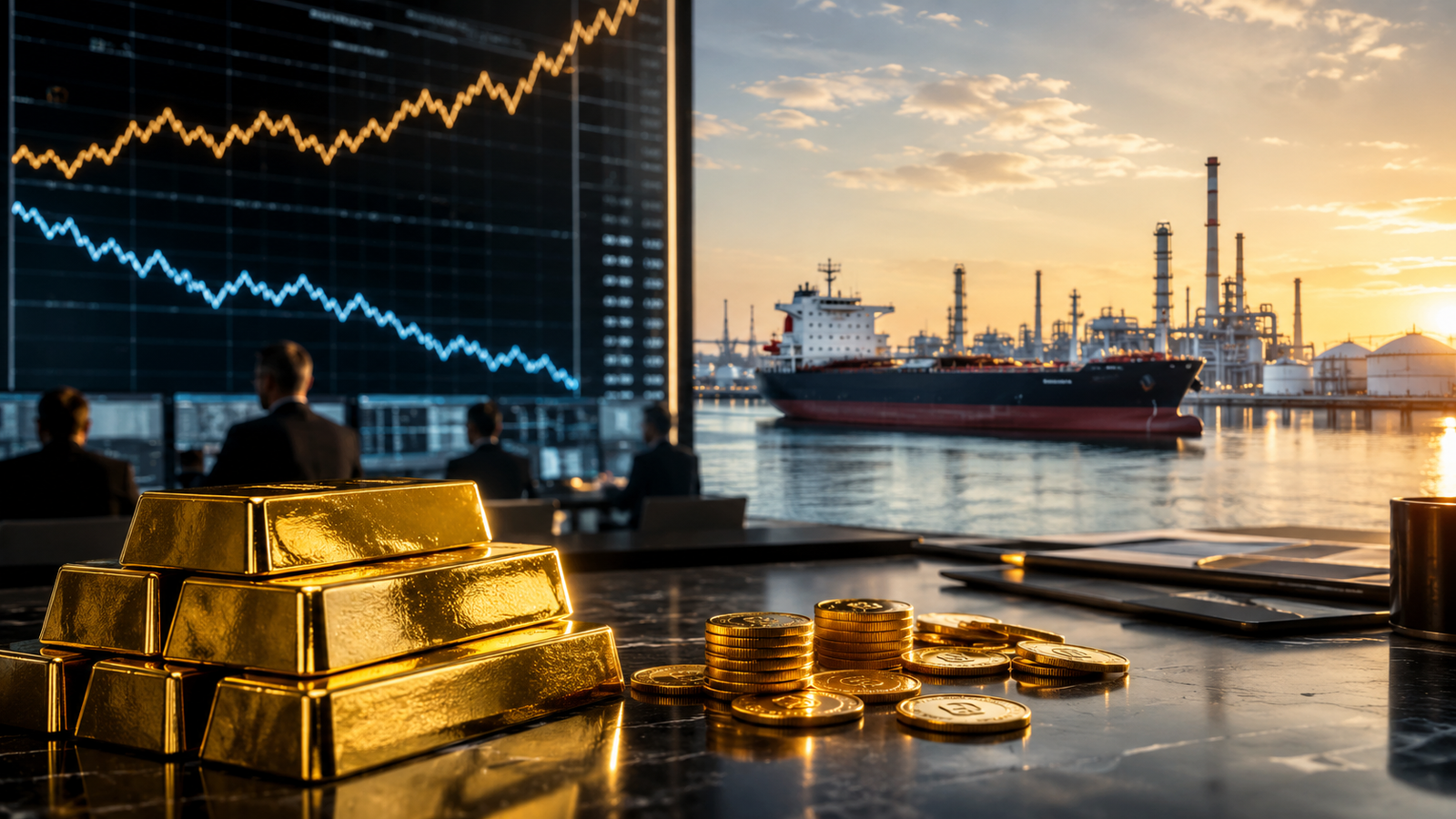
Markets don’t wait for certainty—they move on expectations. On May 6, 2026, commodities delivered a sharp reminder of that reality as gold surged nearly 3% while oil prices fell significantly, following signs of a potential U.S.-Iran agreement that could ease geopolitical tensions in one of the world’s most critical energy corridors.
The reaction was swift and decisive. Investors rotated capital across commodities, recalibrating risk exposure as the probability of supply disruptions declined. But beneath the surface, a deeper story is unfolding—one where geopolitical headlines are exerting as much influence on commodities as traditional supply-demand fundamentals.
For investors navigating metals and energy markets, this shift is both an opportunity and a warning.
A Rapid Market Repricing Driven by Geopolitics
The latest moves in gold and oil were triggered by renewed optimism around diplomatic progress between the United States and Iran. According to Investopedia (May 6, 2026), the prospect of easing tensions—and potentially reopening key oil transit routes—prompted a sharp decline in crude prices.
Oil markets are highly sensitive to geopolitical developments, particularly in the Middle East, which accounts for a significant portion of global supply. Even the suggestion of improved stability can lead to:
- Lower risk premiums
- Increased supply expectations
- Downward pressure on prices
At the same time, gold moved in the opposite direction, rising as investors adjusted their portfolios amid shifting macro conditions.
This divergence highlights a key dynamic: commodities are not moving in isolation—they are responding to a complex interplay of risk sentiment, policy expectations, and capital flows.
Why Gold Is Rising Despite Easing Tensions
At first glance, gold’s rally may seem counterintuitive. If geopolitical tensions are easing, why is a traditional safe-haven asset gaining?
The answer lies in broader market positioning.
Gold is influenced by multiple factors beyond geopolitics, including:
- Currency movements
- Interest rate expectations
- Inflation outlook
- Portfolio diversification strategies
Even as tensions ease, investors may still be seeking protection against:
- Economic uncertainty
- Policy shifts
- Market volatility
Additionally, gold often benefits from rebalancing activity, as investors adjust allocations across asset classes in response to changing conditions.
In this context, gold’s rise reflects not just fear—but strategic positioning in a complex macro environment.
Oil’s Decline Signals a Shift in Risk Premiums
Oil markets, on the other hand, are reacting more directly to geopolitical developments.
The possibility of a U.S.-Iran agreement carries significant implications:
- Increased oil supply entering global markets
- Reduced likelihood of disruptions in key shipping routes
- Lower geopolitical risk premiums
This has led to a sharp repricing of crude, with traders factoring in a more stable supply outlook.
However, it’s important to note that oil markets remain highly volatile. While tensions may be easing now, the geopolitical landscape can shift quickly, and prices can respond just as rapidly.
Why This Matters for Investors
The latest moves in gold and oil underscore a critical reality: commodities are increasingly driven by headline risk and macro sentiment, not just traditional fundamentals.
1. Geopolitics Is a Primary Market Driver
Events such as diplomatic negotiations, conflicts, and policy decisions can have immediate and significant impacts on commodity prices.
Investors must stay informed and be prepared to respond to rapidly changing conditions.
2. Volatility Is Likely to Persist
As markets react to evolving geopolitical developments, volatility in commodities is likely to remain elevated.
This creates both:
- Opportunities for tactical positioning
- Risks for long-term investors without proper diversification
3. Correlations Are Shifting
Gold and oil are not always moving in predictable ways. As seen in the latest session, different commodities can respond differently to the same event, depending on broader market dynamics.
Understanding these relationships is key to effective portfolio management.
The Broader Impact on Metals & Mining Stocks
The ripple effects of commodity price movements extend into equities, particularly in the metals and mining sector.
Gold Mining Companies
Rising gold prices typically support margins and profitability for gold producers, potentially leading to stronger stock performance.
Energy Companies
Lower oil prices can pressure revenues and earnings for oil producers, particularly those with higher production costs.
Diversified Mining Firms
Companies with exposure to multiple commodities may benefit from a more balanced performance, depending on their asset mix.
For investors, this creates opportunities to gain exposure to commodities through equities, while also introducing additional layers of risk.
Future Trends to Watch
As the geopolitical and macro landscape evolves, several key trends will shape the outlook for commodities:
Diplomatic Developments in the Middle East
Any confirmation—or breakdown—of a U.S.-Iran agreement could lead to significant price movements in both oil and gold.
Global Economic Conditions
Demand for commodities is closely tied to economic growth. Changes in growth expectations could influence prices across the board.
Monetary Policy
Interest rates and currency movements play a critical role in commodity markets, particularly for gold.
Supply Chain Dynamics
Production levels, inventory data, and logistical factors will continue to influence supply-demand balances.
Key Investment Insight
The current environment reinforces a key principle: commodities are no longer driven solely by fundamentals—they are increasingly shaped by geopolitics and macro sentiment.
For investors, this means:
- Maintaining exposure to gold as a hedge against uncertainty
- Approaching energy investments with caution in the near term
- Staying flexible and responsive to changing market conditions
Diversification is essential. Commodities can provide valuable portfolio balance, but they also introduce volatility that must be managed carefully.
Navigating a Volatile Commodity Landscape
The latest moves in gold and oil highlight the complexity of today’s markets. Investors are not just analyzing supply and demand—they are interpreting geopolitical signals, policy shifts, and global sentiment in real time.
This creates a dynamic environment where opportunities and risks coexist.
Success in this landscape requires:
- Staying informed
- Understanding macro drivers
- Adapting strategies as conditions change
As markets continue to evolve, commodities will remain a critical component of the global financial system—and a key area of focus for investors.
Stay ahead of the latest developments in commodities, geopolitics, and market trends with MoneyNews.Today—your trusted source for daily investor insights.




