
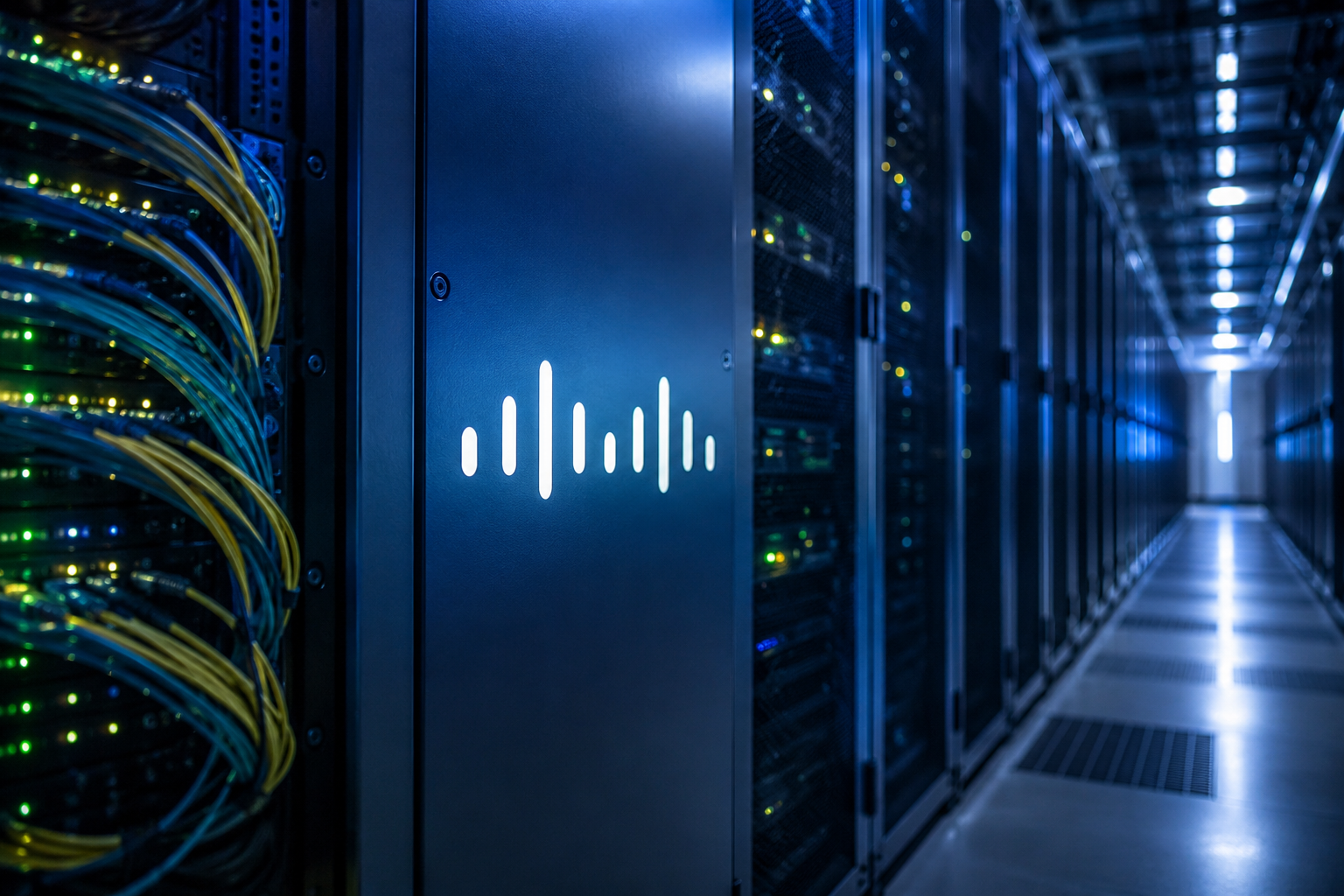
Cisco is giving investors one of the clearest signals yet that the AI infrastructure boom is no longer just a semiconductor story. The networking giant’s shares surged after stronger-than-expected results, a raised outlook, and a sharp jump in AI infrastructure orders from hyperscale customers. At the same time, the company announced plans to cut fewer than 4,000 jobs as it redirects capital and talent toward artificial intelligence, security, data centers, optics, and silicon.
For investors, Cisco’s message is straightforward: the company wants Wall Street to stop viewing it only as a mature networking hardware business and start valuing it as a critical supplier to the AI data-center buildout.
The numbers helped make that case. Cisco reported quarterly revenue of about $15.8 billion, up 12% year over year, while adjusted earnings came in at $1.06 per share, according to Barron’s and Investors Business Daily. Cisco also disclosed $5.3 billion in AI infrastructure orders from hyperscalers so far this fiscal year and raised its full-year AI order expectation to $9 billion, up from a previous target of $5 billion.
That is why the stock reaction was so strong. This was not simply a cost-cutting story. It was a re-rating story.
Cisco’s AI Moment Arrives
For years, Cisco has been treated by many investors as a stable but slow-growth technology incumbent. Its core business in enterprise networking, routers, switches, and security has been profitable, but not typically associated with the same growth premium as Nvidia, AMD, Broadcom, or cloud software leaders.
AI is changing that perception.
AI workloads require massive data movement inside and between data centers. Training and inference clusters depend not only on GPUs, but also on high-performance networking, switching, optics, security, and silicon. That puts Cisco directly in the path of AI infrastructure spending.
Cisco said it has taken $5.3 billion in AI infrastructure orders from hyperscalers so far this fiscal year, and Reuters reported through Moneycontrol that the company raised its full-year expectation to $9 billion from $5 billion previously.
That acceleration is the core of the bull case. Investors are no longer looking only at Cisco’s legacy enterprise refresh cycle. They are now watching whether the company can capture a durable share of AI data-center spending.
Why the Job Cuts Matter
The nearly 4,000 planned job cuts may look contradictory at first. Cisco is posting strong results, raising forecasts, and reporting surging AI orders, yet still reducing headcount.
But the company is framing the move as a strategic reallocation rather than a traditional downturn-driven layoff cycle. CEO Chuck Robbins said companies that win in the AI era will need “focus, urgency” and the discipline to shift investment toward areas of strongest demand and long-term value creation, according to the Reuters report cited by Moneycontrol. Cisco said it is making strategic investments in silicon, optics, security, and internal AI use while reducing roles in other areas.
The restructuring will not be cheap. Cisco expects the plan to cost up to $1 billion, with about $450 million recognized in the fourth quarter and the rest spread into fiscal 2027. The company had about 86,200 employees as of July 2025, and the cuts represent less than 5% of its workforce.
For investors, the key issue is whether these cuts are truly productivity-enhancing or merely a way to support earnings while growth shifts unevenly across the business. If Cisco can reduce lower-growth costs while expanding AI-related revenue, margins could improve. If the restructuring only masks pressure in legacy segments, the rally may be harder to sustain.
The Market Is Re-Rating Cisco as an AI Beneficiary
Cisco’s stock move shows how quickly investors are willing to reward companies with credible AI infrastructure exposure. Barron’s reported that Cisco shares surged about 15% to $117.36, highlighting the company’s growing role in AI infrastructure. The same report noted that Cisco’s networking segment generated $8.82 billion, above Wall Street estimates, and that analysts pointed to Cisco’s silicon and optics investments as increasingly relevant to the AI era.
That is an important shift. The AI trade has often been concentrated in GPU leaders and cloud hyperscalers. Cisco’s results suggest the market is broadening its focus to the “picks and shovels” required to make AI systems work at scale.
Networking is becoming one of the most important parts of the AI stack. As AI models grow larger and data-center clusters become more complex, the speed and efficiency of data movement can become a bottleneck. Cisco’s opportunity is to position itself as a critical infrastructure provider for hyperscalers, enterprises, and AI-native data centers.
Revenue Guidance Strengthens the Bull Case
Cisco’s raised outlook also helped support the rally. Reuters reported that Cisco now expects fiscal 2026 revenue in the range of $62.8 billion to $63 billion, compared with its earlier forecast of $61.2 billion to $61.7 billion.
That guidance matters because investors want confirmation that AI orders are not just a future promise. They want evidence that demand is flowing into current revenue, backlog, and earnings visibility.
Investors Business Daily reported that Cisco’s AI network infrastructure orders surged from $2.1 billion in the previous quarter to $5.3 billion, while the company raised its fiscal 2026 AI-related order forecast to $9 billion. IBD also noted that shares surged nearly 15% and hit an all-time high after the earnings report.
The market is effectively asking whether Cisco deserves a higher multiple. If AI infrastructure orders translate into sustained revenue growth, Cisco may no longer trade like a purely defensive technology stock. It could increasingly be valued as a hybrid: part mature cash generator, part AI infrastructure compounder.
Risks Investors Should Not Ignore
Despite the strong reaction, this is not a risk-free story.
First, investors need to watch margins. Barron’s noted that gross margins were slightly below expectations, at 66% versus 66.2% expected. That is not a major miss, but it is worth monitoring because AI infrastructure can require heavy investment in supply chain, engineering, and customer support.
Second, hyperscaler demand can be lumpy. Large AI infrastructure orders may not arrive smoothly every quarter. If investors extrapolate one strong order cycle too aggressively, Cisco could face volatility if future bookings slow or timing shifts.
Third, AI networking is competitive. Cisco faces pressure from other networking, semiconductor, and cloud-infrastructure suppliers. Nvidia’s networking stack, Broadcom’s custom silicon exposure, and other data-center hardware vendors are all competing for AI infrastructure budgets.
Fourth, the layoffs create execution risk. Restructuring can improve efficiency, but it can also disrupt internal teams, slow product execution, or hurt morale if not managed carefully.
Key Investment Insight
Cisco’s latest quarter strengthens the case that AI infrastructure is becoming a broader technology investment theme, not just a Nvidia-driven semiconductor trade.
For investors, Cisco now deserves closer attention as an AI networking beneficiary. The stock’s upside case depends on three measurable factors: continued growth in hyperscaler AI orders, conversion of those orders into revenue, and evidence that restructuring supports durable margin expansion rather than temporary earnings support.
Investors already holding Cisco may view the results as confirmation that the company’s AI pivot is gaining credibility. New investors should be more disciplined. After a sharp move, chasing the stock without a risk plan can be dangerous. A better approach is to watch for pullbacks, earnings follow-through, or confirmation that AI infrastructure demand remains strong across multiple quarters.
What to Watch Next
The next signals will come from Cisco’s order pipeline, management commentary on AI-related revenue conversion, and whether analysts continue raising estimates. Investors should also monitor Nvidia’s results and broader hyperscaler capital-expenditure plans, because Cisco’s AI opportunity is closely tied to the pace of data-center buildout.
If AI spending continues to expand, Cisco could become one of the more important second-wave winners of the AI infrastructure cycle. If demand slows or margins fail to improve, the stock’s re-rating may prove premature.
For now, Wall Street is sending a clear message: Cisco is no longer being viewed only as an old-line networking company. It is increasingly being priced as a serious participant in the AI infrastructure boom.
Stay with MoneyNews.Today for daily investor-focused coverage, market-moving technology news, and actionable insights across AI, stocks, crypto, commodities, and global markets.




