Quantum computing is rapidly moving from theoretical promise to strategic priority as Washington escalates its commitment to next-generation computing power. A newly announced $2 billion federal investment program signals that quantum technology is no longer being treated as a distant research frontier, but as a core pillar of U.S. industrial and national security policy—alongside AI, semiconductors, and advanced energy systems.
For investors, the message is becoming increasingly clear: quantum computing is transitioning into an early-stage but government-backed growth sector where policy support could significantly reshape commercialization timelines and capital flows.
A New Phase of Industrial Policy: Quantum Enters the Strategic Core
The U.S. government’s latest initiative reportedly allocates approximately $2 billion toward quantum computing development, with a significant portion directed toward established technology leaders such as IBM and a growing ecosystem of emerging quantum firms. According to reporting circulated through Reuters via Investing.com and Yahoo Finance, the program is designed to accelerate both hardware breakthroughs and real-world applications across defense, cybersecurity, materials science, and financial modeling.
The move reflects a broader continuation of industrial policy expansion that has already transformed semiconductors and AI infrastructure into heavily subsidized strategic sectors. Quantum computing now appears to be following the same trajectory.
At the center of this shift is the recognition that quantum systems could fundamentally disrupt encryption, simulation, logistics optimization, and complex data modeling—areas with direct implications for both economic competitiveness and national defense.
Why This Matters for Investors
Quantum computing has long been considered a “long-duration” investment theme—promising but uncertain, with commercialization often viewed as a decade away. However, direct federal funding at this scale changes the risk profile of the sector in several important ways.
First, it reduces early-stage financing risk for companies operating in a capital-intensive field. Quantum hardware development requires highly specialized infrastructure, including cryogenic systems, advanced semiconductors, and precision manufacturing capabilities. Government funding can help bridge the gap between laboratory research and scalable commercialization.
Second, it accelerates the competitive race between the U.S. and China in advanced computing. Policymakers increasingly view quantum computing as part of a broader technological arms race, which increases the likelihood of sustained public investment rather than one-off funding cycles.
Third, it strengthens the role of anchor firms such as IBM and other large-cap technology companies that already possess research depth, government contracts, and enterprise distribution channels. In parallel, it creates a spillover effect for smaller pure-play quantum startups and suppliers in adjacent technologies.
Sector Linkages: The Broader Quantum Value Chain
While much attention is focused on quantum processors themselves, the investment implications extend far beyond a single technology category. Investors should view quantum computing as a multi-layer ecosystem spanning several adjacent industries:
1. Semiconductor and Advanced Chip Design
Quantum systems rely heavily on precision semiconductor fabrication and advanced chip architectures. This creates indirect exposure opportunities for semiconductor equipment manufacturers and materials suppliers already benefiting from AI-driven chip demand.
2. Cryogenic and Cooling Technologies
Many quantum systems require extremely low temperatures to function. This makes cryogenic engineering firms and industrial cooling specialists a critical enabler of scalable quantum infrastructure.
3. AI and High-Performance Computing Infrastructure
Quantum computing is increasingly being positioned as a complement to artificial intelligence rather than a replacement. Hybrid AI-quantum systems are expected to emerge over the next decade, increasing demand for high-performance computing infrastructure.
4. Critical Materials and Rare Elements
Superconducting systems and advanced computing components depend on rare and highly specialized materials. As quantum research scales, supply chain constraints in critical minerals may become a key strategic bottleneck.
Reuters-aligned reporting and investor discussions across platforms such as Yahoo Finance and Reddit investing communities have highlighted growing attention to these secondary beneficiaries, rather than just direct quantum hardware companies.
The IBM Factor and Institutional Anchoring
A notable aspect of the funding program is its reported linkage to initiatives involving IBM, a company that has consistently positioned itself as a leader in quantum research and enterprise deployment pathways.
Rather than focusing solely on startups, the U.S. strategy appears to emphasize a hybrid model: combining established technology giants with emerging innovators. This structure reduces execution risk while ensuring that research outputs can be integrated into existing enterprise and government systems.
For investors, this creates a familiar pattern seen in previous industrial policy cycles—where early-stage innovation is incubated by smaller firms, but scaled through large-cap technology platforms with institutional reach.
Parallel Catalyst: Fusion Energy Policy Reform Gains Momentum
Alongside quantum computing, another emerging industry is gaining policy traction: fusion energy.
According to reporting from Axios and developments linked to U.S. Nuclear Regulatory Commission discussions, regulators are moving toward a simplified approval pathway for fusion-energy projects. The shift reflects growing consensus that fusion systems present fundamentally different risk profiles compared to traditional nuclear fission technologies.
This regulatory evolution could significantly reduce the time required to bring experimental fusion systems closer to commercial deployment.
Why Fusion Energy Is Suddenly Back in Focus
For years, fusion energy has been viewed as “always 20 years away”—a promising but perpetually delayed technology. However, three key changes are reshaping investor sentiment:
- Massive increases in private capital from tech-aligned venture funds
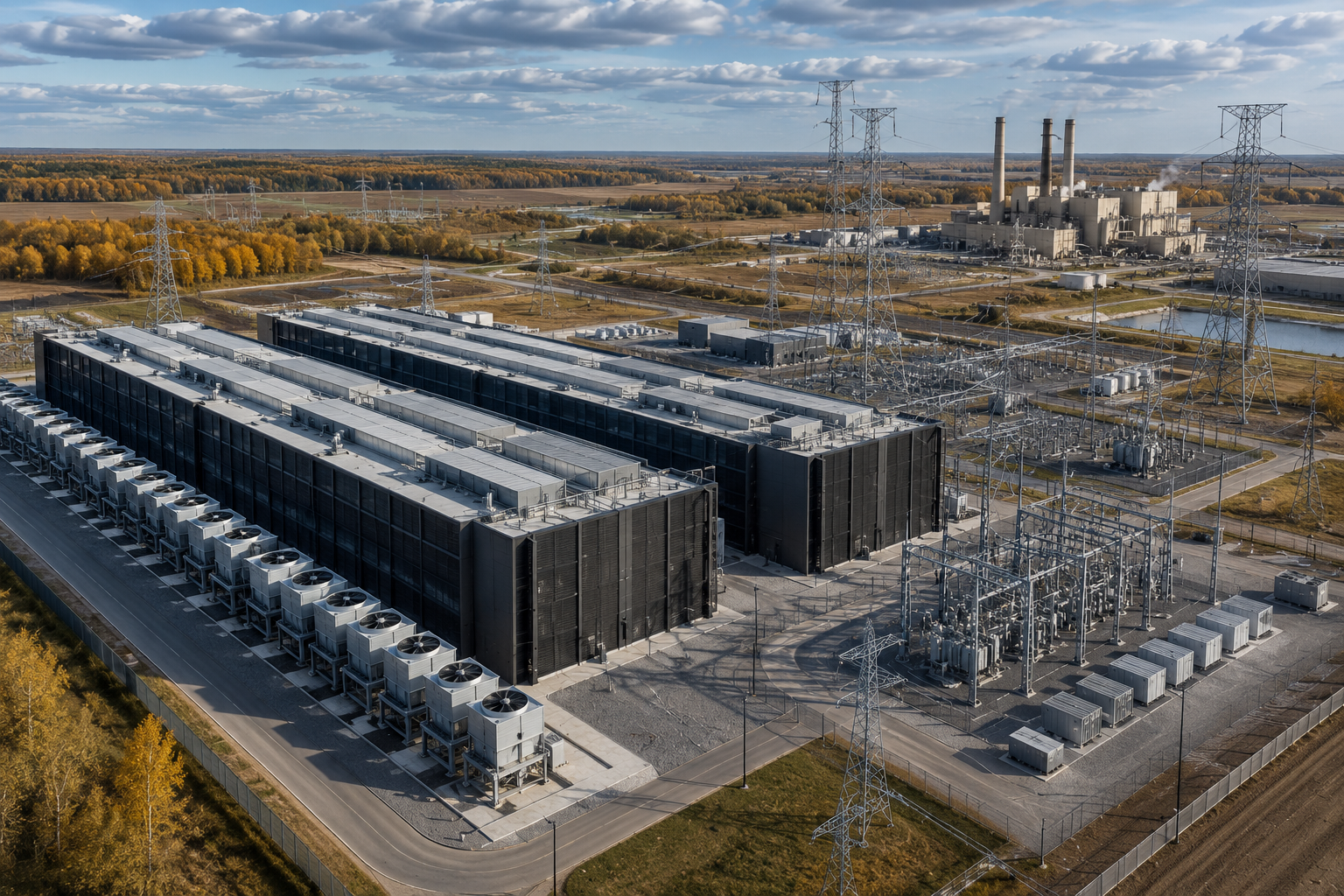
- Growing energy demand from AI data centers and cloud infrastructure
- Regulatory momentum toward streamlined review processes
As energy demand from artificial intelligence continues to surge, fusion is increasingly being reframed not as a distant scientific ambition, but as a potential long-term solution to grid-scale power constraints.
Investment Implications Across Emerging Energy Systems
If regulatory reform continues, fusion energy could follow a similar trajectory to nuclear small modular reactors and advanced geothermal systems—both of which have recently seen renewed investor interest.
Key beneficiaries may include:
- Advanced materials companies
- Superconducting technology developers
- Grid infrastructure and transmission firms
- Engineering and construction companies specializing in energy systems
For investors, the overlap between quantum computing and fusion energy is not accidental. Both industries sit at the intersection of national security, energy independence, and next-generation computing demand.
Market Outlook: A Government-Led Innovation Cycle
The broader trend emerging across both quantum computing and fusion energy is the return of government-led innovation cycles. Unlike previous tech booms driven primarily by private capital, this phase is increasingly shaped by industrial policy, strategic funding programs, and geopolitical competition.
This creates a unique market environment where:
- Policy decisions directly influence capital allocation
- Early-stage technologies receive institutional de-risking
- Long-term infrastructure themes gain accelerated funding visibility
For investors, this environment rewards early positioning in ecosystem enablers rather than waiting for full commercialization.
Key Investment Insight
Quantum computing is no longer a speculative frontier—it is becoming a structured, policy-backed technology stack. Investors should focus not only on direct quantum developers but also on the underlying infrastructure: semiconductors, cryogenics, advanced materials, and AI-integrated computing systems.
At the same time, fusion energy’s regulatory shift signals a parallel opportunity in next-generation power systems, which could become critical to sustaining AI-driven energy demand over the next decade.
Together, these themes suggest that the next major investment cycle will not be driven by a single breakthrough, but by interconnected advances across computing, energy, and industrial technology.
At MoneyNews.Today, we continue to track these fast-moving structural shifts across markets, helping investors identify where policy, innovation, and capital are converging into the next wave of growth opportunities.