
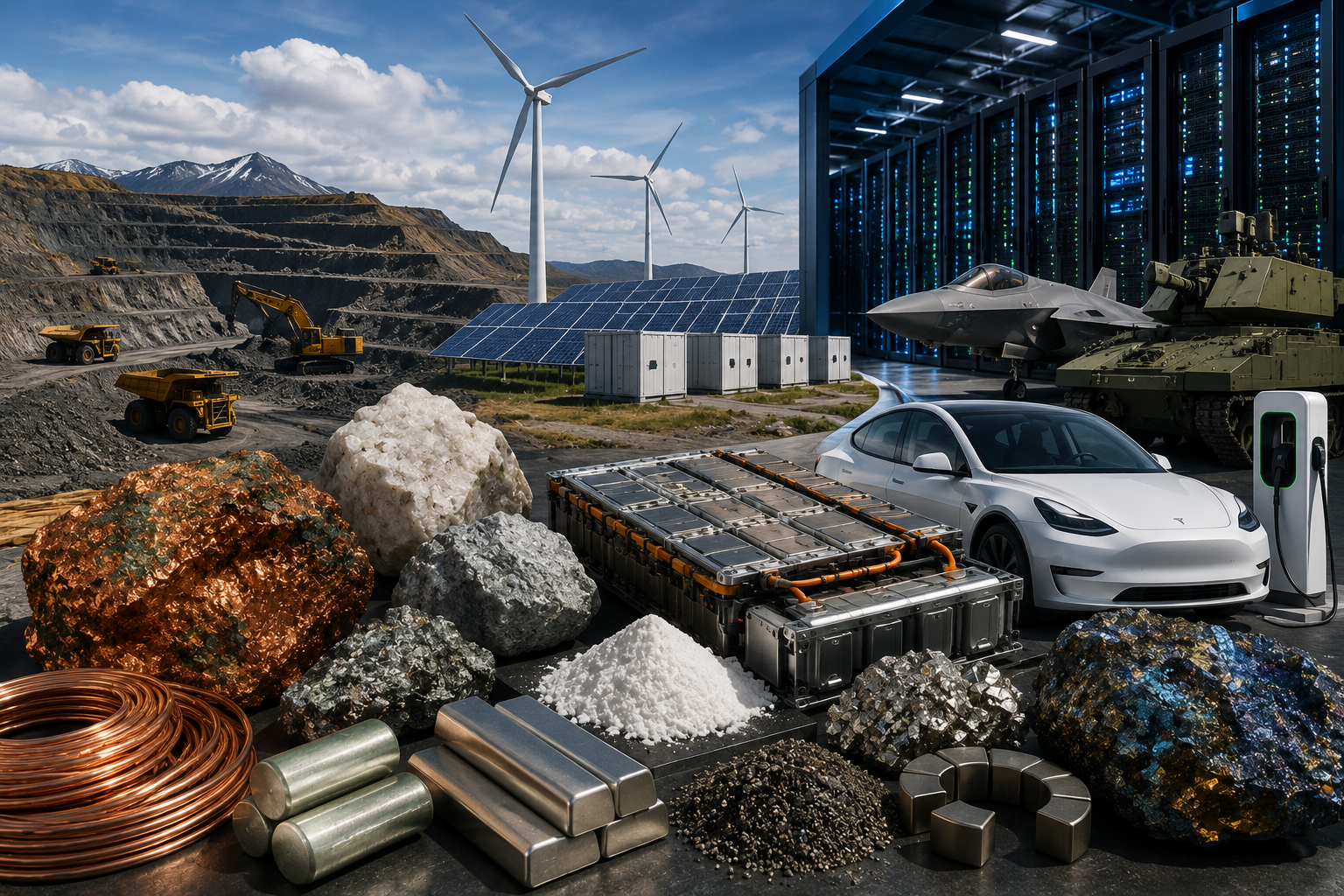
A new global resource race is unfolding — and this time, it is being driven not only by electric vehicles and clean energy, but also by artificial intelligence, advanced defense systems, and geopolitical competition.
Copper, lithium, uranium, and rare earth elements have rapidly become some of the most strategically important commodities in the world economy as governments and corporations pour billions into AI infrastructure, electrification, battery manufacturing, semiconductor production, and military modernization.
What was once viewed primarily as a cyclical mining story is increasingly being treated as a long-term strategic investment theme.
From Washington to Ottawa to Brussels, policymakers are aggressively attempting to secure domestic critical mineral supply chains amid growing concerns over China’s dominance in global resource processing and refining. At the same time, Wall Street is increasingly positioning critical minerals as one of the defining commodity opportunities of the next decade.
For investors, the implications extend far beyond traditional mining stocks.
Critical minerals are becoming foundational infrastructure for the modern economy.
Why Critical Minerals Have Become a Strategic Priority
The surge in investor interest surrounding critical minerals reflects a major shift in how governments and corporations view resource security.
For years, globalization prioritized efficiency and low-cost production. Today, geopolitical tensions and industrial-policy initiatives are shifting the focus toward supply-chain resilience, domestic production, and strategic independence.
This transition has accelerated due to several major trends converging simultaneously:
- Artificial intelligence infrastructure expansion
- Electrification and EV adoption
- Defense modernization
- Renewable energy deployment
- Semiconductor manufacturing growth
- Rising geopolitical competition with China
According to Reuters, S&P Global, and multiple mining industry reports, demand forecasts for several critical minerals continue climbing sharply despite ongoing volatility in commodity prices.
Governments increasingly view access to these materials as essential for national competitiveness and economic security.
That dynamic is transforming the mining sector into a strategic pillar of industrial policy.
Copper Is Emerging as the Backbone of the AI and Electrification Boom
Among all critical minerals, copper may be one of the most important long-term investment themes.
Copper demand is being driven by several powerful structural trends simultaneously:
- AI data-center construction
- Electric vehicle manufacturing
- Power-grid expansion
- Renewable energy infrastructure
- Semiconductor fabrication facilities
AI infrastructure alone is becoming a major source of copper demand due to the enormous electrical requirements associated with hyperscale data centers.
According to the International Energy Agency (IEA) and industry analysts, AI-related energy infrastructure expansion could significantly increase long-term copper consumption over the next decade.
Modern AI facilities require:
- High-capacity electrical systems
- Grid expansion
- Advanced cooling systems
- Transmission infrastructure
- Data-center construction materials
Copper sits at the center of all of it.
Meanwhile, electrification trends continue supporting long-term demand growth across EVs, charging infrastructure, and renewable energy systems.
Many analysts believe copper supply constraints could become increasingly severe later this decade if new mining projects fail to keep pace with demand.
That possibility is one reason investors remain highly focused on copper producers and exploration firms with stable North American assets.
Lithium Markets Remain Central to the Battery Supply Chain
Despite periods of price volatility, lithium continues to play a critical role in global battery production and energy-transition strategies.
Electric vehicles remain one of the largest long-term drivers of lithium demand, but battery storage systems tied to renewable energy deployment are also becoming increasingly important.
According to Benchmark Mineral Intelligence and S&P Global, governments and automakers continue investing heavily in localized battery supply chains across the United States and Canada.
This shift is largely motivated by concerns surrounding:
- Chinese refining dominance
- Supply-chain vulnerabilities
- Geopolitical risk
- Industrial competitiveness
North American lithium projects are receiving growing policy support through subsidies, tax incentives, and public-private partnerships designed to strengthen domestic supply chains.
For investors, this creates opportunities not only in lithium extraction but also in:
- Battery processing
- Refining infrastructure
- Recycling technologies
- Battery materials manufacturing
The market is increasingly rewarding companies capable of integrating into broader domestic battery ecosystems.
Uranium Demand Is Rising Alongside AI Energy Needs
One of the most unexpected investment themes emerging from the AI boom involves uranium.
As AI infrastructure expands globally, electricity demand is becoming one of the biggest constraints facing technology companies and utilities. This has renewed investor interest in nuclear energy as a stable, scalable source of baseload electricity.
Major technology firms and hyperscalers are increasingly exploring nuclear partnerships and long-term energy procurement strategies to support future AI power consumption.
This trend is contributing to renewed momentum in uranium markets after years of underinvestment.
According to the World Nuclear Association and multiple energy research firms, several countries are now:
- Expanding nuclear capacity
- Extending reactor lifespans
- Accelerating small modular reactor (SMR) development
Uranium producers and developers with politically stable assets are benefiting from this renewed focus on energy security and decarbonization.
For investors, the intersection between AI growth and nuclear energy demand could become one of the most important commodity stories of the decade.
Rare Earth Elements Are Becoming a Geopolitical Battleground
Rare earth elements remain among the most strategically sensitive parts of the global critical minerals market.
These materials are essential for:
- Defense technologies
- Advanced electronics
- Semiconductor systems
- Electric motors
- Wind turbines
- Aerospace applications
China currently dominates much of the global rare earth processing industry, creating concerns among Western governments about long-term supply-chain dependence.
In response, the United States and its allies are aggressively investing in alternative refining and processing capabilities.
According to U.S. Department of Defense initiatives and government industrial-policy programs, domestic rare earth supply chains are increasingly viewed as essential to national security.
This has created rising investor interest in companies developing:
- Rare earth mining projects
- Processing facilities
- Magnet manufacturing infrastructure
- Defense-linked mineral supply chains
The strategic importance of rare earths may continue increasing as geopolitical tensions intensify globally.
Industrial Policy Is Reshaping the Mining Sector
One of the biggest shifts investors should recognize is how industrial policy is changing the economics of mining and resource development.
Governments are no longer treating mining solely as a private-sector commodity business.
Instead, critical mineral projects are increasingly receiving:
- Tax incentives
- Infrastructure support
- Strategic funding
- Defense partnerships
- Permitting prioritization
- Long-term procurement agreements
The U.S. Inflation Reduction Act, Canadian industrial initiatives, and allied supply-chain partnerships are all accelerating investment into domestic mineral production.
This policy support may reduce financing risks for strategically important projects while increasing long-term valuation potential.
For mining companies with North American exposure, government alignment is becoming a major competitive advantage.
Why Investors Are Focusing on North American Supply Chains
Political stability is becoming increasingly valuable in the global mining industry.
Investors are paying greater attention to:
- Jurisdictional safety
- Regulatory certainty
- Supply-chain security
- ESG compliance
- Strategic government relationships
North American mining projects are benefiting from this shift because governments are prioritizing domestic resource independence and allied supply-chain development.
Companies operating in the United States and Canada may continue attracting premium valuations if geopolitical fragmentation intensifies.
This trend is especially important given growing tensions between the West and China over technology, manufacturing, and industrial leadership.
Future Trends Investors Should Watch
Several major developments could shape the next phase of the critical minerals investment cycle.
AI Infrastructure Expansion
AI-related electricity and infrastructure growth may significantly increase demand for copper, uranium, and grid materials.
Battery Manufacturing Growth
Domestic EV and energy-storage supply chains remain major long-term demand drivers for lithium and related minerals.
Defense Spending
Rising defense budgets and geopolitical tensions may accelerate demand for rare earths and strategic metals.
Resource Nationalism
Governments worldwide may continue tightening control over strategic mineral assets and exports.
Processing and Refining Capacity
The next major investment wave may increasingly focus on refining infrastructure rather than raw extraction alone.
Key Investment Insight
Critical minerals are evolving from a traditional commodity trade into a strategic infrastructure investment theme tied directly to AI, energy security, electrification, and geopolitics.
Copper, lithium, uranium, and rare earth elements are becoming increasingly essential to the future global economy, while North American supply chains are benefiting from strong industrial-policy support and geopolitical realignment.
For investors, the biggest opportunities may not only come from mining companies themselves, but also from the broader ecosystem surrounding:
- Refining
- Processing
- Grid infrastructure
- Energy systems
- Defense manufacturing
- Battery supply chains
As governments and corporations compete to secure strategic resources, critical minerals could remain one of the most important long-term investment stories of the next decade.
Stay with MoneyNews.Today for daily investor insights covering commodities, AI, emerging industries, markets, geopolitics, and the trends reshaping the global economy.




