
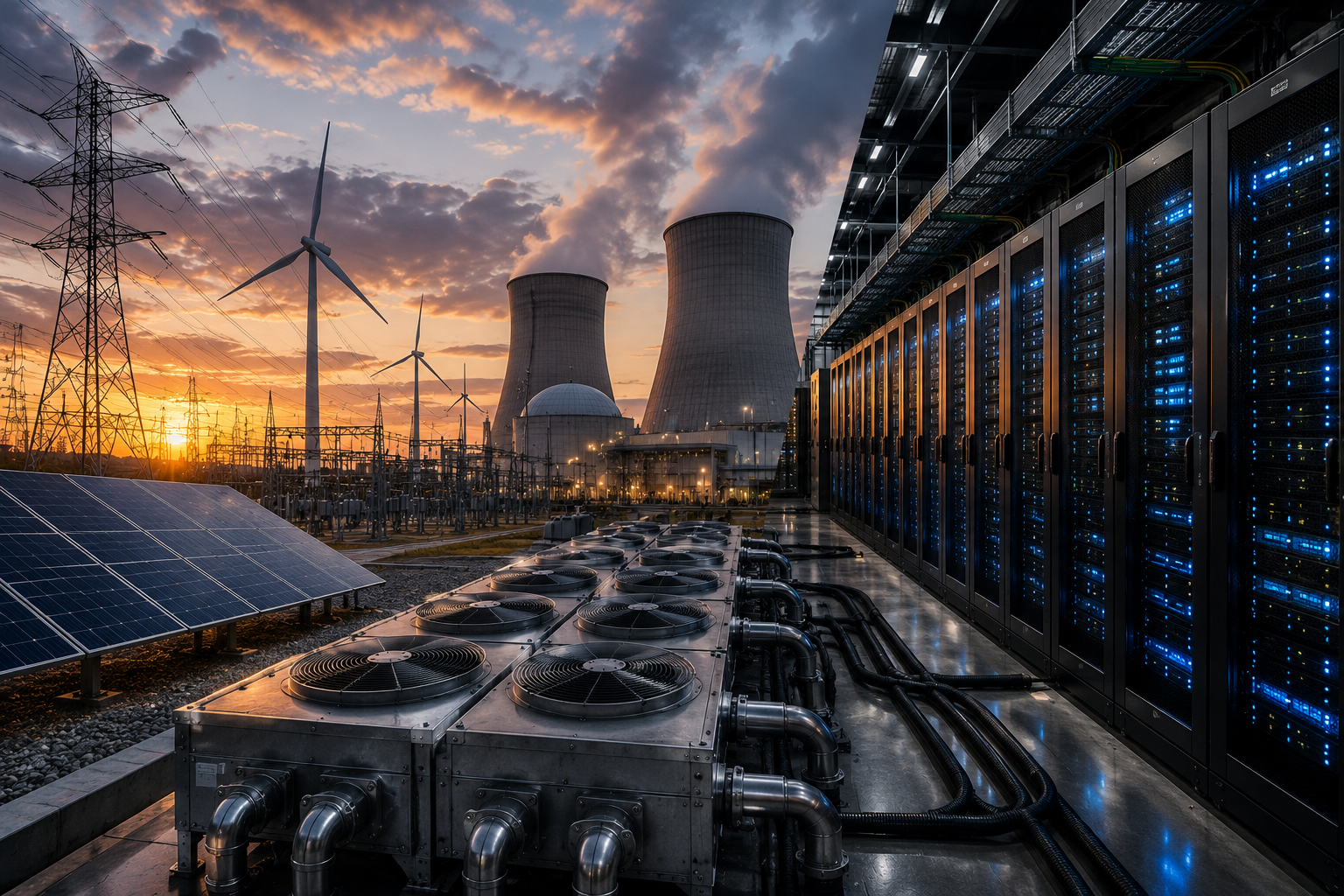
The artificial intelligence boom is no longer just a semiconductor story.
As Microsoft, Amazon, Google, and Meta race to build the next generation of AI infrastructure, a new challenge is rapidly emerging at the center of Wall Street’s attention: energy.
The explosive growth of AI data centers is placing mounting pressure on electricity grids, power generation capacity, cooling systems, and corporate sustainability goals across the United States and Canada. What began as a technology investment cycle is now evolving into one of the largest infrastructure and energy transformations in decades.
According to Reuters Technology News and Reuters Sustainability & Energy coverage, major technology firms are now increasingly divided over proposed changes to clean-energy accounting standards as AI expansion accelerates electricity consumption far beyond earlier expectations.
For investors, this shift is creating a powerful new reality:
The future of AI may depend just as much on access to reliable electricity as it does on advanced chips.
That dynamic is rapidly opening investment opportunities far beyond traditional technology stocks.
AI’s Infrastructure Boom Is Driving an Unprecedented Power Surge
The scale of modern AI infrastructure is unlike anything the technology industry has experienced before.
Training and operating large AI models requires enormous computational power, and hyperscalers are spending billions of dollars expanding global data-center capacity to support growing demand for generative AI, enterprise automation, cloud computing, and advanced analytics.
According to industry estimates from Bloomberg, McKinsey, and the International Energy Agency (IEA), AI-related electricity demand could rise dramatically over the next decade as:
- AI models become larger and more complex
- Enterprise AI adoption accelerates
- Cloud providers expand hyperscale infrastructure
- Autonomous systems and AI agents proliferate
Modern AI data centers consume substantially more power than traditional cloud-computing facilities due to the massive processing requirements associated with advanced GPUs and accelerated computing systems.
This is creating intense pressure on:
- Electrical grids
- Transmission infrastructure
- Utility capacity
- Water usage
- Cooling technologies
- Renewable-energy availability
The result is a growing intersection between technology investing and energy infrastructure investing.
Why Big Tech Is Scrambling for Long-Term Power Access
One of the most important emerging trends is the aggressive push by technology giants to secure stable long-term electricity supplies.
Companies including Microsoft, Amazon, Google, and Meta are increasingly signing multi-year energy agreements and exploring partnerships involving:
- Nuclear energy
- Natural gas infrastructure
- Renewable-energy projects
- Battery storage systems
- Small modular reactors (SMRs)
The reason is straightforward:
Without guaranteed energy access, future AI expansion could face major operational bottlenecks.
According to Reuters reporting, several major technology firms are also debating how corporate clean-energy accounting standards should evolve as AI power consumption rises.
This issue highlights a growing tension within the technology sector:
AI growth is dramatically increasing electricity demand at the same time companies are attempting to meet aggressive climate and sustainability commitments.
Some firms are prioritizing faster infrastructure expansion even if it requires temporary increases in fossil-fuel energy usage, while others remain focused on maintaining stricter emissions targets.
For investors, this debate signals that energy availability may become one of the defining competitive advantages of the AI era.
AI Is Creating a Massive Opportunity for Utilities
Utility companies are emerging as unexpected beneficiaries of the AI revolution.
Historically, utilities were often viewed as slow-growth, defensive investments. Today, many utility providers are experiencing renewed investor interest due to surging electricity demand tied to hyperscale data-center development.
According to energy analysts and utility-sector reports, AI infrastructure growth is driving:
- Increased power-consumption forecasts
- Grid expansion initiatives
- Transmission-line investments
- Energy-storage deployment
- Utility modernization projects
Utilities capable of supporting large-scale data-center operations may benefit from long-duration revenue growth tied directly to AI infrastructure expansion.
This shift is particularly important in regions experiencing rapid hyperscale development, including parts of:
- Texas
- Virginia
- Arizona
- Alberta
- Ontario
Power availability is increasingly influencing where major technology companies choose to build future AI infrastructure facilities.
That trend could significantly reshape regional investment opportunities across North America.
Nuclear Energy Is Reentering the Investment Conversation
One of the most significant developments emerging from the AI boom is the renewed focus on nuclear energy.
For years, nuclear power struggled with public skepticism, regulatory complexity, and high construction costs. Now, rising AI electricity demand is causing governments and technology companies to reconsider nuclear energy as a reliable source of carbon-free baseload power.
Several major trends are supporting renewed nuclear momentum:
- AI-driven electricity demand growth
- Energy-security concerns
- Decarbonization goals
- Advances in small modular reactor technology
- Corporate clean-energy procurement strategies
According to the International Energy Agency and multiple energy-industry reports, nuclear energy is increasingly being viewed as one of the few scalable solutions capable of supporting long-term AI infrastructure expansion while reducing carbon emissions.
This has created rising investor interest in:
- Uranium producers
- Nuclear infrastructure firms
- SMR developers
- Grid modernization companies
- Energy engineering contractors
The intersection between AI and energy security could become one of the most important long-term investment themes of the decade.
Cooling Systems and Grid Infrastructure Are Becoming Critical
Another overlooked opportunity involves cooling technologies and electrical infrastructure.
AI data centers generate enormous amounts of heat, particularly those using advanced GPUs from companies like Nvidia. As AI workloads intensify, efficient cooling systems are becoming essential for maintaining performance and reducing operational costs.
This is driving increased demand for:
- Liquid cooling systems
- Advanced HVAC technologies
- Thermal-management infrastructure
- Water-efficiency systems
- Power-distribution equipment
Meanwhile, aging electrical grids across North America may require substantial upgrades to handle future AI-related demand growth.
Grid modernization initiatives are expected to include:
- Transmission expansion
- Smart-grid systems
- Energy storage integration
- Renewable-energy balancing technologies
According to utility-sector forecasts, grid investment requirements tied to AI and electrification trends could reach hundreds of billions of dollars over the coming decade.
For investors, this means the AI boom is extending far beyond semiconductor companies alone.
Sustainability Concerns Are Becoming More Complex
The rapid expansion of AI infrastructure is also creating difficult sustainability challenges.
Many major technology companies previously committed to ambitious climate goals involving:
- Net-zero emissions
- Carbon neutrality
- Renewable-energy sourcing
- Reduced water consumption
However, the scale of AI electricity demand is making those goals harder to achieve.
Reuters recently reported growing divisions among major technology firms regarding proposed updates to clean-energy accounting rules, reflecting broader uncertainty about how AI infrastructure growth should align with sustainability commitments.
Some environmental analysts warn that AI expansion could significantly increase electricity consumption globally unless renewable and nuclear capacity scales rapidly enough to meet demand.
This creates a complex balancing act for:
- Policymakers
- Utilities
- Technology companies
- Infrastructure investors
Investors are increasingly recognizing that sustainability and energy security may become deeply interconnected themes throughout the AI era.
Why Investors Should Pay Attention Now
The AI investment narrative is evolving rapidly.
Earlier phases of the AI boom focused heavily on:
- GPUs
- Semiconductor manufacturers
- Cloud providers
- AI software platforms
The next phase may increasingly revolve around the infrastructure enabling AI itself.
This includes:
- Utilities
- Nuclear energy
- Grid modernization
- Cooling systems
- Power equipment
- Data-center construction
- Energy storage
- Transmission infrastructure
Companies capable of supporting AI’s enormous energy requirements could become some of the most important long-term beneficiaries of the technology revolution.
At the same time, firms unable to secure sufficient energy access may face operational constraints despite strong AI demand.
Future Trends Investors Should Watch
Several major trends could define the next stage of the AI-energy investment cycle.
AI Electricity Consumption
Power-demand forecasts tied to AI infrastructure will remain a major market focus.
Nuclear Energy Expansion
Small modular reactors and nuclear partnerships may accelerate as hyperscalers seek stable carbon-free power.
Grid Modernization
Utilities and infrastructure providers could benefit from long-term transmission and grid-upgrade investment cycles.
Data-Center Expansion
Regional markets with strong energy availability may attract accelerated hyperscale development.
Sustainability Regulation
Governments may introduce new energy-efficiency and emissions frameworks for AI infrastructure.
Key Investment Insight
Artificial intelligence is rapidly transforming from a semiconductor-driven investment story into a massive energy and infrastructure investment cycle.
As hyperscalers continue expanding AI data-center capacity, electricity availability, grid modernization, cooling systems, and nuclear energy are becoming increasingly critical to the future of the technology sector.
For investors, this creates opportunities far beyond traditional AI stocks.
The next major winners in the AI boom may include utilities, energy infrastructure companies, nuclear developers, cooling-technology firms, and grid modernization providers capable of supporting the enormous power requirements of advanced computing.
In the next phase of the AI race, access to energy may become just as valuable as access to chips.
Stay with MoneyNews.Today for daily investor insights covering AI, technology, markets, energy, geopolitics, and the emerging trends shaping the future global economy.




