
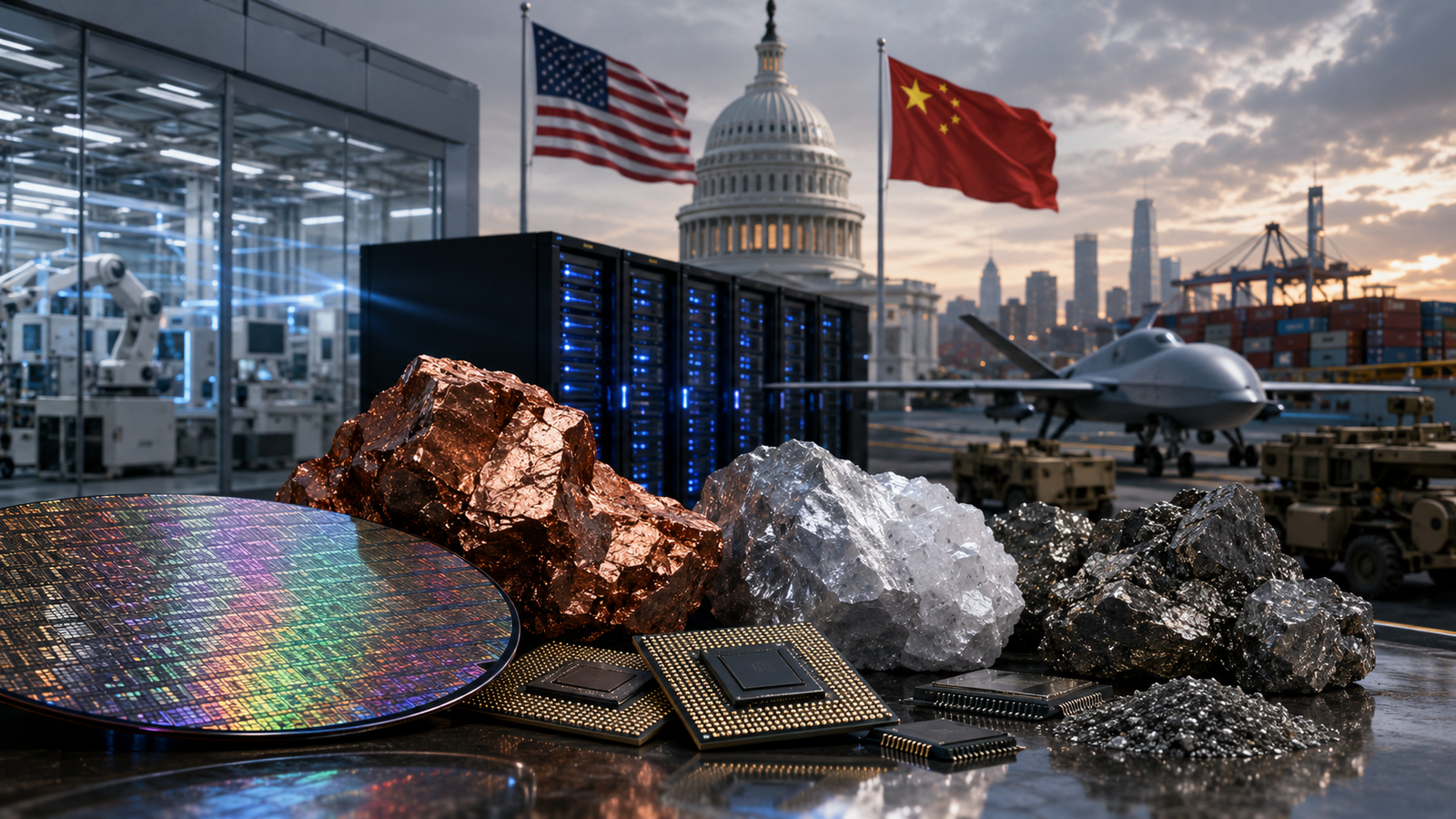
The global economic order is increasingly being reshaped by geopolitics — and investors are rapidly learning that government policy may now matter just as much as corporate earnings.
As tensions between the United States and China continue intensifying around technology, semiconductors, artificial intelligence, and strategic resources, the Trump administration is accelerating a sweeping industrial-policy agenda designed to secure America’s position in the next generation of global economic competition.
According to Reuters and recent U.S. policy developments, Washington is deepening partnerships with Japan, India, and Australia around critical minerals and strategic infrastructure while simultaneously expanding efforts to secure semiconductor supply chains, rare-earth processing capabilities, and AI-related manufacturing capacity.
The shift reflects a broader transformation occurring across global markets:
National security and economic policy are becoming deeply interconnected.
For investors, this means geopolitical strategy is no longer a background issue — it is increasingly becoming a primary driver of capital allocation across technology, defense, mining, manufacturing, and infrastructure sectors.
The result is a new investment environment where industrial policy, trade restrictions, and strategic alliances are helping determine which industries and companies may dominate the next decade.
The U.S.-China Economic Rivalry Is Entering a New Phase
The competition between the United States and China has evolved far beyond tariffs and traditional trade disputes.
Today’s geopolitical contest centers on:
- Artificial intelligence
- Semiconductor leadership
- Advanced manufacturing
- Rare earth supply chains
- Defense technologies
- Energy infrastructure
- Quantum computing
- Critical mineral access
Both Washington and Beijing increasingly view these sectors as strategically essential to long-term economic and military power.
According to Reuters and multiple policy research organizations, the Trump administration continues expanding initiatives aimed at reducing U.S. dependence on Chinese-controlled supply chains while strengthening domestic production capabilities and allied partnerships.
This includes efforts tied to:
- Semiconductor reshoring
- Export controls
- Rare-earth independence
- Defense manufacturing
- Strategic infrastructure investment
For investors, the implications are massive.
Government-backed industrial policy is now directly influencing where capital flows across some of the world’s fastest-growing sectors.
Semiconductors Remain at the Center of the Strategic Push
Semiconductors continue to represent one of the most important battlegrounds in the U.S.-China competition.
Advanced chips power nearly every critical technology industry, including:
- Artificial intelligence
- Defense systems
- Cloud computing
- Autonomous vehicles
- Telecommunications
- Quantum computing
Washington has increasingly tightened export restrictions on advanced semiconductor technologies destined for China while simultaneously supporting domestic chip manufacturing through industrial-policy incentives and strategic partnerships.
According to U.S. Commerce Department developments and industry reports, the administration remains focused on:
- Expanding domestic fabrication capacity
- Reducing dependence on overseas supply chains
- Protecting advanced AI chip technologies
- Strengthening allied semiconductor cooperation
This strategy is helping drive billions of dollars into:
- Semiconductor manufacturing facilities
- AI infrastructure
- Advanced packaging technologies
- Equipment manufacturing
- Data-center expansion
Companies tied to semiconductor production and infrastructure continue benefiting from this policy-driven investment cycle.
However, rising geopolitical fragmentation also introduces risks, including:
- Supply-chain disruptions
- Export restrictions
- Increased regulatory complexity
- Slower global trade integration
Investors are increasingly balancing growth opportunities with geopolitical exposure.
Critical Minerals Are Becoming Strategic Assets
Alongside semiconductors, critical minerals have become a central focus of industrial policy.
Copper, lithium, uranium, nickel, cobalt, and rare earth elements are all essential for:
- Electric vehicles
- AI infrastructure
- Defense technologies
- Battery production
- Renewable energy systems
- Semiconductor manufacturing
China currently dominates large portions of the global refining and processing industry for several strategic minerals, creating growing concern among Western governments.
In response, the United States and its allies are aggressively pursuing supply-chain diversification strategies.
Reuters recently reported that the U.S., Japan, India, and Australia signed new agreements tied to critical minerals and strategic infrastructure cooperation. These partnerships are designed to reduce supply-chain vulnerabilities while strengthening allied resource security.
For investors, this creates major opportunities across:
- North American mining projects
- Rare-earth processing
- Battery materials
- Uranium development
- Refining infrastructure
- Industrial manufacturing
Governments are increasingly treating critical mineral supply chains as national-security priorities rather than purely commercial markets.
That shift may continue supporting long-term investment flows into strategically aligned mining and infrastructure projects.
AI Infrastructure Is Becoming a National Security Priority
Artificial intelligence is no longer viewed solely as a commercial technology trend.
Governments increasingly see AI infrastructure as essential to economic competitiveness, military readiness, and geopolitical influence.
This explains why Washington continues prioritizing:
- AI chip manufacturing
- Cloud infrastructure
- Data-center expansion
- Cybersecurity systems
- Advanced computing research
The administration’s broader industrial-policy strategy reflects growing concern that AI leadership could shape the future balance of global power.
According to policy analysts and technology-industry reports, countries capable of dominating advanced computing infrastructure may gain major advantages across:
- Defense systems
- Economic productivity
- Scientific research
- Financial markets
- Cybersecurity operations
This dynamic is accelerating public-private cooperation between governments and major technology companies.
For investors, AI infrastructure spending is increasingly supported not only by corporate demand, but also by national strategic priorities.
That combination could sustain elevated investment levels across the sector for years.
Defense Spending Is Creating Secondary Growth Opportunities
Geopolitical tensions are also fueling broader defense and security spending.
Military modernization programs increasingly depend on advanced technologies including:
- AI systems
- Autonomous platforms
- Quantum computing
- Semiconductor technologies
- Rare-earth materials
- Cybersecurity infrastructure
As geopolitical fragmentation intensifies globally, defense-tech companies may become some of the largest beneficiaries of industrial-policy expansion.
Governments are increasingly directing resources toward:
- Supply-chain resilience
- Domestic manufacturing
- Strategic infrastructure
- Secure communications
- Intelligence systems
This trend is creating investment opportunities beyond traditional defense contractors alone.
Technology companies operating in cybersecurity, AI infrastructure, advanced manufacturing, and communications systems may also benefit from rising government demand.
Why Reshoring and Supply-Chain Security Matter to Investors
One of the most important long-term themes emerging from this geopolitical shift is reshoring.
For decades, global supply chains prioritized efficiency and low-cost production. Now, governments and corporations are increasingly prioritizing:
- Domestic production
- Allied supply chains
- Manufacturing resilience
- Resource security
- Strategic independence
This transformation is already reshaping investment flows across:
- Manufacturing
- Logistics
- Industrial real estate
- Energy infrastructure
- Transportation networks
North American industrial expansion could accelerate further if geopolitical tensions continue increasing.
Several sectors may benefit disproportionately:
- Semiconductor manufacturing
- Industrial automation
- Critical minerals
- Defense infrastructure
- Grid modernization
- Nuclear energy
For investors, understanding how industrial policy influences these sectors may become increasingly important in the years ahead.
Markets Are Adapting to a New Geopolitical Reality
The current investment environment differs significantly from the globalization-driven era that dominated markets for much of the past two decades.
Today’s markets are increasingly shaped by:
- Trade restrictions
- Export controls
- National-security priorities
- Strategic alliances
- Government subsidies
- Industrial-policy incentives
This does not necessarily mean globalization is ending, but it does suggest markets are entering a more fragmented and strategically competitive phase.
Investors are already adjusting.
Institutional capital is increasingly flowing toward industries viewed as strategically important to national competitiveness and economic security.
That includes:
- AI infrastructure
- Semiconductor manufacturing
- Critical minerals
- Energy systems
- Defense technologies
- Cybersecurity
The result is a powerful intersection between geopolitics and investment strategy.
Future Trends Investors Should Watch
Several major developments could shape the next phase of geopolitical investing.
Semiconductor Export Controls
Additional restrictions on advanced chips and AI technologies could impact global supply chains and technology-sector earnings.
Critical Mineral Alliances
Strategic partnerships among allied nations may continue accelerating investment into mining and refining infrastructure.
Defense-Tech Spending
AI-driven defense modernization could create long-term growth opportunities across cybersecurity and advanced manufacturing.
Industrial Reshoring
Domestic manufacturing incentives may support infrastructure, industrial automation, and supply-chain investments.
AI Infrastructure Expansion
Government-backed AI initiatives could sustain elevated spending across cloud computing, semiconductors, and energy infrastructure.
Key Investment Insight
Geopolitics is becoming one of the most important forces shaping global capital markets.
The Trump administration’s expanding industrial-policy strategy around semiconductors, AI infrastructure, and critical minerals highlights how governments are increasingly treating advanced technologies and strategic resources as national-security priorities.
For investors, this creates long-term opportunities across sectors tied to:
- Semiconductor manufacturing
- Critical minerals
- Defense technology
- AI infrastructure
- Cybersecurity
- Industrial reshoring
At the same time, geopolitical fragmentation may increase volatility, regulatory uncertainty, and supply-chain complexity across global markets.
The companies best positioned for the next decade may not simply be those with the fastest growth — but those aligned with the strategic priorities of governments shaping the future global economy.
Stay with MoneyNews.Today for daily investor insights covering markets, geopolitics, AI, emerging industries, commodities, and the global trends driving tomorrow’s investment landscape.




