
The artificial intelligence investment story has entered a new phase, and investors are paying close attention.
For much of the past two years, Wall Street’s AI enthusiasm has been driven primarily by semiconductor leaders and the explosive growth of generative AI platforms. However, Dell Technologies’ latest earnings report is providing fresh evidence that the AI boom is extending far beyond chipmakers and into the broader infrastructure ecosystem that powers the next generation of computing.
Dell recently reported a remarkable 757% year-over-year increase in AI server demand and raised its full-year outlook, reinforcing investor confidence that enterprise and hyperscale spending on AI infrastructure remains exceptionally strong. The results arrive at a critical moment when some investors have begun questioning whether AI-related valuations have become disconnected from underlying business fundamentals.
Instead, Dell’s performance suggests that corporations, cloud providers, and governments are continuing to invest aggressively in the physical infrastructure required to support AI deployment at scale.
For investors, the message is becoming increasingly clear: the AI opportunity extends far beyond software applications and chatbot platforms. The companies building the digital backbone of the AI economy may represent some of the most compelling investment opportunities in the market.
Dell’s Results Signal Continued AI Spending Strength
The latest earnings report from Dell has become one of the most closely watched indicators of AI infrastructure demand.
According to company disclosures and reporting from Reuters and MarketWatch, demand for Dell’s AI-optimized servers surged dramatically as customers accelerated investments in data centers and AI computing capacity. Management also increased guidance for the remainder of the fiscal year, signaling confidence that AI-related orders remain robust.
The significance of this development goes beyond Dell itself.
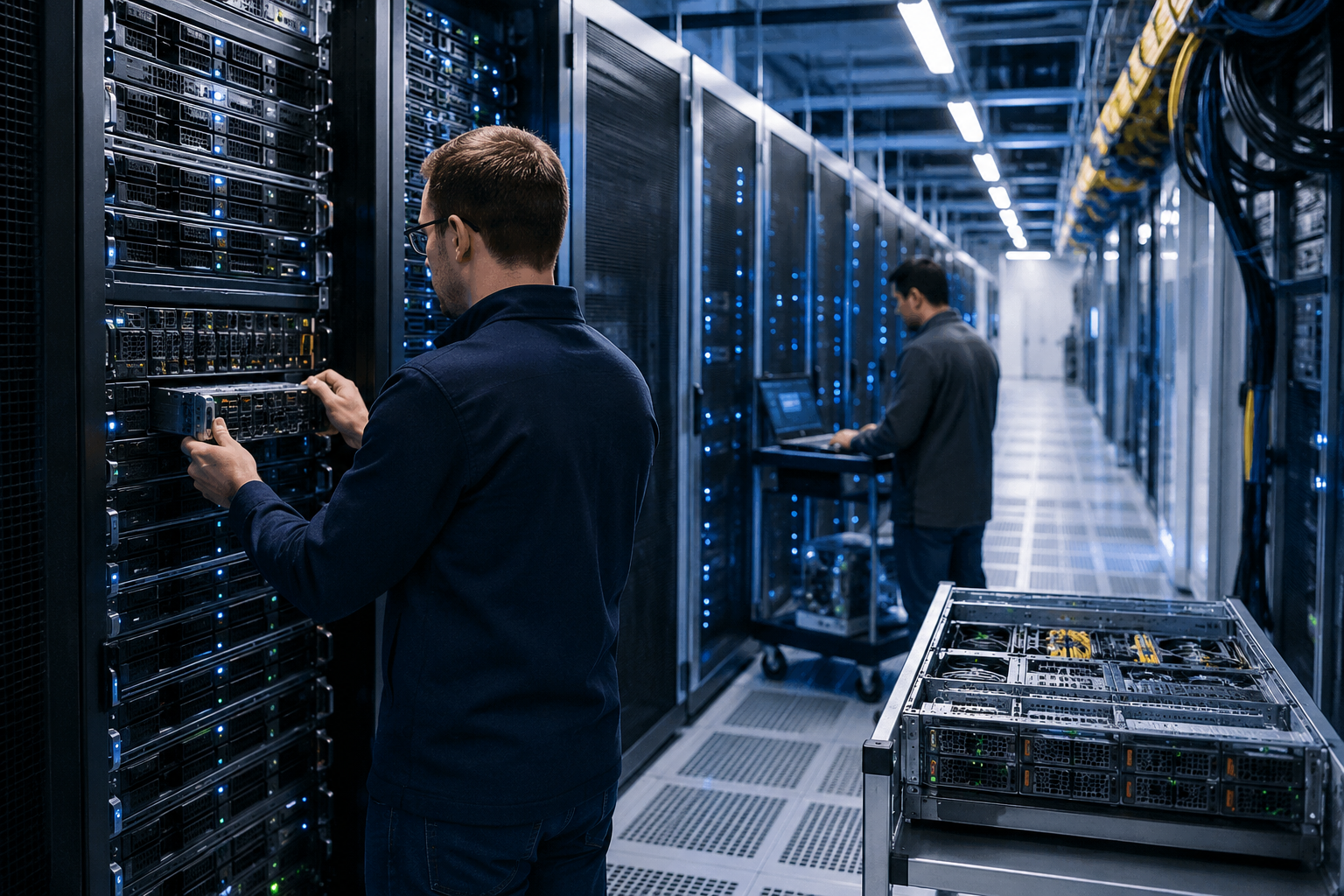
AI servers represent a critical component of the broader AI ecosystem. These systems integrate advanced graphics processing units (GPUs), networking equipment, memory solutions, cooling technologies, and power-management systems to create the computational environments necessary for training and deploying large AI models.
When demand for AI servers rises sharply, it often signals growth across the entire AI supply chain.
That has important implications for investors seeking exposure to long-term AI trends.
Why This Matters for Investors
One of the biggest questions facing investors in 2026 has been whether AI spending would continue at the extraordinary pace seen over the previous two years.
The concern was understandable.
Major technology companies have collectively committed hundreds of billions of dollars toward AI infrastructure investments. Some analysts worried that spending could eventually slow as organizations evaluated returns on those investments.
Dell’s latest results suggest that concern may be premature.
Hyperscale cloud providers continue expanding AI capacity to meet customer demand. Enterprise organizations are increasingly integrating AI tools into business operations. Governments are investing in domestic AI capabilities for economic competitiveness and national security purposes.
Together, these trends are creating sustained demand for AI infrastructure.
According to industry research from McKinsey, IDC, and Gartner, global spending on AI technologies is expected to continue growing at double-digit annual rates for years to come. Data center expansion, AI model training, inference workloads, and enterprise AI deployment remain among the fastest-growing areas of technology spending.
For investors, this means the AI investment thesis is broadening beyond a handful of mega-cap technology companies.
The Expanding AI Infrastructure Ecosystem
While companies developing AI software often receive the most attention, the infrastructure layer may offer equally compelling opportunities.
The AI ecosystem includes multiple interconnected sectors:
Semiconductors
Advanced processors remain the foundation of AI computing. Companies involved in GPUs, AI accelerators, memory chips, and semiconductor manufacturing continue benefiting from rising AI demand.
High-bandwidth memory providers, chip designers, and foundry operators are all experiencing increased interest from investors seeking AI exposure.
Data Centers
The rapid expansion of AI workloads is driving unprecedented demand for data center capacity.
Cloud providers and enterprise operators are investing billions of dollars in new facilities, creating opportunities for companies involved in construction, equipment manufacturing, and facility management.
Many analysts believe AI-related data center growth could become one of the defining infrastructure investment themes of the decade.
Networking Infrastructure
AI systems require enormous amounts of data movement.
As AI clusters become larger and more complex, demand for high-performance networking equipment continues increasing. Companies specializing in switches, optical networking, interconnect solutions, and data transmission technologies are becoming essential participants in the AI value chain.
Power Infrastructure
One of the most underappreciated aspects of the AI boom is its impact on energy demand.
Large AI data centers consume significant amounts of electricity. Utilities, grid operators, power-equipment manufacturers, and energy infrastructure providers are increasingly viewed as indirect beneficiaries of AI growth.
Several industry reports suggest that AI-related electricity demand could become a major driver of infrastructure investment throughout North America over the coming decade.
AI Server Manufacturers
Dell’s latest results highlight a growing opportunity for companies that integrate and deploy AI computing systems.
As organizations seek turnkey AI solutions, server manufacturers capable of delivering optimized AI infrastructure are positioned to capture increasing market share.
Market Sentiment Remains Strong
Wall Street’s reaction to Dell’s report highlights how central AI remains to current market performance.
Despite periodic concerns about inflation, interest rates, and economic growth, investors continue rewarding companies that demonstrate tangible AI-related revenue growth.
The broader market has increasingly differentiated between speculative AI narratives and businesses generating measurable demand from AI adoption.
Dell’s results fall squarely into the latter category.
The company’s performance provides evidence that AI spending is translating into real orders, real revenue, and real earnings growth.
That distinction is important because it strengthens the fundamental case supporting continued investment across the AI ecosystem.
Future Trends to Watch
Several developments could shape the next phase of AI infrastructure growth.
First, enterprise AI adoption remains in its early stages. Many organizations are still evaluating how best to deploy AI tools across operations, customer service, software development, and analytics.
Second, sovereign AI initiatives are gaining momentum. Governments across North America, Europe, and Asia are investing in domestic AI capabilities, creating additional demand for infrastructure.
Third, the evolution of AI models is likely to increase computational requirements. More advanced models generally require larger datasets, more powerful hardware, and greater networking capacity.
Finally, the energy demands of AI are becoming a strategic issue. Investors should monitor developments in power generation, grid modernization, and energy infrastructure as AI adoption expands.
Key Investment Insight
Dell’s extraordinary growth in AI server demand provides another powerful signal that the AI infrastructure cycle remains intact.
Investors looking beyond headline AI software stories may find opportunities across the broader infrastructure ecosystem, including semiconductors, data centers, networking equipment, power infrastructure, memory technologies, and AI server manufacturers.
While market volatility is always possible, the underlying trend remains clear: organizations around the world continue investing aggressively in the infrastructure required to power artificial intelligence.
For long-term investors, the most important question may no longer be whether AI will transform the economy, but rather which companies are best positioned to supply the infrastructure that makes that transformation possible.
Stay informed with MoneyNews.Today for daily investor-focused insights, market analysis, and coverage of the trends shaping the future of global investing.




