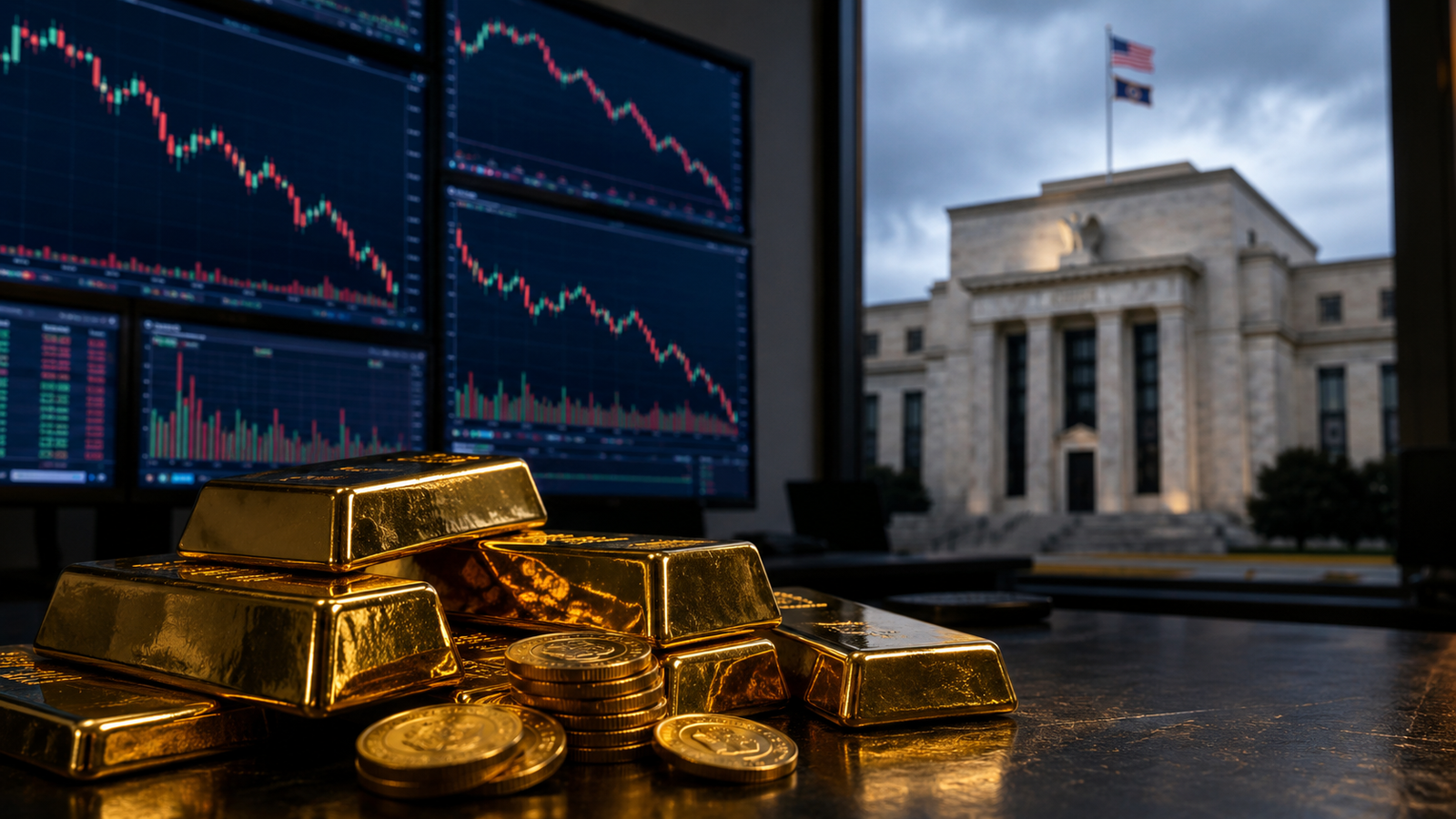
For much of the past several years, gold has been one of the market’s most reliable winners. Driven by geopolitical uncertainty, central bank buying, inflation concerns, and expectations of lower interest rates, the precious metal climbed to historic highs and became a favorite safe-haven asset among investors worldwide.
Now, that powerful rally is facing its first meaningful test.
As investors position themselves ahead of a pivotal Federal Reserve meeting, gold is heading toward its second consecutive weekly loss. While prices remain near historically elevated levels, sentiment has shifted as markets reassess the outlook for U.S. interest rates, inflation, and the strength of the U.S. dollar.
The pullback does not necessarily signal the end of gold’s long-term bull market. However, it highlights a growing reality facing investors: gold’s near-term direction may depend less on geopolitical headlines and more on what Federal Reserve policymakers say about inflation and future monetary policy.
For investors seeking clarity in an increasingly uncertain environment, the coming days could prove critical for both gold prices and the broader precious metals sector.
A Pause in One of the Market’s Strongest Bull Runs
Gold has delivered remarkable performance over the past several years.
The metal benefited from a combination of factors that created a highly supportive environment. Persistent geopolitical tensions, elevated government debt levels, concerns about global economic growth, and aggressive central bank purchasing all contributed to rising demand.
According to data from the World Gold Council, central banks have remained significant buyers of gold as countries seek to diversify reserves away from traditional currency holdings. This structural demand has provided a powerful foundation for prices even during periods of market volatility.
At the same time, expectations that major central banks—including the Federal Reserve—would eventually begin lowering interest rates encouraged investors to increase exposure to non-yielding assets such as gold.
That narrative is now being challenged.
Recent economic data has suggested that inflation remains more resilient than policymakers had hoped. Rising energy prices and continued strength in parts of the U.S. economy have raised questions about whether interest rates will remain elevated for longer than previously expected.
As a result, investors have begun adjusting their expectations for future monetary policy, putting pressure on gold prices.
Why Federal Reserve Policy Matters So Much for Gold
Unlike stocks, bonds, or dividend-paying investments, gold generates no income.
Its attractiveness often depends on the opportunity cost of holding it relative to interest-bearing assets.
When interest rates are low or falling, investors are generally more willing to hold gold because the income sacrificed by owning the metal is relatively small. However, when interest rates remain elevated, government bonds and cash alternatives become more attractive, reducing some of gold’s appeal.
This relationship explains why Federal Reserve policy remains one of the most important drivers of gold prices.
Investors are now closely watching the Federal Reserve for signals regarding:
- The future path of interest rates
- Inflation expectations
- Economic growth projections
- Labor market conditions
- Potential timing of future rate cuts
According to Reuters commodities coverage, even subtle changes in Federal Reserve language could significantly influence investor expectations and trigger volatility across precious metals markets.
The market’s focus is increasingly shifting from whether rates will eventually fall to how quickly and by how much.
The U.S. Dollar Is Adding Pressure
Another factor weighing on gold is the recent strength of the U.S. dollar.
Gold is typically priced in dollars, creating an inverse relationship between the two assets. When the dollar strengthens, gold becomes more expensive for foreign buyers, often reducing demand and pressuring prices.
Recent expectations that U.S. interest rates may remain higher for longer have supported the dollar, creating an additional challenge for gold bulls.
According to Federal Reserve monitoring data and currency market analysts, investors continue to favor dollar-denominated assets due to relatively attractive yields and ongoing uncertainty surrounding global growth.
As long as the dollar remains strong, gold may face difficulty sustaining another major rally without a new catalyst.
Why Gold Is Still Attracting Long-Term Investors
Despite recent weakness, many institutional investors remain constructive on gold’s longer-term outlook.
Several structural drivers continue to support the investment case.
Central Bank Demand Remains Strong
One of the most important developments in recent years has been the unprecedented level of central bank gold purchases.
Countries seeking to diversify reserves and reduce dependence on traditional reserve currencies have continued accumulating gold at historically significant rates.
Many analysts view this trend as a long-term support mechanism that could limit downside risks.
Global Debt Levels Continue Rising
Government debt levels remain elevated across many developed economies.
Historically, periods of increasing debt burdens have often enhanced gold’s appeal as a store of value and inflation hedge.
Investors concerned about long-term currency purchasing power continue to view gold as an important portfolio diversifier.
Geopolitical Risks Have Not Disappeared
While market attention has recently shifted toward monetary policy, geopolitical uncertainty remains a persistent factor supporting gold demand.
Conflicts, trade disputes, sanctions, and broader geopolitical tensions can quickly renew safe-haven demand and reverse short-term price declines.
For this reason, many portfolio managers continue maintaining strategic gold allocations regardless of short-term market fluctuations.
What This Means for Gold Mining Stocks
Gold miners often experience amplified movements relative to the underlying metal.
When gold prices rise, mining companies can generate substantial earnings leverage due to relatively fixed production costs. Conversely, declining gold prices can pressure profit margins and investor sentiment.
As investors await Federal Reserve guidance, gold mining shares could experience heightened volatility.
Major producers and royalty companies remain sensitive to both gold prices and broader market sentiment. Investors should pay close attention to management commentary regarding production costs, reserve growth, and capital allocation strategies.
Companies with strong balance sheets, lower production costs, and disciplined management teams may be better positioned to navigate a period of increased uncertainty.
Future Trends to Watch
Several key developments will likely determine the next major move in gold prices.
Federal Reserve Guidance
The most immediate catalyst remains the Federal Reserve meeting. Any indication that inflation remains a concern could reinforce expectations for higher rates and pressure gold further.
Real Interest Rates
Many analysts consider real interest rates—the difference between nominal interest rates and inflation—to be one of the most important drivers of gold prices.
A decline in real yields would likely support gold, while rising real yields could create additional headwinds.
Central Bank Purchases
Investors should continue monitoring World Gold Council reports and official central bank data for evidence that institutional buying remains strong.
Inflation Trends
Persistent inflation could ultimately benefit gold over the longer term, particularly if policymakers struggle to return inflation to target levels.
Key Investment Insight
Gold remains one of the market’s most important portfolio hedges, but investors should recognize that short-term price action is increasingly tied to Federal Reserve expectations.
The current pullback may create opportunities for long-term investors who believe inflation risks, geopolitical uncertainty, and central bank demand will remain supportive over time.
However, near-term volatility is likely to remain elevated as markets react to changing interest-rate expectations.
Investors should focus on real interest rates, Federal Reserve guidance, and dollar strength as the primary indicators for gold’s next major move.
Looking Ahead
Gold’s recent weakness serves as a reminder that even the strongest bull markets experience periods of consolidation.
While the precious metal remains near record levels, investors are entering a phase where monetary policy may have a greater influence on prices than many of the factors that fueled the rally over the past several years.
The Federal Reserve’s upcoming decisions could help determine whether gold resumes its long-term advance or enters a more extended period of consolidation.
For investors, staying informed and maintaining a disciplined approach will be essential as markets navigate the next chapter in the gold story.
Stay informed with MoneyNews.Today for daily investor insights, commodity market analysis, and the latest developments shaping global investment opportunities.