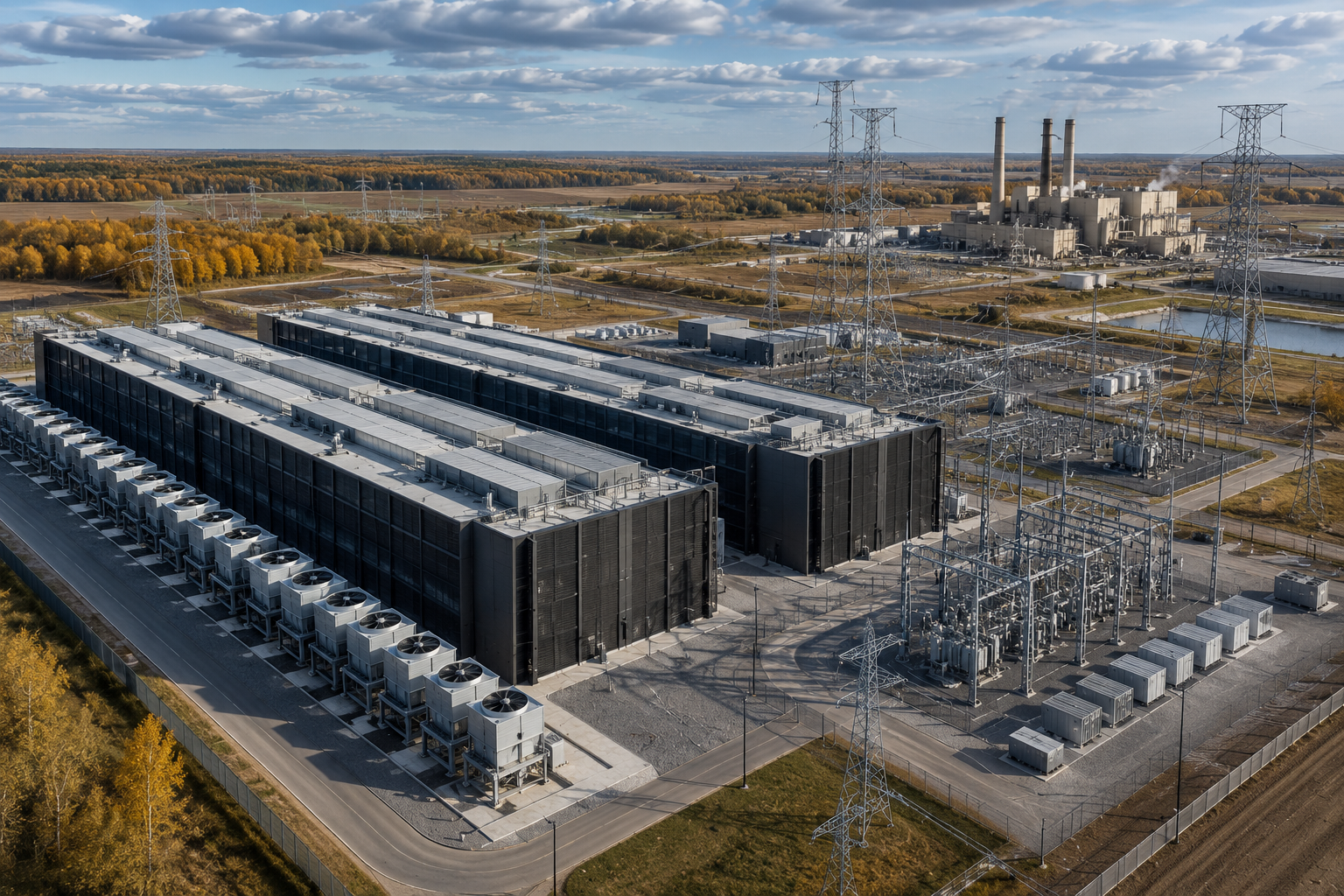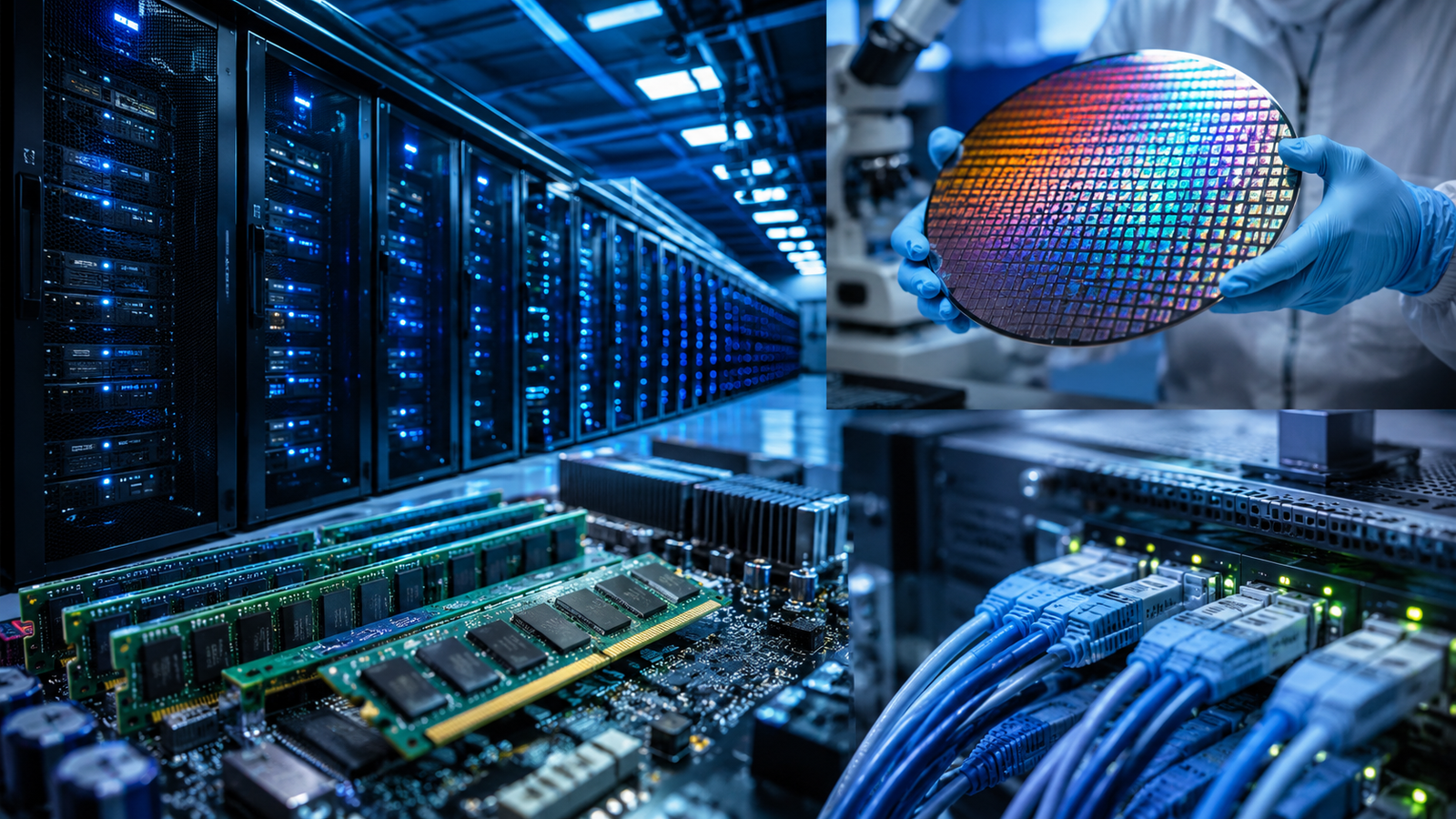
The artificial intelligence trade is no longer just about the biggest names in cloud platforms and graphics processors. Today’s market action suggests investors are moving deeper into the hardware backbone of AI, rotating toward memory, storage, networking, and semiconductor supply-chain companies that make the data-center boom possible.
Tech and chip stocks rallied as investors focused on a global memory-chip shortage and renewed demand for AI infrastructure exposure. Micron, Western Digital, Sandisk, Seagate, AMD, Marvell, and other semiconductor-linked names were highlighted by major financial outlets as gainers, with MarketWatch, Barron’s, Investopedia, and The Wall Street Journal all pointing to strength in AI-related technology shares.
For investors, this is an important shift. The AI market has spent much of the past two years rewarding the most obvious leaders: cloud giants, GPU suppliers, and large-cap software companies. Now the trade appears to be broadening into the less glamorous but highly critical components that power AI data centers. Memory chips, high-capacity storage, networking equipment, and semiconductor infrastructure are becoming central to the next phase of the AI investment story.
Why This Matters for Investors
AI models require enormous computing power, but computing power is not only about processors. Every AI workload also needs memory to move data quickly, storage to hold massive datasets, networking to connect servers, and power-efficient components to keep data centers operating at scale.
That is why today’s rally in memory and storage stocks matters. Investors are beginning to recognize that AI demand creates bottlenecks across the entire technology stack. When one layer becomes constrained, pricing power can shift quickly toward companies that supply scarce components.
MarketWatch reported that Micron and Western Digital gained in premarket trading, while Barron’s highlighted strength in Micron, Sandisk, Seagate, and Western Digital. The Wall Street Journal also noted that AI-linked technology names, including Micron, Super Micro Computer, and Marvell, were among the stronger premarket performers as Nasdaq futures advanced.
This suggests the market is reassessing where the next leg of AI upside may come from. Instead of paying premium valuations only for mega-cap AI platforms, investors are increasingly looking for companies with direct exposure to physical bottlenecks in the AI buildout.
The Memory Shortage Is Becoming an AI Investment Catalyst
The memory-chip market has always been cyclical. Prices rise when supply is tight and fall when manufacturers overbuild. That history makes investors cautious. However, the current cycle may be different because AI demand is creating a structural need for faster, denser, and more energy-efficient memory.
High-bandwidth memory, DRAM, NAND flash, and enterprise storage are all becoming more important as AI workloads expand. Training and running large AI models requires rapid data movement. If processors are the engines of AI, memory and storage are the fuel lines. When those fuel lines are constrained, the whole system becomes more expensive.
Barron’s reported renewed investor interest in Micron as the market focused on memory-chip shortages and AI demand. The publication also noted that analysts are paying attention to the possibility of a memory “supercycle,” supported by tight supply and rising infrastructure needs.
That is why Micron, Sandisk, Western Digital, and Seagate are drawing investor attention. Micron is a key U.S.-listed memory-chip name. Sandisk and Western Digital offer exposure to flash storage and data storage demand. Seagate is closely tied to mass storage needs, including enterprise and nearline drives used in data-center environments.
The AI Trade Is Broadening Beyond Mega-Cap Winners
The first phase of the AI boom was dominated by a narrow group of companies. Investors crowded into the most visible names tied to GPUs, hyperscale cloud, and frontier AI models. That concentration created strong gains, but it also raised valuation concerns.
Today’s move suggests investors are searching for tactical opportunities in second-order AI beneficiaries. These include companies that may not own the dominant AI platforms but provide the hardware, networking, and storage capacity required to support them.
AMD remains a key name to watch as investors look for competition and diversification in AI accelerators and server processors. Marvell is important because networking and custom silicon are critical in AI data centers. Super Micro Computer is closely watched for server infrastructure exposure. Memory and storage names may benefit as data-center operators expand capacity and struggle with tight supply.
This broadening is healthy for the AI trade because it reduces dependence on a few mega-cap stocks. It also gives investors more ways to participate in the AI infrastructure cycle. However, broader participation does not remove risk. Many semiconductor and memory stocks can move sharply in both directions when supply-demand expectations change.
Rate Expectations Still Matter
Even with strong AI demand, technology stocks remain sensitive to interest rates. High-growth sectors often benefit when investors expect lower rates because future earnings become more valuable in present terms. Conversely, higher-for-longer rate expectations can pressure valuations, especially for stocks that have already rallied.
Investopedia reported that broader market sentiment today was helped by rising stock futures and strength in technology names, while investors continued to watch the Federal Reserve’s policy path. That context matters for chip investors. AI demand can support earnings, but valuation multiples still depend partly on macro conditions.
If rate expectations become more restrictive, highly valued tech stocks may face pressure even if their long-term growth story remains intact. This is especially relevant for semiconductor names that have already priced in strong demand from AI data centers.
Key Risks Investors Should Watch
The first risk is cyclicality. Memory markets are famous for boom-and-bust behavior. If manufacturers expand supply too aggressively or AI demand slows, pricing power can weaken quickly.
The second risk is valuation. A strong rally can make even fundamentally attractive companies vulnerable to pullbacks. Investors should compare stock performance against earnings revisions, margin expectations, and free-cash-flow trends.
The third risk is customer concentration. Many AI infrastructure suppliers depend heavily on large cloud and data-center customers. If hyperscalers delay spending, renegotiate contracts, or shift suppliers, revenue expectations can change fast.
The fourth risk is supply-chain exposure. Semiconductors are deeply tied to global manufacturing, export controls, equipment availability, and geopolitical risk. Investors should monitor U.S.-China technology policy, Taiwan supply-chain risk, and government incentives for domestic chip production.
Future Trends to Watch
Investors should watch memory pricing, especially DRAM, NAND, and high-bandwidth memory. Sustained pricing strength would support earnings momentum for memory suppliers.
They should also monitor AI data-center capital spending from major cloud providers. If hyperscalers continue increasing budgets, suppliers of chips, servers, networking equipment, and storage could benefit.
Networking is another critical area. As AI clusters grow larger, moving data between chips and servers becomes a major technical challenge. That makes companies tied to custom silicon, optical interconnects, Ethernet switching, and high-speed networking increasingly important.
Finally, investors should watch earnings commentary. The next round of reports from semiconductor and infrastructure companies may determine whether today’s rally is a short-term momentum move or the beginning of a broader rerating.
Key Investment Insight
The AI trade is entering a more selective phase. Investors are no longer only buying the companies with the most recognizable AI brands. They are rotating into the supply-chain bottlenecks that make AI deployment possible: memory, storage, networking, servers, and semiconductor infrastructure.
That creates opportunity, but it also requires discipline. Memory and chip stocks can offer tactical upside when demand is strong and supply is tight, but they remain cyclical and sensitive to valuation, rates, and capital-spending cycles.
For investors, the practical approach is to watch companies with exposure to real AI infrastructure demand, improving pricing power, and strong customer visibility. Micron, Western Digital, Sandisk, Seagate, AMD, Marvell, and related semiconductor infrastructure names may remain in focus as the market looks beyond crowded mega-cap AI trades.
The message from today’s rally is clear: AI is not just a software revolution. It is a hardware, storage, networking, and supply-chain investment cycle. Investors who understand the full stack may be better positioned for the next phase of the technology market.
Stay with MoneyNews.Today for daily investor-focused coverage of the technology trends, market movers, and AI infrastructure shifts shaping tomorrow’s portfolios.