The artificial intelligence boom has fueled one of the strongest technology rallies in modern market history, propelling semiconductor stocks to record highs and transforming a handful of chipmakers into some of the world’s most valuable companies. Yet as investors head into the second half of 2026, one earnings report is increasingly being viewed as a crucial test of whether the AI investment story still has room to run.
That company is Micron Technology.
While Nvidia has become the public face of the AI revolution, many investors believe Micron’s upcoming earnings report may provide one of the clearest indicators yet of the true health of AI infrastructure spending. The memory-chip maker sits at the center of the AI ecosystem, supplying the high-performance memory needed to power advanced AI training systems, cloud computing platforms, and next-generation data centers.
According to Reuters, Wall Street is closely watching Micron’s results for signs that demand for AI memory chips remains strong enough to justify the enormous capital expenditures currently being made by cloud providers, hyperscalers, and enterprise technology firms. The company’s outlook could have implications far beyond its own stock, potentially influencing sentiment across the broader semiconductor sector and the entire AI investment landscape.
For investors, Micron’s earnings may serve as one of the most important checkpoints of the year.
Why Micron Matters More Than Ever
The AI revolution has created winners throughout the technology sector, but memory has emerged as one of the most critical components enabling advanced AI systems.
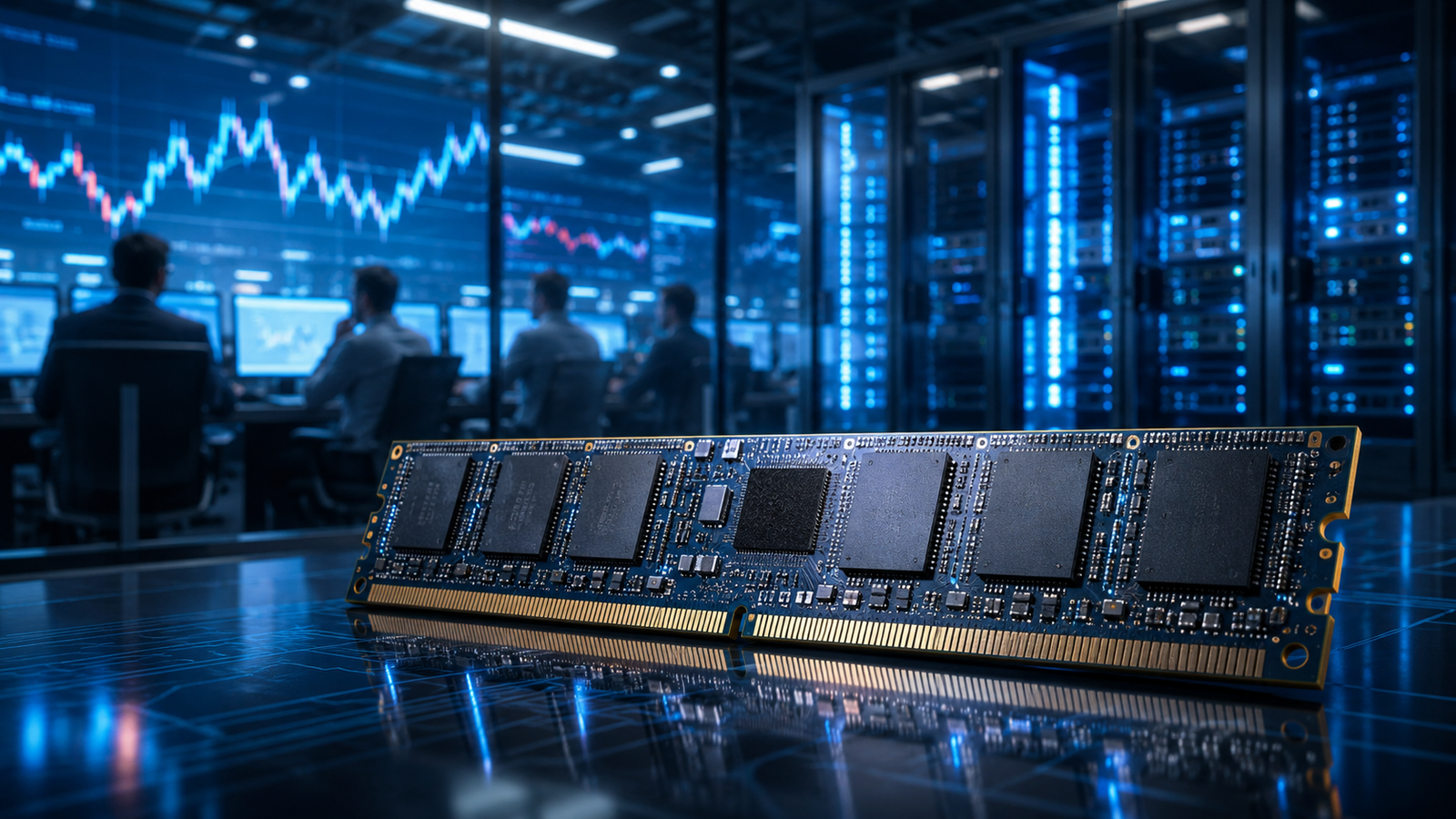
Modern AI workloads require massive amounts of data to be processed simultaneously. This has significantly increased demand for High Bandwidth Memory (HBM), a specialized technology that allows AI processors to access and move data at extraordinary speeds.
Micron has become a major supplier in this market.
The company’s HBM products are increasingly being integrated into advanced AI hardware platforms used by leading technology companies. As AI model complexity continues growing, demand for these memory solutions has accelerated dramatically.
Unlike traditional semiconductor cycles, where demand is often tied to consumer electronics or personal computers, today’s memory market is increasingly linked to AI infrastructure investment.
That distinction is important.
If Micron reports strong demand trends and optimistic guidance, investors may view it as confirmation that AI-related spending remains healthy. If management signals slowing orders or weaker future demand, however, it could raise broader questions about the sustainability of current valuations across the technology sector.
The AI Infrastructure Buildout Continues
The scale of AI-related investment remains unprecedented.
Major technology companies continue spending billions of dollars each quarter on AI infrastructure. Cloud providers are racing to expand capacity, data-center operators are constructing new facilities, and enterprises are increasing investments in AI-powered tools and applications.
Industry analysts from firms such as McKinsey, Gartner, and IDC continue forecasting significant long-term growth in AI adoption across virtually every sector of the economy.
This investment wave has benefited multiple segments of the semiconductor industry.
Companies producing GPUs, networking equipment, storage systems, power management technologies, and memory chips have all experienced increased demand as organizations build the infrastructure necessary to support AI workloads.
Micron occupies a particularly important position within this ecosystem because memory acts as a foundational component across nearly every AI deployment.
As a result, the company’s earnings report may provide one of the most direct measurements of whether AI spending remains as robust as investors currently expect.
Why Wall Street Is Watching Guidance Closely
While quarterly results are important, many analysts believe Micron’s future guidance could be even more significant.
Markets are forward-looking by nature.
Investors already understand that recent demand for AI-related hardware has been strong. The more important question is whether that momentum can continue through the remainder of 2026 and into 2027.
Several factors will likely receive particular attention:
High Bandwidth Memory Demand
HBM has become one of the fastest-growing segments within the semiconductor industry. Investors want to know whether customer demand continues exceeding supply and whether production capacity remains fully utilized.
Cloud Infrastructure Spending
Major cloud providers have become some of the largest buyers of AI hardware. Any signs of slowing capital expenditure plans could affect sentiment throughout the technology sector.
Enterprise AI Adoption
Many organizations remain in the early stages of AI implementation. Investors will be looking for evidence that enterprise demand continues expanding beyond pilot programs and experimental projects.
Supply Chain Conditions
Semiconductor markets can be highly cyclical. Management commentary regarding inventory levels, pricing trends, and production capacity will help investors assess broader industry conditions.
The answers to these questions may influence not only Micron’s stock price but also broader market expectations regarding the future of AI infrastructure spending.
The Broader Impact on Technology Stocks
Micron’s earnings report has implications that extend far beyond the memory market.
Today’s AI ecosystem is deeply interconnected.
Strong demand for memory chips generally suggests continued spending on processors, networking equipment, storage systems, and data-center infrastructure. Weakness in one segment can sometimes signal challenges emerging elsewhere in the supply chain.
This is why investors across the technology sector are paying close attention.
Companies involved in AI infrastructure—including semiconductor manufacturers, networking providers, cloud operators, and data-center developers—could all be affected by the market’s interpretation of Micron’s outlook.
The report may also influence investor sentiment toward some of the market’s largest technology companies, many of which have benefited significantly from enthusiasm surrounding AI growth.
In an environment where valuations have expanded rapidly, earnings reports capable of confirming or challenging prevailing narratives carry outsized importance.
Why This Matters for Investors
The semiconductor industry has historically been cyclical, but the AI boom has introduced a powerful new growth driver.
Investors are now trying to determine whether AI demand represents a temporary spending surge or the beginning of a multi-year investment cycle comparable to previous technological revolutions such as cloud computing, smartphones, or the internet.
Micron’s position within the AI supply chain makes it uniquely qualified to provide insight into that question.
If demand remains strong, investors may gain confidence that AI-related growth can continue supporting technology stocks despite concerns about economic uncertainty, interest rates, and geopolitical risks.
Conversely, signs of slowing demand could trigger reassessments of growth expectations and valuation assumptions across the sector.
For long-term investors, understanding these trends is essential because semiconductor companies often serve as early indicators of broader technology spending patterns.
Future Trends to Watch
Several developments could shape the next phase of the AI semiconductor market.
Continued Data-Center Expansion
AI workloads continue driving unprecedented demand for computing infrastructure, supporting long-term growth opportunities across the semiconductor industry.
Memory Technology Innovation
Advancements in HBM and next-generation memory solutions could create new competitive advantages for industry leaders.
Enterprise AI Scaling
As businesses move from experimentation to deployment, demand for AI infrastructure may broaden beyond hyperscale cloud providers.
Energy and Power Infrastructure
AI data centers require enormous amounts of electricity, creating additional investment opportunities in power systems and related technologies.
Semiconductor Supply Constraints
Managing production capacity while meeting rapidly growing demand remains a key challenge for the industry.
Investors should monitor these themes closely as they evaluate opportunities within the technology sector.
Key Investment Insight
Micron’s earnings report represents more than a company-specific event—it is a critical test of the broader AI investment thesis that has driven technology markets throughout 2026.
Investors should focus not only on quarterly financial results but also on management’s commentary regarding HBM demand, AI infrastructure spending, cloud-provider investment plans, and enterprise adoption trends. Strong guidance could reinforce confidence in semiconductor leaders and AI infrastructure companies, while signs of slowing demand may lead investors to reassess growth expectations across the sector.
As the AI revolution continues evolving, companies supplying the foundational technologies powering data centers and advanced computing systems remain among the most important indicators of where investment capital is flowing and which opportunities may emerge next.
Stay informed with MoneyNews.Today for daily investor insights, market-moving developments, and expert analysis on the trends shaping the future of technology investing.