
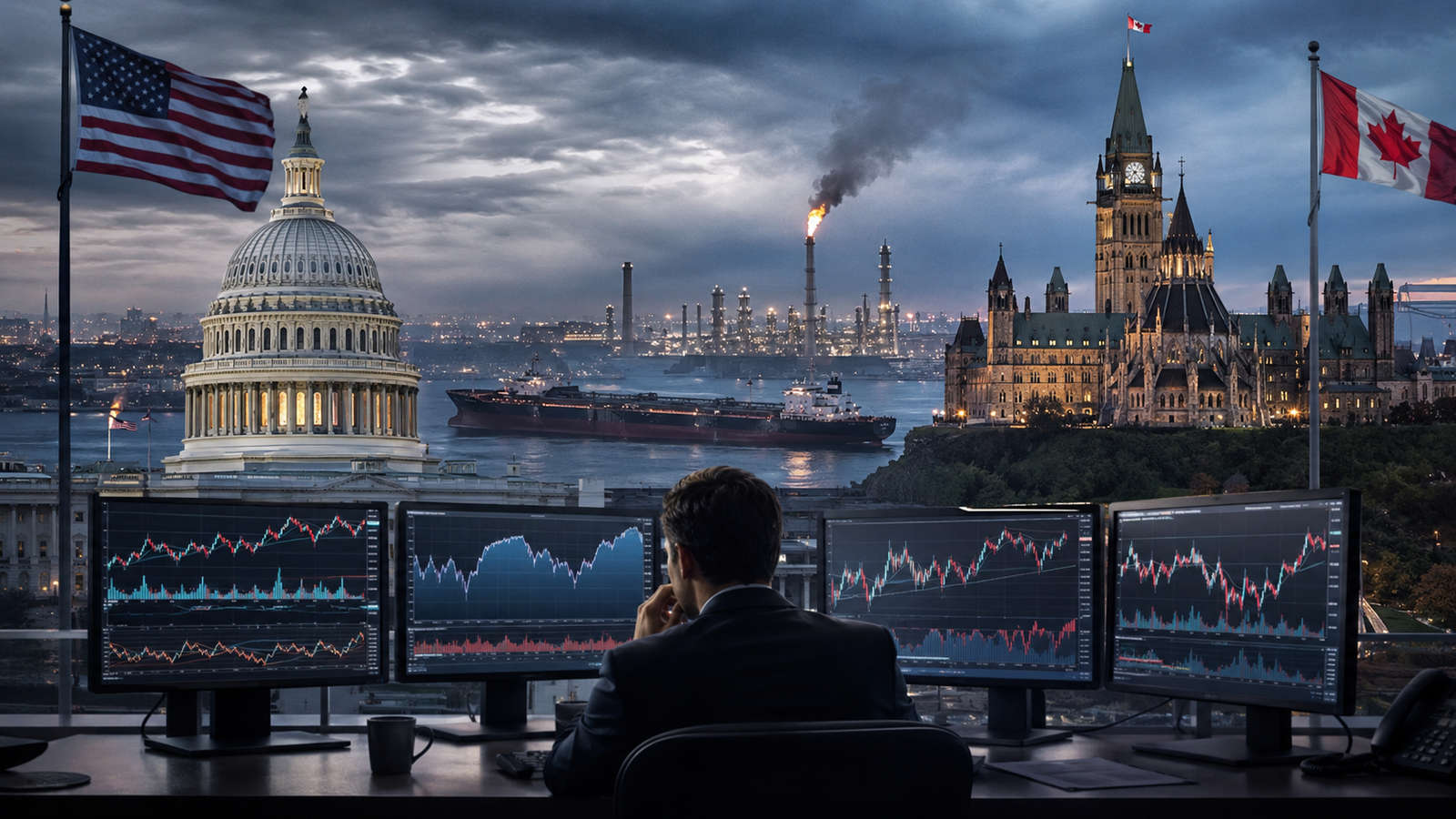
Global markets are entering June 19, 2026 with political risk once again at the forefront of investor decision-making, as overlapping geopolitical tensions, shifting diplomatic strategies, and renewed North American trade uncertainty reshape the global macro outlook.
From Washington’s evolving stance on Iran and broader Middle East stabilization efforts to rising friction between the United States and Canada over trade coordination and security policy, political developments are increasingly becoming direct drivers of asset prices rather than background noise.
According to Reuters reporting and live political coverage on June 19, 2026, investors are responding to a dense cluster of developments spanning foreign policy negotiations, energy security concerns, and domestic governance disputes. While no single headline dominates the narrative, the convergence of multiple political risks is creating a complex environment for equities, commodities, and currency markets.
For investors, the central challenge is no longer isolated geopolitical shocks—but sustained, overlapping policy uncertainty that affects energy flows, defense spending, global trade, and regulatory stability across North America and beyond.
Political Risk Is Reclaiming Market Influence
After a period where monetary policy and AI-driven earnings growth dominated market narratives, geopolitical developments are once again emerging as a key source of volatility.
Historically, political risk tends to increase during periods of economic transition, and 2026 is proving no exception. Investors are now grappling with simultaneous pressures:
- Evolving U.S. foreign policy in the Middle East
- Fragile ceasefire dynamics affecting global energy supply routes
- Renewed uncertainty around North American trade agreements
- Domestic policy debates affecting regulatory frameworks
This combination is creating a market environment where geopolitical headlines can move asset prices almost as quickly as earnings reports or central bank statements.
Analysts from institutions such as Reuters, Bloomberg Economics, and global macro research desks have increasingly highlighted the return of “policy-driven volatility,” particularly in sectors exposed to global trade and energy flows.
Middle East Diplomacy Continues to Shape Energy Markets
One of the most significant geopolitical developments influencing markets is the ongoing U.S.-led diplomatic effort to stabilize tensions in the Middle East.
Recent reporting indicates that interim arrangements involving Iran and regional actors have temporarily reduced the immediate risk of large-scale energy supply disruptions. However, the situation remains fragile, with ongoing military activity and unresolved diplomatic disputes continuing to introduce uncertainty.
Energy markets have reacted accordingly:
- Oil prices have stabilized but remain sensitive to headlines
- Shipping insurance premiums fluctuate based on security assessments
- Risk premiums embedded in crude pricing remain elevated compared to historical averages
According to Reuters geopolitical coverage, even limited disruptions in negotiation frameworks have historically triggered rapid repricing in global energy benchmarks.
For investors, this means energy markets are now highly event-driven, with political developments playing a central role in price formation.
U.S.–Canada Trade and Security Tensions Add North American Uncertainty
While global attention often focuses on U.S. foreign policy, North American political dynamics are also becoming increasingly important for investors.
Recent discussions between U.S. and Canadian officials have highlighted both cooperation and friction across trade, defense, and border security policy frameworks.
At the center of the debate is the long-term future of the USMCA trade agreement, which governs trillions of dollars in annual cross-border commerce. While technical negotiations continue, political rhetoric in both countries has introduced uncertainty about the durability of the agreement’s current structure.
Recent commentary from U.S. policymakers suggesting potential advantages in revisiting or restructuring trade arrangements has further intensified investor attention on supply-chain risk.
According to Reuters political reporting from the June 2026 G7 discussions, both nations acknowledged ongoing technical negotiations but did not resolve key structural disagreements.
This uncertainty has implications across multiple sectors:
- Automotive manufacturing supply chains
- Energy exports and cross-border pipelines
- Agricultural commodities and pricing
- Industrial goods and logistics networks
Even small shifts in trade policy expectations can have outsized effects on corporate earnings forecasts in highly integrated North American industries.
Domestic Policy Uncertainty in the U.S. Adds Another Layer
In addition to foreign policy and trade dynamics, domestic political developments in the United States are contributing to broader market uncertainty.
Legal disputes over election administration policies, regulatory authority, and federal governance frameworks have reintroduced questions about institutional predictability heading into future electoral cycles.
At the same time, debates surrounding surveillance policy, cybersecurity regulation, and federal spending priorities continue to influence sectors such as technology, defense, and communications infrastructure.
While these issues may appear political in nature, their financial implications are increasingly direct:
- Defense contractors are sensitive to budget allocation decisions
- Technology companies face evolving regulatory scrutiny
- Cybersecurity firms benefit from expanded federal mandates
- Infrastructure companies respond to shifting fiscal priorities
Markets typically assign a “policy risk premium” when regulatory environments become less predictable, particularly in sectors dependent on government contracts or oversight.
Why This Matters for Investors
The convergence of geopolitical and domestic political risks is reshaping how investors evaluate macroeconomic conditions.
Three major transmission channels stand out:
1. Energy Market Volatility
Middle East developments continue to directly influence global oil supply expectations, shipping routes, and inflation forecasts. Even temporary escalations or diplomatic breakdowns can rapidly shift energy pricing.
2. Trade-Linked Earnings Risk
U.S.–Canada trade uncertainty introduces potential disruption to industries with deeply integrated supply chains. Automotive, industrial manufacturing, and energy sectors are particularly exposed to policy changes affecting cross-border flows.
3. Regulatory and Fiscal Policy Sensitivity
Domestic political debates influence long-term capital allocation decisions in sectors such as defense, technology, and infrastructure. Increased uncertainty can affect valuation models and investor sentiment.
Together, these channels suggest that political developments are becoming a structural component of market pricing rather than a short-term influence.
Future Trends to Watch
Several key developments are likely to shape political risk markets in the coming weeks:
Middle East Negotiation Stability
The durability of ceasefire arrangements and diplomatic frameworks will remain a primary driver of energy market volatility.
USMCA Trade Negotiations
Any movement toward restructuring or renegotiation could significantly impact North American supply chains and corporate earnings forecasts.
Defense and Security Spending Expansion
Geopolitical instability is likely to support continued growth in defense and cybersecurity budgets across North America.
Regulatory Policy Shifts
Technology, communications, and data infrastructure sectors remain sensitive to evolving regulatory frameworks in both the U.S. and Canada.
Global Election Cycle Implications
Political developments in major economies could further influence investor risk appetite and capital flows.
Key Investment Insight
The current political environment is defined not by a single crisis, but by the simultaneous emergence of multiple geopolitical and domestic policy risks that directly influence energy markets, trade flows, and regulatory expectations.
For investors, this means political developments must now be treated as core market drivers rather than secondary considerations. Energy, defense, logistics, and cross-border industrial sectors remain the most sensitive to policy shifts, while volatility in these areas is likely to remain elevated as geopolitical conditions evolve.
Successfully navigating this environment requires close attention not only to earnings and monetary policy, but also to the broader geopolitical landscape shaping global capital allocation.
Stay informed with MoneyNews.Today for daily investor insights, geopolitical analysis, and market-moving developments shaping global investment strategy.




