
The artificial intelligence boom has transformed financial markets, turning semiconductor stocks into some of the biggest winners of the decade. From Nvidia’s meteoric rise to unprecedented spending on data centers, investors have poured capital into nearly every corner of the AI ecosystem. Yet as technology stocks continue to push toward new highs, Wall Street is preparing for what could be one of the most important earnings reports of the summer.
Micron Technology’s upcoming earnings release is increasingly being viewed as a critical test of whether the AI investment cycle remains as strong as markets currently expect. According to Reuters, semiconductor stocks including Nvidia, Intel, and memory-chip manufacturers advanced on June 22 as investors continued to bet on expanding AI infrastructure spending. The broader semiconductor index also reached fresh highs, reflecting confidence that demand for AI hardware remains robust.
But beneath the optimism lies an important question: Is AI-related spending continuing to accelerate, or are investors beginning to price in growth that may be difficult to sustain?
The answer could have significant implications not only for Micron but for the entire semiconductor sector and the broader technology market.
Why Micron Has Become a Key Market Indicator
Historically, investors often viewed memory-chip manufacturers as highly cyclical businesses tied to personal computers, smartphones, and traditional enterprise hardware spending.
That perception has changed dramatically.
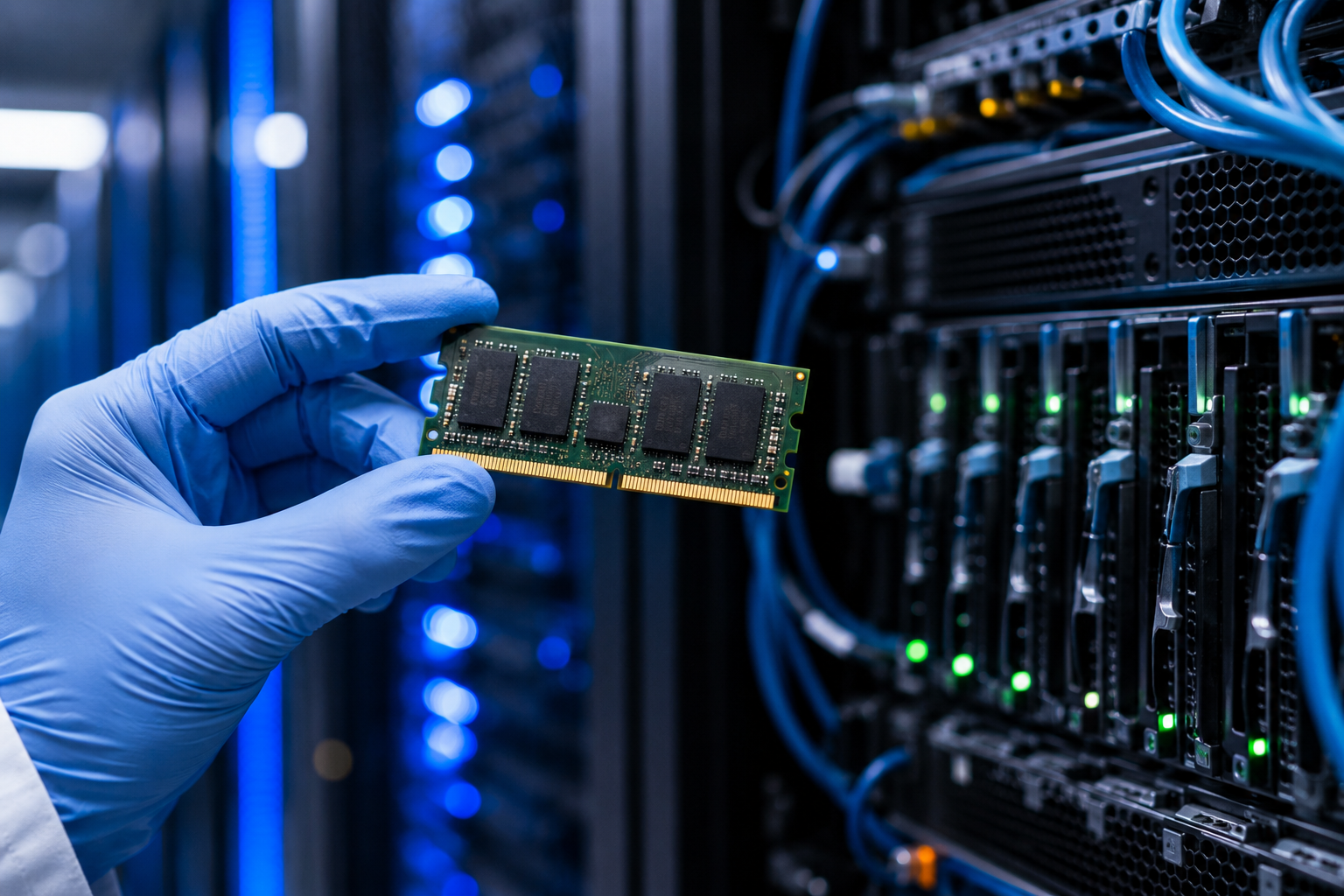
The rise of artificial intelligence has transformed memory into one of the most critical components of modern computing infrastructure. AI servers require significantly more high-bandwidth memory (HBM) and advanced DRAM solutions than traditional computing systems. As companies race to deploy large language models, generative AI platforms, and advanced data-center infrastructure, demand for memory has surged.
This shift has elevated Micron’s importance within the technology sector.
Investors increasingly see Micron’s earnings as a real-time indicator of AI infrastructure demand. Strong results could reinforce confidence that cloud providers, hyperscalers, and enterprise customers continue investing aggressively in AI. Weak guidance, on the other hand, could raise concerns that portions of the AI trade have become overheated.
According to Reuters market analysis, investors are closely watching memory-chip demand because it often serves as an early signal of broader trends across semiconductor markets.
The AI Infrastructure Spending Boom
Much of the excitement surrounding artificial intelligence has focused on software applications and AI models. However, the foundation of the AI revolution is physical infrastructure.
Every AI model requires enormous computing power. That computing power depends on advanced semiconductors, memory systems, networking equipment, power infrastructure, cooling technology, and massive data centers.
Major technology companies have responded by dramatically increasing capital expenditures.
Companies such as Nvidia, Microsoft, Amazon, Alphabet, and Meta have collectively committed hundreds of billions of dollars toward AI-related infrastructure investments. Industry analysts from firms including McKinsey, IDC, and Gartner project that AI spending could remain one of the fastest-growing areas of technology investment throughout the remainder of the decade.
Memory chips are essential to this expansion.
Unlike traditional workloads, AI applications process enormous amounts of data simultaneously. High-performance memory solutions have become critical for maximizing the efficiency of AI accelerators and advanced graphics processing units.
As a result, demand for memory has become closely tied to the overall health of the AI ecosystem.
Why Investors Are Paying Attention to Data Center Demand
Data centers have become the backbone of the AI economy.
Every major AI platform relies on large-scale data-center infrastructure capable of supporting increasingly complex computational workloads. The construction of new facilities has accelerated significantly as technology companies compete to expand their AI capabilities.
This trend has created a ripple effect throughout the semiconductor industry.
Strong data-center demand benefits not only chip designers but also manufacturers of memory, networking equipment, storage systems, power management technologies, and cooling infrastructure.
Investors view data-center spending as one of the most reliable indicators of long-term AI adoption because it represents a tangible commitment of capital rather than speculative future demand.
If hyperscalers continue expanding infrastructure investments, it suggests confidence that AI applications will generate meaningful economic returns.
Micron’s earnings may provide important clues regarding whether that investment cycle remains intact.
Why This Matters for Technology Stocks
The semiconductor sector has become one of the primary drivers of broader market performance.
Over the past two years, AI-related stocks have accounted for a significant portion of major index gains. Investors have rewarded companies perceived as beneficiaries of the AI revolution, often assigning premium valuations based on expectations of future growth.
This has created both opportunities and risks.
Strong earnings reports can reinforce bullish sentiment and support higher valuations. However, even minor signs of slowing demand can trigger significant market reactions.
The stakes are particularly high because semiconductor valuations have risen substantially alongside AI enthusiasm.
Many investors now view earnings reports from key industry participants as validation tests for the broader AI investment narrative.
If demand remains strong, confidence in the sector could continue building. If growth begins showing signs of moderation, investors may become more selective in evaluating technology stocks.
The Nvidia Ecosystem Effect
One reason Micron’s results matter so much is the company’s close connection to the broader Nvidia-driven AI ecosystem.
Advanced memory solutions are a critical component of AI servers powered by Nvidia’s graphics processing units. As demand for AI accelerators grows, demand for high-performance memory typically rises as well.
This interconnected relationship means Micron’s earnings can provide valuable insights into spending trends throughout the AI supply chain.
Investors increasingly analyze semiconductor companies not as isolated businesses but as parts of a larger AI infrastructure ecosystem.
Strong memory demand often signals healthy activity across data centers, cloud providers, networking suppliers, and chip manufacturers.
This makes Micron one of the most closely watched companies during earnings season.
Future Trends to Watch
Several themes could influence the direction of technology stocks in the months ahead.
AI Infrastructure Investment
Investors should monitor whether major cloud providers continue increasing capital expenditures related to AI deployment.
Memory Pricing Trends
Changes in memory pricing can provide valuable insights into supply-demand dynamics across the semiconductor industry.
Data Center Expansion
Continued growth in hyperscale and enterprise data-center construction would support long-term demand for semiconductors and infrastructure equipment.
Enterprise AI Adoption
The next stage of AI growth may depend on broader adoption by businesses outside the technology sector.
Interest Rate Environment
Rising Treasury yields and a more hawkish Federal Reserve could influence valuations for high-growth technology stocks, even if fundamentals remain strong.
Key Investment Insight
The most important takeaway for investors is that the AI investment story is entering a phase where execution matters more than expectations.
For much of the past two years, markets have rewarded companies based on future AI potential. Going forward, investors are likely to focus increasingly on evidence that AI spending is translating into sustainable revenue growth throughout the semiconductor ecosystem.
Micron’s earnings report represents one of the clearest opportunities to assess that trend.
Strong memory demand would reinforce confidence that the AI infrastructure buildout remains healthy and could support continued strength across semiconductor and technology stocks. Conversely, weaker-than-expected guidance could raise questions about the pace of future growth and the sustainability of current valuations.
Investors should pay close attention not only to Micron’s reported results but also to management commentary regarding data-center demand, AI-related orders, memory pricing, and customer spending trends.
The next phase of the AI rally may depend less on headlines and more on hard evidence that the industry’s massive infrastructure investments are continuing to generate real-world demand.
For more daily technology analysis, semiconductor market coverage, and actionable investor insights, stay connected with MoneyNews.Today, your trusted source for financial news that matters.




