
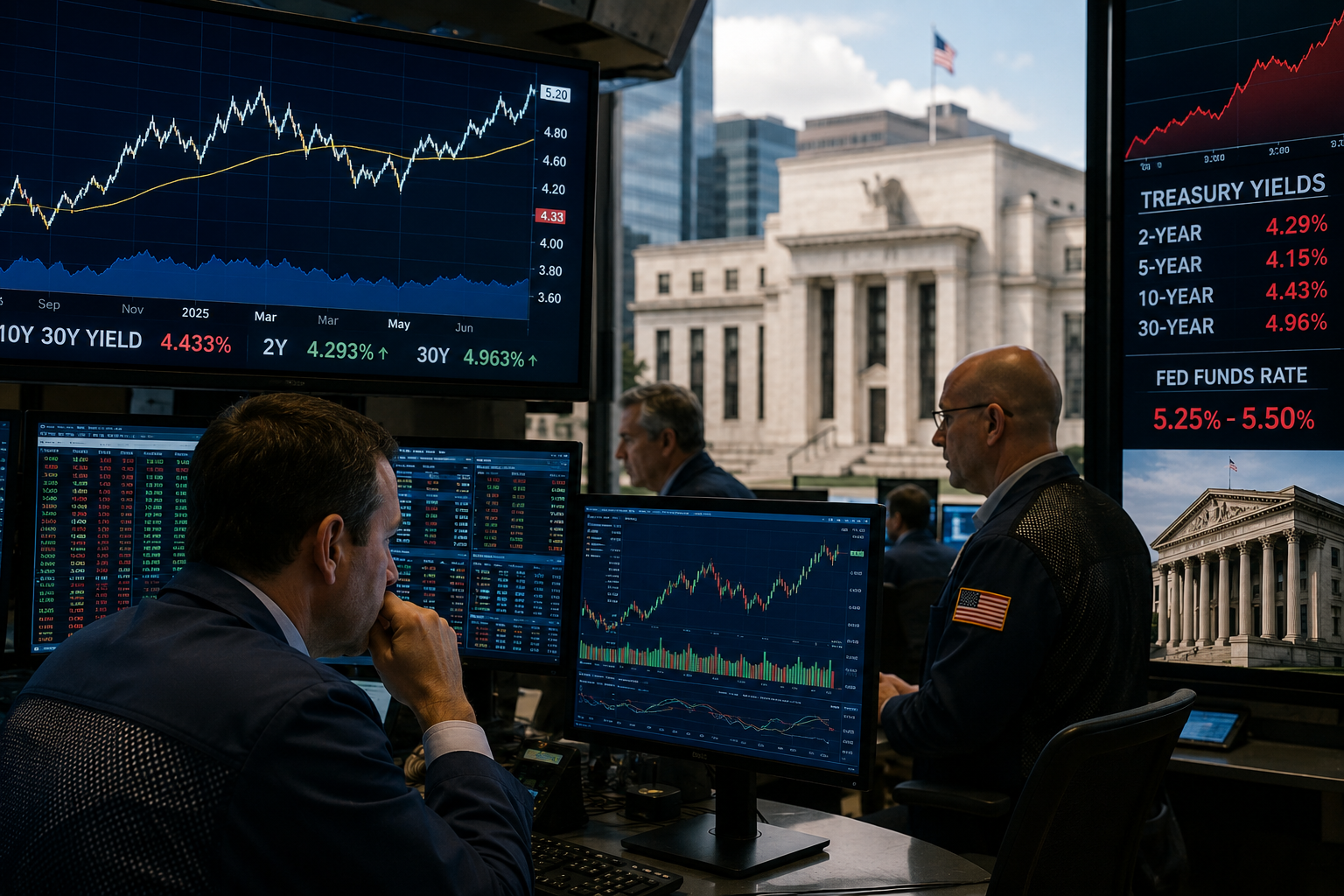
For much of the past year, investors have celebrated the resilience of the U.S. economy, the explosive growth of artificial intelligence, and a stock market that has repeatedly defied expectations. But as June draws to a close, a familiar concern is once again dominating conversations across Wall Street: interest rates.
Markets are increasingly reassessing their outlook after Bank of America Global Research forecast that the Federal Reserve could implement three additional rate hikes in 2026. At the same time, Treasury yields have climbed as investors adjust expectations for a potentially more hawkish central bank under Federal Reserve Chair Kevin Warsh. The shift has introduced a new layer of uncertainty for equities, particularly growth stocks and technology companies that have benefited from years of abundant liquidity.
For investors, the coming weeks may prove pivotal. Inflation data, Federal Reserve commentary, and bond market movements are all converging into what could become one of the most important market narratives of the summer.
Rising Treasury Yields Are Reshaping Market Expectations
The bond market often serves as Wall Street’s early warning system, and recently it has been sending a clear message.
Treasury yields have been moving higher as investors increasingly price in a more restrictive monetary policy environment. Higher yields generally reflect expectations for stronger economic growth, persistent inflation, or tighter central bank policy. In the current environment, concerns about inflation and future Fed actions appear to be driving the move.
According to Reuters, investor sentiment shifted after Bank of America projected three Federal Reserve rate hikes before the end of 2026. The forecast challenged expectations that policymakers might eventually pivot toward rate cuts and instead reinforced the possibility that rates could remain elevated for an extended period.
This matters because Treasury yields influence nearly every asset class.
From mortgages and corporate borrowing costs to stock valuations and consumer spending, the yield environment helps determine how capital flows through the economy. When yields rise rapidly, markets often experience increased volatility as investors reassess risk and return expectations.
For equity investors, the implications can be significant.
Why Growth Stocks Are Feeling the Pressure
One of the biggest concerns surrounding higher yields is their impact on growth-oriented companies.
Technology firms, artificial intelligence leaders, software companies, and other high-growth businesses derive much of their valuation from future earnings potential. When interest rates rise, those future earnings become less valuable in present-value terms.
This valuation effect can place pressure on some of the market’s most popular stocks.
Over the past two years, AI-related companies have led market gains, fueled by strong earnings growth and investor enthusiasm surrounding artificial intelligence adoption. However, rising yields create a challenging backdrop for richly valued companies that depend on long-term growth assumptions.
The dynamic has already become a key topic among institutional investors and analysts.
Several Wall Street strategists have warned that even strong earnings may not be enough to offset valuation pressure if interest rates continue moving higher. While AI spending remains robust, investors are increasingly paying attention to macroeconomic conditions that could affect market multiples.
This does not necessarily mean growth stocks are headed for a sustained downturn. Rather, it suggests investors may become more selective, rewarding companies with proven profitability and strong cash flow while becoming less tolerant of excessive valuations.
The Federal Reserve Remains the Market’s Most Powerful Force
Despite strong corporate earnings and ongoing technological innovation, Federal Reserve policy continues to be the dominant driver of market sentiment.
The central bank’s challenge remains balancing inflation control with economic growth.
Inflation has moderated from the highs seen earlier in the decade, but policymakers continue to monitor labor market strength, consumer demand, wage growth, and pricing pressures across the economy. Any indication that inflation is becoming entrenched could increase the likelihood of additional policy tightening.
Investors are particularly focused on upcoming economic reports, including Thursday’s inflation data release.
Market participants will scrutinize every detail for clues regarding future Fed actions. A stronger-than-expected inflation reading could reinforce expectations for additional rate hikes, while softer data might provide some relief to equities and risk assets.
Federal Reserve communications will also be closely watched.
Historically, markets have reacted sharply to shifts in Fed guidance, often moving significantly based on subtle changes in language regarding inflation risks, economic growth, and policy expectations.
In the current environment, every statement from policymakers carries heightened importance.
Why the AI Boom Is Intersecting With Monetary Policy
One of the most fascinating developments in today’s market is the collision between two powerful themes: artificial intelligence and monetary policy.
The AI revolution has generated enormous optimism among investors, driving capital toward technology companies, semiconductor manufacturers, cloud providers, and infrastructure firms.
At the same time, higher interest rates are creating a more restrictive financial environment.
This creates a tension that may define market performance for the remainder of 2026.
On one hand, AI investment continues to accelerate. Major technology companies are committing hundreds of billions of dollars toward data centers, advanced chips, networking infrastructure, and AI software development. Industry forecasts from firms such as McKinsey and IDC suggest AI spending could remain one of the fastest-growing areas of the global economy for years to come.
On the other hand, rising rates can reduce market valuations even when business fundamentals remain strong.
Investors are increasingly asking a critical question: Can AI-driven earnings growth continue to outweigh the headwinds created by tighter monetary policy?
The answer may determine the direction of both technology stocks and broader equity markets.
Future Trends to Watch
Several developments are likely to shape investor sentiment in the weeks ahead.
Inflation Data
Upcoming inflation reports remain the most important near-term catalyst. Any surprises could significantly alter expectations for future Federal Reserve policy.
Treasury Yield Movements
Continued increases in yields would likely pressure growth-oriented sectors, while stabilization could provide support for equities.
Corporate Earnings Guidance
Investors will closely monitor how companies discuss demand trends, capital spending, and economic conditions during earnings season.
AI Infrastructure Spending
Despite macroeconomic concerns, AI-related capital expenditures remain a powerful growth driver. Investors should watch whether technology companies maintain aggressive investment plans.
Federal Reserve Communication
Policy commentary will remain a key market-moving factor. Any changes in tone regarding inflation or economic growth could trigger significant reactions across asset classes.
Key Investment Insight
The most important takeaway for investors is that the market is transitioning from a narrative dominated by growth to one increasingly influenced by interest-rate expectations.
While artificial intelligence, technological innovation, and strong corporate earnings continue to support long-term optimism, rising Treasury yields introduce a new challenge. Companies with stretched valuations may face greater scrutiny, while businesses generating consistent cash flow and demonstrating pricing power could become increasingly attractive.
Investors should pay close attention to inflation trends, Federal Reserve communications, and bond market movements. These indicators may provide the clearest signals about the market’s direction during the second half of 2026.
Periods of rising rates often create volatility, but they can also create opportunities for disciplined investors who focus on quality businesses, strong balance sheets, and sustainable earnings growth.
As Wall Street weighs the risks of additional Fed tightening against the promise of continued innovation, the bond market may ultimately determine whether the next major move for stocks is higher or lower.
For more daily market analysis, investor insights, and breaking financial news that matters, stay connected with MoneyNews.Today, your trusted source for navigating today’s rapidly changing investment landscape.




